Artwork
Cană cu toartă deasupra/mănușar
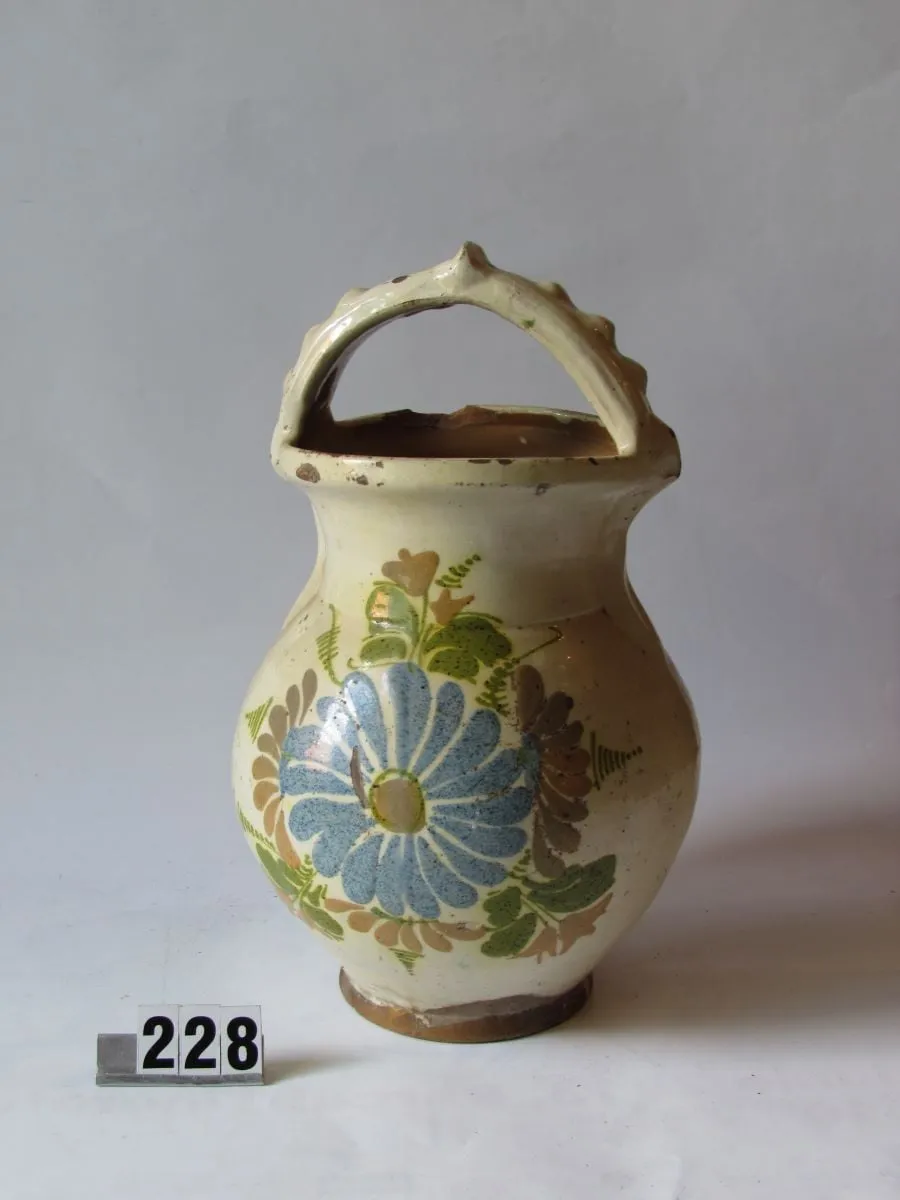
Cană cu toartă deasupra/mănușar is a photography by Unknown. It dates from 1850 and is held in the collection of the ASTRA National Museum Complex. The object is a modest clay vessel with a single handle positioned on its rim.
About this work
Overview
The object is a modest clay vessel with a single handle positioned on its rim. Its body is primarily a light, off‑white tone, while the front surface bears a large, blue floral motif surrounded by green foliage and a few brown, berry‑like forms. A small brown foot supports the pot, and the surface shows signs of wear and faded pigment, indicating extensive use.
Subject & Meaning
The dominant painted element is a stylised blue flower, likely representing a local or symbolic plant, set against accompanying leaves and small fruit‑shaped accents. Such decorative schemes often served both aesthetic and protective functions, invoking fertility, abundance, or household well‑being within the community that produced the vessel.
Technique & Style
The pot is hand‑formed from earthenware clay and finished with a slip that yields a white background. Pigments—blue, green, and brown—were applied with brushes after the vessel dried, then fired at a low temperature, which explains the occasional flaking and muted areas where the glaze has worn away over time.
Context
Objects of this type are typical of everyday domestic ware in rural Romanian regions, where painted pottery combined utility with folk ornamentation. The simple form and decorative program suggest it was used in household activities such as storage or serving, reflecting the integration of artistic expression into daily life.
Artist & collection

 Domestic Scene
 Giacomo and Cardinal Marco, investing Andrea, Abbot of San Zeno, with his Benefice
 The Nymph of Fontainebleau
 Portrait of a Woman
 Madonna and Child with Saints in the Enclosed Garden
 Venus and Minerva
 Family Group of Four on Sofa
 Wall painting from Room H of the Villa of P. Fannius Synistor at Boscoreale
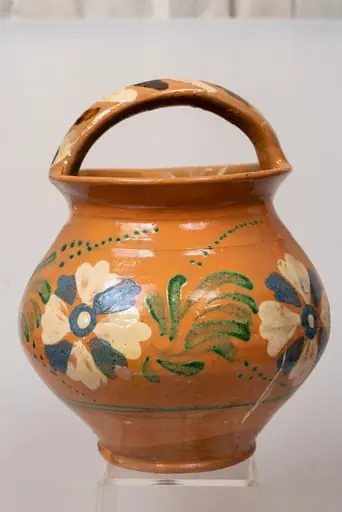 Piesă cu corp sferic, bombat, modelată din lut la roata olarului, gât îngust, drept și buză evazată; oala este prevăzută la gură cu o toartă orizontală pe post de mâner de prindere. Vasul este angobat pe suprafața exterioară cu un strat de angobă de culoare siena naturală, peste care este realizat decorul, prin pictare cu cornul și cu pensula. Toarta este decorată cu un șir de linii groase pictate în formă de V, de culoare albă și maro. Pe corpul vasului se desfășoară decorul principal, format din motive florale stilizate (patru flori cu opt petale de trifoi, de culoare albă și albastră) alternând cu motivul fitomorf caracteristic centrului: frunze alungite, de culoare verde. Partea inferioară a corpului este decorată cu trei linii subțiri concentrice, de culoare verde, pictate cu cornul. Cromatica: alb, siena naturală, maro, verde, albastru. Piesa este acoperită pe ambele fețe cu un strat de smalț transparent.
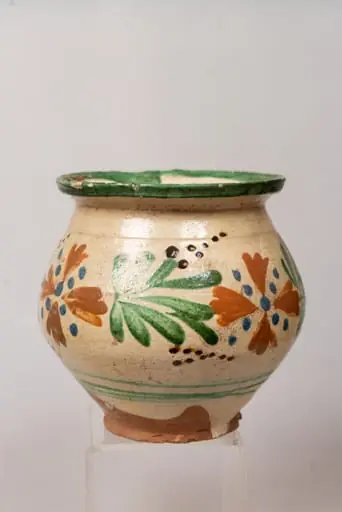 Piesă cu toartă în partea laterală, cu baza mai îngustă, joasă, cu corp sferic, cu gât scurt, buză îngustă și răsfrântă. Toartă simplă, în bandă, cu punctele de inserție la gura și la partea centrală a corpului. Vasul este angobat în întregime cu humă albă. Decorat la exterior, prin pictare cu pensula si cu cornul, cu motive florare și fitomorfe (patru flori de culoare siena arsă, cu petale sub forma frunzelor de trifoi cu puncte albastre între ele și cu frunze verzi) pe suprafața corpului și cu motive geometrice (linii paralele pe toartă). Partea inferioară a corpului este decorată cu patru linii paralele circulare, de culoare verde. Muchia buzei este marcată de o dungă verde. Smălțuit pe exterior și pe interior cu smalț transparent. Cromatica: alb, albastru, siena arsă, verde.
 Oală pentru ciorbă
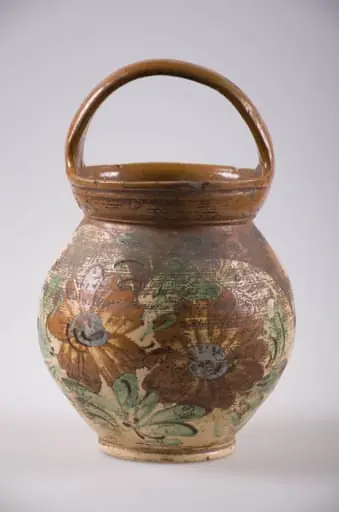 Oală de formă bitronconică cu buza largă din care se ridică o toartă ce fixează diametrul buzei (mănușar). Corpul vasului este bitronconic, toarta și buza vasului au un smalț de culoare cărămizie. În partea din față a corpului vasului, pe un fond alb-gălbui (culoarea untului) sunt pictate două flori (albastru, galben, maron, verde) restul corpului având desenate vrejuri ornamentale. Pe buza vasului, la exterior, prezintă caneluri închise la culoare. Cromatică: fond: maro; motive: albastru; galben; maron; verde.
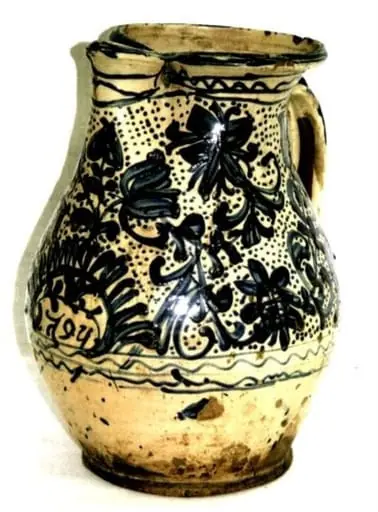 cană de bere
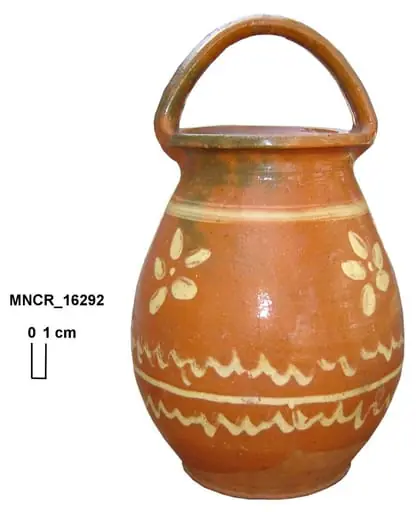
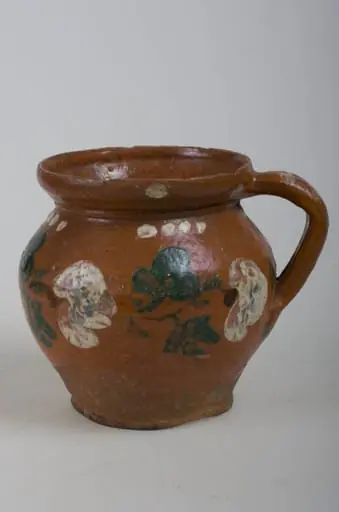 Ulcea de pus la grindă, cu corpul globular, gâtul scurt, buza evazată modelată la roată, arsă, smălțuită (interior și exterior până sub toartă), pictată cu pensula (motivele ornamentale). Motive florale și geometrice (puncte și linii). Vasul prezintă o impresiune sub toartă. Toarta are cinci linii albe transversale. Cromatică: fond: cărămiziu; decor: alb; verde; albastru.
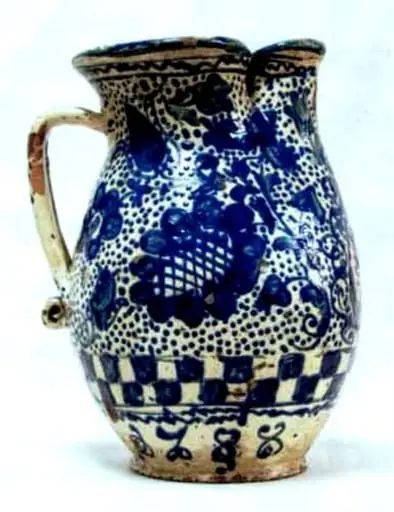 cană de vin