Artwork
cană de bere
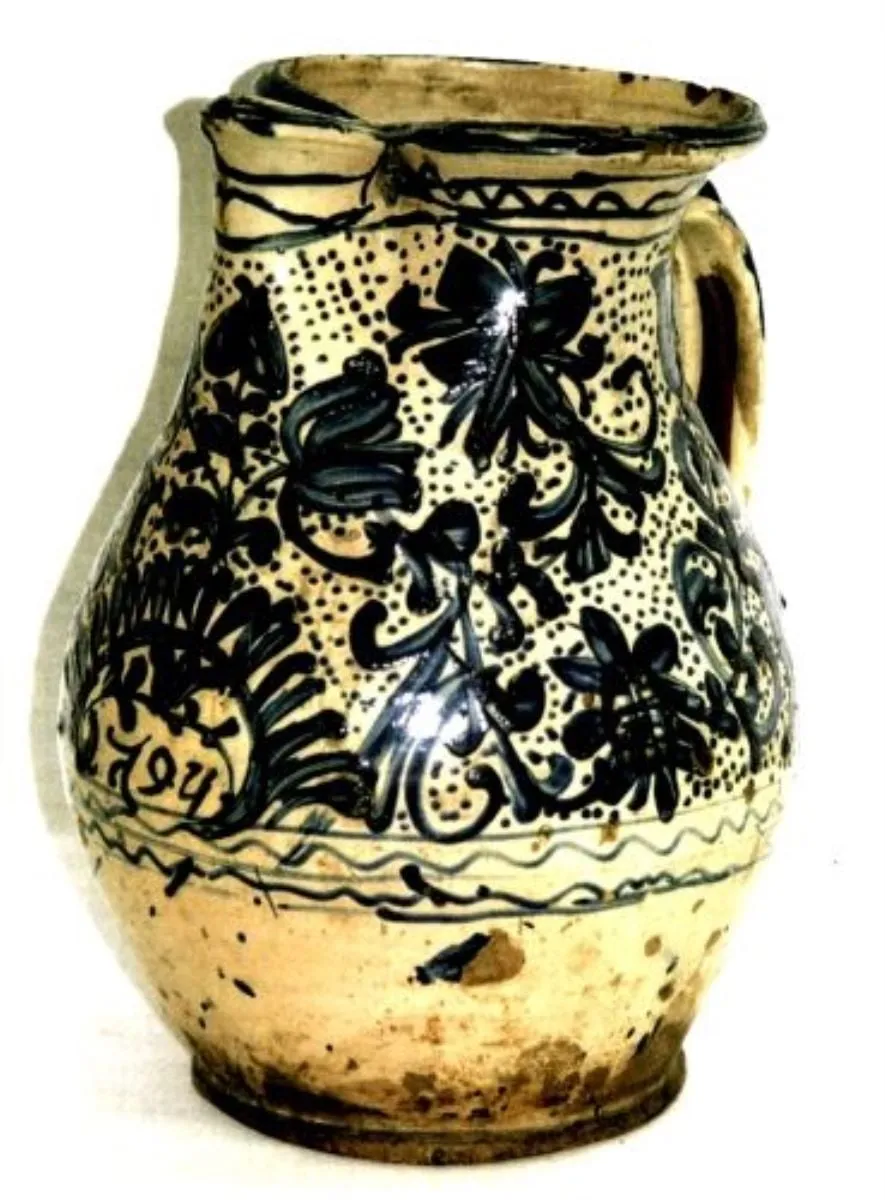
cană de bere is a photography by the Romanticist artist Unknown. It dates from 1794 and is held in the collection of the Romanian Peasant Museum.
About this work
Overview
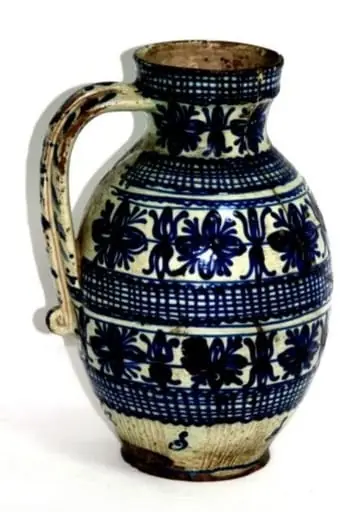
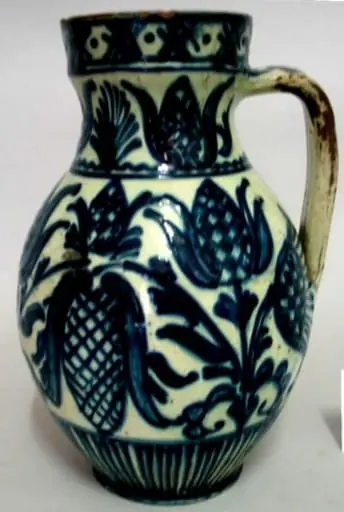
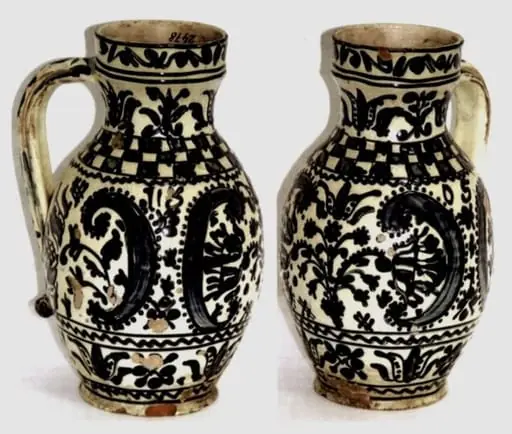
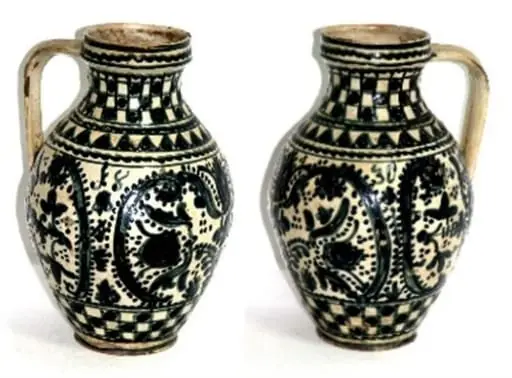
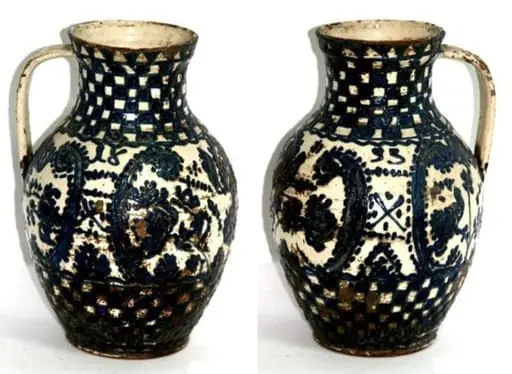
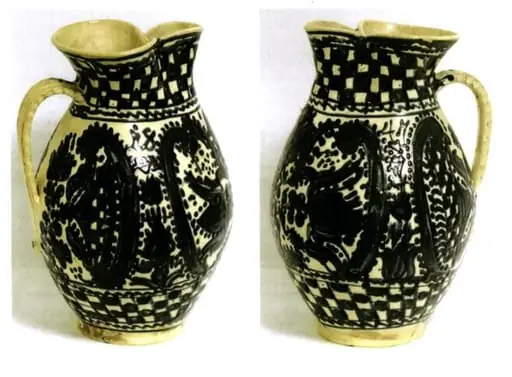
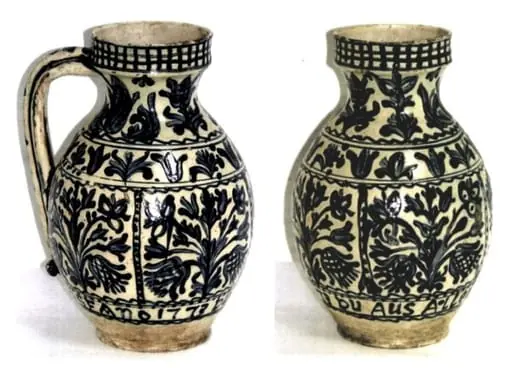
The surface is decorated with a detailed black-and-white floral motif, composed of stylized flowers, leaves, and fine linear details that suggest texture.
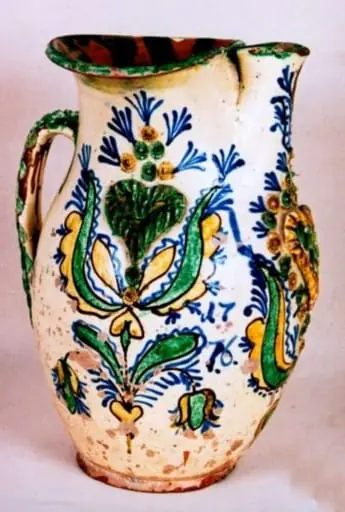
This ceramic jug, known as a cană de bere, is a functional vessel designed for serving beer. Its form includes a single handle on the right side for ease of use. The surface is decorated with a detailed black-and-white floral motif, composed of stylized flowers, leaves, and fine linear details that suggest texture. Age has left subtle staining on the base, indicating prolonged use and exposure over time.
Subject & Meaning
The floral decoration reflects a common decorative language in 19th-century European folk ceramics, where natural motifs symbolized vitality and domestic harmony. The absence of color and reliance on monochrome patterning suggests a preference for restraint, possibly tied to regional traditions rather than high art movements. The design does not align with Romanticism’s dramatic or emotional themes but instead expresses a quiet, artisanal appreciation for botanical forms.
Technique & Style
The jug was hand-painted using slip decoration or underglaze techniques, with fine black lines and dotwork creating intricate texture within the floral design. The white clay body provides a clean ground for the contrast. The handle is securely attached and shaped for practicality, indicating craftsmanship focused on utility. The precision of the brushwork suggests training within a local workshop tradition rather than mass production.
History & Provenance
The object likely originated in Eastern Europe, possibly Romania or Moldova, where similar ceramic jugs were produced for domestic use from the late 18th through the 19th century. Its stained base and wear patterns imply regular household use. No documented ownership history is available, but its style aligns with regional folk pottery traditions that persisted despite industrialization.
Context
While Romanticism influenced fine art and literature in Europe during the same period, this jug belongs to a parallel tradition of rural craft. Its decoration reflects local aesthetics, not academic art movements. Similar vessels were made for everyday use in peasant households, where ornamentation served both cultural identity and functional pride, distinct from the idealized nature depicted in Romantic paintings.
Legacy
This jug represents a continuity of folk ceramic practices that survived into the modern era, preserving pre-industrial techniques and visual languages. Though overlooked in mainstream art histories, such objects remain important to ethnographic collections and regional heritage studies, offering insight into the daily lives and aesthetic values of non-elite communities in 19th-century Eastern Europe.
Artist & collection

 Domestic Scene
 Giacomo and Cardinal Marco, investing Andrea, Abbot of San Zeno, with his Benefice
 The Nymph of Fontainebleau
 Portrait of a Woman
 Madonna and Child with Saints in the Enclosed Garden
 Venus and Minerva
 Family Group of Four on Sofa
 Wall painting from Room H of the Villa of P. Fannius Synistor at Boscoreale