Artwork
cană de vin
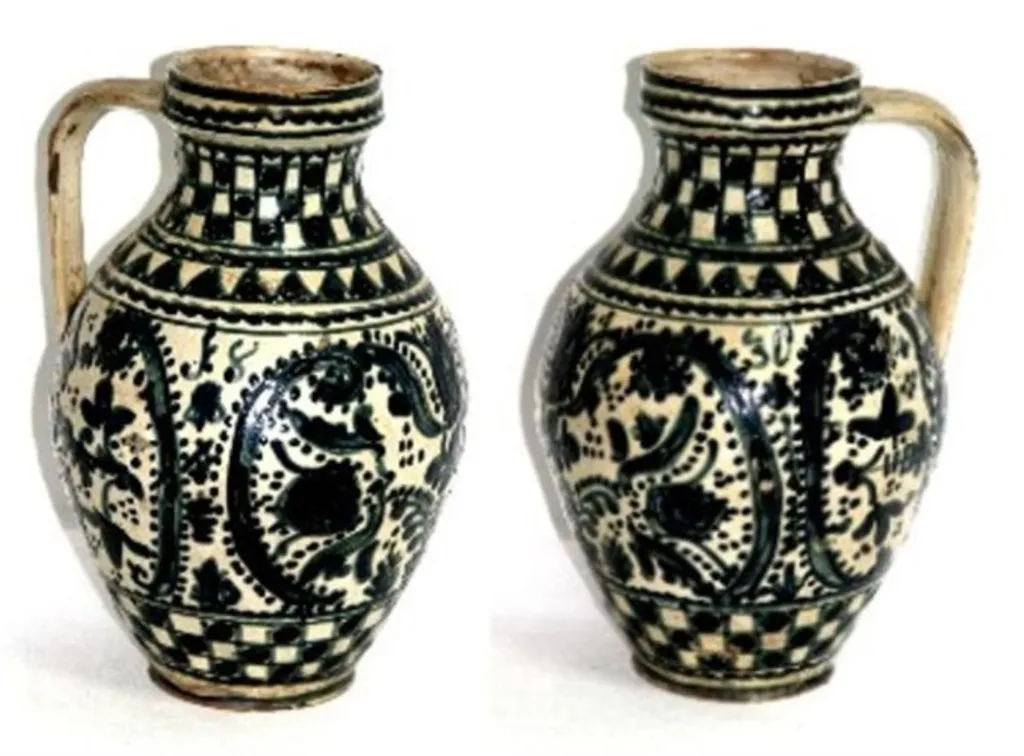
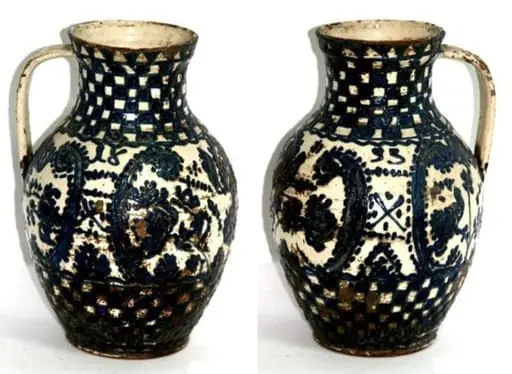
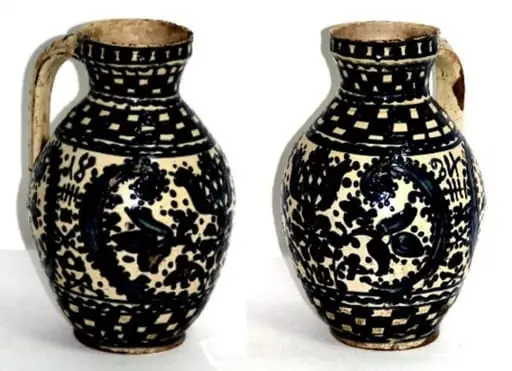
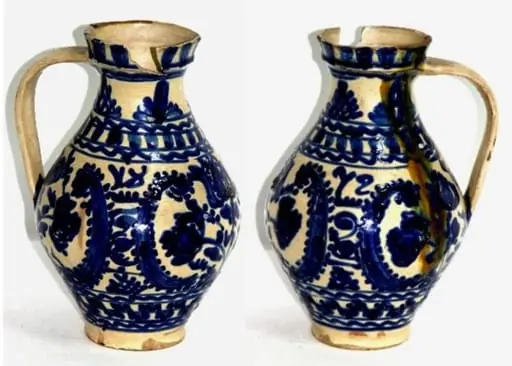
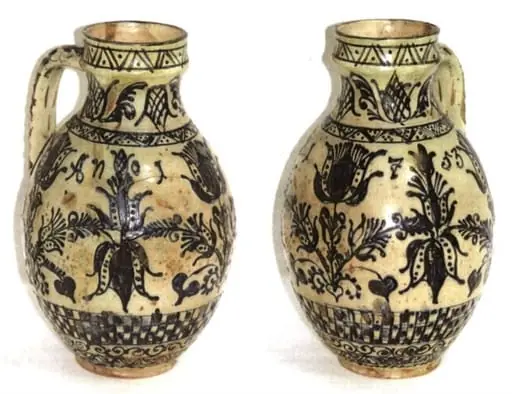
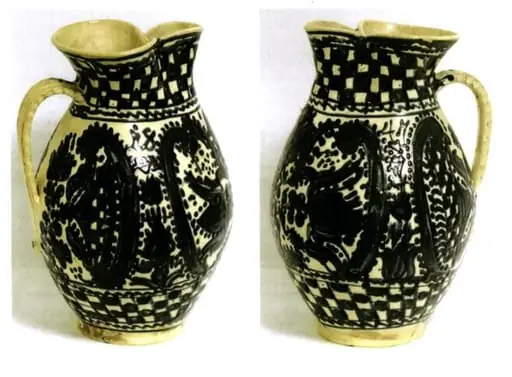
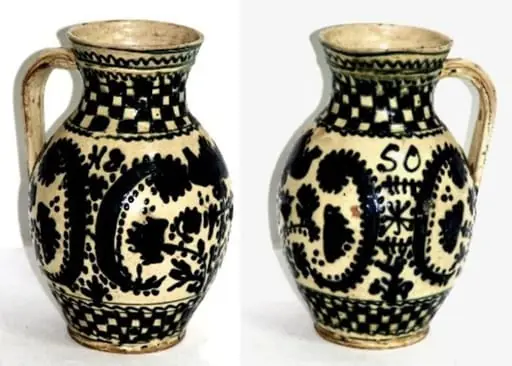
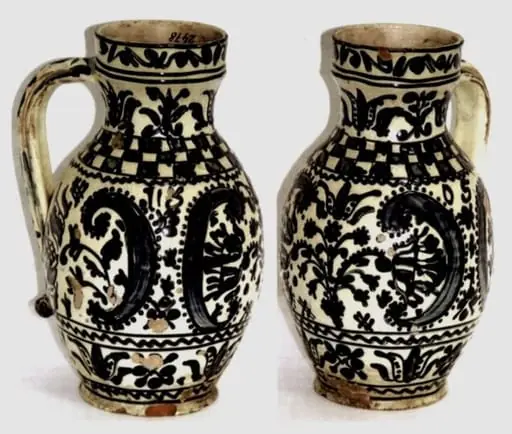
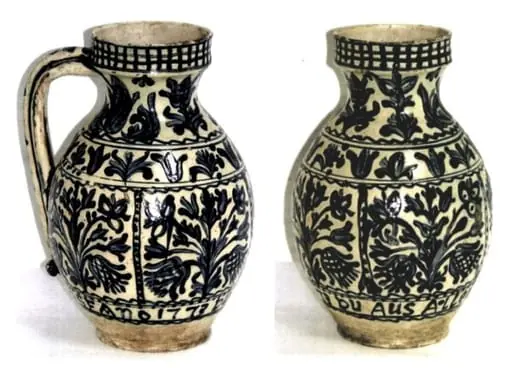
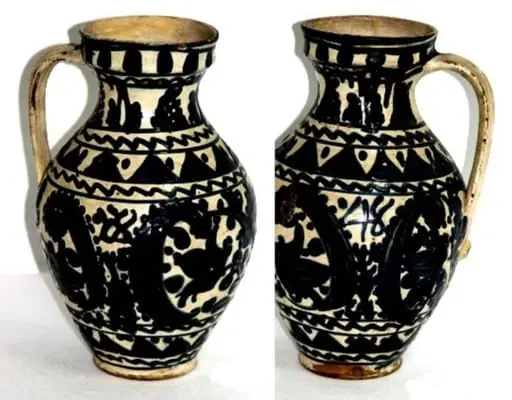
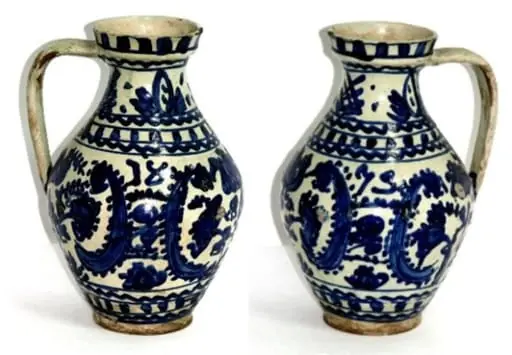
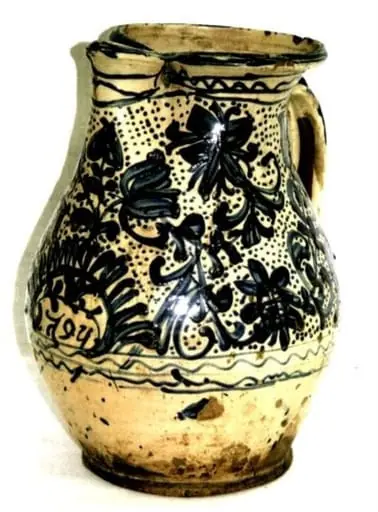
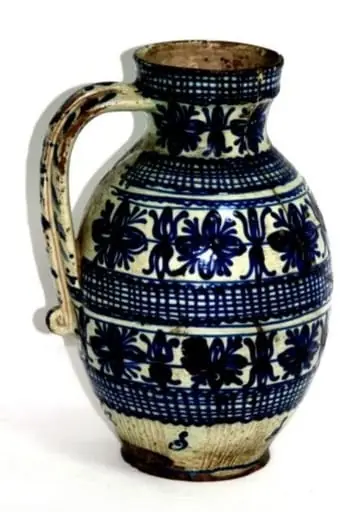
cană de vin is a photography by the Romanticist artist Unknown. It dates from 1830 and is held in the collection of the Romanian Peasant Museum. Two ceramic jugs, likely used for storing liquids, are depicted against a plain white background.
About this work
Overview
Two ceramic jugs, likely used for storing liquids, are depicted against a plain white background. Each features a black-and-white checkered band near the rim and a hand-painted floral motif along the body. A single handle extends from the left side of each vessel. The composition suggests a commercial photographic setting, emphasizing form and decoration without contextual elements.
Subject & Meaning
The jugs function as utilitarian objects elevated by decorative detail. The floral patterns and geometric border imply a blend of practicality and aesthetic intention, common in 19th-century domestic ware. While not tied to a specific cultural tradition, the designs reflect a broader European preference for nature-inspired ornamentation in household ceramics during the period.
Technique & Style
The vessels were likely wheel-thrown and glazed, with hand-painted designs applied beneath a transparent finish. The checkered band and floral motifs suggest a standardized yet artisanal approach—repeating patterns executed with consistent brushwork. The precision in line and symmetry indicates skilled craftsmanship, though the style lacks the individuality of fine art.
History & Provenance
No specific origin or maker is documented. The design elements align with mass-produced ceramics from 19th-century European workshops, particularly in regions like Bohemia or Staffordshire, where floral patterns were popular for everyday tableware. The clean presentation suggests modern documentation, not historical archival context.
Context
These jugs belong to a category of utilitarian ceramics produced during industrial expansion, when decorative arts became accessible beyond elite circles. Though Romanticism influenced broader artistic trends, these designs reflect commercial adaptation rather than direct artistic movement engagement—more about market appeal than philosophical expression.
Legacy
Such vessels represent the transition from handmade to industrially influenced domestic goods. Their survival in photographic form highlights their role as cultural artifacts of everyday life, preserved not for museum display but as evidence of evolving consumer aesthetics in the 19th and early 20th centuries.
Artist & collection

 Domestic Scene
 Giacomo and Cardinal Marco, investing Andrea, Abbot of San Zeno, with his Benefice
 The Nymph of Fontainebleau
 Portrait of a Woman
 Madonna and Child with Saints in the Enclosed Garden
 Venus and Minerva
 Family Group of Four on Sofa
 Wall painting from Room H of the Villa of P. Fannius Synistor at Boscoreale