Artwork
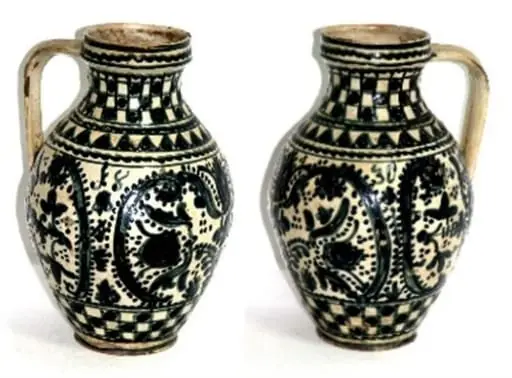
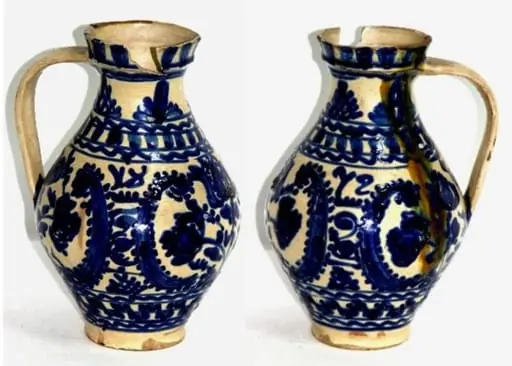
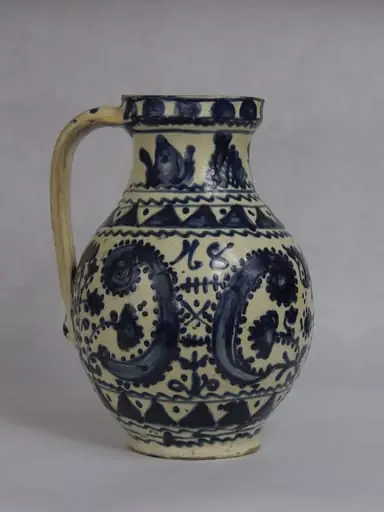
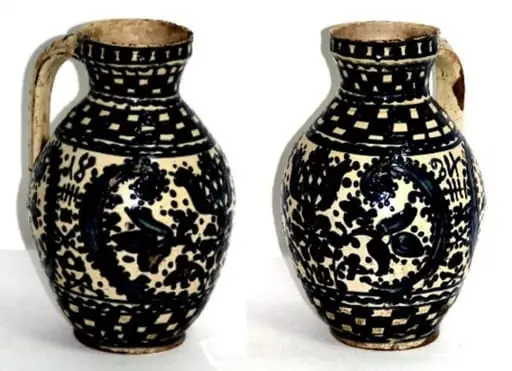
cană de vin
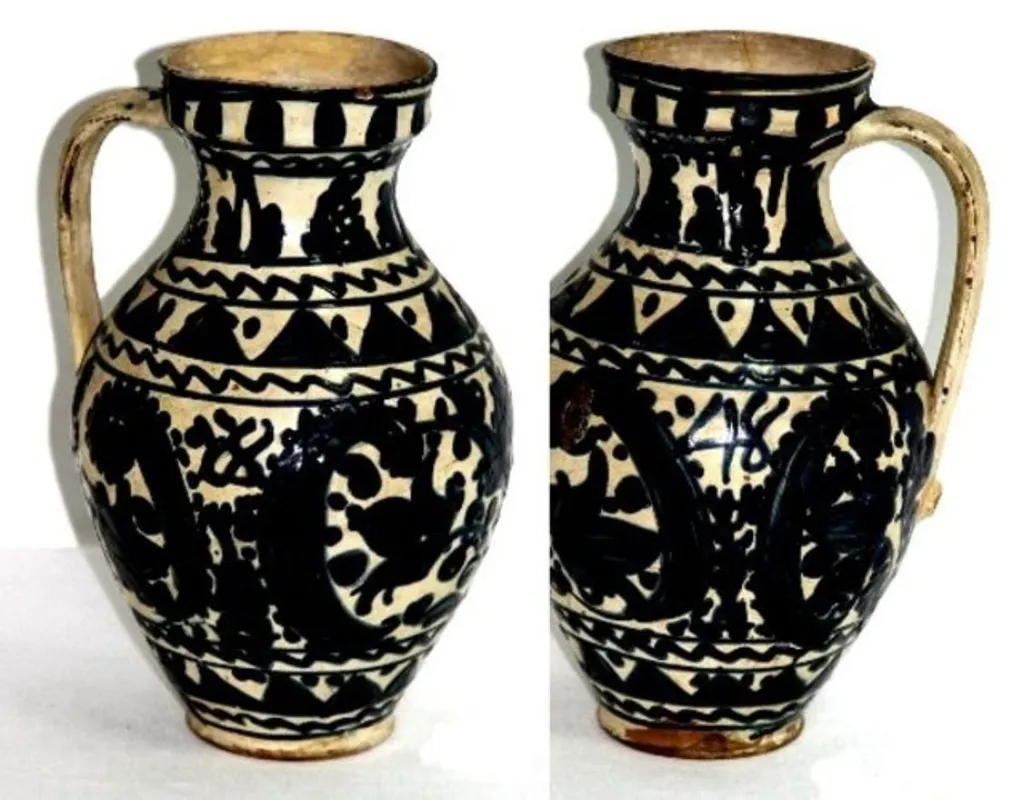
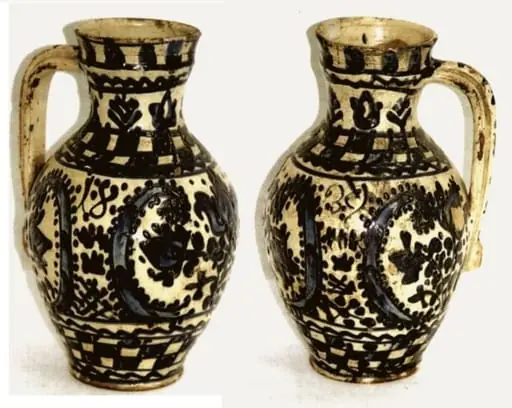
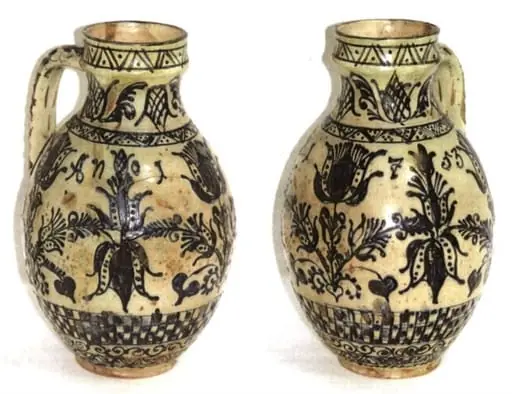
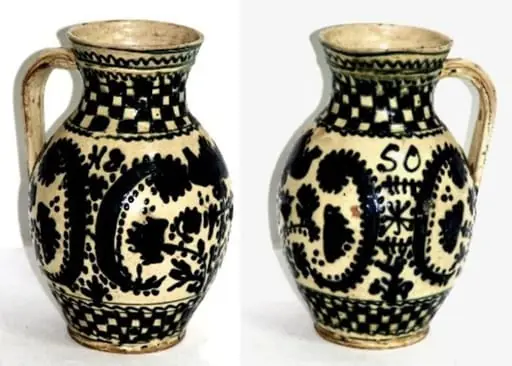
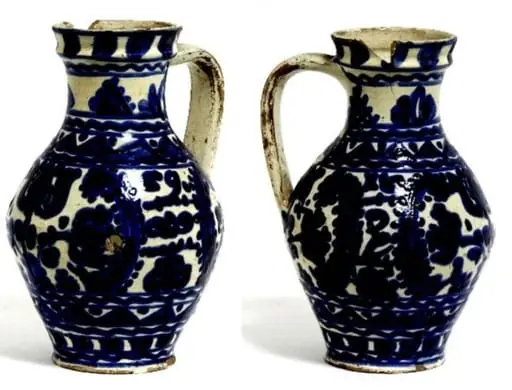
cană de vin is a photography by the Romanticist artist Unknown. It dates from 1848 and is held in the collection of the Romanian Peasant Museum.
About this work
Overview
The design blends organic motifs with structured geometry, suggesting a deliberate interplay between natural forms and abstract order.
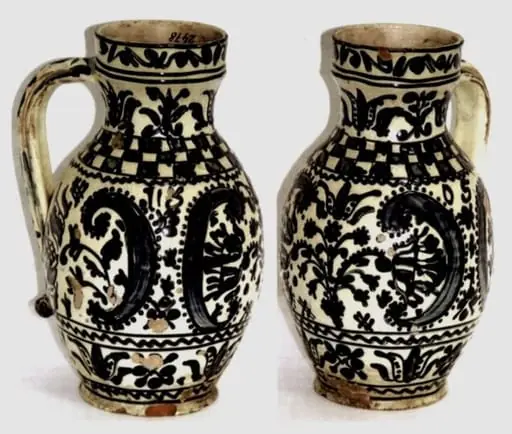
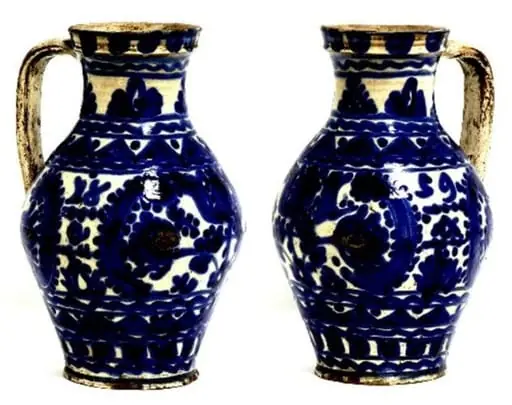
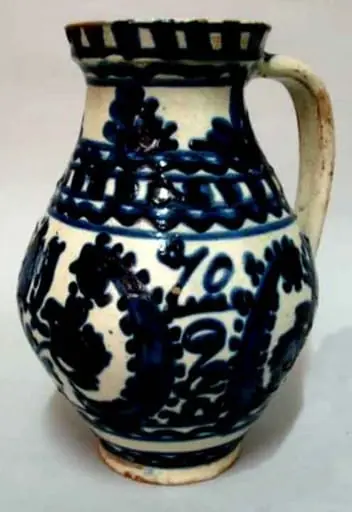
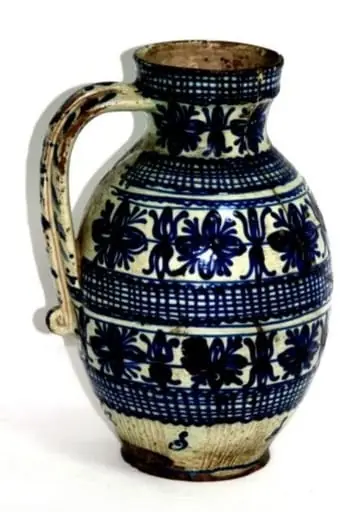
This ceramic vessel, known as a cană de vin, is a functional jug crafted for holding wine. Its form features two handles and a simple, unadorned rim, with a base showing signs of use. Decorative elements in white and cream contrast against a dark clay body, arranged in horizontal bands that encircle the surface. The design blends organic motifs with structured geometry, suggesting a deliberate interplay between natural forms and abstract order.
Subject & Meaning
The decoration combines stylized leaves and swirling lines with geometric shapes such as triangles and zigzags. These patterns may reflect a symbolic connection between the natural world and mathematical harmony, common in folk traditions where utility and ornamentation coexist. The transformation of botanical forms into angular motifs implies a cultural interpretation of nature through disciplined, repetitive design rather than literal representation.
Technique & Style
The vessel was hand-thrown and painted with slip decoration before firing, producing a durable, matte finish. The precision of the bands and the consistency of the motifs indicate skilled craftsmanship, likely from a regional workshop. The flat, even application of color and sharp delineation of patterns suggest the use of stencils or controlled brushwork, prioritizing clarity over expressive brushstrokes.
History & Provenance
Though exact origins are undocumented, the style aligns with late 19th- to early 20th-century Eastern European ceramic traditions, particularly in rural areas where pottery served both daily and ceremonial purposes. The wear on the base implies prolonged use, and the decorative scheme resembles patterns found in folk ceramics from regions such as Transylvania or Moldavia, where such vessels were commonly produced for domestic use.
Context
This piece reflects a broader European interest in vernacular craft during the Romantic era, when artisans and intellectuals sought value in handmade objects that embodied local identity. While not created as fine art, its integration of nature and geometry resonated with contemporary ideals that elevated folk aesthetics as authentic expressions of cultural heritage, distinct from industrial mass production.
Legacy
As a surviving example of utilitarian ceramics, the cană de vin contributes to the study of non-elite material culture. Its preservation in photographic form highlights how everyday objects, once common in households, now serve as historical artifacts. The design’s balance of simplicity and symbolism continues to inform contemporary interpretations of traditional craft in museum and educational settings.
Artist & collection

 Domestic Scene
 Giacomo and Cardinal Marco, investing Andrea, Abbot of San Zeno, with his Benefice
 The Nymph of Fontainebleau
 Portrait of a Woman
 Madonna and Child with Saints in the Enclosed Garden
 Venus and Minerva
 Family Group of Four on Sofa
 Wall painting from Room H of the Villa of P. Fannius Synistor at Boscoreale