Artwork
cană de vin
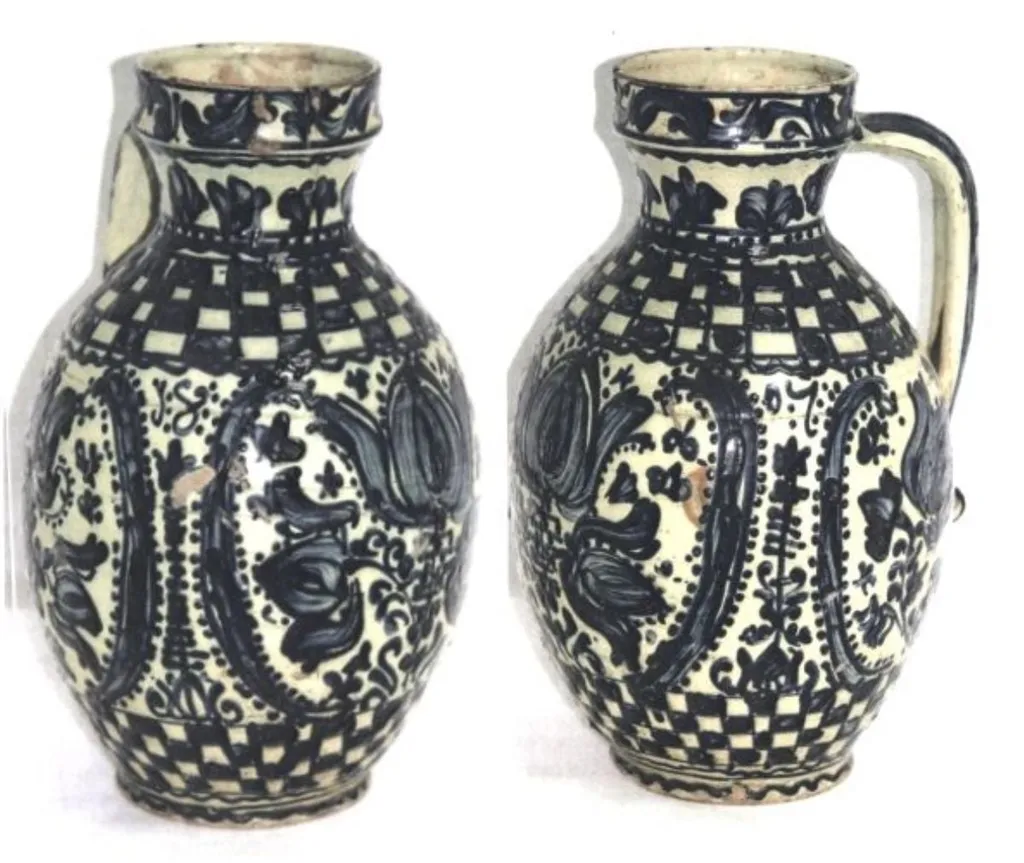
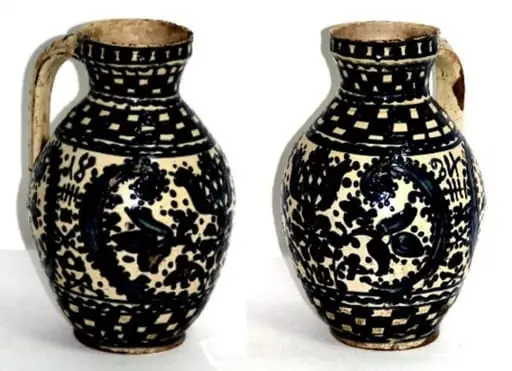
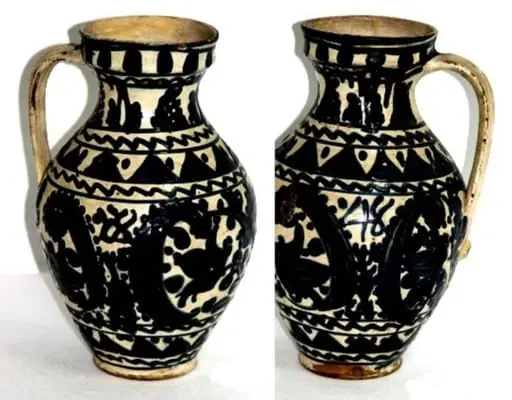
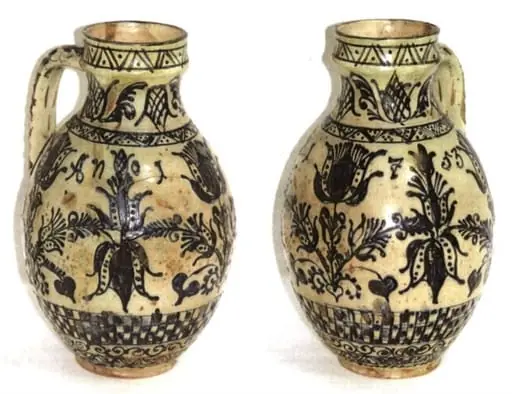
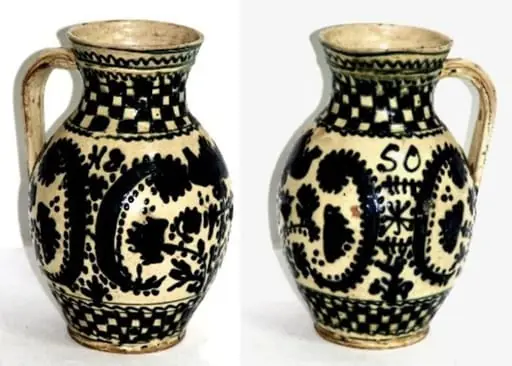
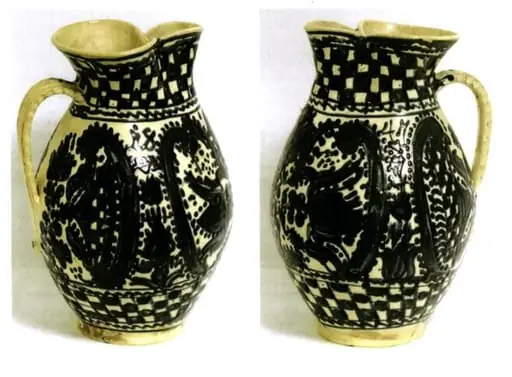
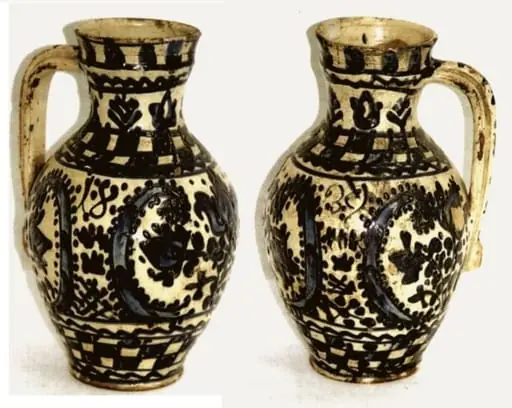
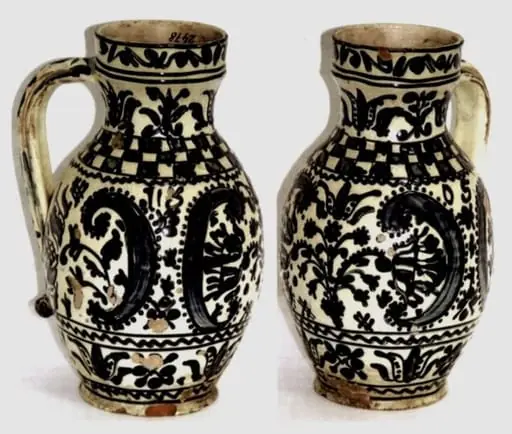
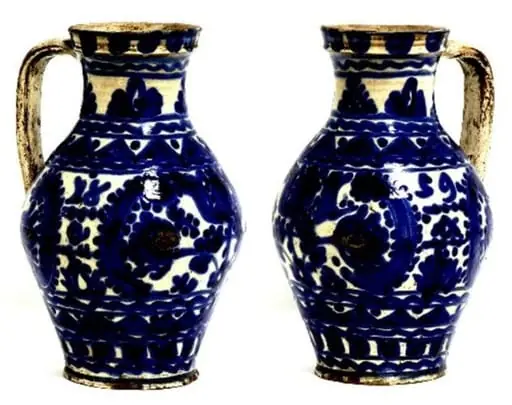
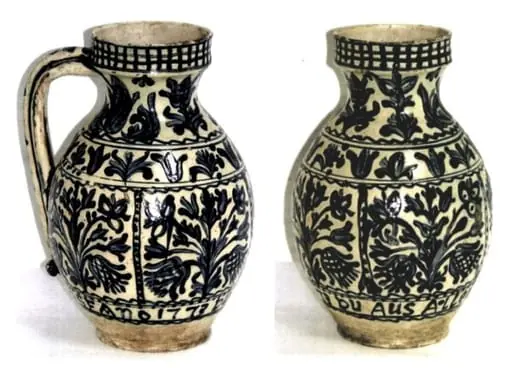
cană de vin is a photography by the Romanticist artist Unknown. It dates from 1807 and is held in the collection of the Romanian Peasant Museum. The work presents a pair of ceramic vessels, each fashioned from a light‑colored body and adorned with stark black decoration.
About this work
If you're interested in learning more about the style and techniques used to create these jugs, you might want to look into the Romanticism movement.
This image shows two antique ceramic jugs with intricate designs. The jugs are white with black patterns, featuring leaves, flowers, and checkered shapes. They have handles on the right side and are placed against a plain background.
The jugs seem to be from a similar time period, possibly the early 19th century, given their style and craftsmanship. They might have been used for serving wine or other beverages.
If you're interested in learning more about the style and techniques used to create these jugs, you might want to look into the Romanticism movement.
Overview
The work presents a pair of ceramic vessels, each fashioned from a light‑colored body and adorned with stark black decoration. The composition isolates the objects against an unadorned backdrop, allowing the intricate surface motifs to dominate the viewer’s attention.
Subject & Meaning
Both containers display a repeating program of vegetal and floral elements combined with geometric checkerboard patterns. The motifs, typical of decorative arts that celebrated nature’s forms, suggest a functional purpose—most likely the serving of wine or similar drinks—while also reflecting an aesthetic concern for harmonious ornamentation.
Technique & Style
The jugs are executed in a slip‑painted ceramic technique, where a white ground is overlaid with black pigment before firing. The precision of the linear designs and the balanced distribution of foliage indicate a high level of craftsmanship associated with early‑nineteenth‑century decorative pottery.
History & Provenance
Based on stylistic analysis, the vessels are attributed to the early 1800s, a period when European ceramic workshops produced richly patterned tableware for domestic use. Their preservation in a neutral setting suggests they have been removed from their original functional context, perhaps entering a private collection before being documented.
Context
The decorative vocabulary aligns with Romantic‑era tastes, which favored natural motifs and expressive surface treatment. Such designs were common in both utilitarian and ornamental objects, reflecting a broader cultural interest in the picturesque and the emotive qualities of nature.
Legacy
While not linked to a specific maker, the jugs exemplify the intersection of utility and artistic expression that characterizes early nineteenth‑century ceramic production, offering insight into the material culture and aesthetic preferences of the period.
Artist & collection

 Domestic Scene
 Giacomo and Cardinal Marco, investing Andrea, Abbot of San Zeno, with his Benefice
 The Nymph of Fontainebleau
 Portrait of a Woman
 Madonna and Child with Saints in the Enclosed Garden
 Venus and Minerva
 Family Group of Four on Sofa
 Wall painting from Room H of the Villa of P. Fannius Synistor at Boscoreale