Artwork
Canceauă
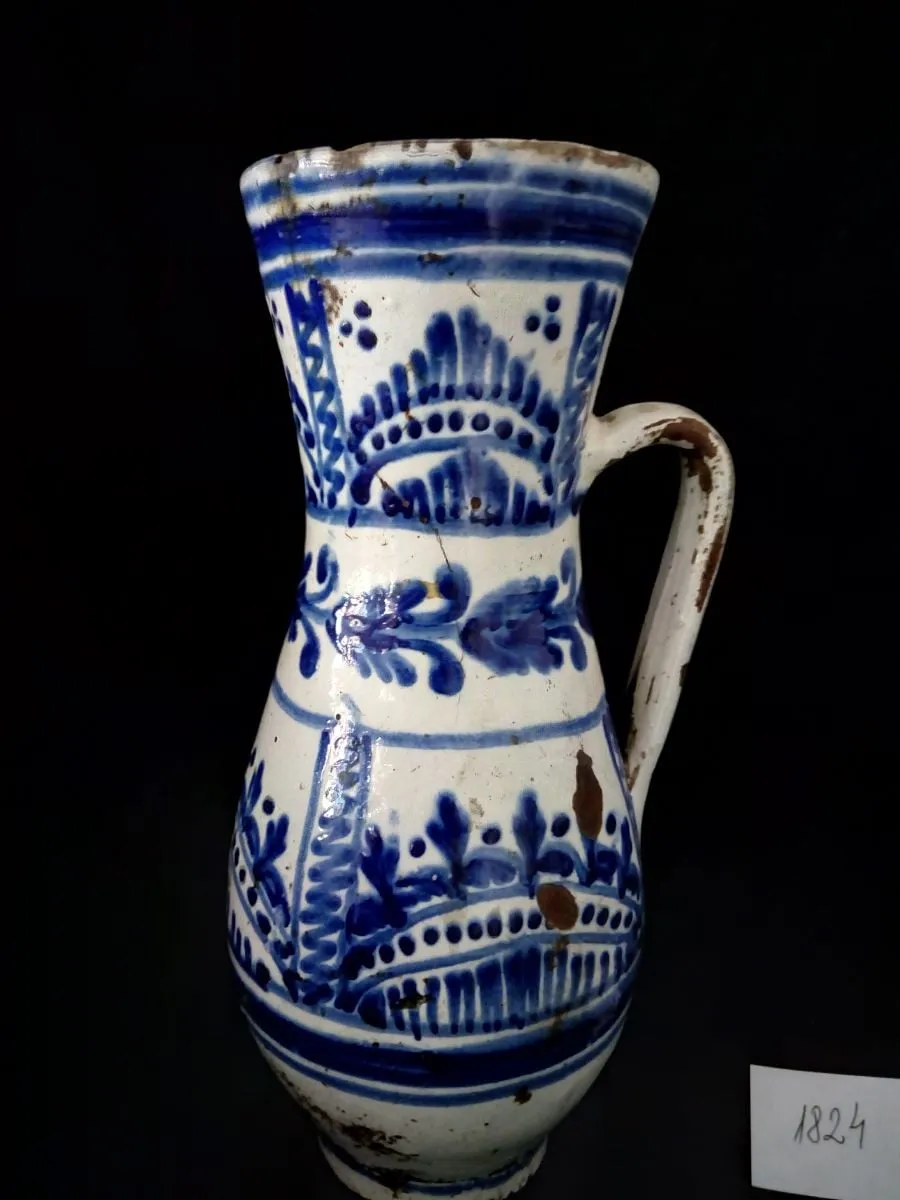
Canceauă is a photography by Unknown. It dates from 1850 and is held in the collection of the Bistrita-Năsăud Museum Complex. A white ceramic plate adorned with hand-drawn black motifs, this piece reflects regional decorative traditions from rural communities.
About this work
Overview
A white ceramic plate adorned with hand-drawn black motifs, this piece reflects regional decorative traditions from rural communities. Its design features interwoven geometric forms and stylized plant elements, arranged in a rhythmic, non-repeating pattern. The contrast between the pale clay and dark pigment enhances visual clarity, suggesting functional use alongside cultural expression.
Subject & Meaning
The patterns are not arbitrary ornamentation but derive from inherited folk motifs, possibly linked to ancestral symbols of protection, fertility, or seasonal cycles. Their repetition and flow suggest a visual language passed through generations, rooted in local belief systems rather than commercial aesthetics.
Technique & Style
The design was applied freehand, with no use of stencils or mechanical printing. Brushwork shows slight irregularities, indicating direct artisanal execution. The lines mimic natural growth—vines, branches, and tessellated shapes—blending organic and structured forms in a way typical of vernacular ceramic traditions.
History & Provenance
This plate likely originated in a household or small workshop where ceramic production was part of domestic life. Its survival suggests it was valued enough to be preserved, possibly as a family heirloom or ceremonial object. It entered the Museum of Ethnography through documented local collection efforts in the 20th century.
Context
Similar ceramics appear across Eastern European villages, where pottery served both daily and ritual purposes. This piece aligns with regional practices where household objects carried symbolic weight, distinguishing them from mass-produced wares. Its presence in an ethnographic collection underscores its role as cultural artifact, not mere commodity.
Legacy
The plate exemplifies how traditional craft persisted despite industrialization, preserved through informal transmission among makers. Today, it serves as a reference for scholars studying continuity in folk art, offering insight into how communities maintained identity through material culture.
Artist & collection
 Domestic Scene
 Giacomo and Cardinal Marco, investing Andrea, Abbot of San Zeno, with his Benefice
 The Nymph of Fontainebleau
 Portrait of a Woman
 Madonna and Child with Saints in the Enclosed Garden
 Venus and Minerva
 Family Group of Four on Sofa
 Wall painting from Room H of the Villa of P. Fannius Synistor at Boscoreale
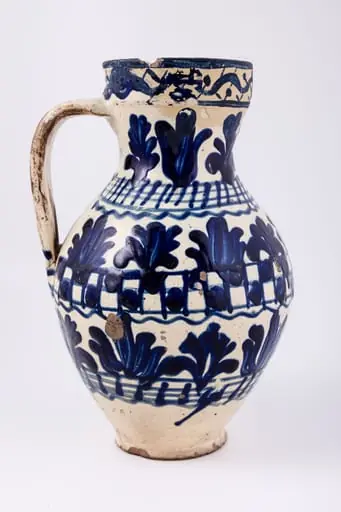 Cană piriformă prevăzută cu o toartă dreaptă și lată, gura rotundă. Suprafața decorativă a vasului este împărțită în șapte registre decorative: cel din partea superioară, pe buza vasului este dispus orizontal, iar celelalte șase, dispuse vertical. Primul registru, așezat pe marginea dreaptă a cănii redă o linie vălurită intercalată de puncte. Registrul al doilea, al patrulea și al șaselea prezintă motive fitomorfe și florale, brăduți intercalați de lalele înflorite stilizate. Registrul al treilea, dispus pe gâtul cănii și al șaptelea, dispus la bază, prezintă linii circulare orizontale intersectate de linii verticale. Registrul al patrulea prezintă tabla de șah. Toarta este pictată cu pensula. Cromatica: alb, albastru-cobalt.
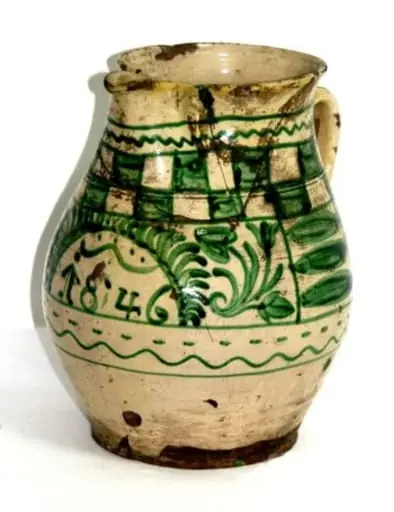
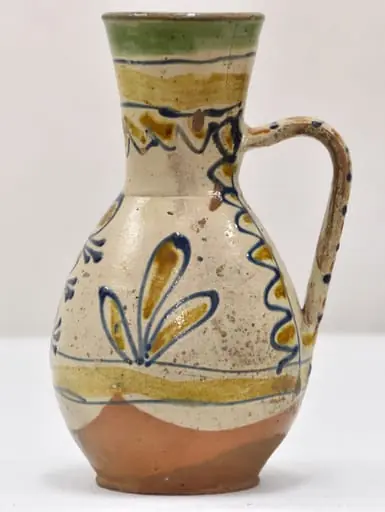 Piesa are o formă relativ cilindrică, fiind îngustată în jumătatea superioară și lărgită (bombată) în cea inferioară. Este dotată cu o toartă laterală. Suprafața exterioară este pictată (decorată), conținând motive decorative geometrice și vegetale: pete de culoare și linii orizontale pe toartă, cercuri de jur-împrejur atât în partea superioară cât și în partea inferioară, semicercuri separate prin câte câte trei liniuțe ramificate - de o parte și de cealaltă a unei linii verticale, două grupuri a câte trei frunze fiecare și linii șerpuite alături de câte o linie verticală (două). Partea de jos a obiectului nu este decorată având culoarea cărămizie. Culorile decorului sunt: alb-crem (fondul), albastru, verde și galben-ocru.
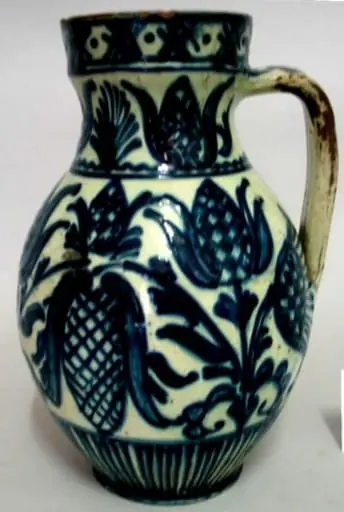
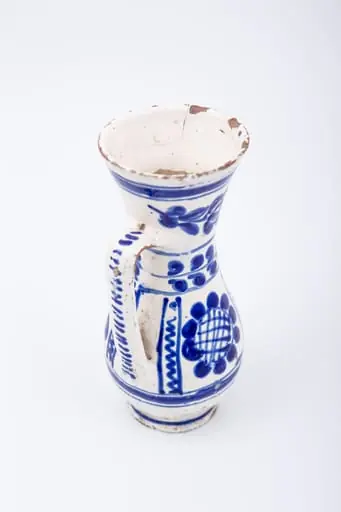 Cănceu piriform prevăzut cu o toartă, gât alungit și puternic evazat, toarta montată de la gât la diametrul maxim al vasului. Suprafața vasului este împărțită în trei registre. Primul registru dispus sub buza vasului prezintă o ghirlandă de rodii cu frunze stilizate dispusă orizontal, al doilea registru redă o bandă decorată cu spice de grâu dispuse orizontal, iar al treilea registru, dispus pe pântecul vasului, prezintă patru floarea-soarelui stilizate, intercalate de benzi verticale realizate din trei linii: două subțiri și una vălurită. Compoziția decorativă este mărginită în partea superioară și inferioară de câte o bandă lată și linii subțiri, albastre. Cromatică:alb; albastru.
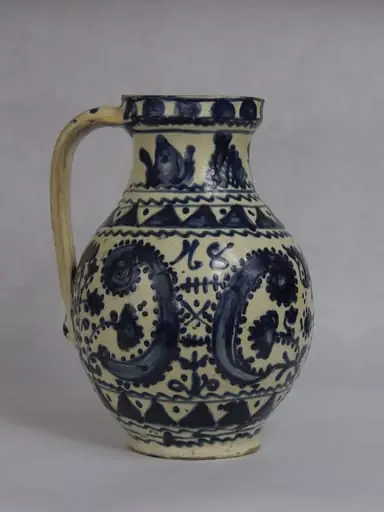
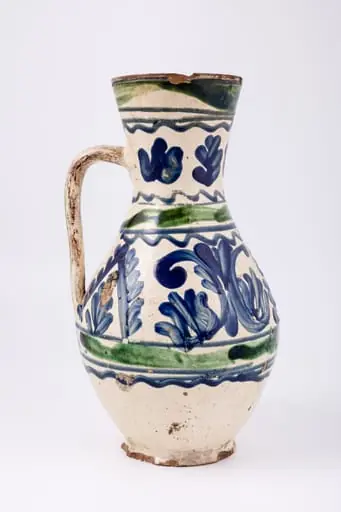 Cănceu piriform prevăzut cu o toartă, gât scurt și ușor evazat, corpul pântecos, toarta de la gât la diametrul maxim al vasului. Decorul este împărțit în două registre verticale separate printr-o bandă lată verde, mărginită de linii subțiri vălurite. Registrul superior este decorat cu motive florale și fitomorfe, câte o lalea înflorită intercalată de brăduți stilizați. Registrul inferior este decorat cu motive florale reprezentând stilizări ale pomului vieții alcătuit din lalele și triunghiuri decorate cu motivul bradului stilizat.
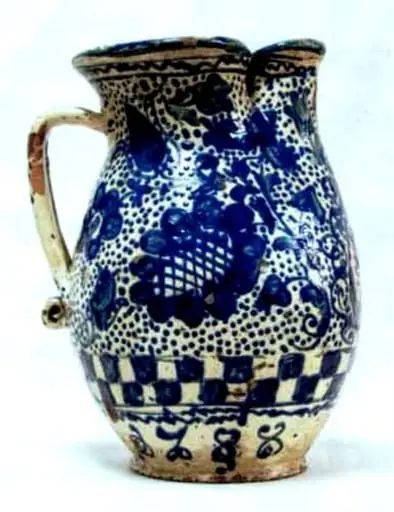 cană de vin
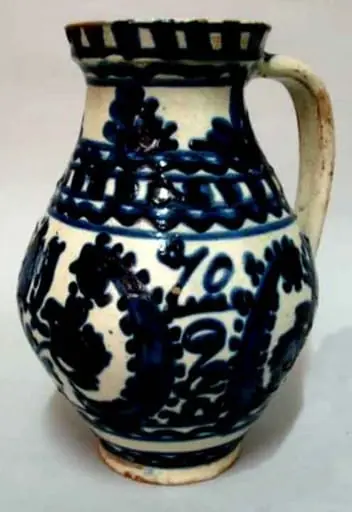 cană de vin
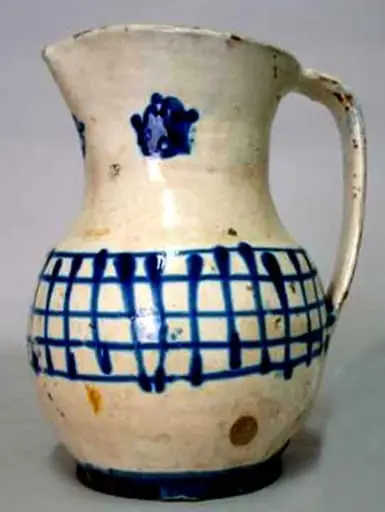 cană de lapte
 cană de vin
 cană de vin
 cană
cană