Artwork
Canton Waterfront (The Hongs at Canton)
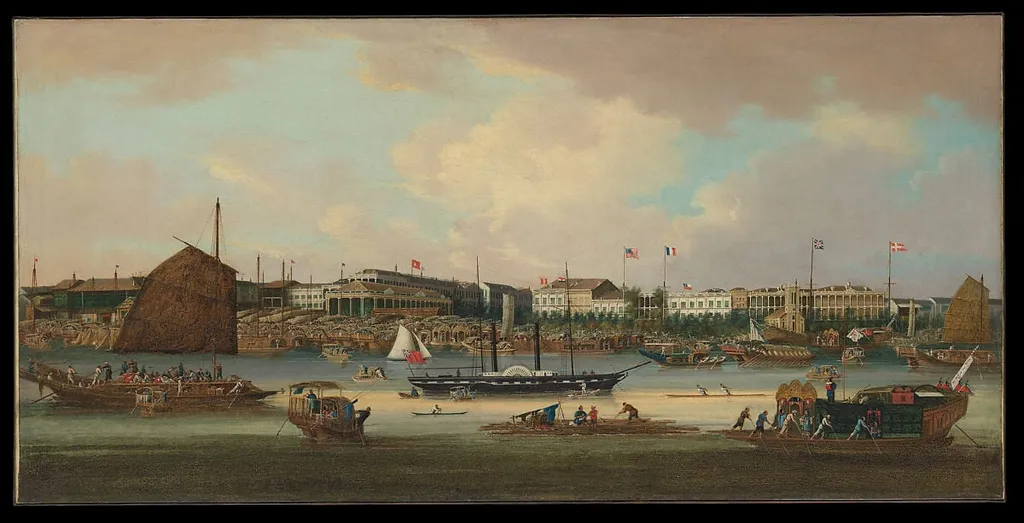
Canton Waterfront (The Hongs at Canton) is an oil painting. It dates from 1852 and is held in the collection of the Metropolitan Museum of Art.
About this work
Overview
This oil on canvas, titled Canton Waterfront (The Hongs at Canton), depicts a bustling port scene. The painting captures the vibrant activity of a major trading hub, characterized by numerous vessels and figures engaged in commerce. A hazy sky hangs over low-lying warehouses, while tall ships dominate the harbor, reflecting the extensive maritime trade of the era.
Subject & Meaning
Numerous tall ships, likely Western vessels, are moored alongside smaller boats, while tiny figures diligently load tea chests.
The artwork offers a detailed glimpse into the commercial heart of Canton (Guangzhou) during the 1840s. It showcases the "hongs," or foreign trading factories, as low warehouses lining the waterfront. Numerous tall ships, likely Western vessels, are moored alongside smaller boats, while tiny figures diligently load tea chests. This imagery underscores the intensive global trade that flowed through this crucial Chinese port during the 19th century.
History & Provenance
This painting is attributed to an anonymous American sailor or trader who visited China around the 1840s. Unlike works by established artists, it lacks a prominent signature, suggesting it was created by an individual with direct experience of the scene rather than a professional painter. Its inclusion in the American Wing highlights its connection to American maritime and commercial history in Asia.
Technique & Style
The artist's approach emphasizes meticulous detail, particularly in rendering the complex elements of a busy harbor. Ropes, flags, and the subtle play of light on the water's surface are depicted with an authenticity that suggests firsthand observation. This precise, almost documentary style indicates the creator possessed an intimate familiarity with the port environment, likely gained through personal experience rather than artistic training.
Artist & collection