Artwork
Castron cu două toarte
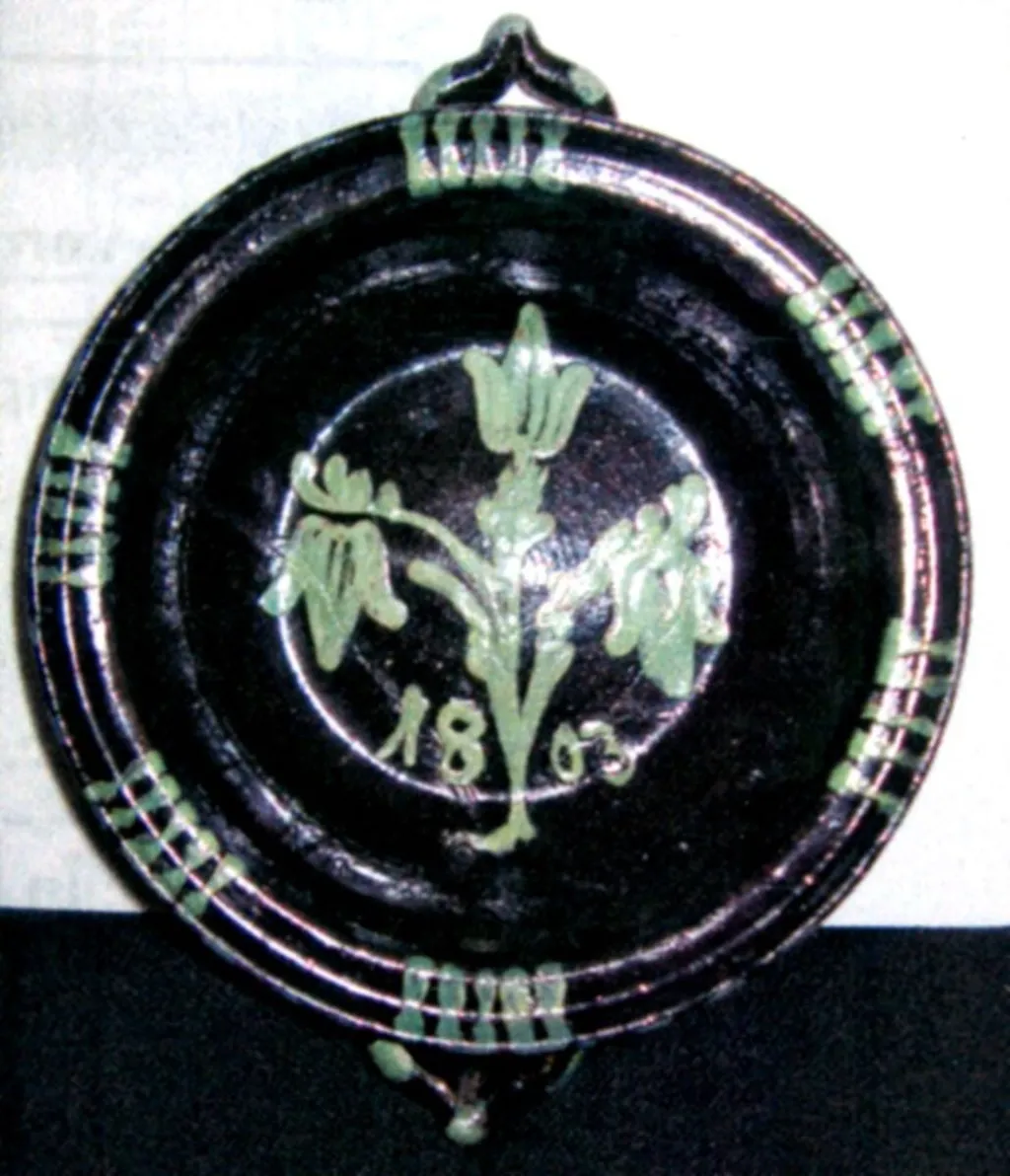
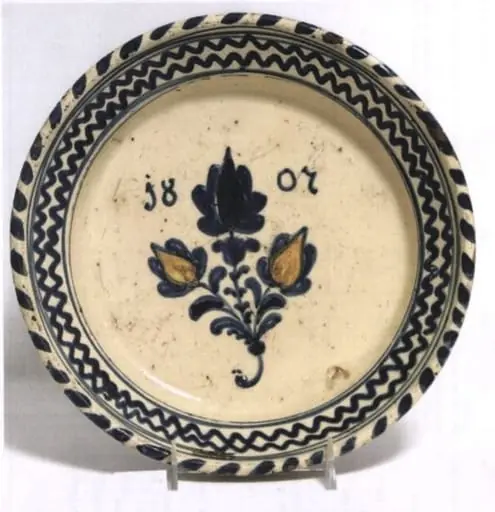
Castron cu două toarte is a photography by the Romanticist artist Unknown. It dates from 1803 and is held in the collection of the Colecție particulară - Sibiu.
About this work
In the center, there’s a painted green plant with two flowers and the year "1803" written below.
This is a round, dark plate with a simple design. In the center, there’s a painted green plant with two flowers and the year "1803" written below. The edges have a thin, decorative border with small green and white patterns.
The plate looks old and hand-painted, like something made for everyday use. The green paint stands out against the dark background, making the flowers and leaves pop.
If you like this style, look up Romanticism next.
Overview
Castron cu două toarte is a circular, hand-painted plate dated 1803, featuring a simple yet distinctive design on a dark background.
Subject & Meaning
The central motif depicts a green plant with two flowers, set against a dark plate. The subject is straightforward, suggesting a focus on naturalistic, everyday imagery, potentially reflective of early Romanticism's emphasis on nature.
Technique & Style
Characterized by hand-painted execution, the plate showcases a thin, decorative border with small green and white patterns. The contrasting green against the dark background creates visual prominence for the floral elements.
History & Provenance
Dated to 1803, the plate's origin and artist remain unspecified in the provided information, though its style and handmade nature imply a potentially European or European-influenced craftsmanship.
Context
The plate's style aligns with the burgeoning Romantic movement, which valued nature and handmade craftsmanship. Its simplicity also suggests it may have been intended for everyday use rather than as a luxury item.
Legacy
While specific influence or notable exhibitions are not detailed, the plate represents a humble example of early 19th-century ceramic art, potentially informing understanding of domestic aesthetics during the Romantic era.
Artist & collection
 Domestic Scene
 Giacomo and Cardinal Marco, investing Andrea, Abbot of San Zeno, with his Benefice
 The Nymph of Fontainebleau
 Portrait of a Woman
 Madonna and Child with Saints in the Enclosed Garden
 Venus and Minerva
 Family Group of Four on Sofa
 Wall painting from Room H of the Villa of P. Fannius Synistor at Boscoreale