Artwork
blid
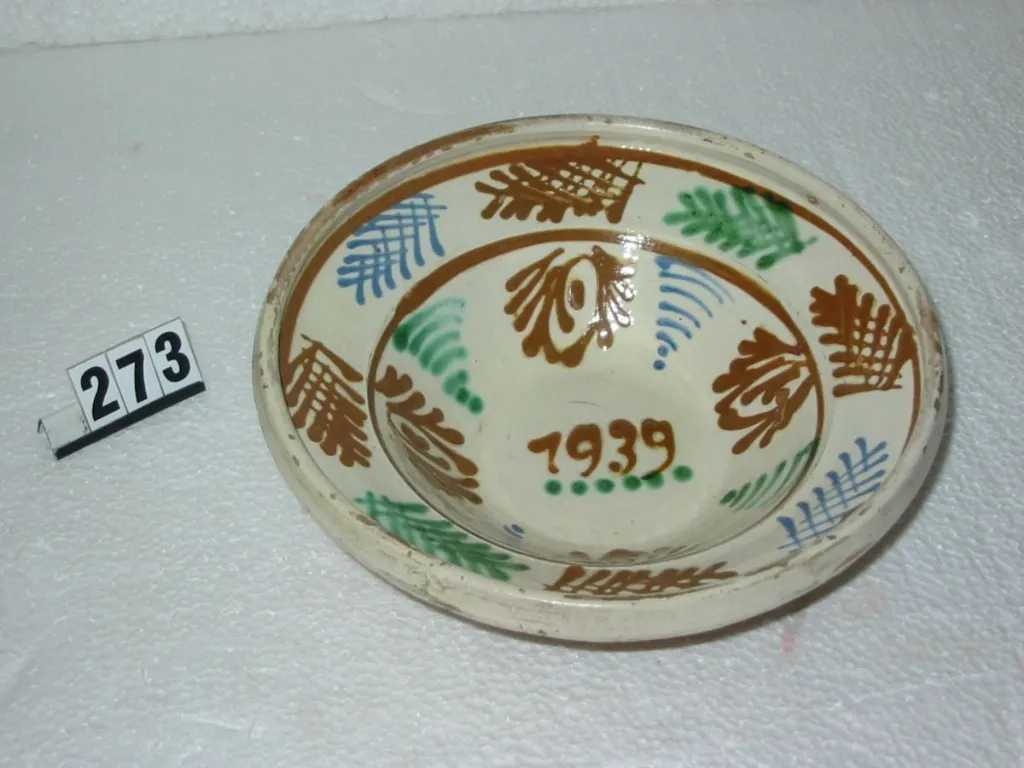
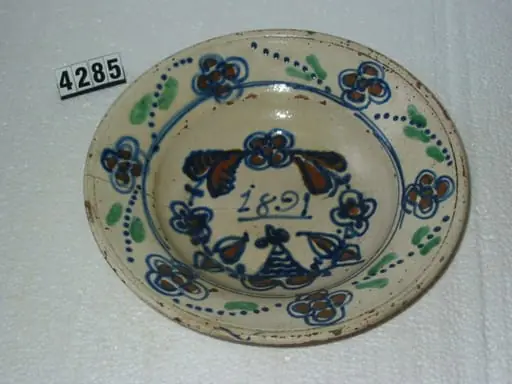
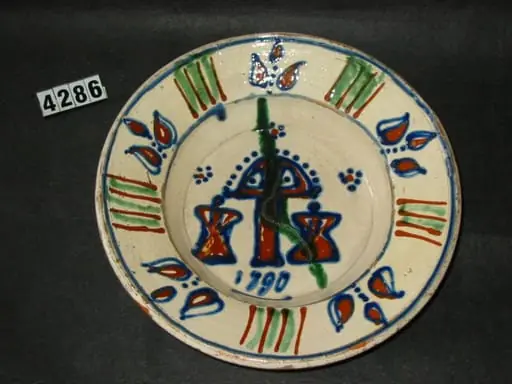
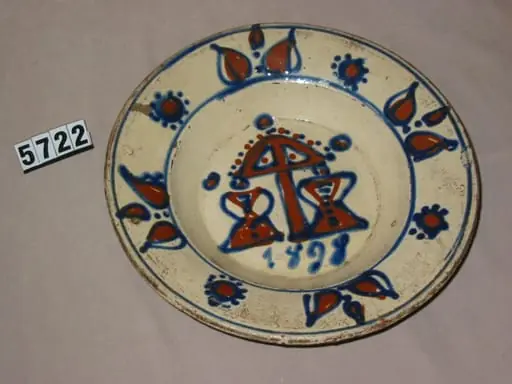
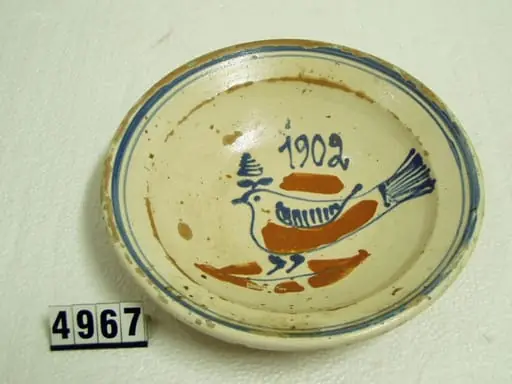
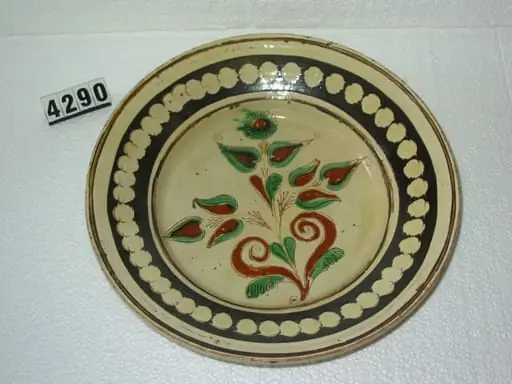
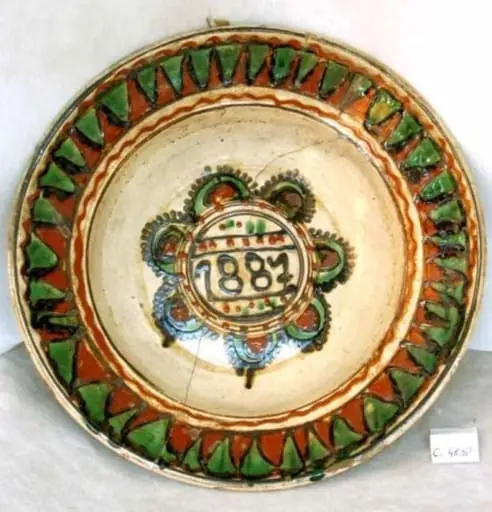
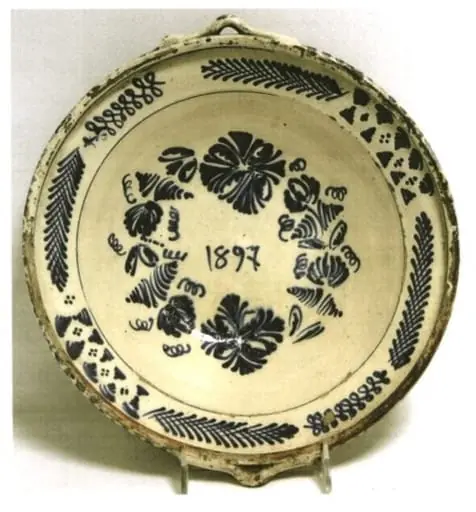
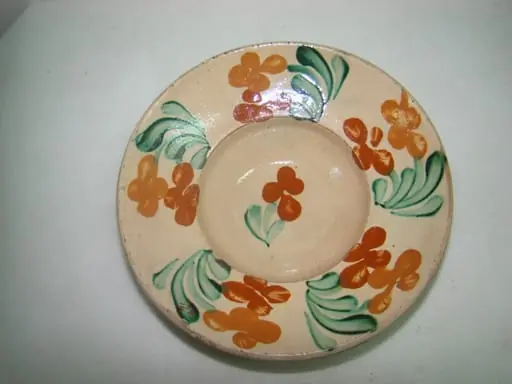
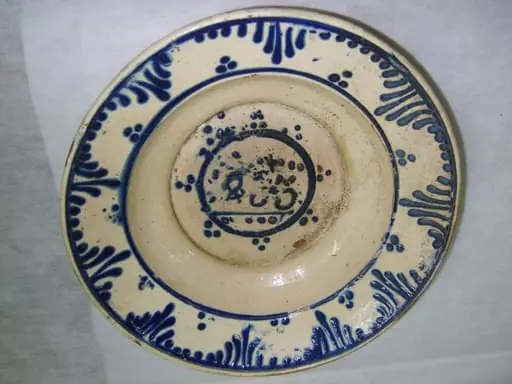
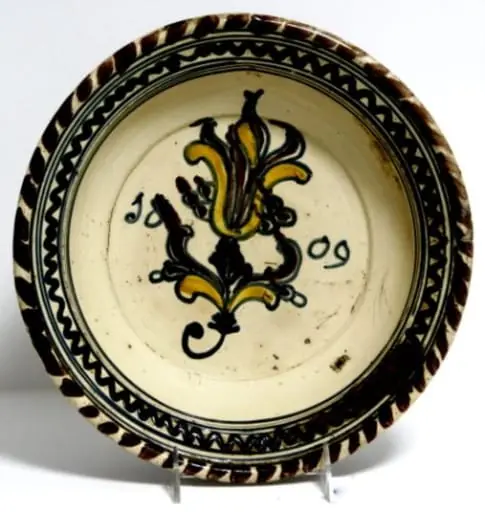
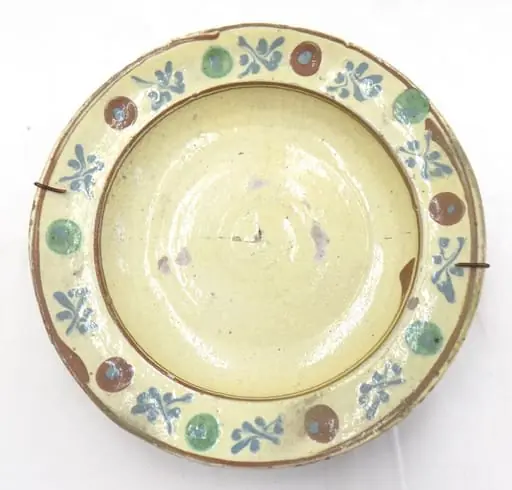
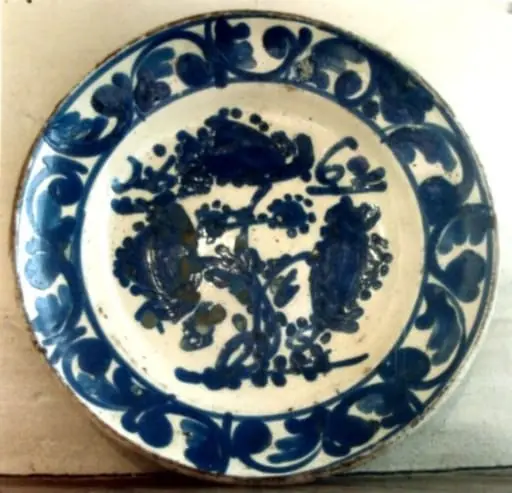
blid is a print by Unknown. It dates from 1939 and is held in the collection of the ASTRA National Museum Complex. This circular ceramic dish, dated 1939, features a minimalist white ground adorned with hand-painted motifs in blue, green, and brown.
About this work
Painted on it are blue, green, and brown designs: a few flowers, some wavy lines, and what looks like a small boat.
This is a round dish with a simple white background. Painted on it are blue, green, and brown designs: a few flowers, some wavy lines, and what looks like a small boat. The center has a circle with the year "1939" written in it.
The dish feels old, with a slightly worn edge and faded colors. The brushstrokes are rough but deliberate, giving it a handmade look.
If you like this kind of decorative dish, check out the Museum of Ethnography for more examples.
Overview
This circular ceramic dish, dated 1939, features a minimalist white ground adorned with hand-painted motifs in blue, green, and brown. Its edges show signs of wear, and the pigments have softened over time, suggesting regular use. The brushwork is uneven yet purposeful, indicating a non-industrial, artisanal approach. The central inscription marks the year of creation, anchoring the object in a specific historical moment.
Subject & Meaning
Decorative elements include abstracted floral forms, undulating lines, and a small vessel that may represent a boat. These symbols lack clear narrative context but evoke natural and aquatic themes common in folk traditions. The absence of figural detail suggests a focus on rhythm and pattern rather than storytelling. The dish likely served utilitarian or ceremonial domestic purposes, its imagery reflecting local aesthetic sensibilities.
Technique & Style
The dish was painted with simple, unrefined brushstrokes using limited pigments, applied directly onto a glazed ceramic surface. The colors, though faded, retain a tactile quality, with visible irregularities in line and form. The style resists precision, favoring spontaneity and repetition. This approach aligns with regional craft practices where function and personal expression outweigh formal polish.
History & Provenance
Created in 1939, the object’s origin is undocumented beyond its visual language and material. Its wear patterns imply domestic use over an extended period. No known artist or workshop is associated with it. Its survival suggests it was valued enough to be preserved, though not formally collected until later. It now resides in a context that treats it as an example of vernacular material culture.
Context
This dish belongs to a broader tradition of household ceramics produced outside formal art institutions, often in rural or marginalized communities. During the late 1930s, such objects were common in homes where mass-produced goods were inaccessible or undesirable. Its motifs echo folk designs found across Europe and beyond, reflecting shared visual vocabularies rooted in nature and daily life.
Legacy
Though unattributed and unsigned, the dish contributes to the understanding of everyday artistic practice in the early 20th century. It is now preserved as evidence of non-elite creativity, offering insight into how ordinary people engaged with decoration. Institutions like the Museum of Ethnography collect similar items to document cultural expression beyond canonical art history.
Artist & collection

 Domestic Scene
 Giacomo and Cardinal Marco, investing Andrea, Abbot of San Zeno, with his Benefice
 The Nymph of Fontainebleau
 Portrait of a Woman
 Madonna and Child with Saints in the Enclosed Garden
 Venus and Minerva
 Family Group of Four on Sofa
 Wall painting from Room H of the Villa of P. Fannius Synistor at Boscoreale