Artwork
Cei Trei Sfinți
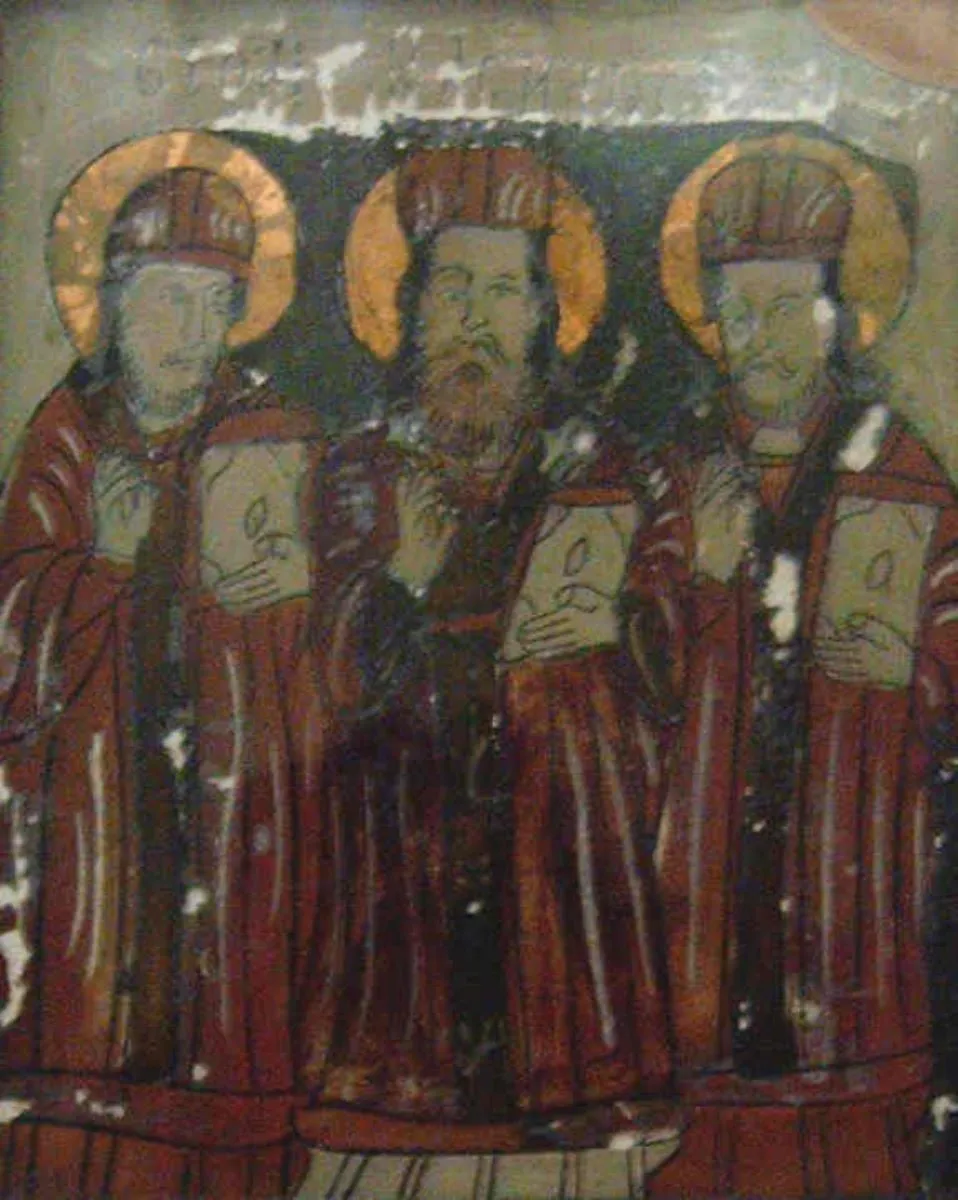
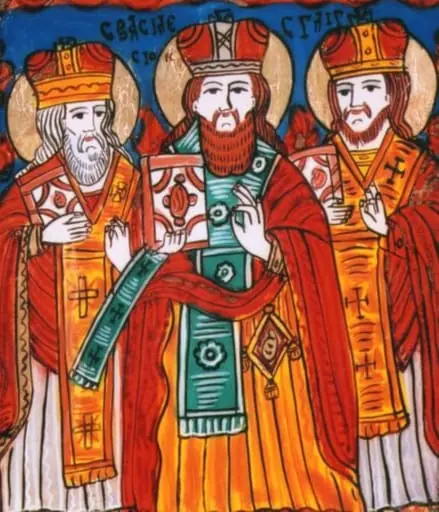
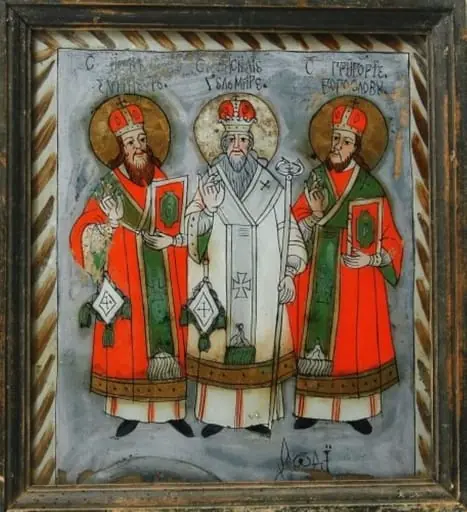
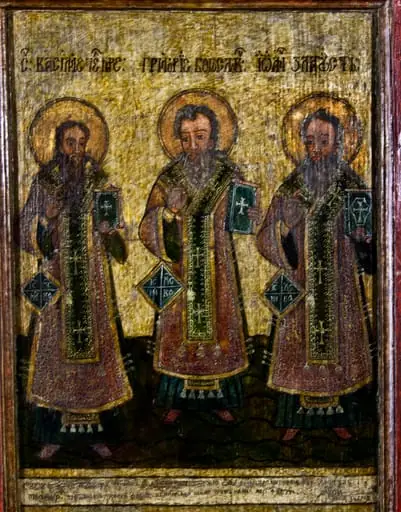
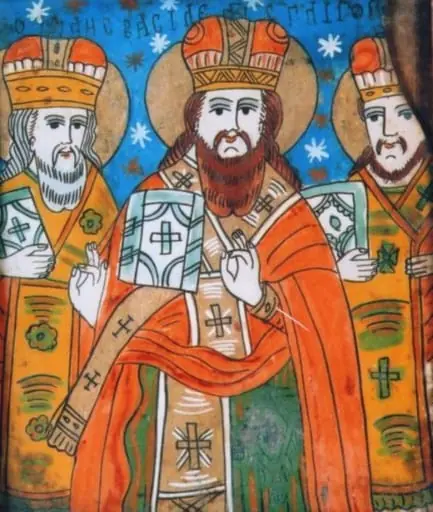
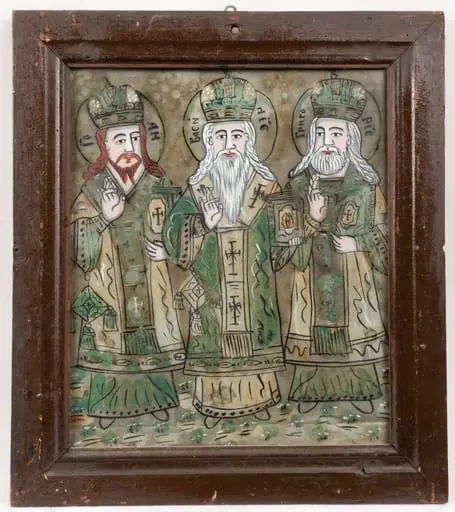
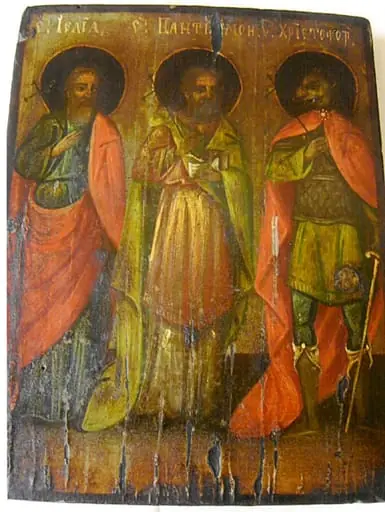
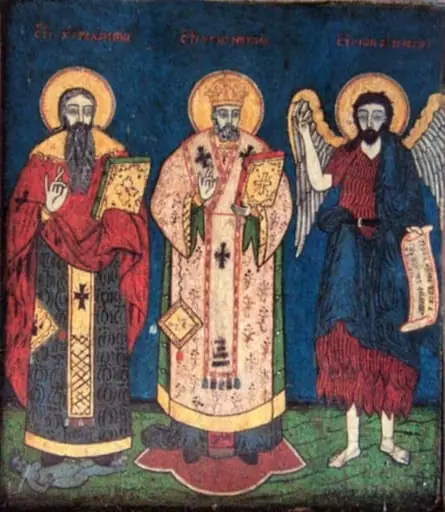
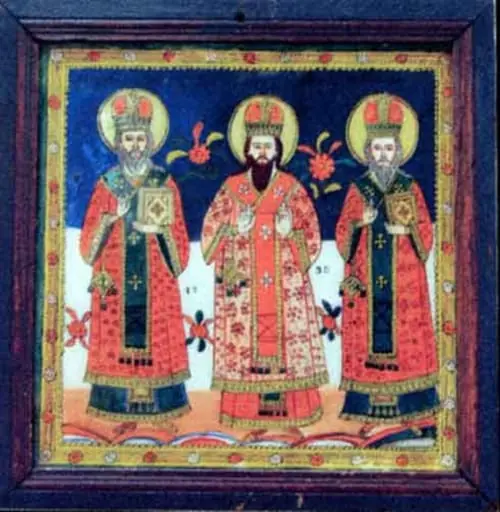
Cei Trei Sfinți is a drawing by Unknown. It dates from 1850 and is held in the collection of the Maramureș Village Museum. This painting presents three holy figures standing in solemn alignment, each marked by a halo and dressed in red robes with white detailing.
About this work
Overview
This painting presents three holy figures standing in solemn alignment, each marked by a halo and dressed in red robes with white detailing.
This painting presents three holy figures standing in solemn alignment, each marked by a halo and dressed in red robes with white detailing. Their hands are clasped before them, suggesting prayer or inner stillness. The muted greenish-gray background recedes quietly, allowing the figures to dominate the composition. The tone is contemplative, avoiding dramatic gesture in favor of quiet dignity and balanced form.
Subject & Meaning
The three figures, identified by their halos and solemn posture, represent saints or holy men. Their identical attire and unified stance imply a shared spiritual purpose, possibly symbolizing unity in devotion. The absence of narrative action or symbolic objects shifts focus to their inner state, inviting quiet reverence rather than storytelling. Their stillness conveys a sense of enduring faith beyond earthly concerns.
Technique & Style
The robes are rendered with careful attention to fold and texture, suggesting volume without heavy modeling. The use of cross-hatching likely defines shadows and fabric depth, contributing to a restrained realism. Color is limited but deliberate: the reds stand out against the neutral background, enhancing the figures' presence. Lines are clean and controlled, avoiding ornamentation in favor of clarity and spiritual focus.
History & Provenance
The painting’s origin is not documented in the provided details, but its style aligns with devotional icons from Eastern European traditions, possibly 18th or 19th century. Its simple composition and lack of elaborate setting suggest it was created for private or local church use rather than public display. No known collector or institution is recorded in the available information.
Context
This work emerges from a regional tradition of religious imagery that prioritized spiritual presence over theatricality. In communities where literacy was limited, such images served as focal points for prayer and meditation. The subdued palette and frontal arrangement reflect a broader aesthetic of humility and reverence, common in rural Orthodox Christian art of the period.
Legacy
Though not widely known outside its immediate cultural sphere, the painting exemplifies a quiet, enduring mode of sacred representation. Its emphasis on stillness and unity continues to resonate in devotional practices that value interiority over spectacle. It stands as a modest but deliberate expression of faith, preserved through its simplicity rather than its grandeur.
Artist & collection

 Domestic Scene
 Giacomo and Cardinal Marco, investing Andrea, Abbot of San Zeno, with his Benefice
 The Nymph of Fontainebleau
 Portrait of a Woman
 Madonna and Child with Saints in the Enclosed Garden
 Venus and Minerva
 Family Group of Four on Sofa
 Wall painting from Room H of the Villa of P. Fannius Synistor at Boscoreale