Artwork
Cenotaph of Mumtaz Mahal, Taj Mahal, Agra
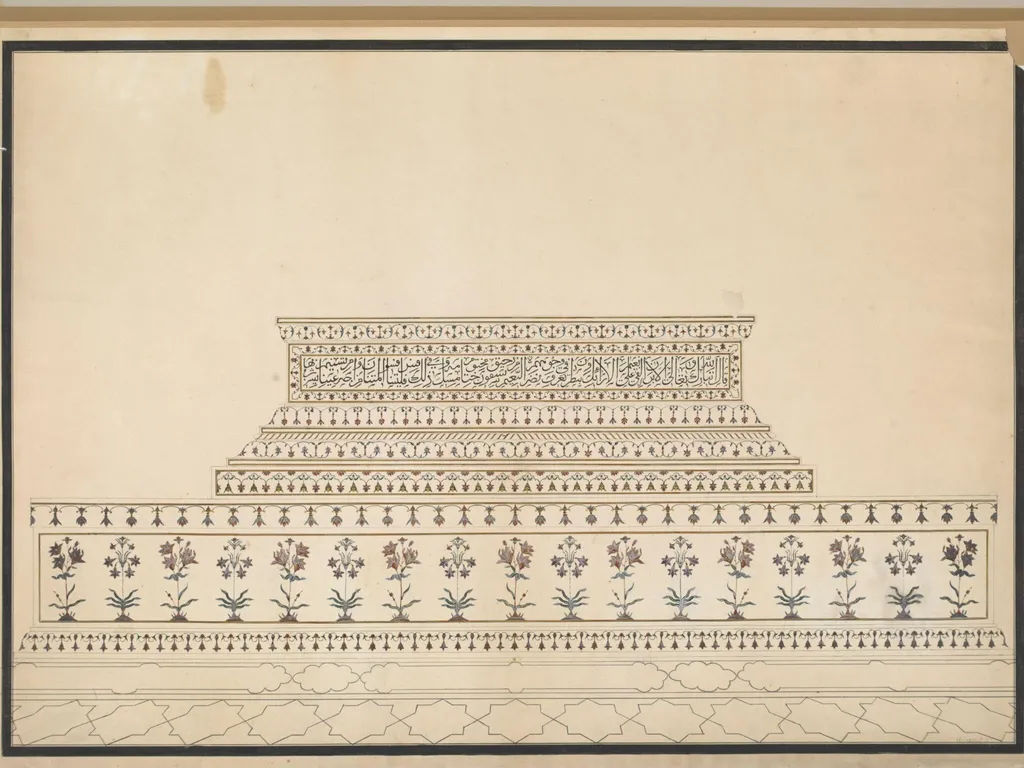
Cenotaph of Mumtaz Mahal, Taj Mahal, Agra is a paint painting by the Romanticist artist Unknown. It dates from 1820 and is held in the collection of the Victoria and Albert Museum. This painting depicts the cenotaph of Mumtaz Mahal within the Taj Mahal complex, rendered as a symbolic rather than literal representation.
About this work
Overview
This painting depicts the cenotaph of Mumtaz Mahal within the Taj Mahal complex, rendered as a symbolic rather than literal representation. Created as a standalone work on paper, it was acquired by a museum in 1896 from a private collector in London. Its provenance was confirmed through research conducted in 2023, establishing its documented history within Western collections.
Subject & Meaning
These elements together function as a visual elegy, referencing Islamic funerary traditions while emphasizing loss and remembrance through absence and ornament.
The composition centers on an empty upper field, evoking the absence of the actual tomb beneath the monument. Below, a narrow band of Arabic calligraphy—likely Quranic verses—frames a horizontal row of stylized flowers in red, blue, and green. These elements together function as a visual elegy, referencing Islamic funerary traditions while emphasizing loss and remembrance through absence and ornament.
Technique & Style
The painting employs fine linear precision, with black outlines defining floral motifs, swirling vines, and repetitive geometric patterns. Gold accents outline the calligraphic band, contrasting with the muted palette of the lower half. The upper void is left unadorned, a deliberate compositional choice that suspends visual expectation and directs attention to the symbolic weight of emptiness.
History & Provenance
The work entered a museum collection in 1896 after being held in a private London collection. Its origins prior to that remain undocumented, though its stylistic features suggest it was produced in the 19th century, possibly by an Indian artist working for a European patron. A 2023 research initiative verified its connection to the Taj Mahal and confirmed its authenticity as a representation of the cenotaph.
Context
Created during a period when European collectors sought Indian architectural subjects, this painting reflects a hybrid aesthetic—drawing from Mughal decorative traditions while conforming to Western tastes for exoticized memorials. It aligns with broader 19th-century interests in Orientalism, yet avoids overt romanticization by focusing on architectural symbolism rather than narrative drama.
Legacy
The painting contributes to the visual record of how the Taj Mahal was interpreted beyond its physical context. Its emphasis on absence and restrained ornamentation distinguishes it from more ornate contemporary depictions. As a documented artifact of cross-cultural collection practices, it remains a quiet testament to how monuments are reimagined through artistic mediation.
Artist & collection

 Domestic Scene
 Giacomo and Cardinal Marco, investing Andrea, Abbot of San Zeno, with his Benefice
 The Nymph of Fontainebleau
 Portrait of a Woman
 Madonna and Child with Saints in the Enclosed Garden
 Venus and Minerva
 Family Group of Four on Sofa
 Wall painting from Room H of the Villa of P. Fannius Synistor at Boscoreale
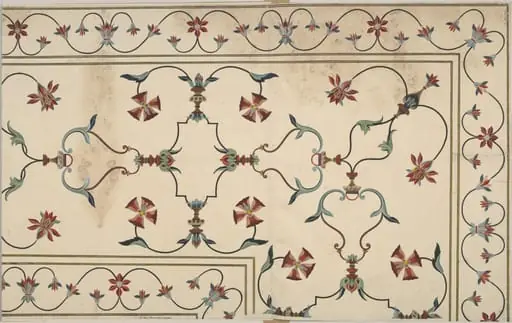 Pietra-dura work decoration on the top of the cenotaph of the Empress Arjumand Banu Begam, Taj Mahal, Agra
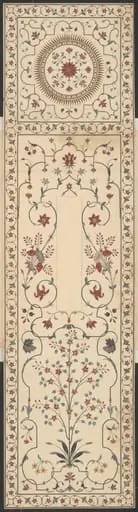 Coloured pietra-dura inlay work on the top of the cenotaph of the Emperor Shah Jahan, Taj Mahal, Agra.
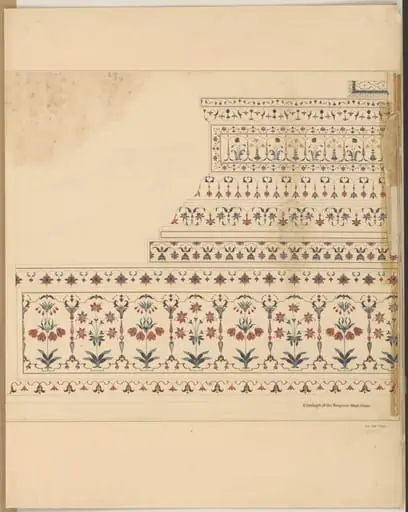 Pietra-dura inlay work on the side of the cenotaph of Shah Jahan, Taj Mahal, Agra.
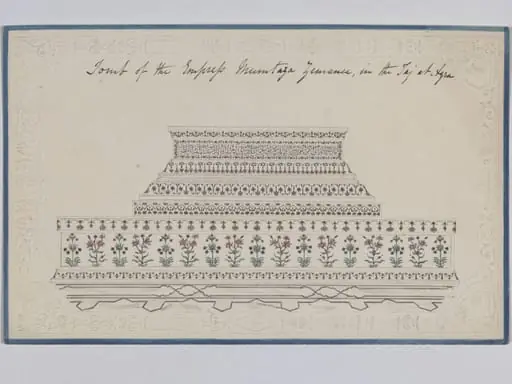 Tomb of Mumtaz Mahal, Agra.
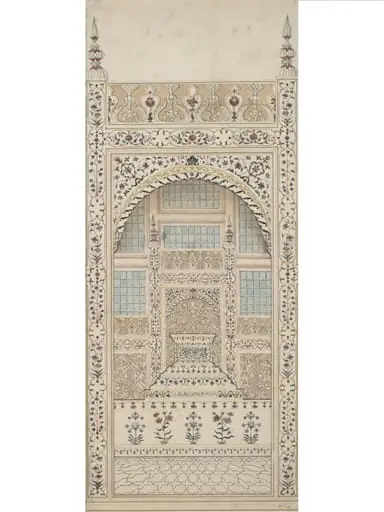 The marble screen around the cenotaphs of Shah Jahan and Mumtaz Mahal, Agra.
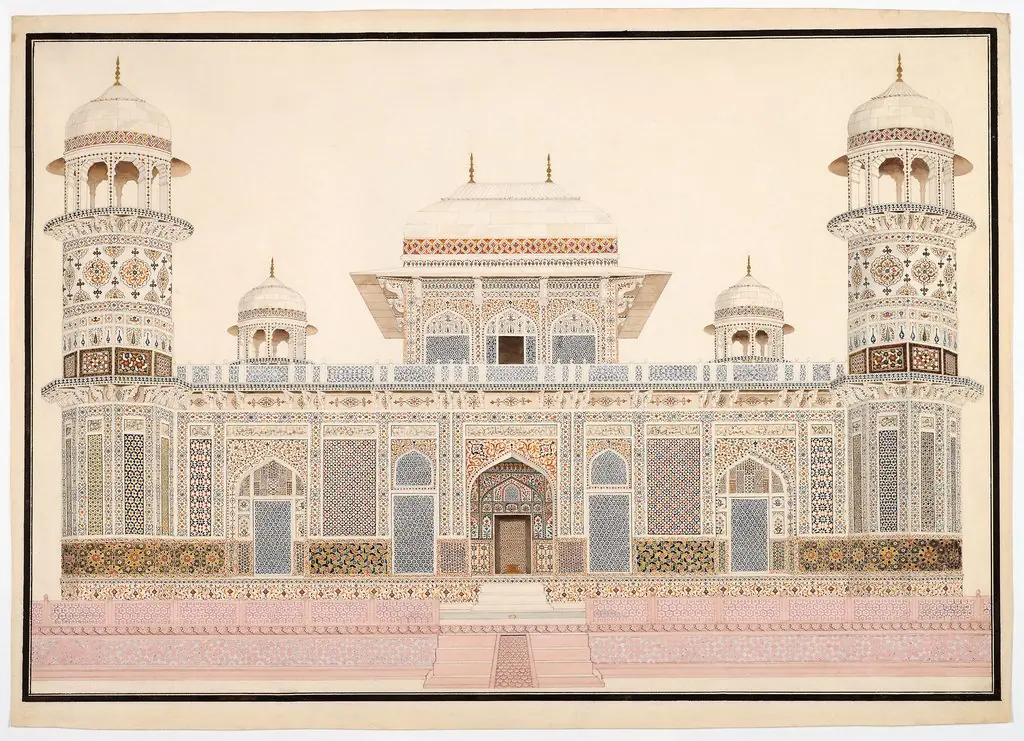 I'timad-ud-Daula's Tomb at Agra
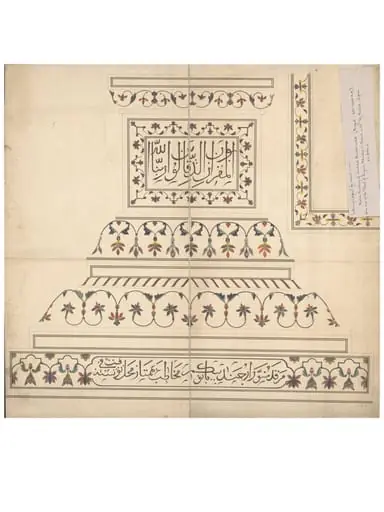 One of ten drawings of details of pietra-dura ornamentation on the cenotaphs of Shah Jahan and his wife Mumtaz Mahal, at Agra.