Artwork
I'timad-ud-Daula's Tomb at Agra
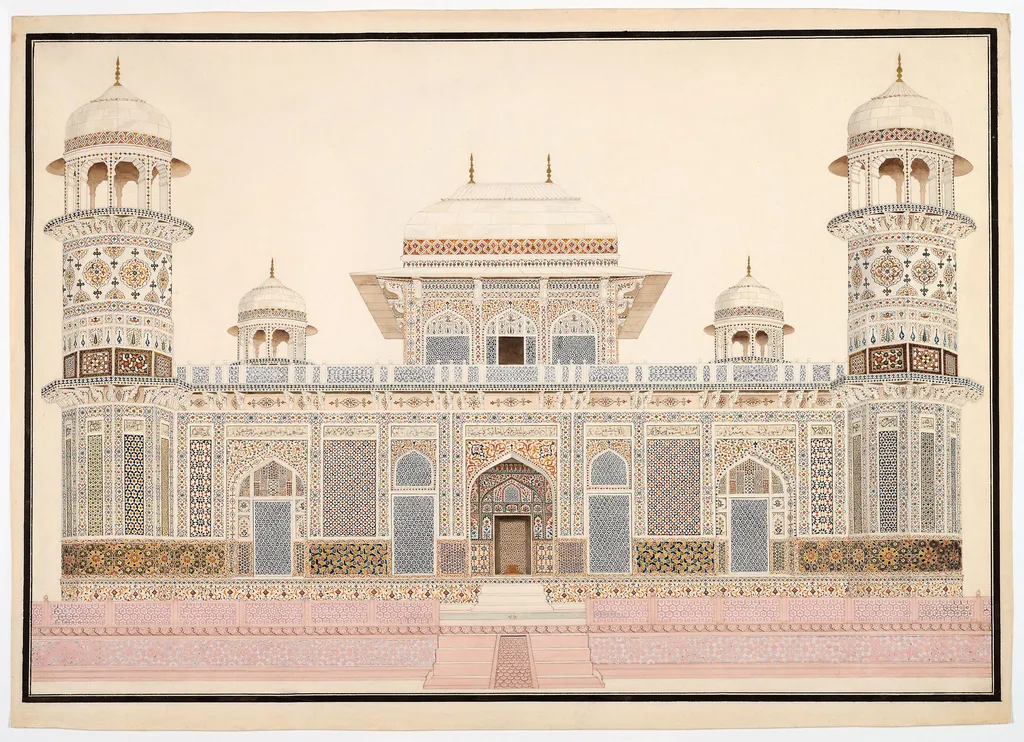
I'timad-ud-Daula's Tomb at Agra is an unspecified painting by Unknown. It dates from 1820 and is held in the collection of the Art Institute of Chicago. The work is a painted representation of the tomb of I'timad-ud-Daula, a 17th‑century Mughal noble whose mausoleum stands in Agra, India.
About this work
Overview
The work is a painted representation of the tomb of I'timad-ud-Daula, a 17th‑century Mughal noble whose mausoleum stands in Agra, India. Executed on paper with ink and watercolor, the image records the monument’s architectural composition and surrounding landscape, offering a visual document of the site as it appeared in the period of its creation.
Subject & Meaning
The painting focuses on the tomb’s distinctive double‑dome silhouette, flanked by arched pavilions and a surrounding garden. By depicting the funerary structure, the image underscores the Mughal tradition of commemorating high officials with elaborate mausoleums, reflecting both personal prestige and imperial aesthetic values.
Technique & Style
Rendered with fine brushwork and delicate washes, the artist employs a muted palette that emphasizes architectural detail over vivid coloration. Linear perspective is suggested through overlapping planes, while ornamental motifs are indicated with restrained stippling, characteristic of courtly Indian miniature conventions adapted for larger formats.
History & Provenance
The painting originates from a series of visual records produced for Mughal patrons in the late 1600s, intended for archival or diplomatic purposes. It entered a European collection in the 19th century, later being acquired by a museum specializing in South Asian art, where it remains part of the permanent holdings.
Context
I'timad-ud-Daula’s tomb was constructed during the reign of Emperor Shah Jahan, contemporaneous with the Taj Mahal. The monument’s design reflects the period’s synthesis of Persian and indigenous Indian architectural elements, a theme echoed in the painting’s balanced composition and attention to ornamental detail.
Legacy
As a visual source, the painting contributes to scholarly understanding of Mughal funerary architecture and garden planning. It also serves as a comparative reference for restorations of the tomb, illustrating original spatial relationships that have since been altered by later interventions.
Artist & collection

 Domestic Scene
 Giacomo and Cardinal Marco, investing Andrea, Abbot of San Zeno, with his Benefice
 The Nymph of Fontainebleau
 Portrait of a Woman
 Madonna and Child with Saints in the Enclosed Garden
 Venus and Minerva
 Family Group of Four on Sofa
 Wall painting from Room H of the Villa of P. Fannius Synistor at Boscoreale
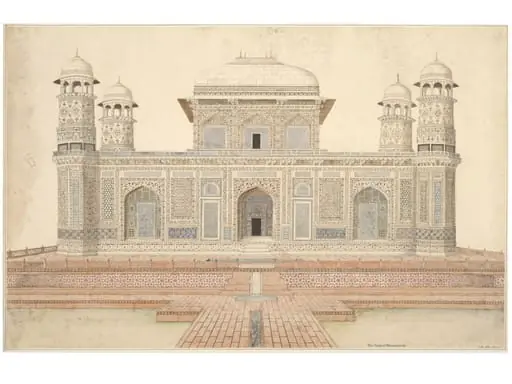 The facade of the tomb of I'timad ad-daula and his wife Asmat Begum, Agra.
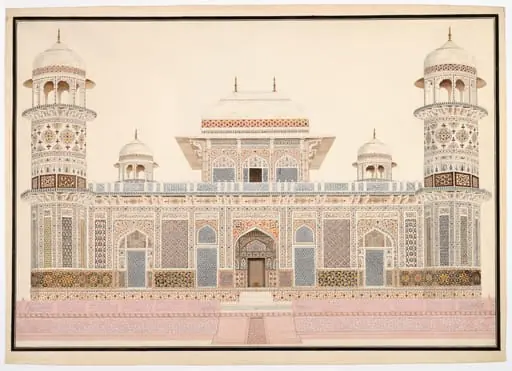 I'timad-ud-Daula's Tomb at Agra
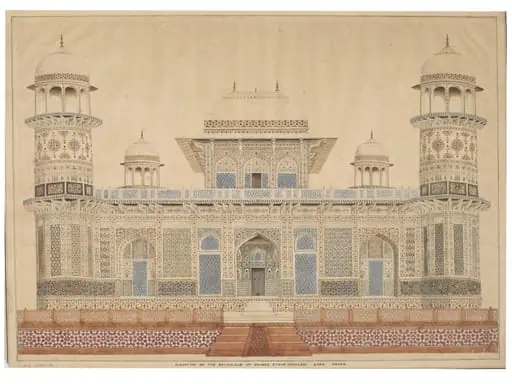 Mausoleum of Itimad ud-Daula.
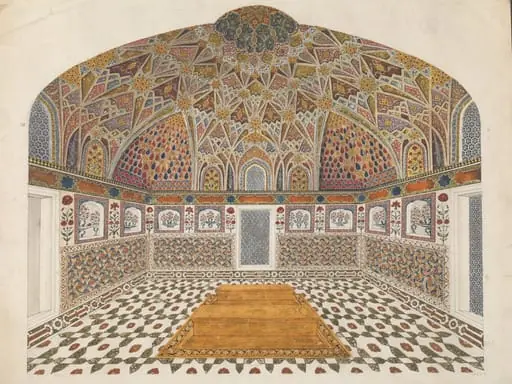 Interior of I'timad ad-Daula's tomb
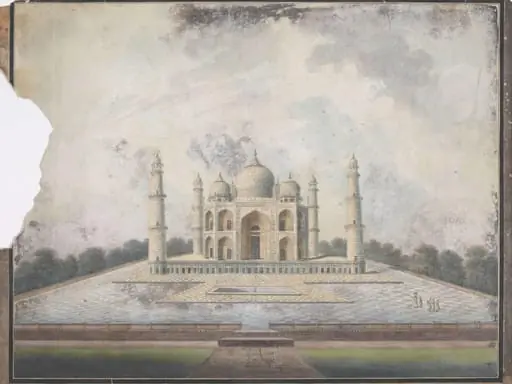 The Taj Mahal, Agra
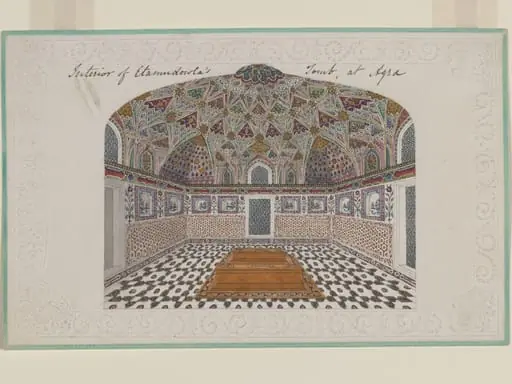 Interior of Tomb of Itimad ud-Daula.
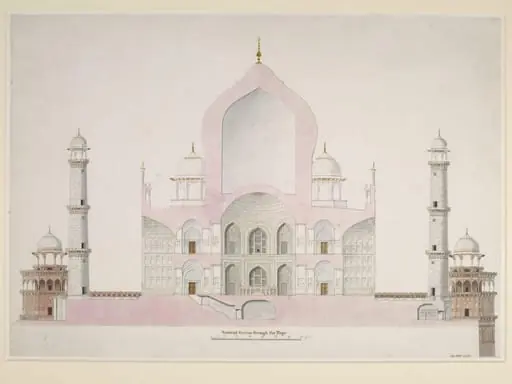 Vertical Section through the Tage
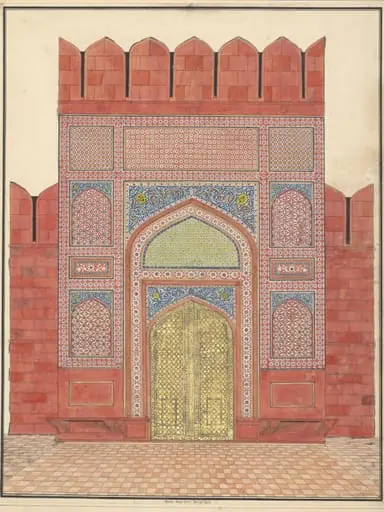 Front elevation of Amar Singh's Gate, Agra Fort.
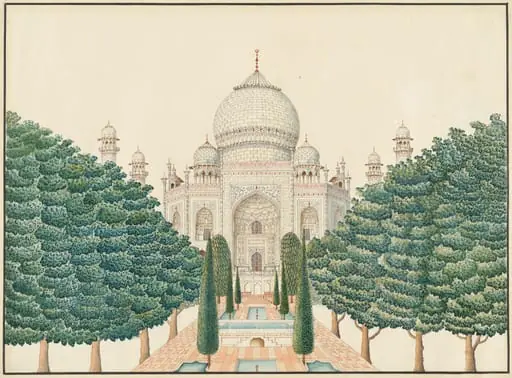 Taj Mahal
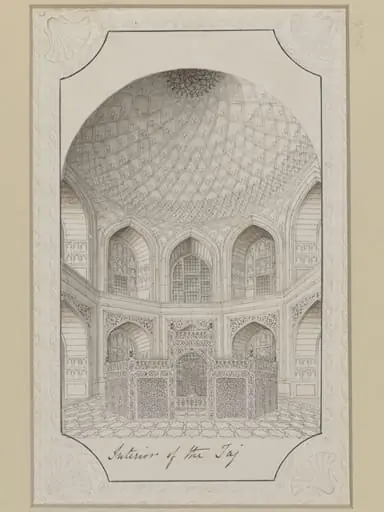 Interior of the Taj Mahal, Agra.
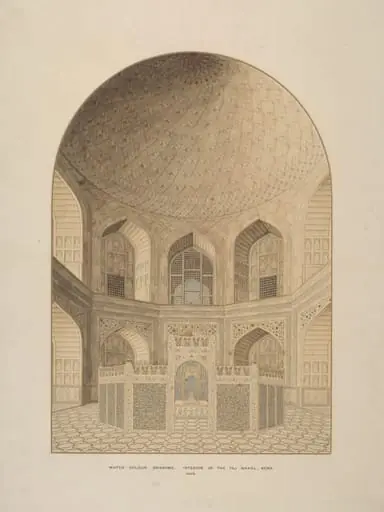 Interior of the Tomb Chamber, Taj Mahal, Agra
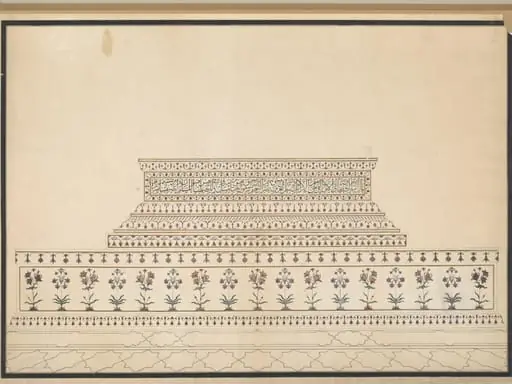 Cenotaph of Mumtaz Mahal, Taj Mahal, Agra