Artwork
Chariot Drawn by Lions with Amorini (recto) Partial Architectural Study (verso)
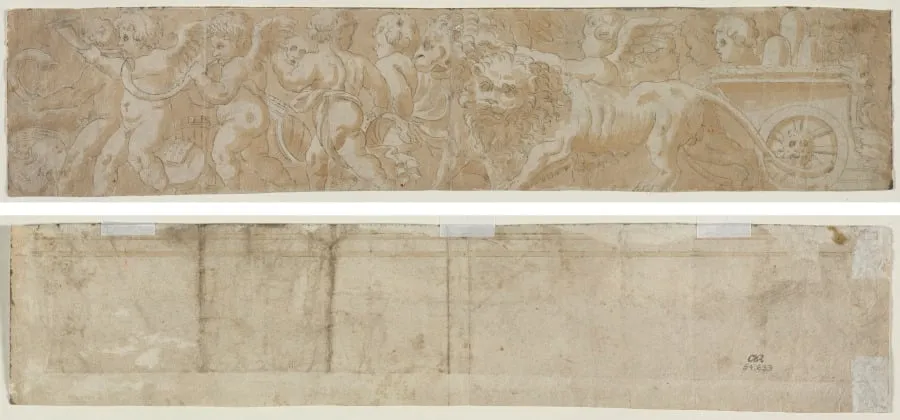
Chariot Drawn by Lions with Amorini (recto) Partial Architectural Study (verso) is a drawing by the Renaissance artist Unknown. It dates from 1504 and is held in the collection of the Cleveland Museum of Art.
About this work
Overview
The work exemplifies Renaissance draftsmanship, emphasizing precision in line and subtle tonal gradations to suggest volume and movement.
This double-sided drawing features a dynamic composition on the recto: a chariot drawn by two lions, surrounded by small winged figures, rendered in light pigment against a darker ground. The verso contains a fragmentary architectural sketch, suggesting the artist’s practice of reusing supports. The work exemplifies Renaissance draftsmanship, emphasizing precision in line and subtle tonal gradations to suggest volume and movement.
Subject & Meaning
The chariot, pulled by lions and attended by amorini, evokes classical mythological themes, possibly referencing triumphal processions or divine transport. The lions symbolize strength and royal authority, while the cherubic figures may signify divine favor or celestial accompaniment. The scene lacks a clear narrative, suggesting it was conceived as an imaginative study rather than an illustration of a specific myth.
Technique & Style
The artist employed fine, controlled lines and delicate shading to model forms and suggest texture in fur, fabric, and stone. Light washes and hatching create depth without heavy contrast, characteristic of preparatory drawings from the period. The composition is densely populated yet orderly, reflecting an interest in classical harmony and anatomical precision.
History & Provenance
The drawing’s origin is unattributed, but its style aligns with Italian Renaissance workshop practices of the late 15th or early 16th century. It likely served as a study for a larger work or decorative scheme. Its survival in good condition suggests it was preserved as a model for apprentices or collected for its artistic merit rather than its finished state.
Context
During the Renaissance, artists frequently produced studies of mythological and allegorical subjects to explore composition and movement. Drawings like this were often used to develop ideas for frescoes, tapestries, or prints. The reuse of the support with an architectural sketch on the reverse reflects the practical economy of studio practice at the time.
Legacy
This drawing contributes to the understanding of how Renaissance artists engaged with classical antiquity through imaginative reinterpretation. Its dual-sided nature offers insight into the iterative process of design, revealing how preliminary ideas coexisted with finished compositions. It remains a quiet testament to the discipline of draftsmanship in an era that elevated drawing as a core artistic discipline.
Artist & collection

 Domestic Scene
 Giacomo and Cardinal Marco, investing Andrea, Abbot of San Zeno, with his Benefice
 The Nymph of Fontainebleau
 Portrait of a Woman
 Madonna and Child with Saints in the Enclosed Garden
 Venus and Minerva
 Family Group of Four on Sofa
 Wall painting from Room H of the Villa of P. Fannius Synistor at Boscoreale
 Three Scenes from the Passion of Christ (recto); Architectural Sketch (verso)
 Three Studies of Angels for a Pendentive (recto); Studies for Christ Meeting His Mother on the Road to Calvary, Studies of an Angel in a Pendentive (verso)
 Elevation for Wall Decoration
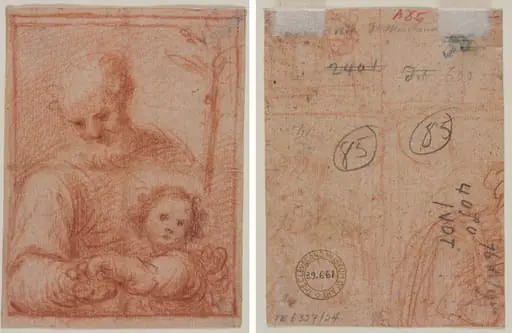 Joseph and Child (recto); Fragment of Two Figures (verso)
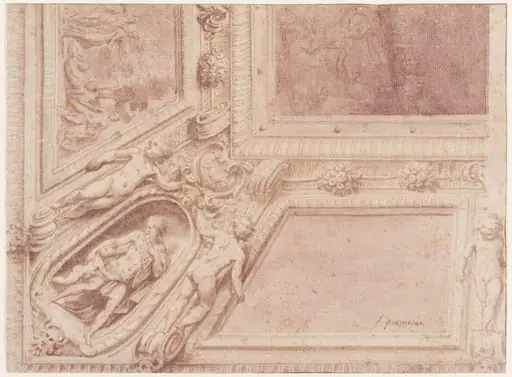 Design for a ceiling with a deep cove, showing a corner only
 Vase
Vase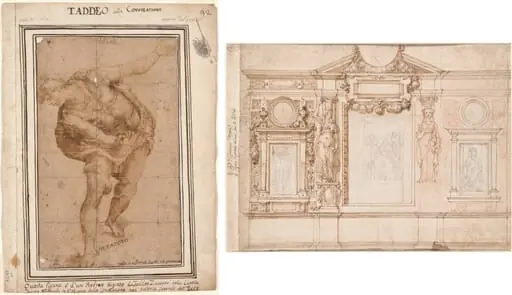 Un Hebreo, from Christ Shown to the People (recto); Design for a Wall Decoration with Pasted-in Sketches after Raphael (verso)