Artwork
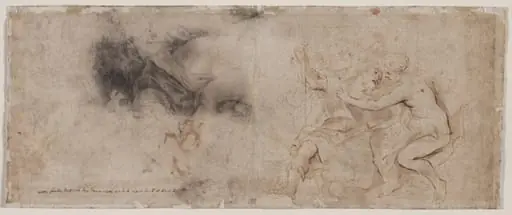
Three Studies of Angels for a Pendentive (recto); Studies for Christ Meeting His Mother on the Road to Calvary, Studies of an Angel in a Pendentive (verso)
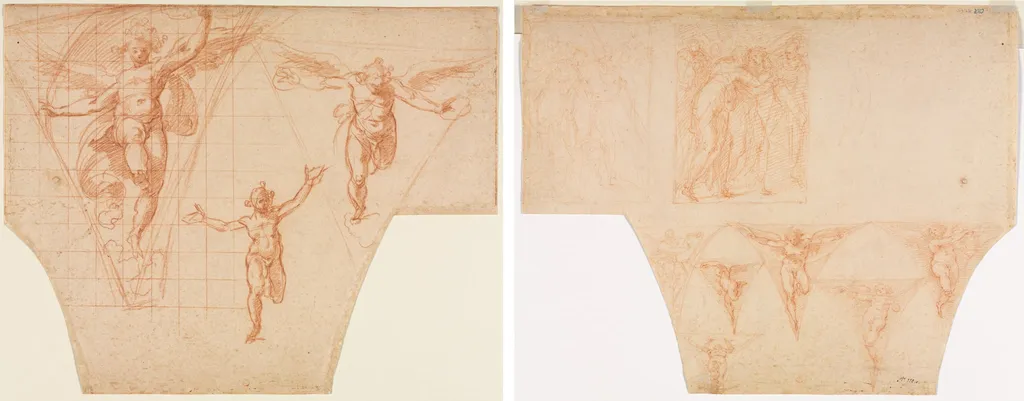
Three Studies of Angels for a Pendentive (recto); Studies for Christ Meeting His Mother on the Road to Calvary, Studies of an Angel in a Pendentive (verso) is a drawing by the Renaissance artist Cristoforo Roncalli. It dates from 1602 and is held in the collection of the Cleveland Museum of Art.
About this work
Overview
Created in 1597, this double-sided drawing by Cristoforo Roncalli served as preparatory work for the mosaic decoration of Saint Peter’s Basilica’s dome.
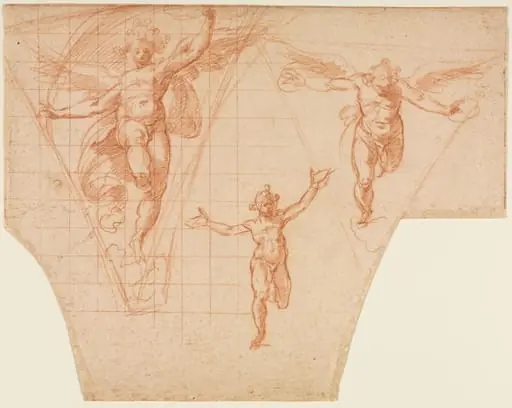
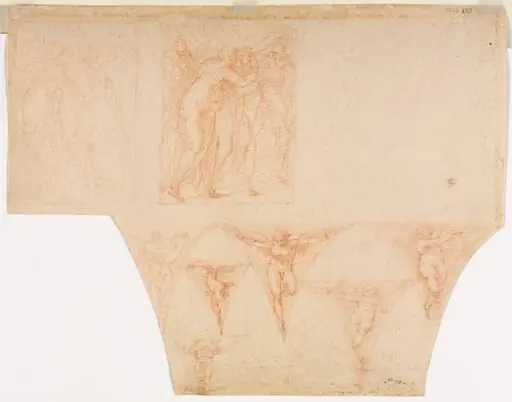
Created in 1597, this double-sided drawing by Cristoforo Roncalli served as preparatory work for the mosaic decoration of Saint Peter’s Basilica’s dome. One side features three studies of angels intended for the pendentives, while the reverse contains sketches related to Christ’s encounter with the Virgin on the Road to Calvary. The sheet reflects the practical process of planning large-scale ecclesiastical decoration under papal commission.
Subject & Meaning
The angels depicted were meant to flank the four Evangelists in the pendentives beneath the dome, symbolizing celestial witness to sacred narrative. The verso’s scene of Christ and Mary, drawn from apocryphal tradition, underscores themes of sorrow and divine compassion. Together, these studies anchor the dome’s visual theology in human emotion and heavenly order.
Technique & Style
Roncalli employed linear draftsmanship with subtle tonal gradations to explore anatomical foreshortening and drapery flow. His approach prioritized structural clarity over atmospheric effects; while sfumato was practiced in Florence, his style here leans toward precise contouring and rhythmic line, suited to mosaic translation. The multiple studies reveal iterative refinement of pose and spatial orientation.
History & Provenance
Commissioned by Pope Clement VIII following the dome’s completion in 1590, the mosaics were entrusted to Roncalli due to his Florentine training and reputation for disciplined draftsmanship. This drawing likely originated in his Roman studio during the early phase of the project. Its survival suggests it was retained as a working record, not discarded after execution.
Context
The decoration of Saint Peter’s dome marked a late Renaissance effort to harmonize Michelangelo’s architecture with devotional imagery. Roncalli’s role reflected a broader trend of assigning mosaic work to painters trained in drawing, bridging fresco traditions with the demands of tessellated surfaces. His studies align with Counter-Reformation priorities: clarity, emotional resonance, and doctrinal precision.
Legacy
Though the mosaics themselves are now partially obscured by time and restoration, Roncalli’s preparatory drawings remain key to understanding the transition from Renaissance draftsmanship to Baroque monumental decoration. This sheet exemplifies the meticulous planning behind papal commissions and the enduring value of preparatory work in large-scale sacred art.
Artist & collection

Artist
Cristoforo Roncalli was an Italian mannerist painter. He was one of the three painters known as Pomarancio or Il Pomarancio.

![Various Sketches of the Madonna and Child (recto); Architectural Studies (verso) [partially visible on recto], by Paolo Veronese](https://artifactworldgallery.com/img/paolo-veronese--various-sketches-of-the-madonna-and-child-recto-architectura--90586edfc8e8efd5-w320.webp) Various Sketches of the Madonna and Child (recto); Architectural Studies (verso) [partially visible on recto]
Various Sketches of the Madonna and Child (recto); Architectural Studies (verso) [partially visible on recto]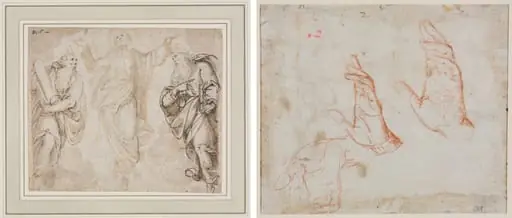 The Transfiguration (recto); Study of Hands (verso)
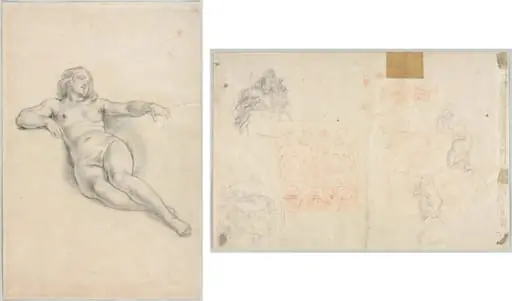 Reclining Female Nude (recto); Various Sketches of Figures and Plants (verso)
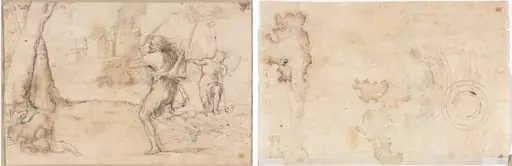 Romulus and Remus Found by Faustulus (recto) Concentric Circles (verso)
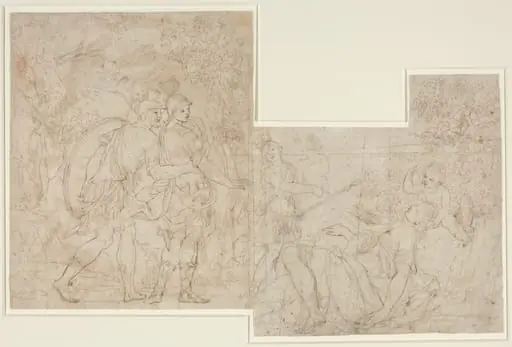 Three Soldiers Discovering a Sleeping Woman
 Venus Disarming Mars, Drapery Study (verso)
![Apollo and Studies of the Artist's Own Hand [recto], by Francesco Fontebasso](https://artifactworldgallery.com/img/francesco-fontebasso--apollo-and-studies-of-the-artist-s-own-hand-recto--ee93288e84456aea-w320.webp) Apollo and Studies of the Artist's Own Hand [recto]
Apollo and Studies of the Artist's Own Hand [recto]