Artwork
Child Standing on a Chair Holding Flowers, with Mother
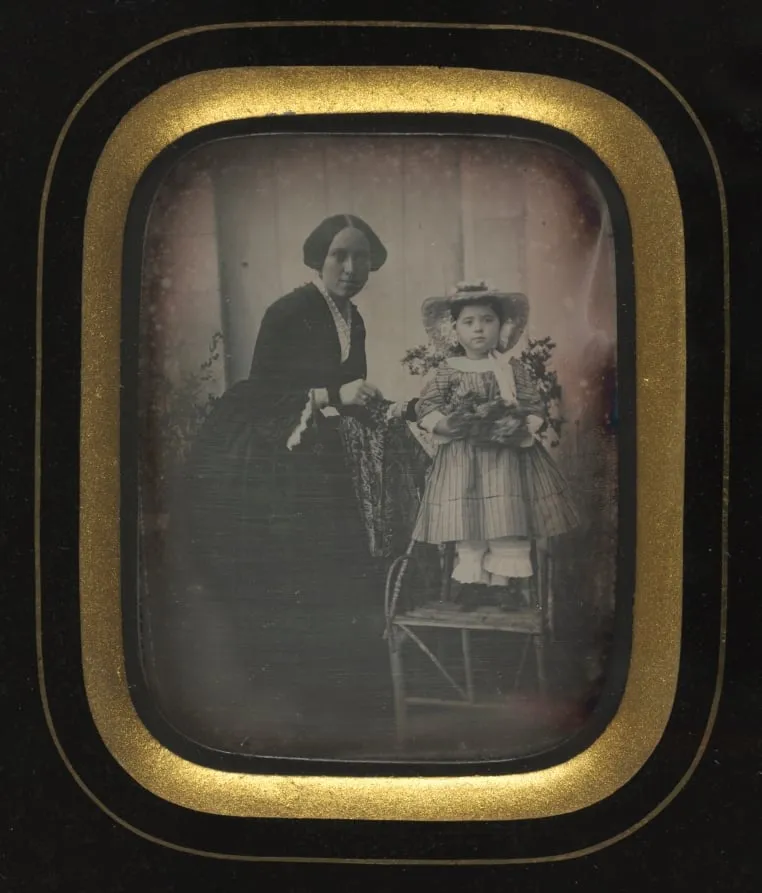
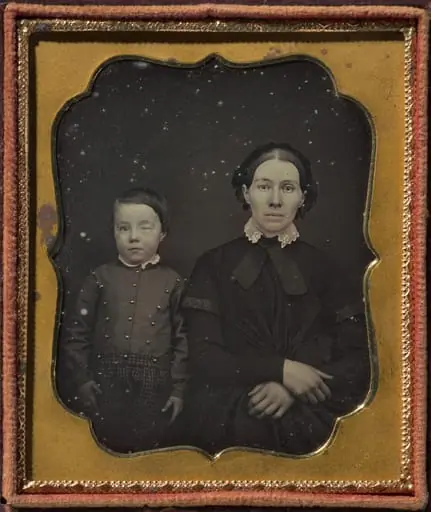
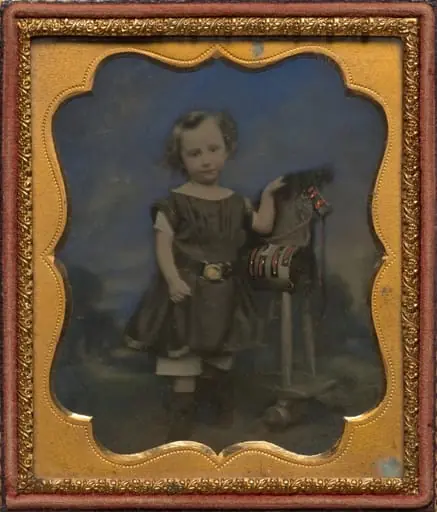
Child Standing on a Chair Holding Flowers, with Mother is a photography by the Impressionist artist Unknown. It dates from 1855 and is held in the collection of the Cleveland Museum of Art.
About this work
A small child stands on a chair, clutching a bouquet of flowers, while a woman—likely their mother—rests a hand on their shoulder.
A small child stands on a chair, clutching a bouquet of flowers, while a woman—likely their mother—rests a hand on their shoulder. The scene feels quiet, almost still.
This isn’t a painting—it’s an early photograph called a daguerreotype. The process was slow, so the child had to hold perfectly still. The flowers are slightly blurred, the only sign of movement. Most details, like the fabric of their clothes, are sharp.
To see more early photographs like this, look up *France, 19th century*.
Overview
This daguerreotype presents a young child perched on a chair, clutching a small bouquet, while a woman—presumably the child's mother—places a hand gently on the child's shoulder. The composition is intimate and still, emphasizing the quiet interaction between the two figures.
Subject & Meaning
The image captures a domestic moment, highlighting themes of familial affection and the tender bond between mother and child. The child's poised stance and the mother's supportive gesture suggest a scene of care and instruction, common motifs in mid‑19th‑century family portraiture.
Technique & Style
Created using the daguerreotype process, the photograph records a silver‑coated copper plate exposed for a relatively long duration. This required the sitters to remain motionless; consequently, most elements—clothing texture, facial features, and accessories—appear sharply rendered, while the bouquet shows slight blur, indicating the only movement during exposure.
Context
By the mid‑1850s daguerreotypes were the preferred medium for commercial portrait photographers responding to a growing public demand for personal likenesses. The image exemplifies the technical constraints and aesthetic qualities of the era, illustrating how early photographic practice shaped the representation of everyday life.
Artist & collection

 Domestic Scene
 Giacomo and Cardinal Marco, investing Andrea, Abbot of San Zeno, with his Benefice
 The Nymph of Fontainebleau
 Portrait of a Woman
 Madonna and Child with Saints in the Enclosed Garden
 Venus and Minerva
 Family Group of Four on Sofa
 Wall painting from Room H of the Villa of P. Fannius Synistor at Boscoreale