Artwork
Chrysanthemum
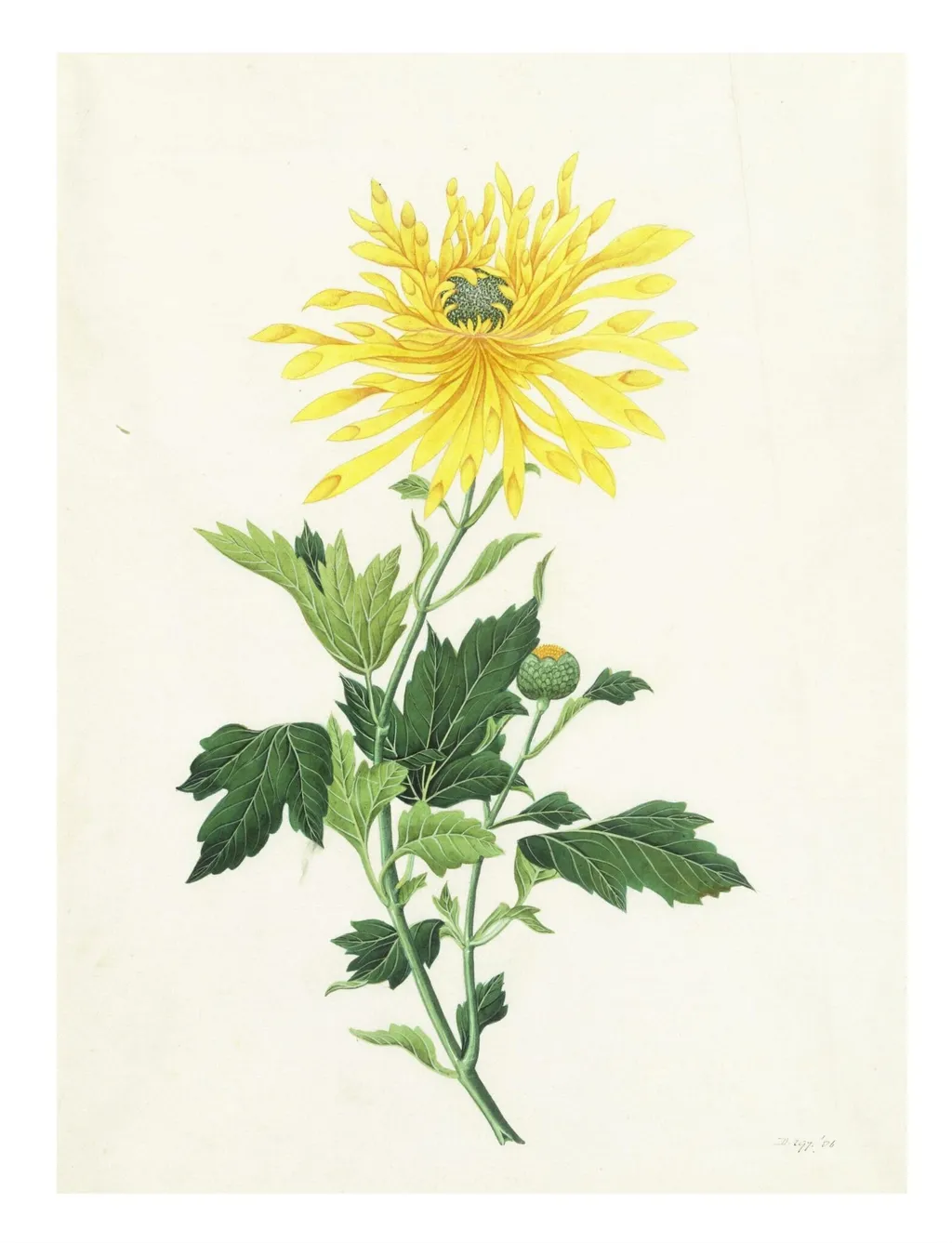
Chrysanthemum is a paint painting by the Qing dynasty painting artist Unknown. It dates from 1800 and is held in the collection of the Victoria and Albert Museum.
About this work
This painting shows a single white chrysanthemum in a simple vase. The petals look soft. The background is plain and dark.
It was painted in China between 1800 and 1830. People in Britain loved flowers from far away then. They grew them in their gardens.
This kind of art helped spread ideas about plants across countries. See more like it at the Victoria and Albert Museum.
Overview
Created in southern China between 1800 and 1830, it reflects a tradition of botanical illustration produced for export to European markets.
This painting depicts a single white chrysanthemum in a plain vase, rendered with quiet precision on paper or silk. Created in southern China between 1800 and 1830, it reflects a tradition of botanical illustration produced for export to European markets. The composition is minimal, emphasizing the flower’s form against a dark, unadorned background, a style suited to both aesthetic restraint and commercial appeal.
Subject & Meaning
The chrysanthemum, known as 'ju hua' in Chinese, held cultural significance in East Asia as a symbol of endurance and autumnal beauty. In this work, its solitary presence and delicate petals suggest quiet dignity rather than ornamental display. While Chinese artists typically imbued such subjects with poetic resonance, the painting’s export context likely prioritized visual accuracy for foreign buyers interested in exotic flora.
Technique & Style
Executed in water-based pigments, the painting employs fine brushwork to capture the soft texture of the petals and the subtle gradations of white. The background is left dark and flat, enhancing the flower’s luminosity without distraction. This approach aligns with Chinese ink-and-wash traditions adapted for Western tastes, balancing naturalism with the elegance of traditional Chinese brush techniques.
History & Provenance
Produced during a period of expanding trade between China and Britain, this work was likely made in Guangzhou for foreign patrons. British collectors and botanists sought such images as both scientific records and decorative objects. The painting entered European collections through commercial channels, often accompanying live plant specimens brought back by travelers, contributing to the growing fascination with Asian horticulture.
Context
In early 19th-century Britain, exotic plants became status symbols among the middle and upper classes. Botanical illustrations from China and India circulated widely, serving as references for gardeners and amateur naturalists. This painting reflects a broader cultural exchange: Chinese artisans responded to foreign demand by producing detailed, appealing images of native flora, bridging aesthetic traditions across continents.
Legacy
Works like this helped shape European perceptions of Asian botany and artistic practice. Many entered public collections, including the Victoria and Albert Museum, where they remain as evidence of early global trade in visual culture. Though often overlooked as decorative, these paintings document a period of cross-cultural curiosity and the quiet influence of Chinese craftsmanship on Western botanical knowledge.
Artist & collection

 Domestic Scene
 Giacomo and Cardinal Marco, investing Andrea, Abbot of San Zeno, with his Benefice
 The Nymph of Fontainebleau
 Portrait of a Woman
 Madonna and Child with Saints in the Enclosed Garden
 Venus and Minerva
 Family Group of Four on Sofa
 Wall painting from Room H of the Villa of P. Fannius Synistor at Boscoreale