Artwork
Glebionis segetum (gul okseøje)
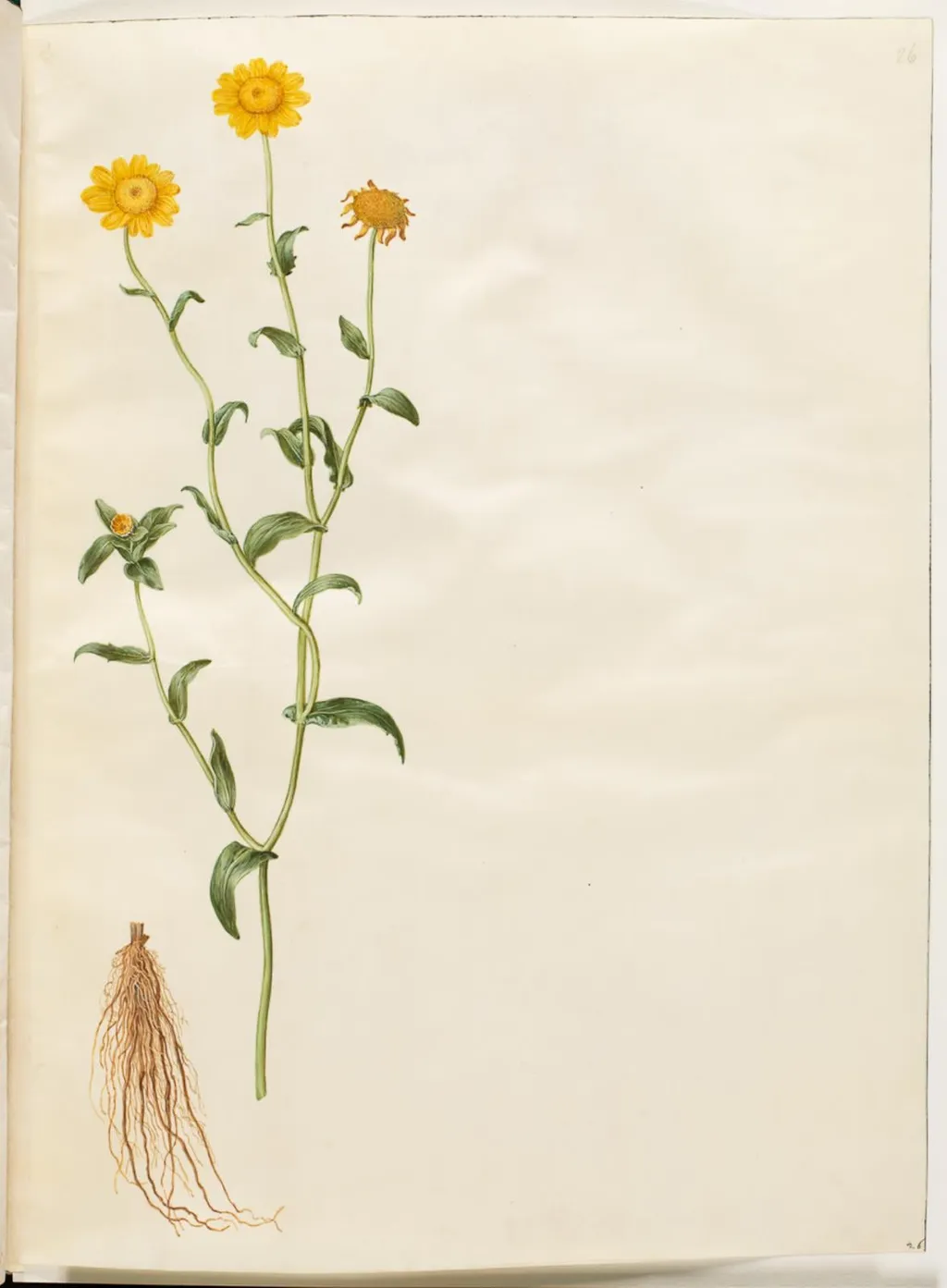
Glebionis segetum (gul okseøje) is an unspecified work on paper by Unknown. It dates from 1654 and is held in the collection of the Statens Museum for Kunst. Created around 1654, this watercolor depicts Glebionis segetum, commonly known as corn marigold.
About this work
Overview
The image captures the plant with precision, reflecting a scientific interest in natural forms common in mid-17th-century Europe.
Created around 1654, this watercolor depicts Glebionis segetum, commonly known as corn marigold. The work is attributed to an unnamed artist identified only by the catalog number 35199_person. It resides in the Museum of Ethnography, where it serves as a botanical record rather than a decorative piece. The image captures the plant with precision, reflecting a scientific interest in natural forms common in mid-17th-century Europe.
Subject & Meaning
The painting isolates a single specimen of Glebionis segetum, emphasizing its structural clarity. Three open yellow flowers, along with unopened buds and extensive root systems, are rendered to illustrate the plant’s full life cycle. This focus on botanical accuracy suggests the image was intended for study or classification, likely used by naturalists or collectors to document regional flora with minimal artistic embellishment.
Technique & Style
Executed in watercolor, the work employs thin, layered washes to model form and texture. Fine lines define leaf veins and stem ridges, while subtle gradations in tone suggest volume without shading. The artist avoided broad strokes, instead favoring meticulous detail—each root, petal, and bud rendered with observational rigor. This method aligns with contemporary botanical illustration practices that prioritized clarity over aesthetic flourish.
History & Provenance
The artwork entered the collection of the Museum of Ethnography at an unknown date, likely as part of a larger collection of natural history studies. Its attribution to 35199_person indicates it was cataloged under a system that prioritized archival identification over individual authorship. The piece has remained largely unstudied outside institutional records, preserving its role as a documentary artifact rather than a celebrated work of art.
Context
In mid-17th-century Europe, detailed plant illustrations flourished alongside the rise of scientific inquiry. Botanical gardens and private collections drove demand for accurate visual records. This image reflects that trend, aligning with works produced for universities, apothecaries, and early encyclopedic projects. The choice of watercolor—a portable, precise medium—suggests it may have been made in the field or for inclusion in a manuscript collection.
Legacy
Though not widely exhibited or published, the work contributes to a broader archive of pre-modern botanical documentation. Its survival in a museum of ethnography underscores how natural history and cultural artifact collection often overlapped in early institutional practices. Today, it remains a quiet testament to the value placed on visual precision in the study of nature before the advent of photography.
Artist & collection

 Domestic Scene
 Giacomo and Cardinal Marco, investing Andrea, Abbot of San Zeno, with his Benefice
 The Nymph of Fontainebleau
 Portrait of a Woman
 Madonna and Child with Saints in the Enclosed Garden
 Venus and Minerva
 Family Group of Four on Sofa
 Wall painting from Room H of the Villa of P. Fannius Synistor at Boscoreale
 Anemone ×fulgens (skinnende anemone)
 Helichrysum orientale (busk-evighedsblomst); Helichrysum Stoechas (stinkende evighedsblomst); Anaphalis margaritacea (almindelig perlekurv)
 Crepis rubra (rød høgeskæg); Scorzonera hispanica (have-skorzoner)
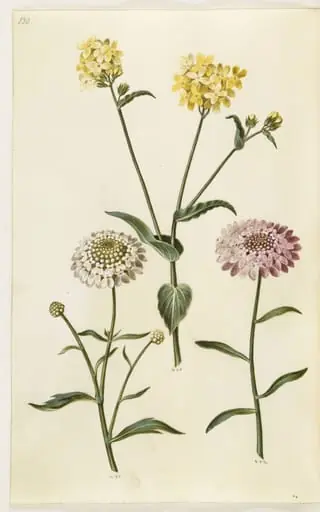 Brassica napus (raps); Iberis amara (bitter sløjfeblomst)
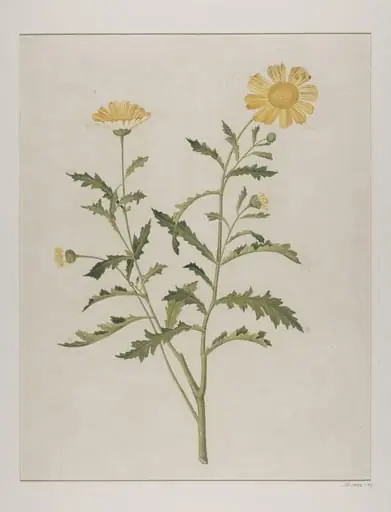 Wild chrysanthemum (chrysanthemum indicum)
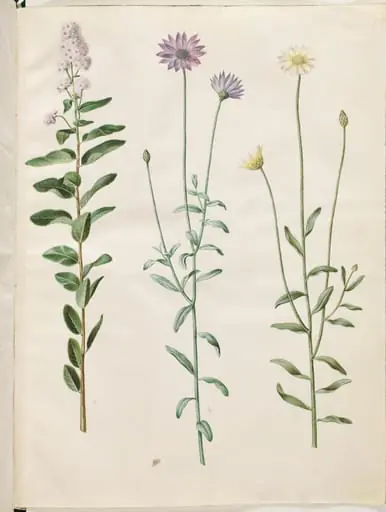 Spiraea salicifolia (pilebladet spiræa); Catananche caerulea (blå rasleblomst)