Artwork
Coast of Arabia. W. of Aden
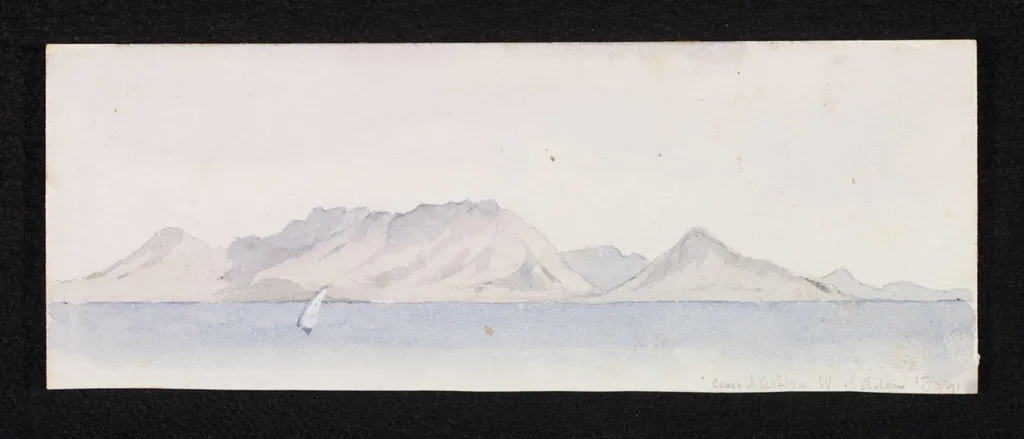
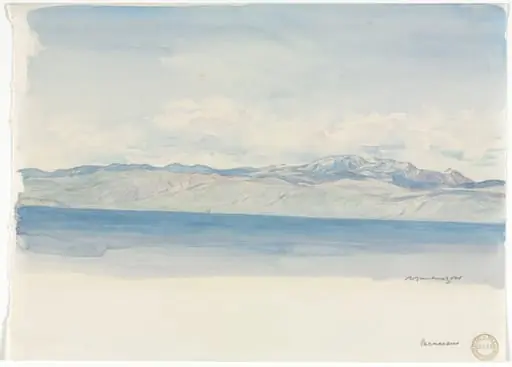
Coast of Arabia. W. of Aden is a watercolor work on paper by the Impressionist artist Unknown. It dates from 1891 and is held in the collection of the Victoria and Albert Museum. This watercolor is one of seven coastal studies made during a sea voyage in 1891, capturing views from Europe, Africa, and Asia.
About this work
Overview
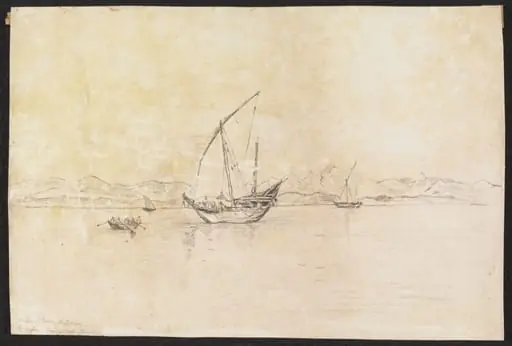
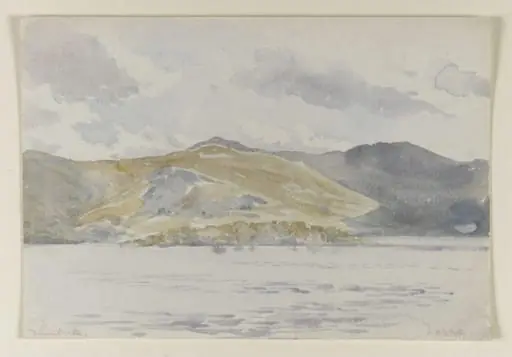
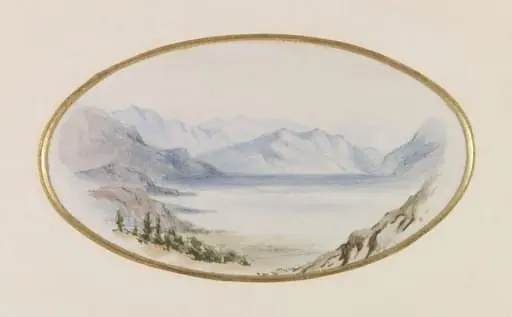
This watercolor is one of seven coastal studies made during a sea voyage in 1891, capturing views from Europe, Africa, and Asia. The scene depicts the Arabian shoreline west of Aden, likely painted aboard the RMS Austral as it traveled toward India. The work reflects a direct, on-the-spot response to the landscape, rendered with minimal detail and a restrained palette.
Subject & Meaning
The painting presents a quiet, unpopulated stretch of coast, with gentle hills receding into the distance and a faint outline of a small boat on calm water. There is no narrative or human activity emphasized; instead, the focus lies in the subtle interplay of light, air, and terrain. The scene conveys a sense of stillness and remoteness, characteristic of observations made from a moving vessel.
Technique & Style
The artist employed thin, translucent washes of watercolor to suggest form without definition. Colors are muted—soft blues, grays, and pale earth tones—creating an atmosphere of haze and distance. Delicate brushwork avoids sharp contours, favoring atmospheric effect over topographical precision. This approach aligns with broader 19th-century practices prioritizing mood over detail.
History & Provenance
The work originated from a series of sketches made during a commercial voyage in 1891, likely by a passenger or artist accompanying the journey. Its connection to the RMS Austral places it within the context of colonial-era maritime travel. The piece remained in private hands, with no public exhibition record prior to its inclusion in institutional collections.
Context
Made during a period when watercolor was increasingly used for travel documentation, this piece reflects a shift from topographical accuracy to sensory impression. Similar approaches appeared among British and European artists documenting distant shores, often influenced by emerging ideas of light and perception later associated with Impressionism, though without its formal innovations.
Legacy
The painting contributes to a modest but significant body of travel watercolors that document colonial-era maritime routes. While not widely known, it exemplifies how artists used the medium to record fleeting visual impressions from the sea. Its quiet aesthetic continues to resonate with viewers interested in understated, observational art from the late 19th century.
Artist & collection

 Domestic Scene
 Giacomo and Cardinal Marco, investing Andrea, Abbot of San Zeno, with his Benefice
 The Nymph of Fontainebleau
 Portrait of a Woman
 Madonna and Child with Saints in the Enclosed Garden
 Venus and Minerva
 Family Group of Four on Sofa
 Wall painting from Room H of the Villa of P. Fannius Synistor at Boscoreale
![Tiberais [sic], by Mary Parker](https://artifactworldgallery.com/img/mary-parker--tiberais-sic--e6f3a288c102ee52-w320.webp)