Artwork
Coborârea în iad
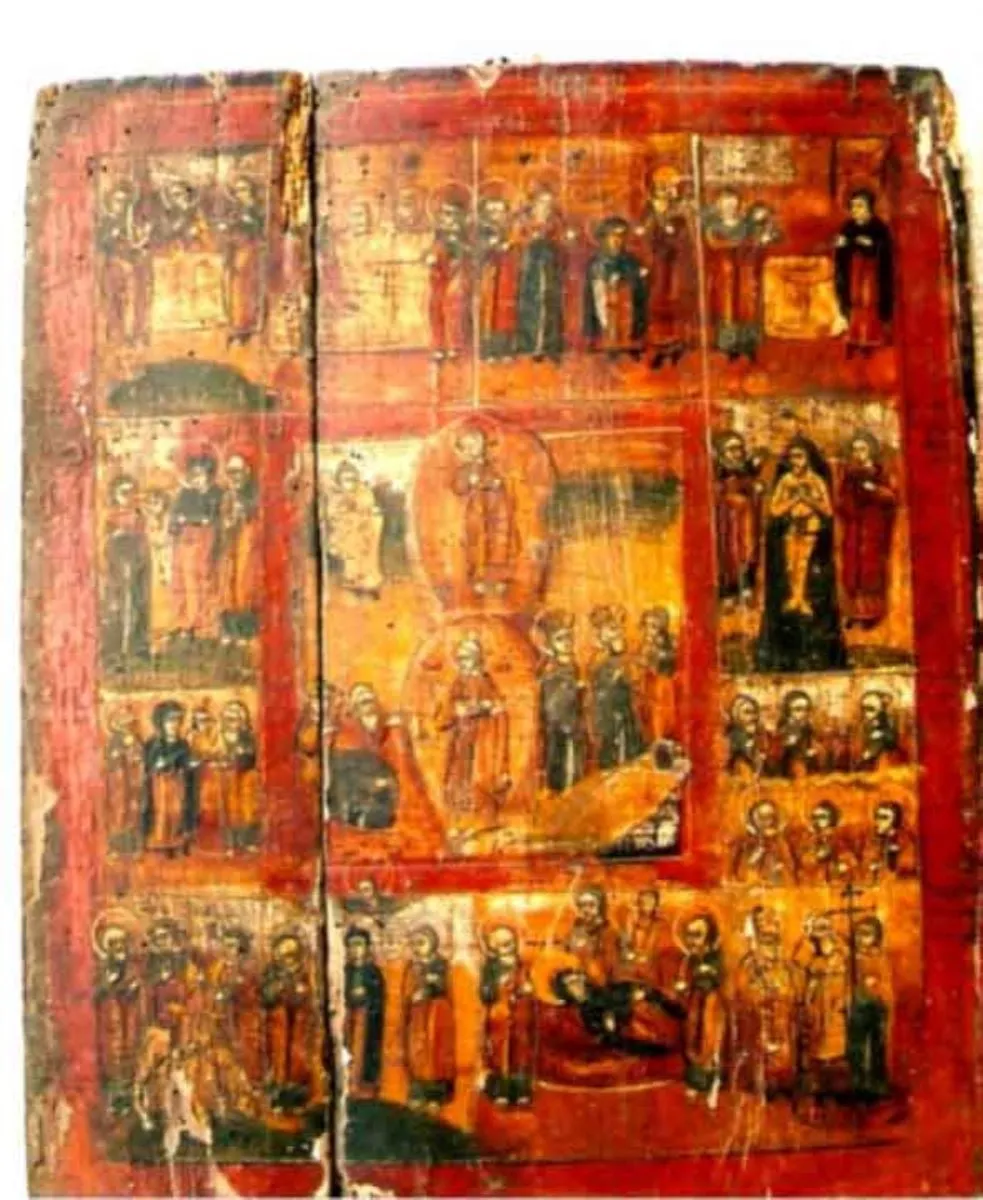
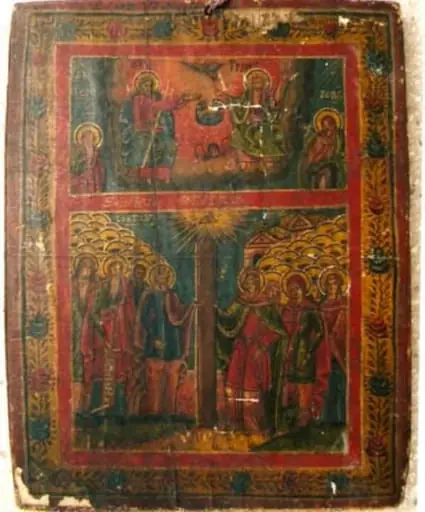
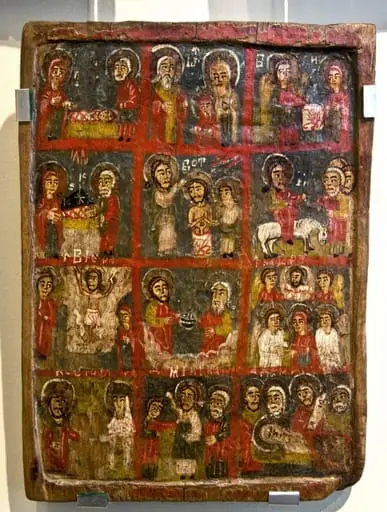
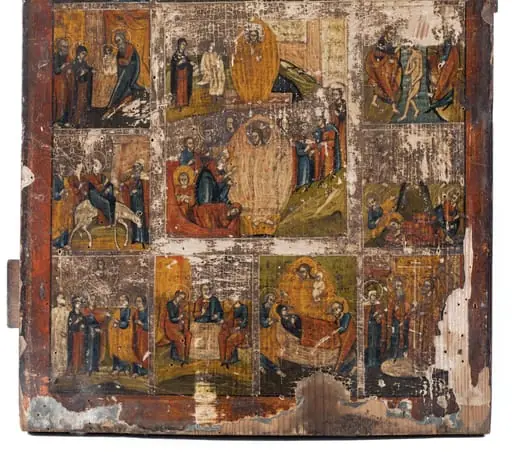
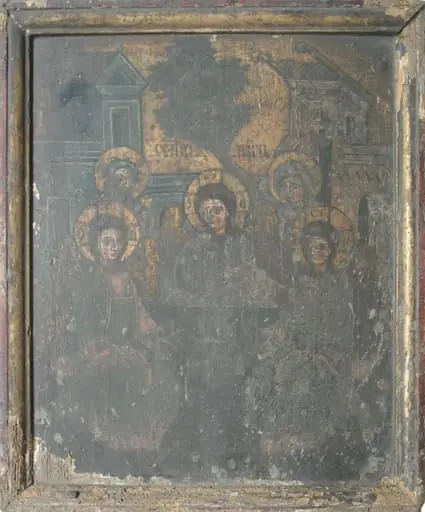
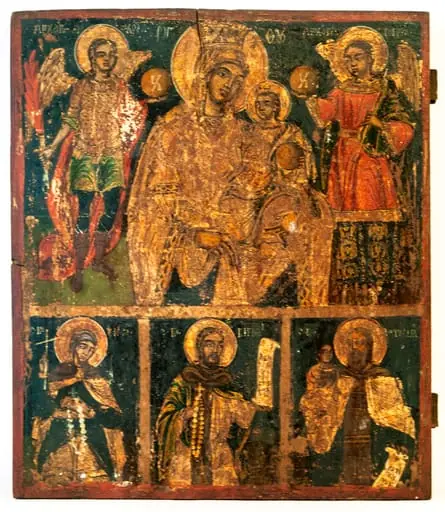
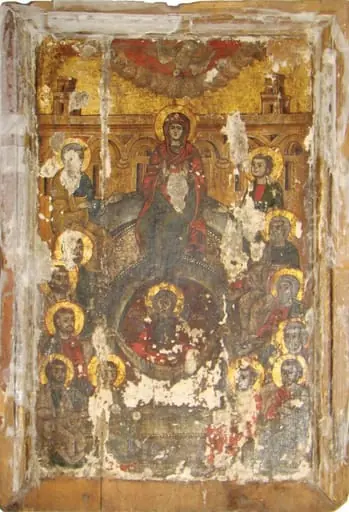
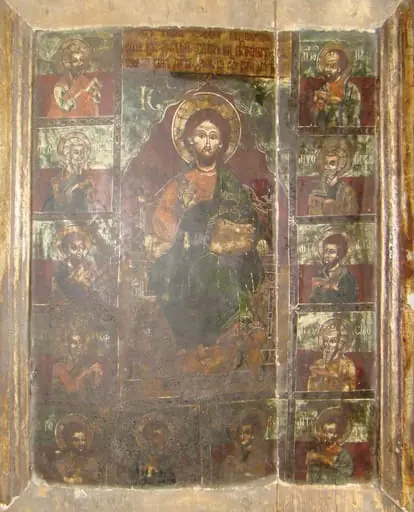
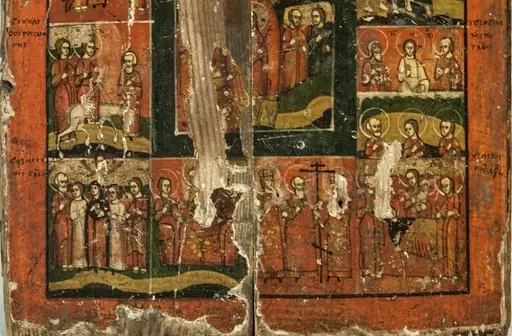
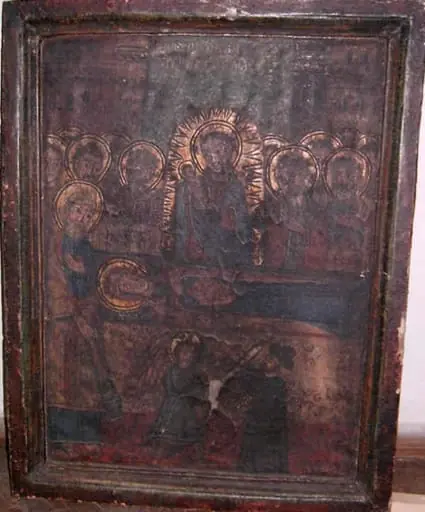
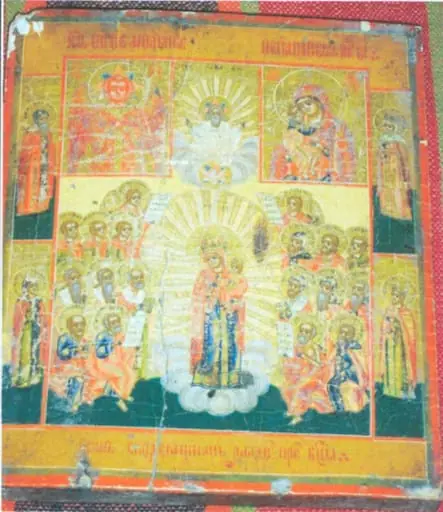
Coborârea în iad is a drawing by Unknown. It dates from 1850 and is held in the collection of the Golești Viticulture and Pomiculture Museum. This artwork is a fragmented, layered devotional image rendered in tempera or similar medium on a rigid support.
About this work
Overview
The palette is muted, dominated by earth tones and subdued reds, with gold leaf backgrounds that have faded over time.
This artwork is a fragmented, layered devotional image rendered in tempera or similar medium on a rigid support. Its composition is divided into multiple rectangular panels, each containing a distinct narrative scene. The palette is muted, dominated by earth tones and subdued reds, with gold leaf backgrounds that have faded over time. The surface shows signs of wear, suggesting prolonged use or exposure. The style reflects a medieval tradition of didactic religious imagery.
Subject & Meaning
The imagery depicts scenes from the descent into hell, a common theme in late medieval Christian theology. Figures in hierarchical arrangements surround central religious characters, illustrating moments of judgment, redemption, or damnation. The repetition of similar facial features suggests an emphasis on spiritual archetypes rather than individual identity. The red borders function as visual dividers, guiding the viewer through a sequence of moral and eschatological events.
Technique & Style
The figures are rendered in a flattened, two-dimensional manner, typical of Byzantine and early Gothic conventions. Facial features are standardized, with large, almond-shaped eyes and minimal modeling, prioritizing symbolic presence over naturalism. Shading is achieved through fine, parallel lines—likely cross-hatching—creating subtle tonal variation without perspective. Gold leaf backgrounds enhance the sacred atmosphere, while the worn paint reveals the material’s age and handling.
History & Provenance
The work likely originated in a monastic or ecclesiastical context during the late Middle Ages, possibly as part of a portable altarpiece or devotional codex. Its fragmented state and faded pigments suggest it was handled frequently, perhaps used in private prayer or liturgical instruction. No definitive record of its origin or early ownership survives, but its stylistic traits align with regional workshops in Eastern or Central Europe.
Context
Created during a period when visual narratives were essential for conveying doctrine to largely illiterate congregations, this image reflects the widespread use of iconographic programs in religious life. Similar compositions appear in illuminated manuscripts and wall paintings across Europe. The emphasis on collective figures and rigid composition underscores a theological focus on divine order rather than human individuality.
Legacy
Though not widely known today, the work exemplifies a broader tradition of medieval devotional art that prioritized spiritual instruction over aesthetic innovation. Its stylistic choices influenced later regional iconography and remain instructive for understanding how religious communities visualized the afterlife. Modern viewers encounter it as a quiet testament to the endurance of ritual imagery through centuries of use and decay.
Artist & collection
Museum
Golești Viticulture and Pomiculture Museum
Continue through works from the same source collection.
 Domestic Scene
 Giacomo and Cardinal Marco, investing Andrea, Abbot of San Zeno, with his Benefice
 The Nymph of Fontainebleau
 Portrait of a Woman
 Madonna and Child with Saints in the Enclosed Garden
 Venus and Minerva
 Family Group of Four on Sofa
 Wall painting from Room H of the Villa of P. Fannius Synistor at Boscoreale