Artwork
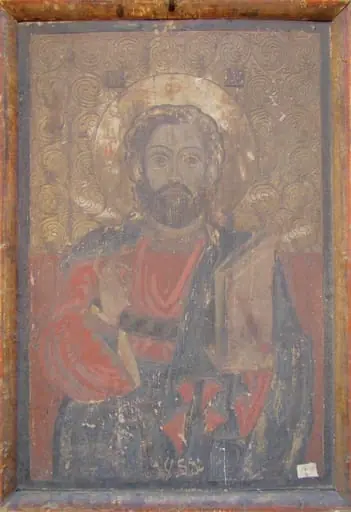
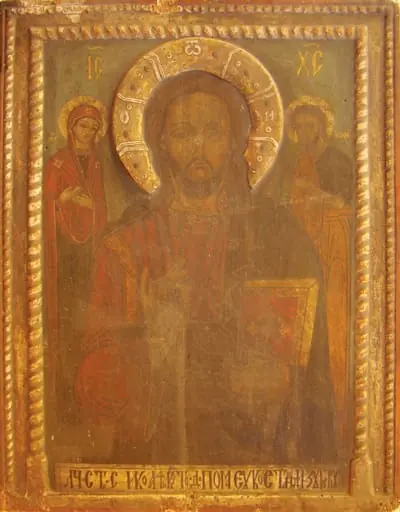
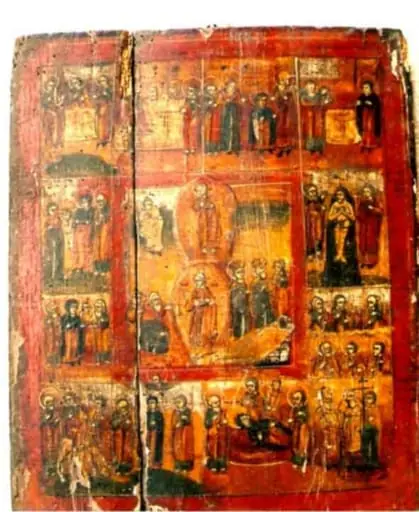
Iisus Hristos Pantocrator, înconjurat de apostoli
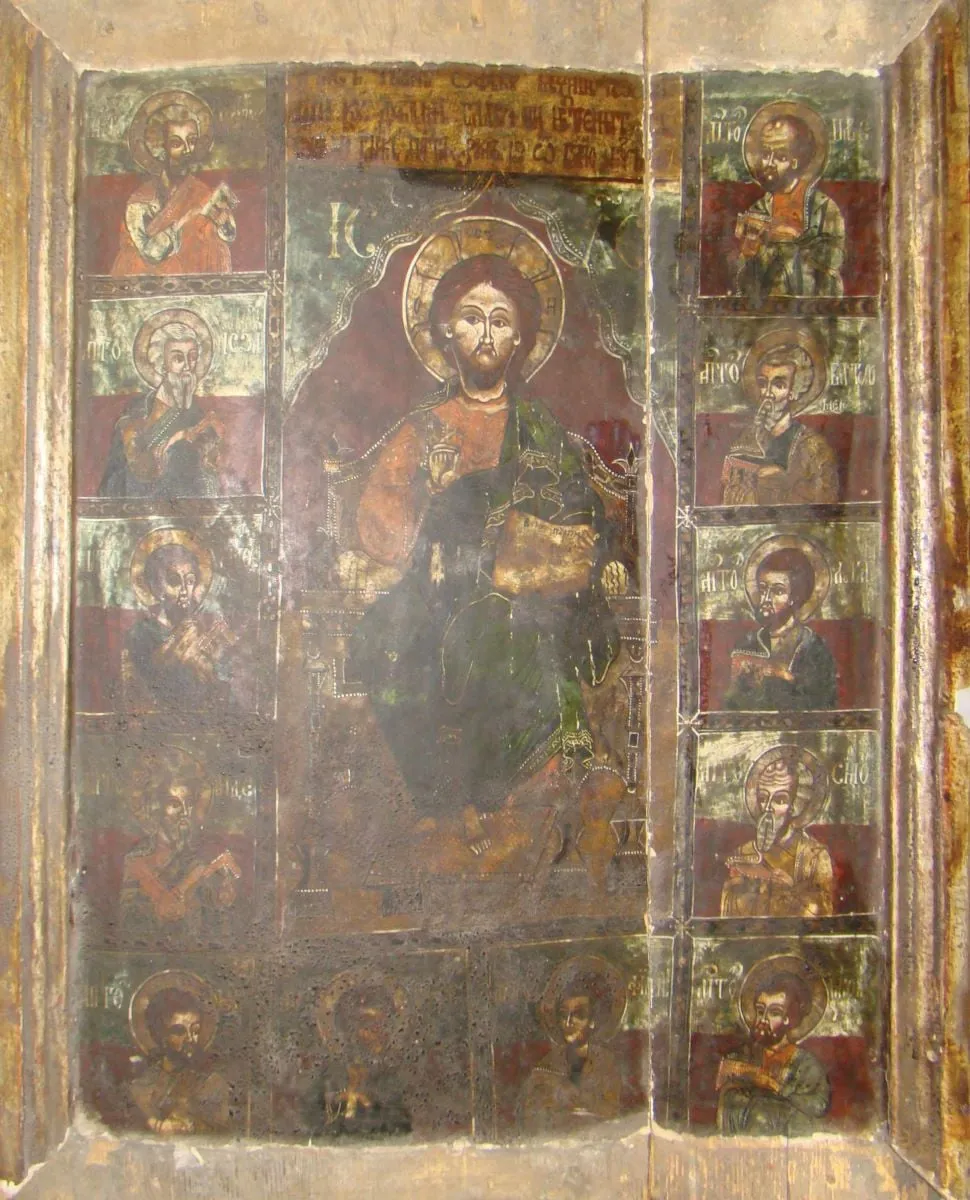
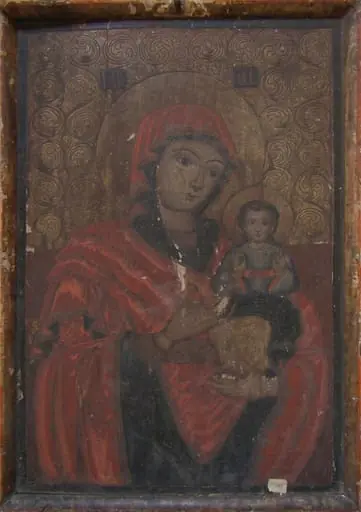
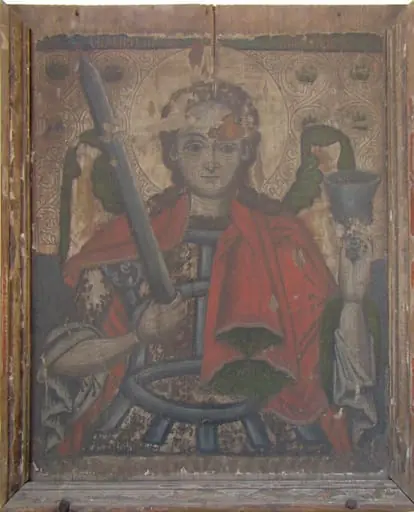
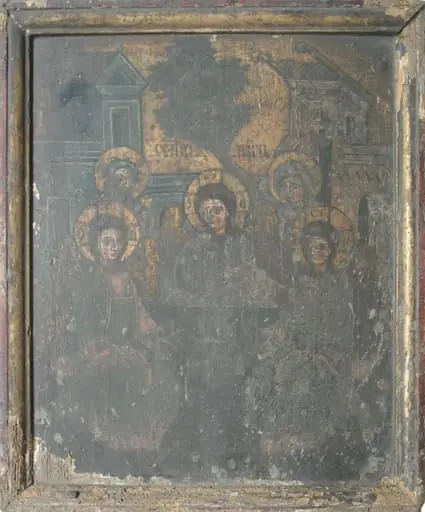
Iisus Hristos Pantocrator, înconjurat de apostoli is a drawing by the Baroque artist Ion de la Beriu. It dates from 1749 and is held in the collection of the Alba Iulia Orthodox Archdiocese.
About this work
Overview
The work resides in the Museum of Ethnography, where it serves as a testament to local devotional artistry during the late Baroque period.
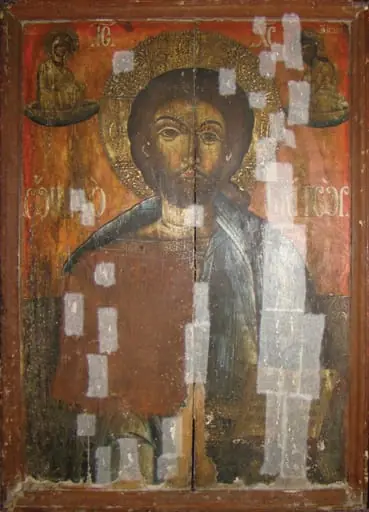
Painted in 1749 by Ion de la Beriu, this religious icon depicts Christ Pantocrator flanked by the Twelve Apostles. Executed in tempera or oil on wood, it reflects the enduring tradition of Eastern Christian iconography adapted within the cultural context of 18th-century Romanian Orthodox practice. The work resides in the Museum of Ethnography, where it serves as a testament to local devotional artistry during the late Baroque period.
Subject & Meaning
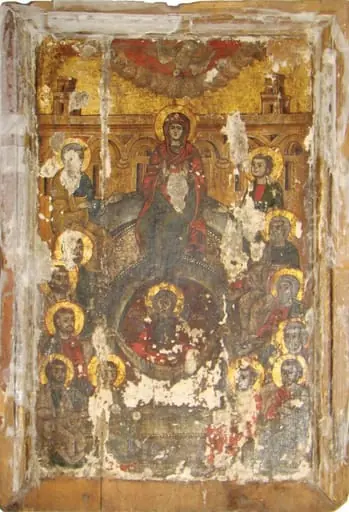
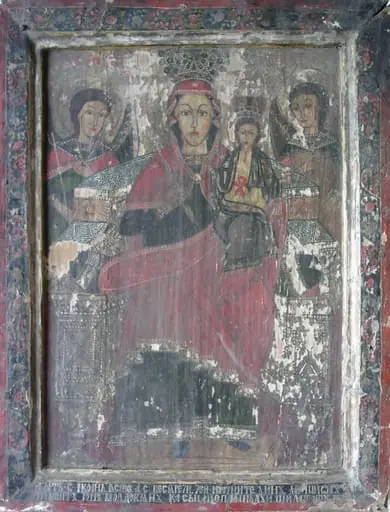
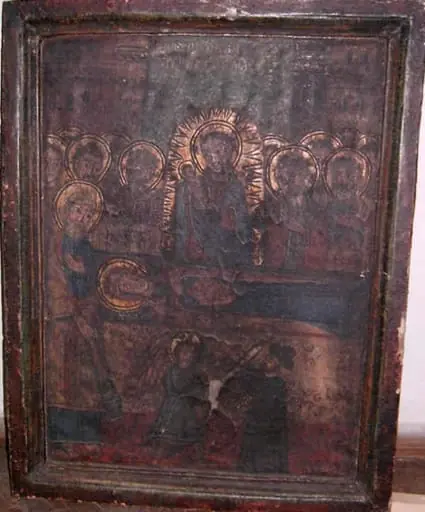
Christ Pantocrator, portrayed as the Almighty Ruler, occupies the central position, holding a closed Gospel book and wearing a green mantle, symbolizing divine authority and eternal life. Surrounding him, the twelve apostles are arranged symmetrically in two rows, each identified by a halo and individualized features. The composition reinforces theological hierarchy, emphasizing Christ’s supremacy and the apostles’ role as witnesses to divine truth.
Technique & Style
The painting employs fine brushwork and restrained pigments, with soft modeling and delicate outlines characteristic of regional icon traditions. Colors are muted—ochres, earth greens, and subdued reds—creating a solemn, contemplative atmosphere. The figures are rendered with formal symmetry and minimal spatial depth, prioritizing spiritual presence over naturalism, aligning with Byzantine-derived conventions adapted in Moldavian and Wallachian workshops.
History & Provenance
Commissioned likely for a local church or private chapel, the work entered the Museum of Ethnography’s collection in the 20th century as part of efforts to preserve religious artifacts from rural Romania. Its survival through centuries of political and religious change underscores its cultural significance. Documentation from the 18th century is sparse, but stylistic analysis confirms its origin in a skilled provincial atelier active in the mid-1700s.
Context
Created during a period when Romanian principalities maintained Orthodox traditions under Ottoman suzerainty, this icon reflects a synthesis of Byzantine models and local artistic sensibilities. While Western Baroque influences were spreading in urban centers, rural iconography retained older forms, emphasizing spiritual continuity. The work exemplifies how religious imagery served both liturgical function and communal identity in a time of limited access to broader European trends.
Legacy
As one of the few signed and dated icons from 18th-century Wallachia, it provides rare insight into the work of a named artist within a tradition often anonymous. Its preservation in a secular museum highlights shifting attitudes toward religious art in modern Romania. The piece continues to inform scholarly study of regional iconography and the persistence of Byzantine aesthetics in Eastern European religious culture.
Artist & collection
Artist
A Romanian draftsman active in the mid-1700s, Ion de la Beriu filled sheets with delicate ink lines and chalk accents.