Artwork
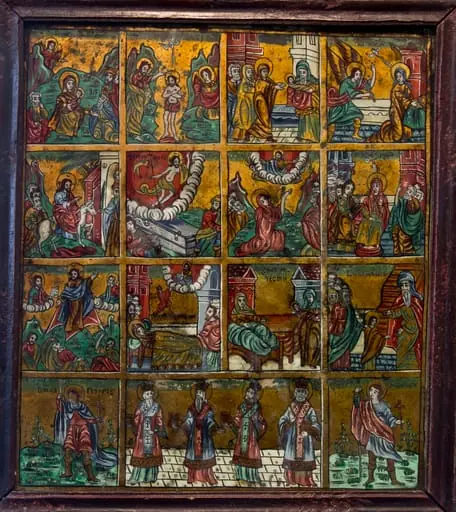
Prăznicar – Scene din Viața lui Iisus; Dodekaortion
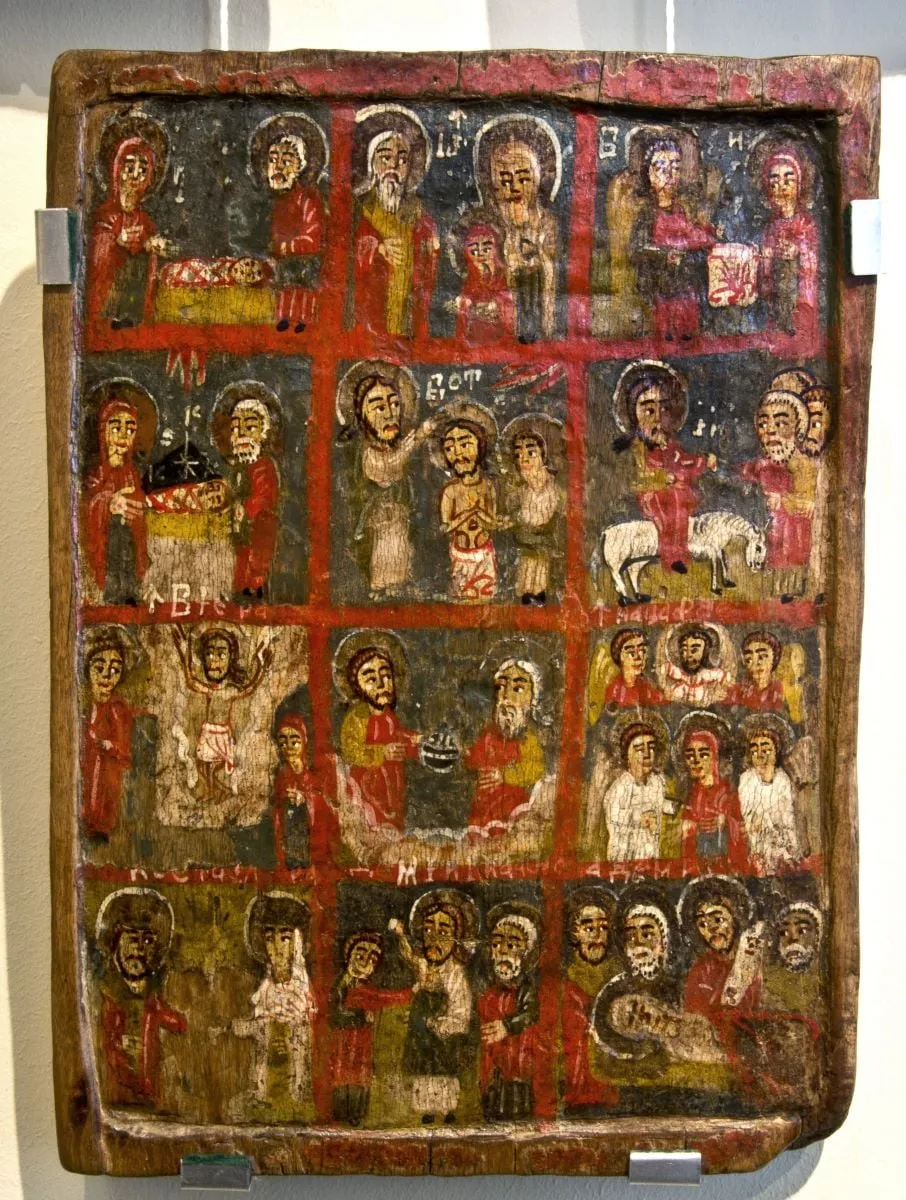
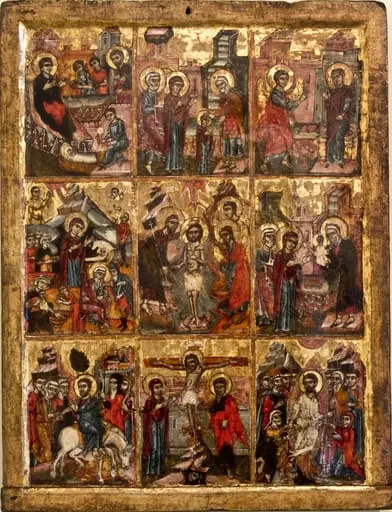
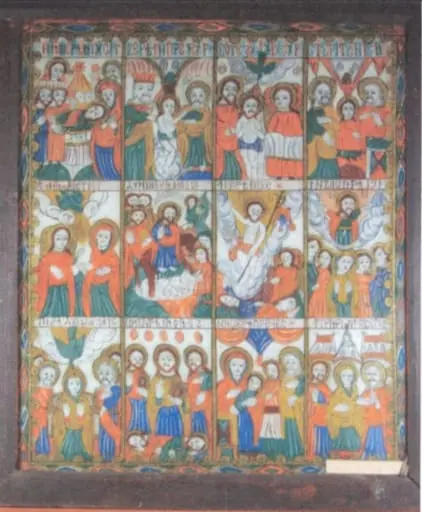
Prăznicar – Scene din Viața lui Iisus; Dodekaortion is a drawing by Unknown. It dates from 1850 and is held in the collection of the National Museum of Art of Romania. The work is a wooden panel divided into twelve separate compartments, each containing a small painted scene.
About this work
Overview
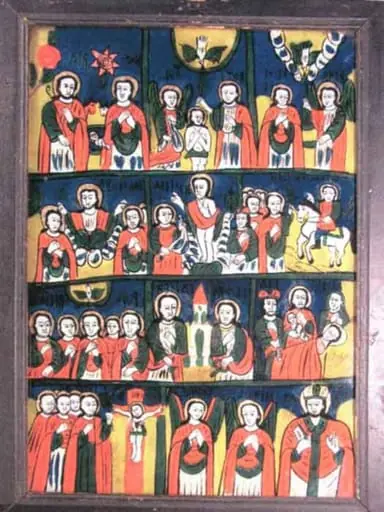
The work is a wooden panel divided into twelve separate compartments, each containing a small painted scene. The figures are rendered in vivid hues—predominantly reds and golds—and are marked by simple facial features. Despite some fading, the colors remain striking against a dark background, and every character is crowned with a halo, indicating a sacred narrative.
Subject & Meaning
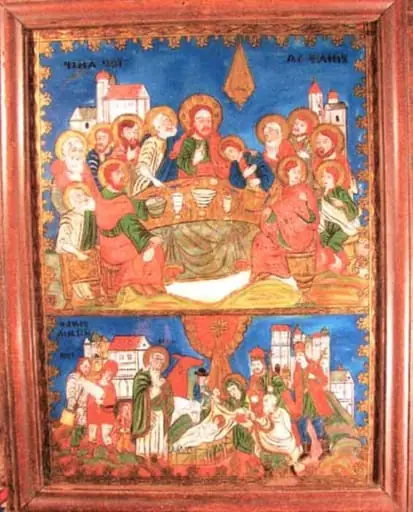
Each compartment depicts an episode from the life of Jesus, presented in a stylized, didactic manner. The presence of halos on all figures, including those in the lowest row, signals their sanctity and reinforces the work’s function as a visual aid for religious contemplation or instruction.
Technique & Style
The panel employs a flat, decorative painting technique typical of folk religious art, with limited modeling and an emphasis on bold outlines. The use of bright primary colors and gold accents creates a stark contrast with the dark wood, while the repetitive halo motif unifies the disparate scenes.
History & Provenance
The piece originates from a tradition of Romanian devotional panels, often used in domestic or parish settings. Its title, “Prăznicar – Scene din Viața lui Iisus; Dodekaortion,” references the twelve-part (dodeka) arrangement, a format common in Eastern European ecclesiastical art.
Context
Such multi-scene panels served as portable visual sermons, enabling lay viewers to engage with biblical narratives without access to a church interior. The simplified figures and bright palette reflect a folk aesthetic that coexisted with more formal iconography in the region.
Legacy
Works of this type illustrate the transmission of religious storytelling through visual means in rural communities. They continue to inform scholars about the interplay between popular art practices and liturgical tradition in Eastern Europe.
Artist & collection

 Domestic Scene
 Giacomo and Cardinal Marco, investing Andrea, Abbot of San Zeno, with his Benefice
 The Nymph of Fontainebleau
 Portrait of a Woman
 Madonna and Child with Saints in the Enclosed Garden
 Venus and Minerva
 Family Group of Four on Sofa
 Wall painting from Room H of the Villa of P. Fannius Synistor at Boscoreale