Artwork
Construction of the John Stewart Store
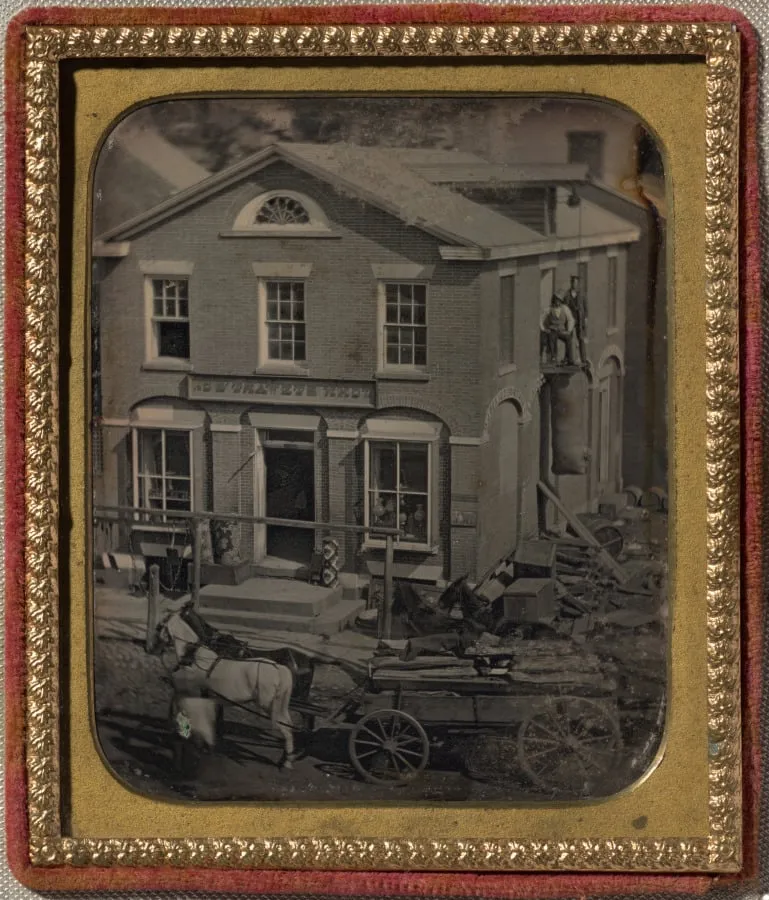
Construction of the John Stewart Store is a photography by the Impressionist artist Unknown. It dates from 1856 and is held in the collection of the Cleveland Museum of Art. A black-and-white photograph captures the John Stewart Store during its construction, likely in the late 19th or early 20th century.
About this work
Overview
A black-and-white photograph captures the John Stewart Store during its construction, likely in the late 19th or early 20th century.
A black-and-white photograph captures the John Stewart Store during its construction, likely in the late 19th or early 20th century. The image presents a candid moment of urban development: a two-story brick structure with a columned porch and large windows rises amid scattered tools, debris, and a horse-drawn wagon. The building’s name is visibly carved into the facade, anchoring the scene to a specific commercial enterprise.
Subject & Meaning
The photograph documents the physical and social labor behind commercial architecture. A figure sits atop a wagon, while workers shape a statue to the right, suggesting the integration of art into civic spaces. The presence of everyday elements—tools, animals, unfinished surfaces—emphasizes the ordinary process of building, not its grandeur, reflecting a focus on the material reality of urban life.
Technique & Style
The image exhibits the characteristics of early photographic processes: grainy texture, low contrast, and a flattened perspective. No artistic embellishment is evident; the composition is straightforward, prioritizing documentation over drama. The lighting is even, likely natural, and the focus remains on architectural detail and activity, aligning with the observational aims of documentary photography.
History & Provenance
The photograph likely originated from a local photographer or contractor’s archive, recording progress for clients or municipal records. Its survival suggests it was preserved as a historical record rather than an artistic object. The carved name implies the store was a planned commercial venture, possibly in a small town or growing city where such buildings signaled economic development.
Context
This image reflects a period when brick storefronts with decorative elements became common in American towns, blending utility with civic pride. Horse-drawn transport and hand-carved statuary indicate a transition between pre-industrial and industrial methods. Similar photographs from the era were often used by builders to showcase work or by towns to track growth, making this a typical yet valuable record of everyday progress.
Legacy
The photograph endures as a quiet testament to the labor and materials behind commercial architecture. It contributes to the visual archive of American urban development, offering insight into the pace and methods of construction before mechanization became widespread. Its value lies not in aesthetics but in its unembellished record of a moment in the life of a local business.
Artist & collection

 Domestic Scene
 Giacomo and Cardinal Marco, investing Andrea, Abbot of San Zeno, with his Benefice
 The Nymph of Fontainebleau
 Portrait of a Woman
 Madonna and Child with Saints in the Enclosed Garden
 Venus and Minerva
 Family Group of Four on Sofa
 Wall painting from Room H of the Villa of P. Fannius Synistor at Boscoreale
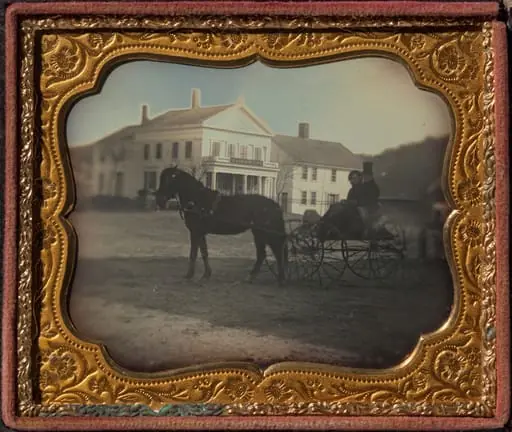 Solomon Clark Spelman and Martha W. Spelman in front of S.C. Spelman General Store, Hampden, MA
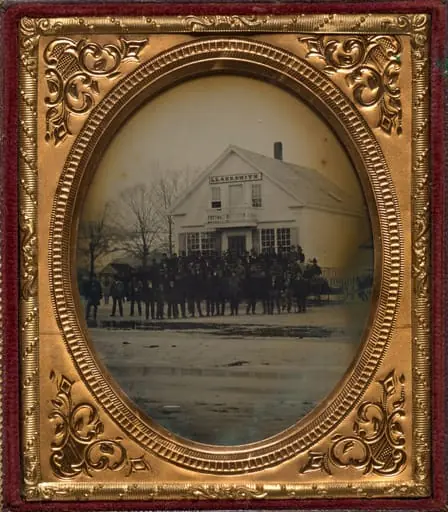 Crowd with sleigh in front of LL & ER Smith store
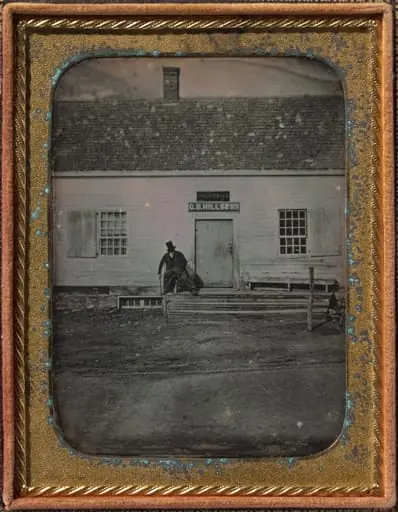 Cyrus B. Hills, Postmaster, Arlington, Vermont
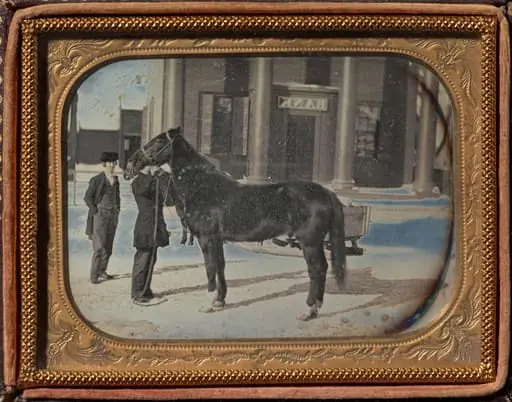 Prize Horse in winter, Chemung County, New York
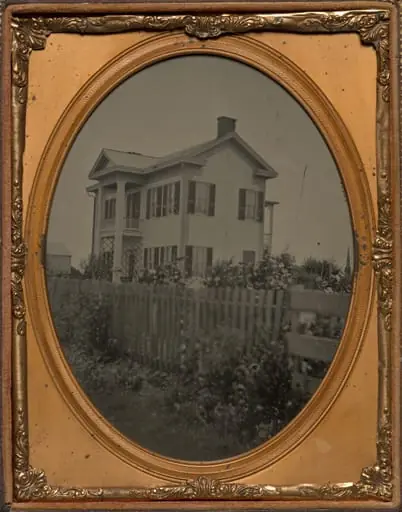 Homestead with picket fence and flowers
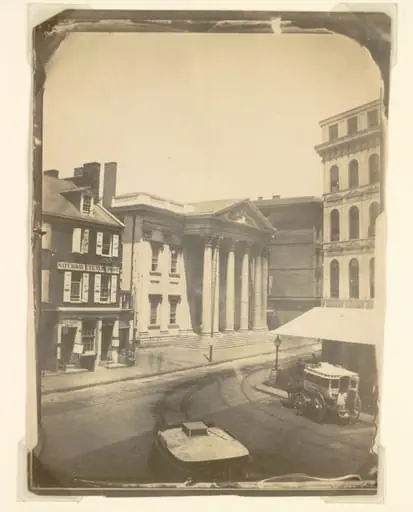 First Bank of the United States, Philadelphia
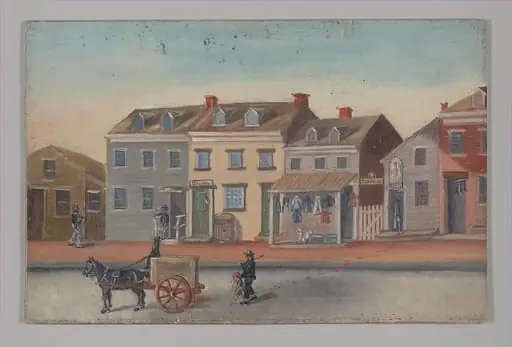 The Dog Killer
 Buggy
Buggy St. Anthony Falls from Across the River
 House Raising
 English family of seven
 The Claremont