Artwork
Crow on a Pomegranate
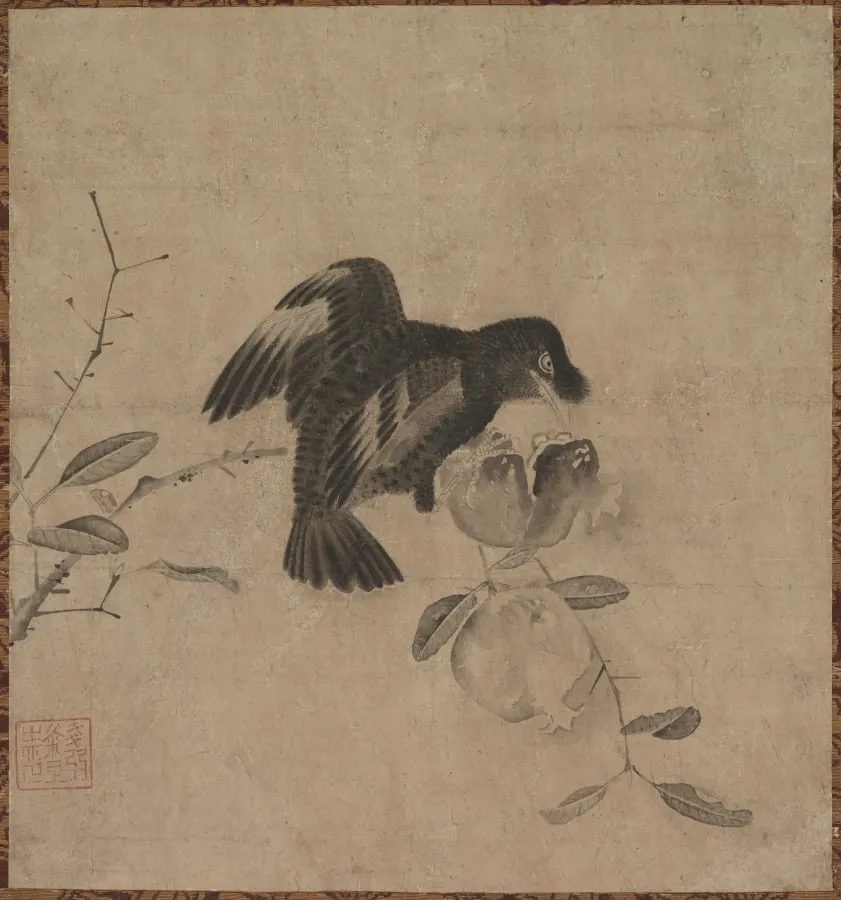
Crow on a Pomegranate is an unspecified painting by the Renaissance artist Unknown. It dates from 1504 and is held in the collection of the Cleveland Museum of Art. This painting depicts a single crow perched on a pomegranate-laden branch, rendered with energetic brushwork and minimal background.
About this work
Overview
The crow’s posture suggests motion, as if caught mid-call, while the partially opened pomegranate adds a sense of ripeness and fragility.
This painting depicts a single crow perched on a pomegranate-laden branch, rendered with energetic brushwork and minimal background. The composition isolates the bird and fruit, eliminating distractions to emphasize their interaction. The crow’s posture suggests motion, as if caught mid-call, while the partially opened pomegranate adds a sense of ripeness and fragility. The plain backdrop directs attention entirely to the subject, reinforcing a quiet, contemplative mood.
Subject & Meaning
The crow, often associated with transition or observation in cultural symbolism, is paired with the pomegranate—a fruit linked to abundance, decay, and renewal. Its open seeds suggest both fertility and impermanence. The bird’s open beak may imply a call to attention or a moment of alertness. Together, the elements evoke a quiet tension between life and mortality, without overt narrative, leaving interpretation open to the viewer’s perception.
Technique & Style
The crow’s feathers are applied with swift, decisive strokes that convey texture and movement rather than精细 detail. The pomegranate’s flesh is rendered with subtle gradations, suggesting soft light and depth without heavy modeling. Edges are softened, allowing forms to emerge organically from the surface. The lack of shadow or ambient light creates a flattened, focused space, emphasizing form over environment and aligning with a restrained, observational approach.
History & Provenance
The painting’s origin and early ownership remain undocumented. No known exhibition records or collector histories precede its modern appearance. Its style suggests a late 19th- or early 20th-century origin, possibly from an artist working in a naturalist or symbolic tradition. The work has no documented connection to major movements or artists, and its creation context is inferred solely from its visual language.
Context
In the broader tradition of still-life and animal painting, this work aligns with a trend toward intimate, solitary subjects—often used to explore themes of nature’s cycles. Unlike ornate still lifes of the 17th century, this piece avoids symbolic clutter, favoring simplicity. Its focus on a single bird and fruit reflects a modern shift toward minimalism and psychological resonance over allegorical complexity.
Legacy
The painting has not been widely reproduced or studied in academic circles. Its influence, if any, is indirect—echoing the quiet intensity found in later modernist works that privilege mood over narrative. It remains a quiet example of how elemental forms, rendered with confidence, can evoke layered meaning without elaborate context or historical reference.
Artist & collection

 Domestic Scene
 Giacomo and Cardinal Marco, investing Andrea, Abbot of San Zeno, with his Benefice
 The Nymph of Fontainebleau
 Portrait of a Woman
 Madonna and Child with Saints in the Enclosed Garden
 Venus and Minerva
 Family Group of Four on Sofa
 Wall painting from Room H of the Villa of P. Fannius Synistor at Boscoreale
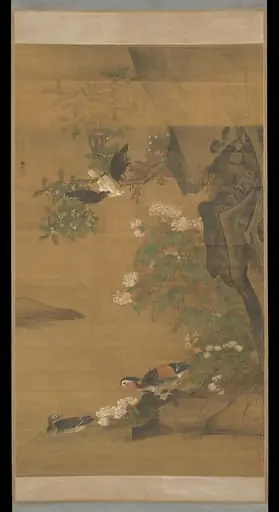 明 呂紀 鴛鴦芙蓉圖 軸|Mandarin ducks and cotton rose hibiscus
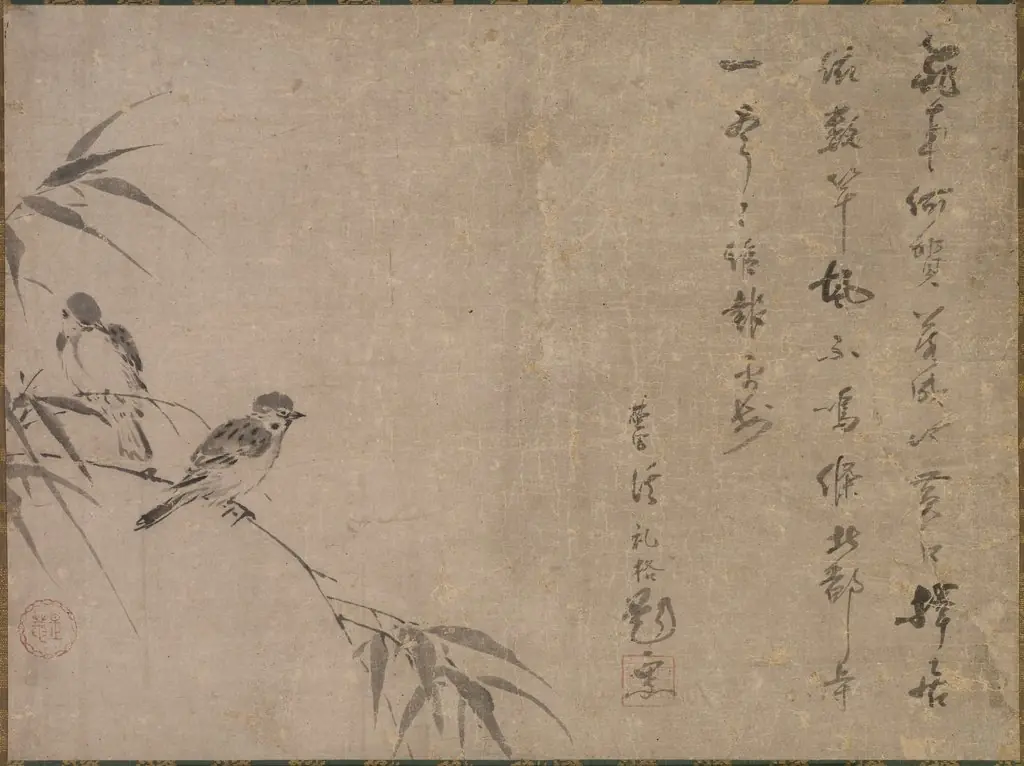 Sparrows and Bamboo
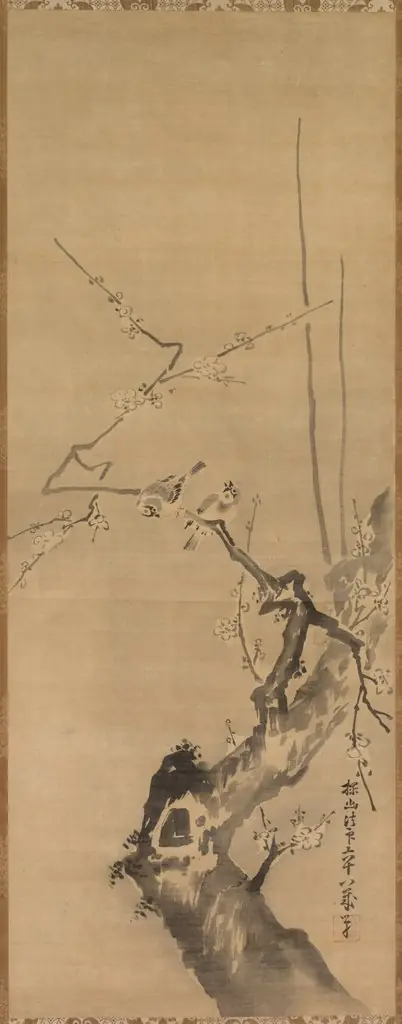 Sparrows on Blossoming Plum; A Sage with Tiger; Chinese Bird on Snow-Laden Branch
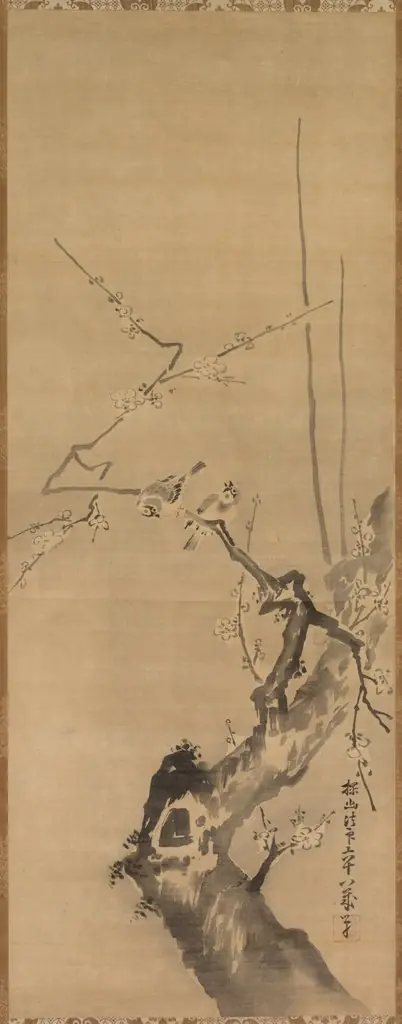 Sparrows on Blossoming Plum
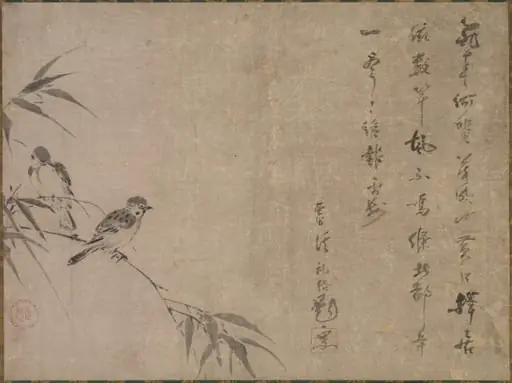 Sparrows and Bamboo
 Sparrows on Blossoming Plum
 Sparrows on Blossoming Plum; A Sage with Tiger; Chinese Bird on Snow-Laden Branch
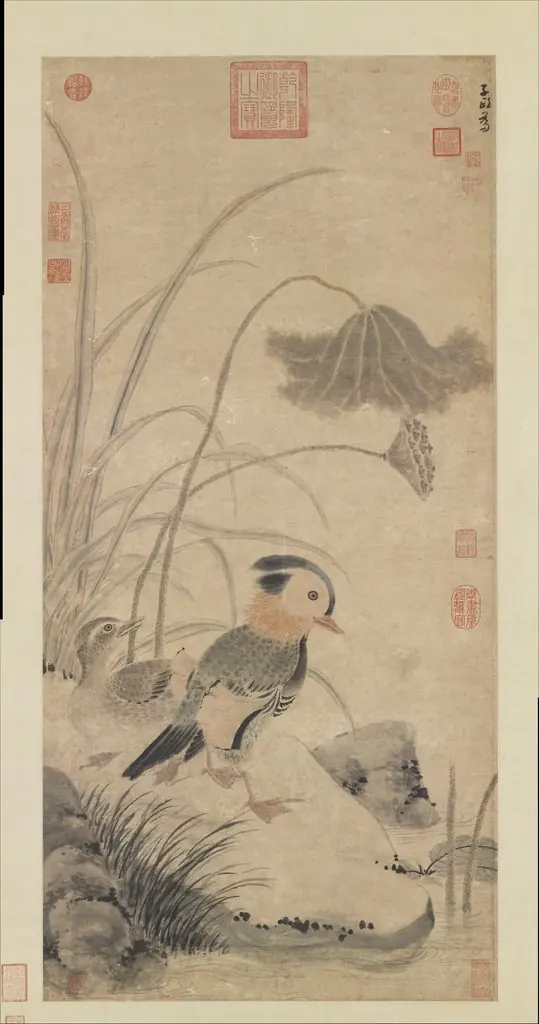 Withered Lotuses and Mandarin Ducks
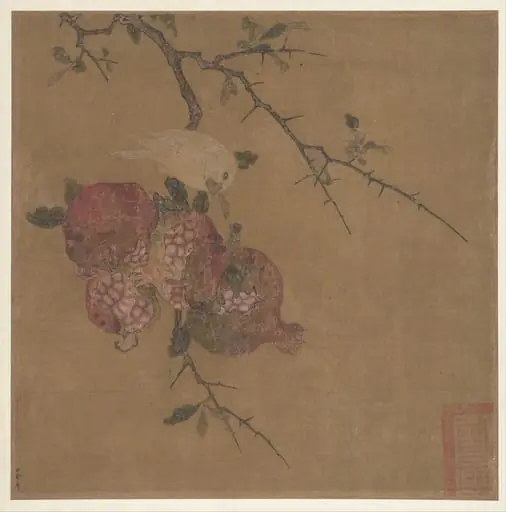 明/清 佚名 傳馬麟 石榴白鳥圖 冊頁 |Pomegranates after Ma Lin
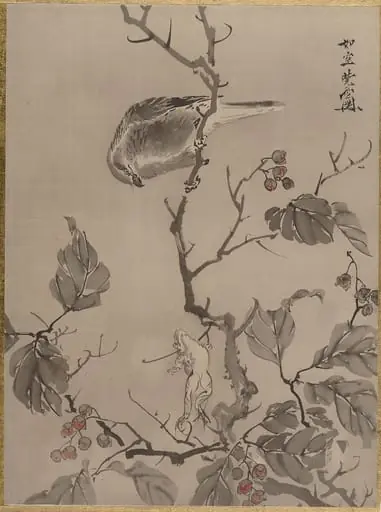 Untitled