Artwork
Das Bildnis Christi
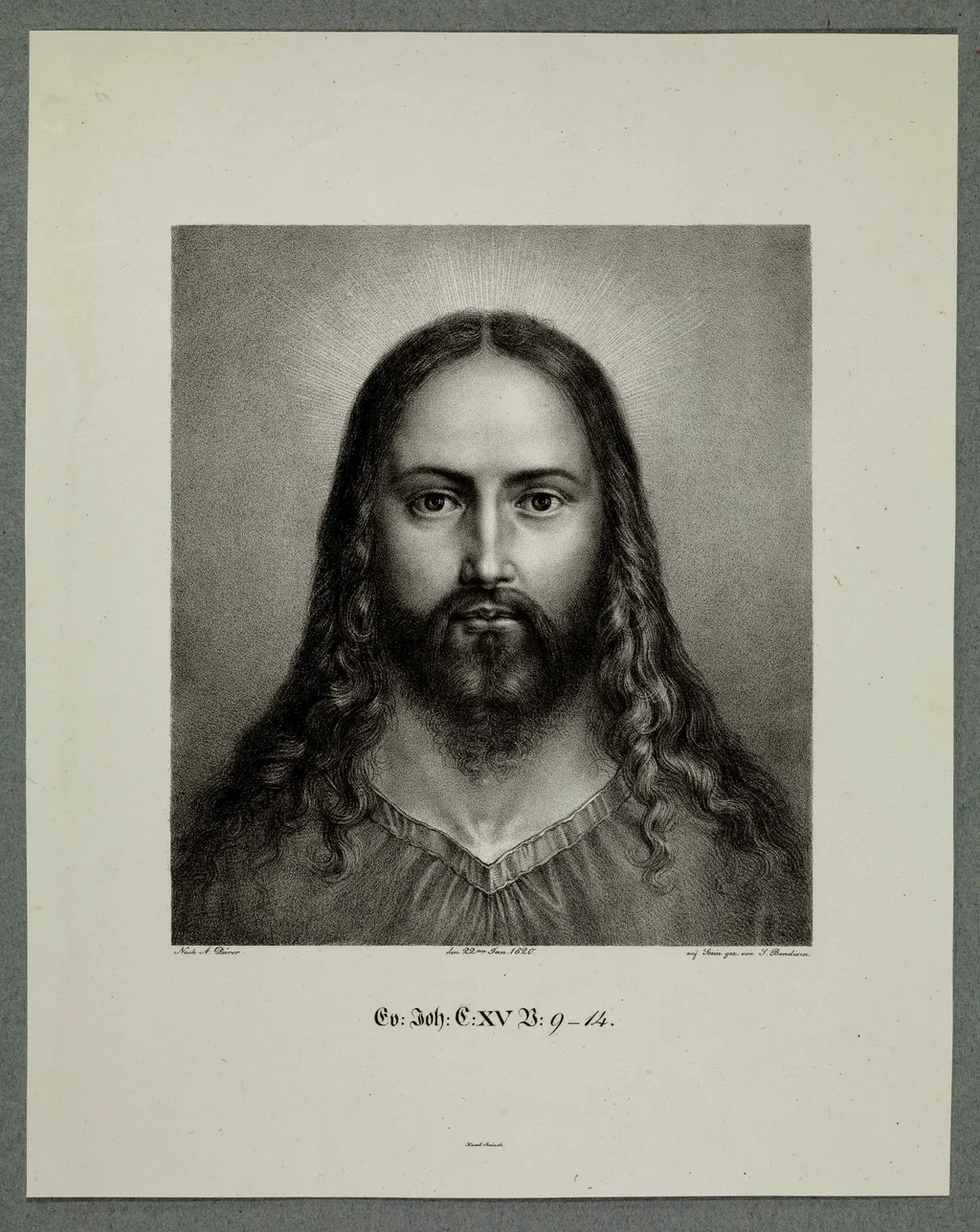
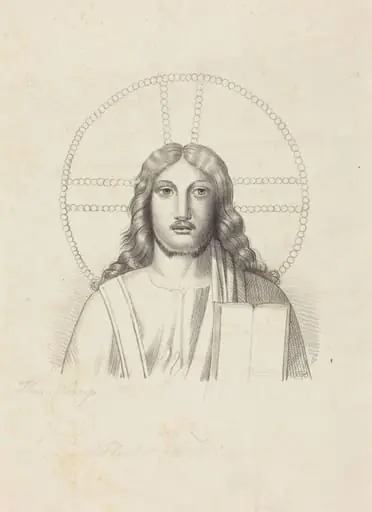
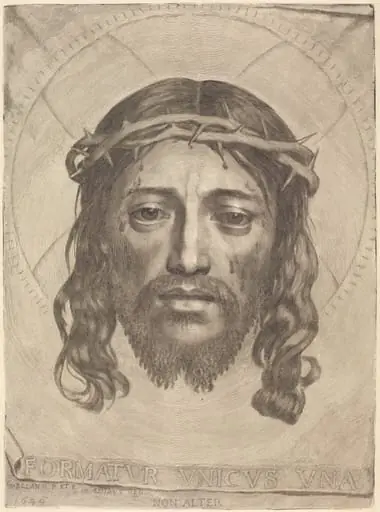
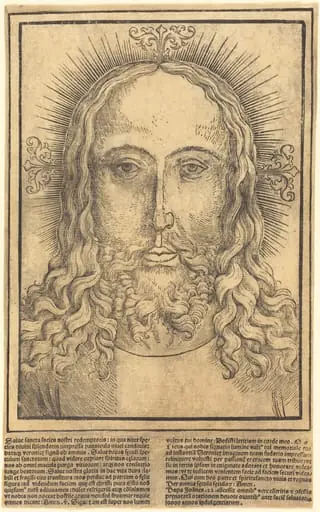
Das Bildnis Christi is a drawing by Unknown. It dates from 1499 and is held in the collection of the Bamberg State Library. The work is a lithographic reproduction of a Christ portrait traditionally linked to Albrecht Dürer.
About this work
This drawing shows a bearded man with long hair, facing forward in a simple robe. The lines are crisp and close together, like a sketch you’d see in a notebook.
Someone copied this from Albrecht Dürer’s famous 1526 engraving. They used cross-hatching—those tiny lines—to make shadows look real. It’s not original, but it’s a well-done copy.
Look up Dürer’s engraving online next.
Overview
The work is a lithographic reproduction of a Christ portrait traditionally linked to Albrecht Dürer. Produced by the Hamburg lithography firm Speckter & Herterich, the image presents a bearded, long‑haired figure in a plain robe, rendered with tight, crisp lines that recall a notebook sketch.
Subject & Meaning
The figure is identified as Christ, depicted in a frontal pose that emphasizes solemnity and devotion. The simplicity of the attire and the direct gaze invite contemplation, aligning with devotional imagery common in early‑modern religious prints.
Technique & Style
The lithograph employs dense cross‑hatching to model volume and create shadow, a method that mirrors the tonal effects of Dürer’s original 1526 engraving. The line work is precise and compact, giving the image a draft‑like quality while preserving the depth of the source.
History & Provenance
The print was issued by Speckter & Herterich after a lithograph made by Bendixen, using a background painting from the collection of Hamburg painter Jes Bundsen (1766‑1829). In 1827, scholar Heller incorporated the image under the heading “After Dürer’s Paintings and Drawings” in his publication on Dürer, citing it as an example of the master’s influence.
Context
During the early nineteenth century, reproductions of Dürer’s works were popular among scholars and collectors seeking to disseminate his legacy. This lithograph reflects that trend, serving both as an educational tool and as a means of making Dürer’s religious iconography accessible beyond the original engraving.
Artist & collection

 Domestic Scene
 Giacomo and Cardinal Marco, investing Andrea, Abbot of San Zeno, with his Benefice
 The Nymph of Fontainebleau
 Portrait of a Woman
 Madonna and Child with Saints in the Enclosed Garden
 Venus and Minerva
 Family Group of Four on Sofa
 Wall painting from Room H of the Villa of P. Fannius Synistor at Boscoreale