Artwork
Der Hirte auf der Bergspitze bei Abendschein
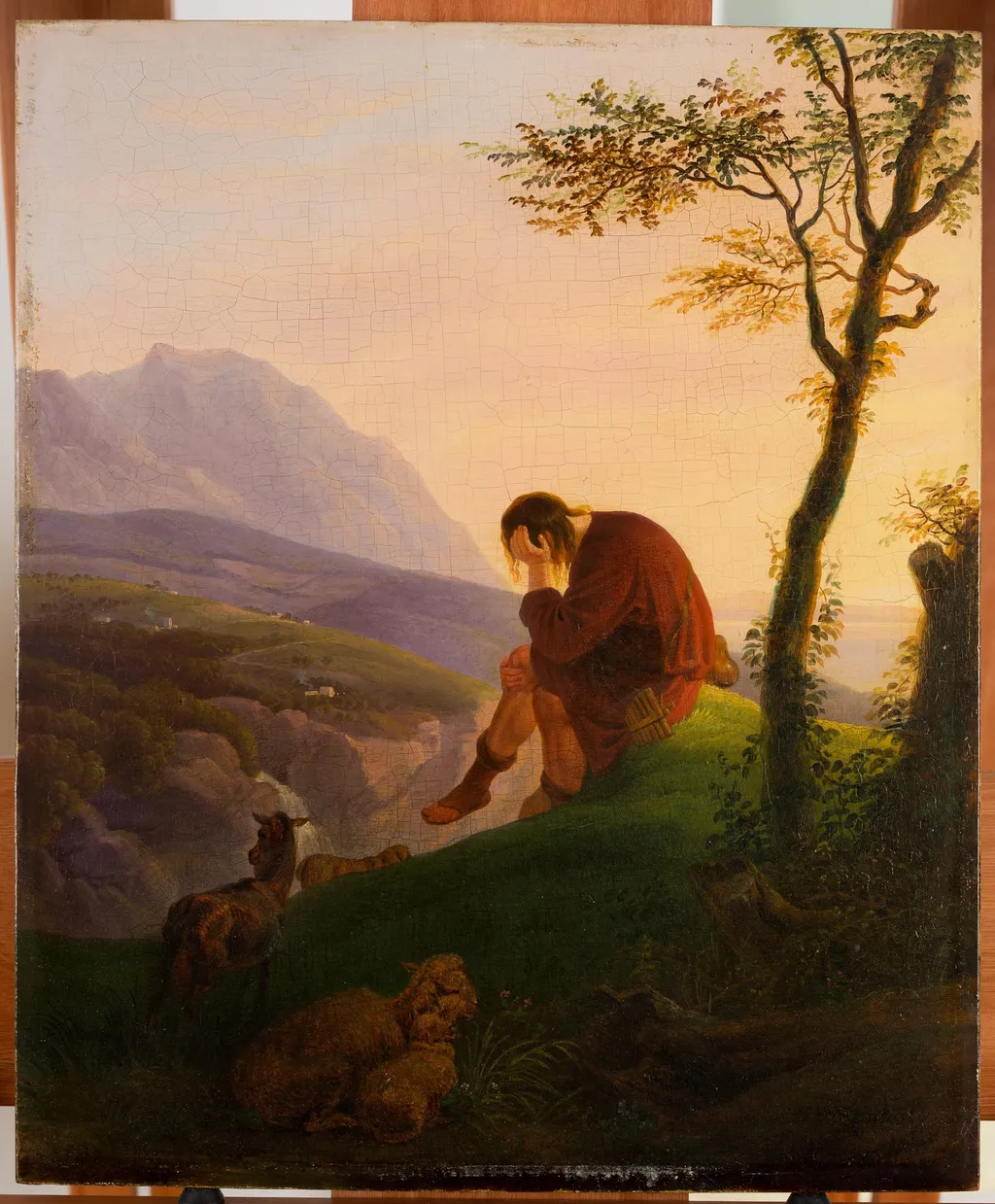
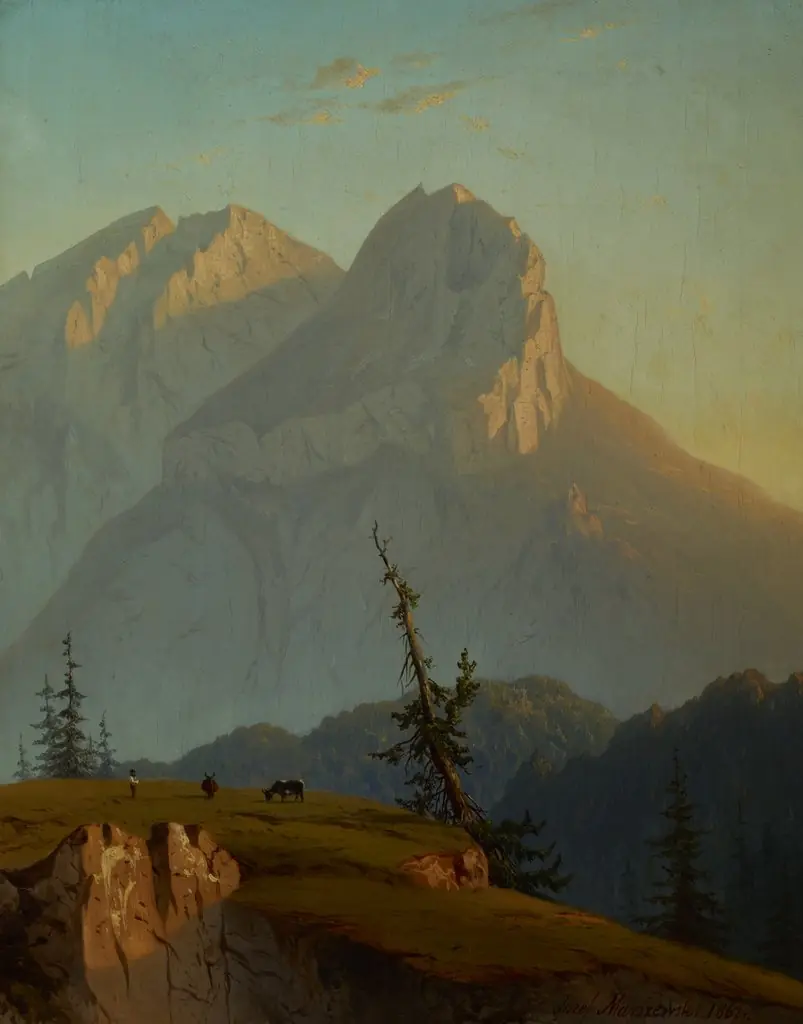
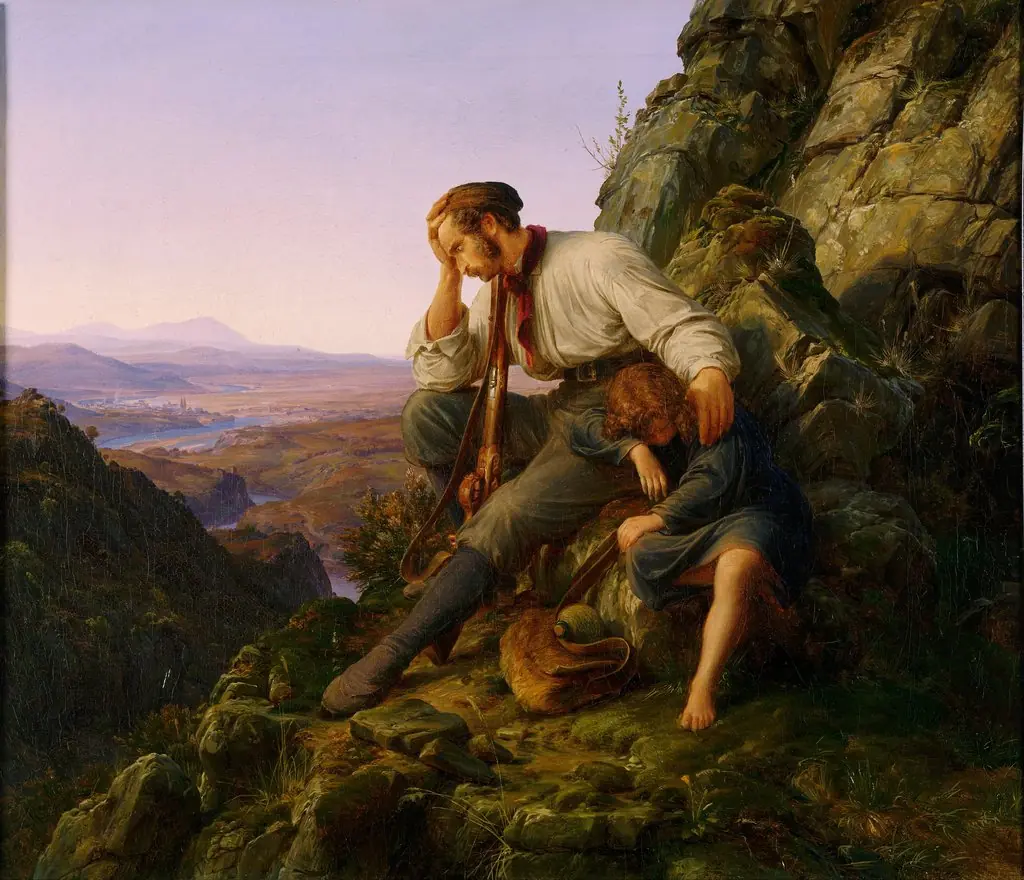
Der Hirte auf der Bergspitze bei Abendschein is a drawing by Unknown. It dates from 1850 and is held in the collection of the Art Collection of the University Göttingen. This image portrays a solitary shepherd at the summit of a mountain as evening falls.
About this work
Overview
Soft light bathes the terrain in gold and amber, while distant buildings and grazing animals suggest a quiet, lived-in wilderness.
This image portrays a solitary shepherd at the summit of a mountain as evening falls. The scene is quiet and unhurried, with the figure resting his head in his hand, gazing across the land. Soft light bathes the terrain in gold and amber, while distant buildings and grazing animals suggest a quiet, lived-in wilderness. The composition emphasizes stillness, drawing attention to the harmony between human presence and natural landscape.
Subject & Meaning
The shepherd, a figure often associated with solitude and reflection, is shown in a moment of contemplation. His posture and the fading light imply a pause between day and night, work and rest. The surrounding animals and distant dwellings hint at a simple, rural existence. The scene does not narrate action but evokes an inner quiet, suggesting themes of endurance, solitude, and the passage of time.
Technique & Style
Warm, muted tones dominate the palette—ochres, burnt siennas, and soft golds—creating a cohesive atmosphere of twilight. Brushwork is gentle and blended, avoiding sharp edges to enhance the sense of calm. Light is diffused evenly across the sky and terrain, unifying the elements. The artist avoids dramatic contrasts, favoring subtlety to reinforce the mood of tranquility.
History & Provenance
The work’s origin and early ownership are not documented in available records. It appears to be a standalone piece, likely created in the late 19th or early 20th century, reflecting a broader interest in pastoral themes during a period of rapid industrialization. No exhibition history or collector lineage is publicly recorded.
Context
The image aligns with 19th-century European traditions that idealized rural life as an antidote to urbanization. Similar subjects appeared in works by artists influenced by Romanticism and Realism, who sought to capture the dignity of humble labor and the quiet beauty of nature. This piece, however, avoids sentimentality, focusing instead on understated presence.
Legacy
Though not widely exhibited or reproduced, the image contributes to a quieter strand of landscape art that values stillness over spectacle. Its enduring appeal lies in its restraint—offering no grand narrative, only a moment of suspended peace. It remains a quiet testament to the emotional resonance of ordinary scenes in nature.
Artist & collection
Museum
Art Collection of the University Göttingen
Continue through works from the same source collection.
 Domestic Scene
 Giacomo and Cardinal Marco, investing Andrea, Abbot of San Zeno, with his Benefice
 The Nymph of Fontainebleau
 Portrait of a Woman
 Madonna and Child with Saints in the Enclosed Garden
 Venus and Minerva
 Family Group of Four on Sofa
 Wall painting from Room H of the Villa of P. Fannius Synistor at Boscoreale