Artwork
Desakara Ragini
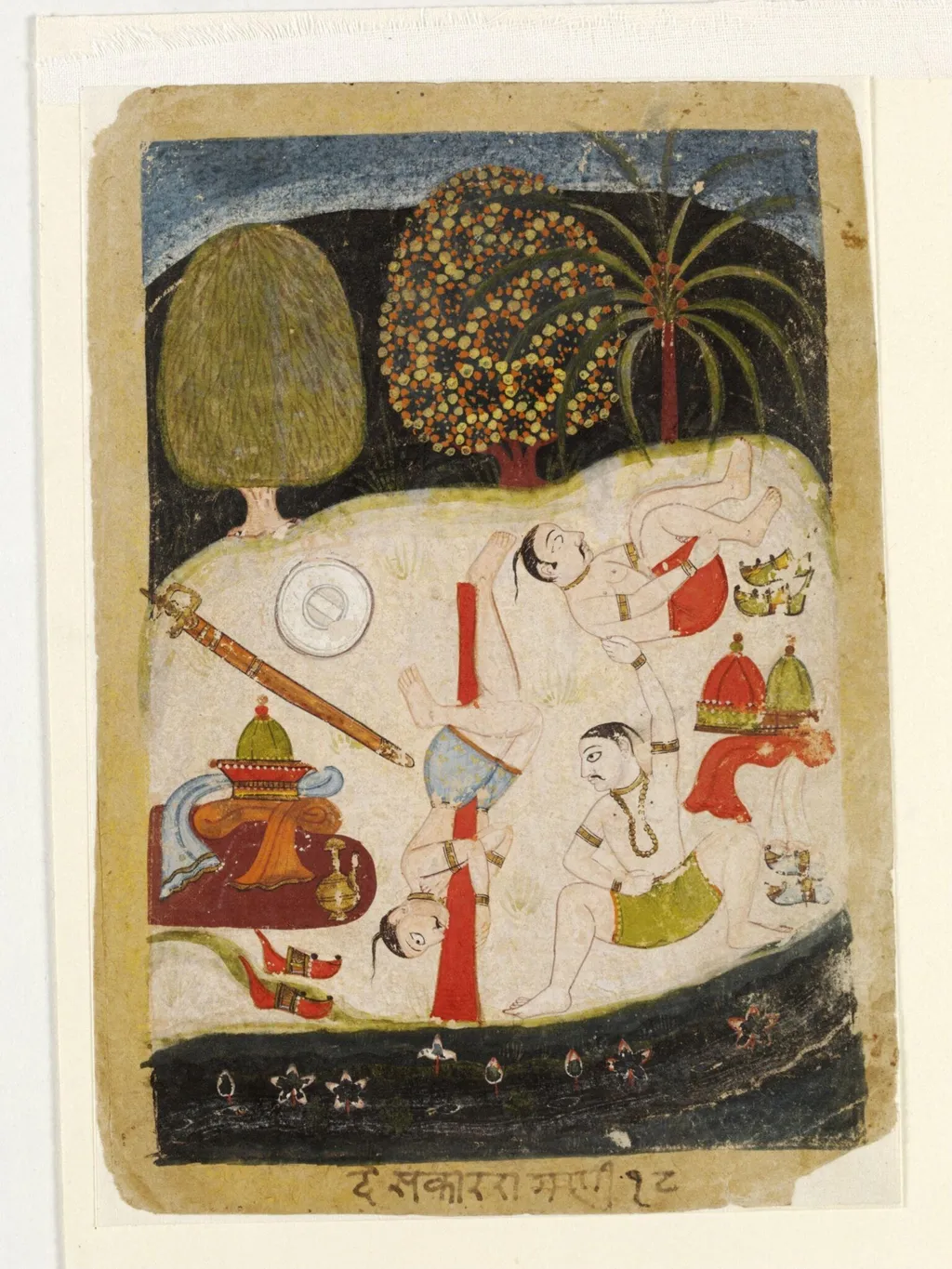
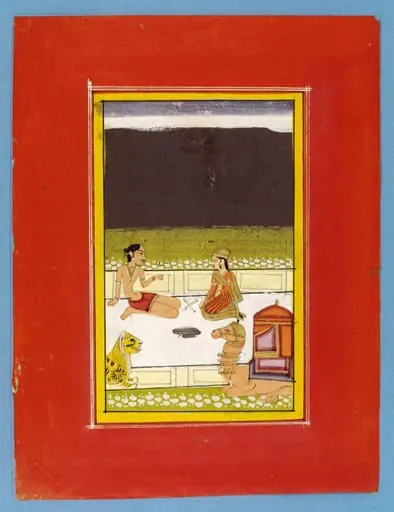
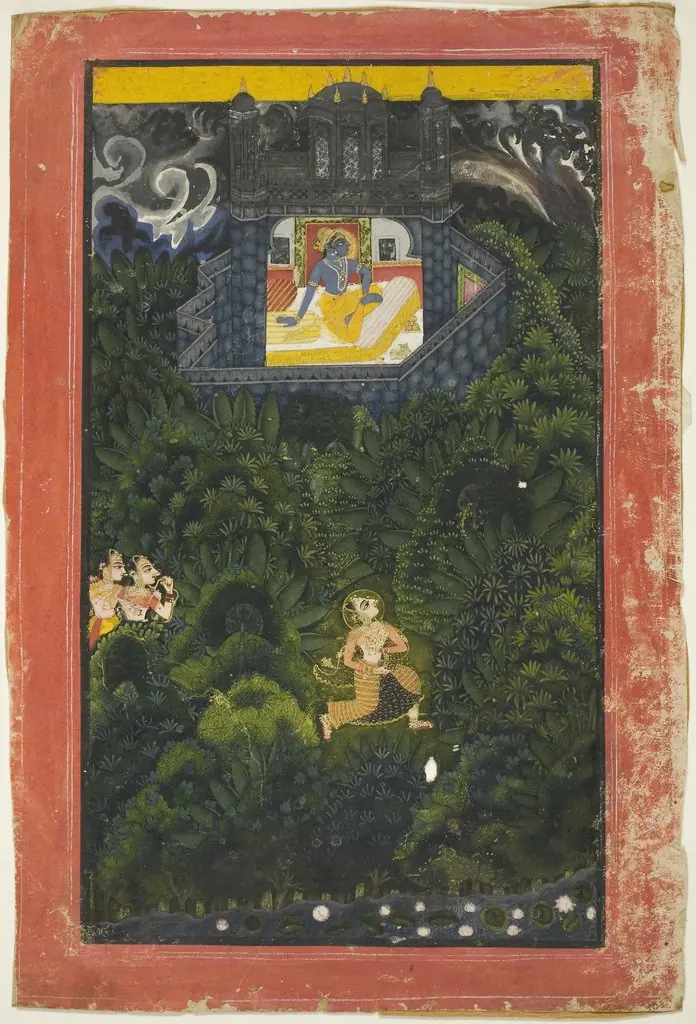
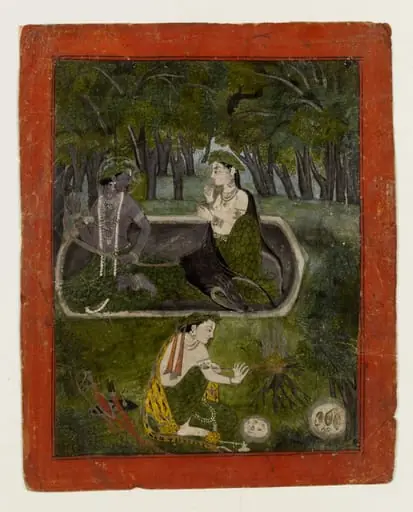
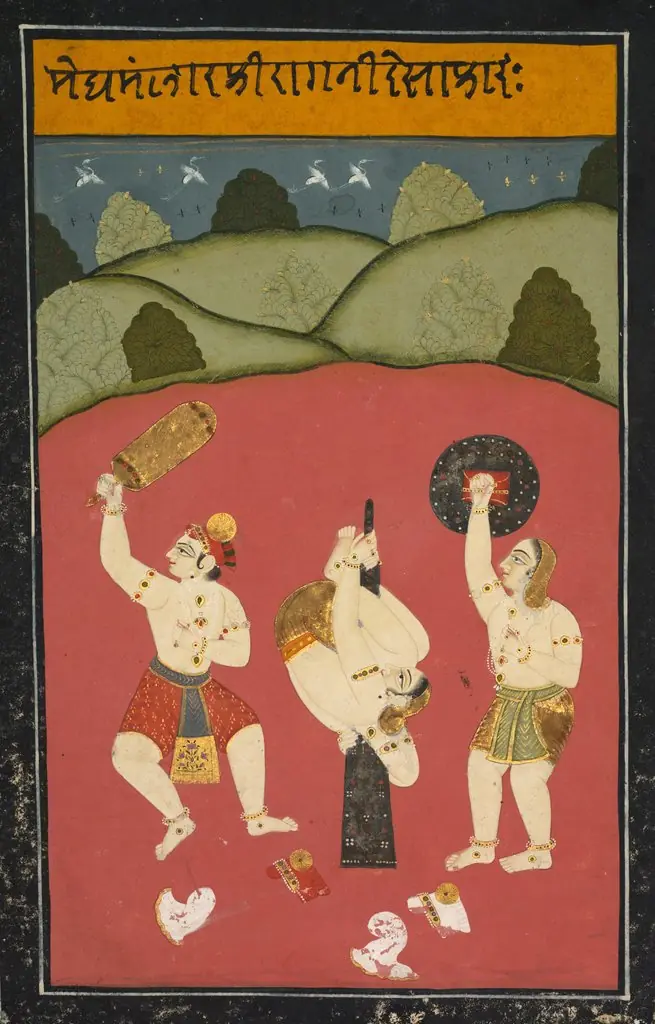
Desakara Ragini is a paint painting by the Mughal Painting artist Unknown. It dates from 1650 and is held in the collection of the Victoria and Albert Museum.
About this work
Overview
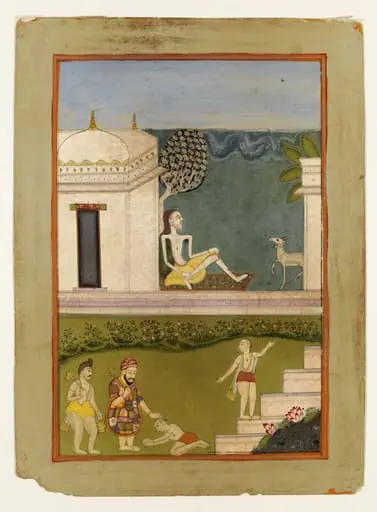
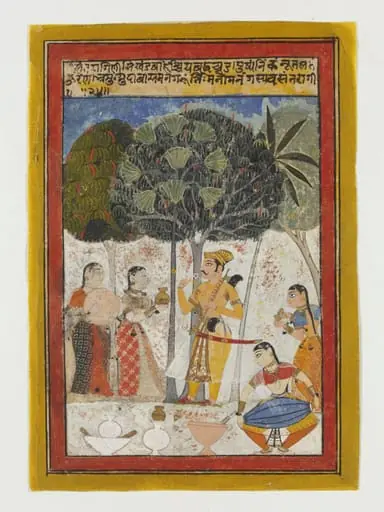
Created around 1650, this opaque watercolor on paper illustrates the Desakara Ragini, a melodic mode from the Indian classical tradition. The scene captures a moment of informal musical gathering near a stream, rendered with vivid pigments on a pale ground. The composition is dense with figures and natural elements, suggesting a rhythmic harmony between human activity and the landscape.
Subject & Meaning
The depiction aligns with poetic traditions linking specific ragas to time, mood, and activity, here evoking leisure and communal joy in a natural environment.
The painting visualizes the Desakara Ragini through a scene of musicians and performers in a rural setting. Four individuals engage with instruments and movement—one reclines, another drums, and two others hold stringed or wind instruments. The depiction aligns with poetic traditions linking specific ragas to time, mood, and activity, here evoking leisure and communal joy in a natural environment.
Technique & Style
The artist employed opaque watercolor with bold, flat areas of red, green, and blue, creating strong visual contrast against the pale paper. Forms are outlined clearly, with minimal shading, emphasizing pattern and gesture over depth. The figures and foliage are stylized, their details rendered with precision despite the lack of perspective, reflecting a regional Pahari aesthetic focused on expressive clarity.
History & Provenance
This work originates from the Pahari school of painting, likely produced in a royal atelier in the hills of northern India. Its survival with visible edge wear suggests it was once part of a larger manuscript or album, handled and viewed over centuries. While its exact early ownership is undocumented, its style aligns with mid-17th-century works from the Basohli or Guler regions.
Context
In the 17th century, Rajput courts commissioned illustrated ragamalas—series depicting musical modes as visual narratives. Desakara Ragini was one of many such themes, often associated with late afternoon or evening. These paintings served both devotional and aesthetic purposes, translating abstract musical concepts into tangible, emotionally resonant scenes.
Legacy
The painting exemplifies the Pahari tradition’s ability to merge spiritual symbolism with everyday vitality. Though not widely known outside specialized collections, it contributes to the broader understanding of how Indian musical theory was visually interpreted. Its preservation allows continued study of regional artistic responses to classical culture in early modern India.
Artist & collection

 Domestic Scene
 Giacomo and Cardinal Marco, investing Andrea, Abbot of San Zeno, with his Benefice
 The Nymph of Fontainebleau
 Portrait of a Woman
 Madonna and Child with Saints in the Enclosed Garden
 Venus and Minerva
 Family Group of Four on Sofa
 Wall painting from Room H of the Villa of P. Fannius Synistor at Boscoreale