Artwork
Rama and Ravana
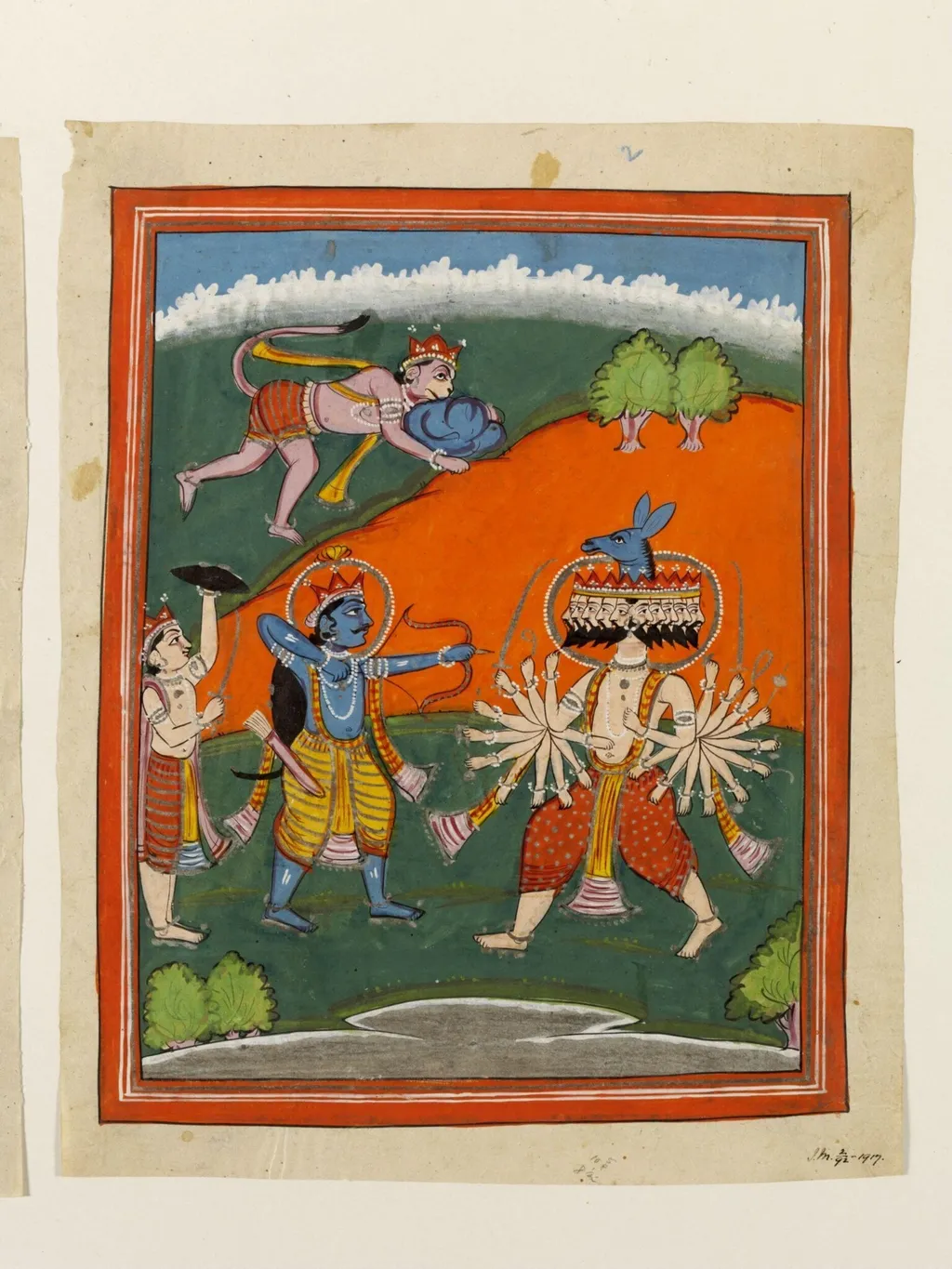
Rama and Ravana is a paint painting by Unknown. It dates from 1850 and is held in the collection of the Victoria and Albert Museum.
About this work
Overview
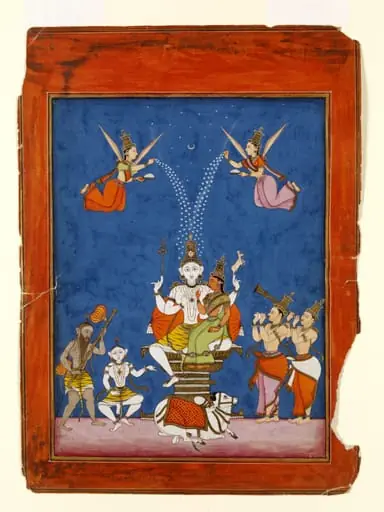
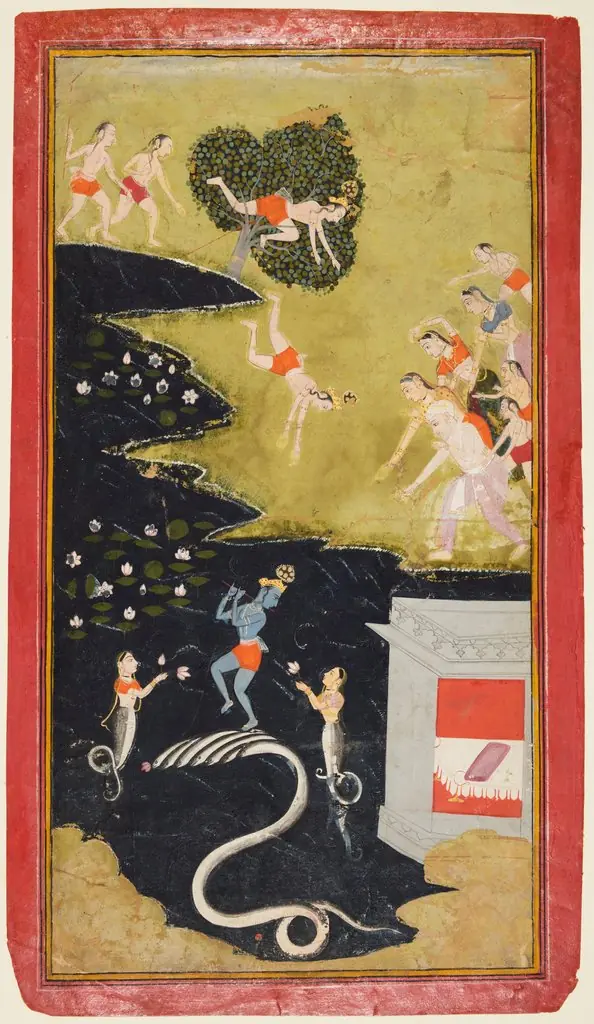
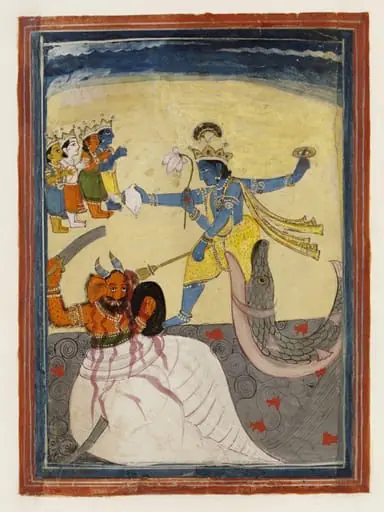
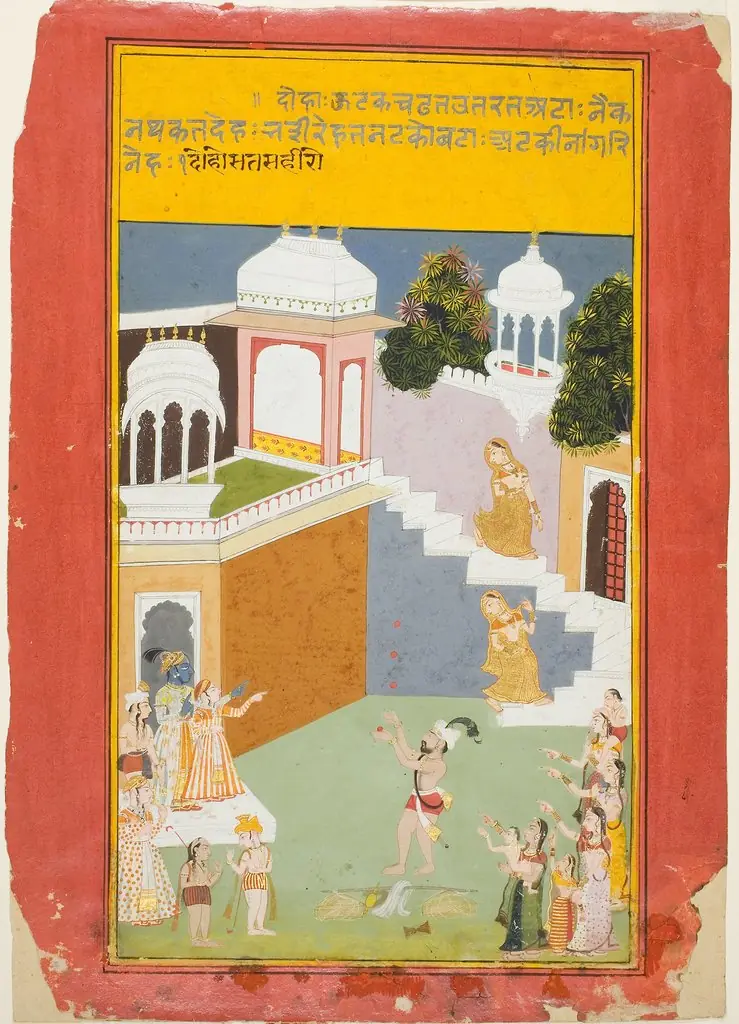
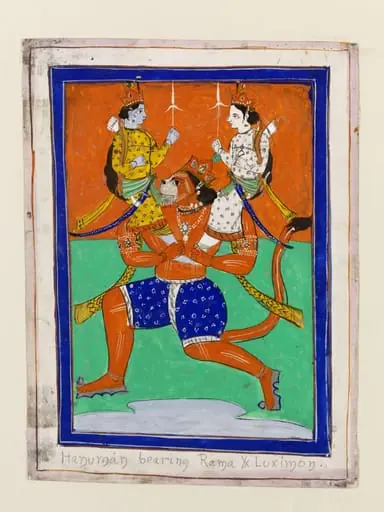
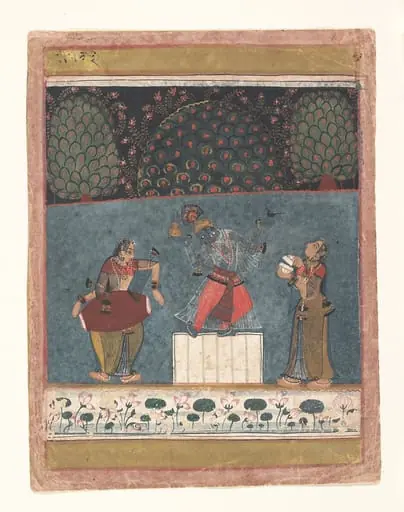
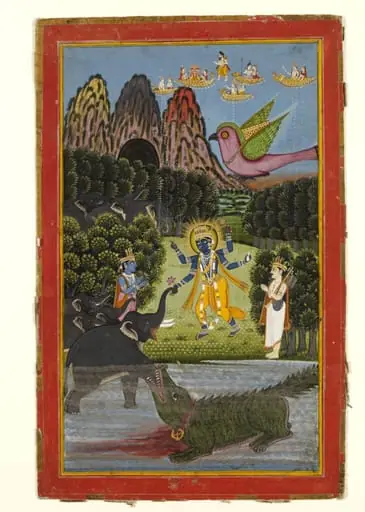
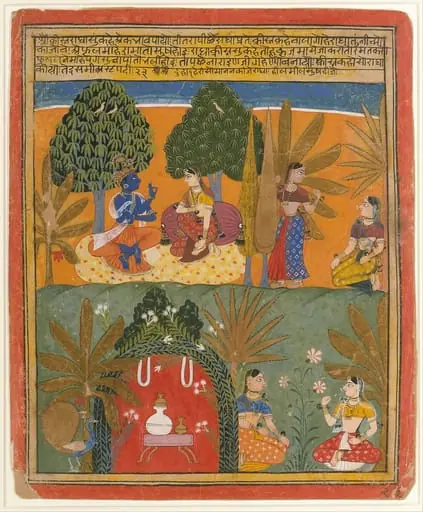
The work is an opaque watercolor on paper, dating to around 1850, portraying a dramatic episode from the Indian epic Ramayana in which the hero Rama confronts the demon king Ravana. The composition is vibrant, populated by five figures rendered in striking hues against a simple red‑orange ground.
Subject & Meaning
The scene captures the climactic moment of Rama shooting an arrow at Ravana, a pivotal event symbolising the triumph of dharma over chaos. The figures, including a blue‑skinned deity, a red‑clad woman, a leaping monkey‑like being, and a man in yellow bearing a weapon, embody the narrative’s mythic characters.
Technique & Style
Executed in opaque watercolor, the painting employs bold, saturated colors and exaggerated anatomical features such as oversized eyes and multiple arms. The flat background of green hills and a pond emphasizes the kinetic energy of the figures, reflecting a stylised, folk‑art aesthetic common in 19th‑century Indian visual culture.
History & Provenance
The piece belongs to a larger album of 196 works—prints, paintings, and drawings—assembled by J. Lockwood Kipling between 1865 and 1893. The collection, largely composed of lithographs from Upper India and Bengal bazaars, was bequeathed to the museum in 1917 by Kipling’s son, the writer Rudyard Kipling.
Context
Created during a period when British officials and their families collected Indian art, the album reflects the cross‑cultural interest in regional visual traditions. The work’s subject, drawn from the Ramayana, underscores the enduring popularity of Hindu mythological themes in both elite and popular artistic production of the time.
Artist & collection

 Domestic Scene
 Giacomo and Cardinal Marco, investing Andrea, Abbot of San Zeno, with his Benefice
 The Nymph of Fontainebleau
 Portrait of a Woman
 Madonna and Child with Saints in the Enclosed Garden
 Venus and Minerva
 Family Group of Four on Sofa
 Wall painting from Room H of the Villa of P. Fannius Synistor at Boscoreale