Artwork
Diptych with the Passion of Christ
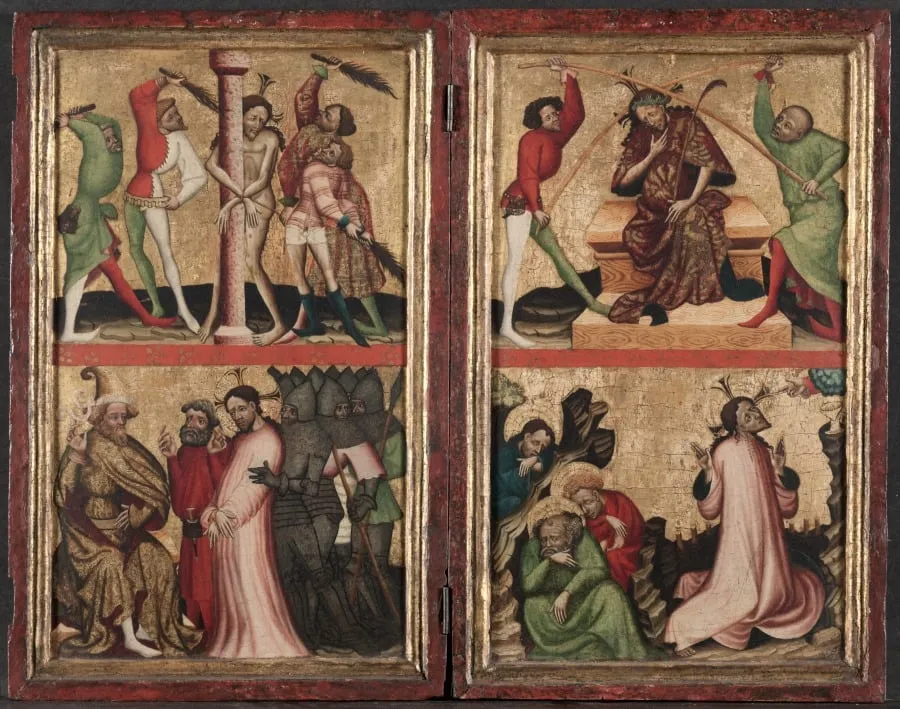
Diptych with the Passion of Christ is an unspecified painting by the Byzantine icon painting artist Unknown. It dates from 1400 and is held in the collection of the Cleveland Museum of Art. The work is a hinged diptych comprising two panels that fold together like a small book.
About this work
The scenes are simple, with bright colors and gold backgrounds, so the story stands out clearly.
This small hinged painting folds like a book, showing four moments from Jesus’s last days. The top panels show him being whipped and mocked with a crown of thorns. Below, he stands before Pilate and prays in the garden.
It was made for someone to carry and pray with—like a portable altar. The scenes are simple, with bright colors and gold backgrounds, so the story stands out clearly. No one knows who painted it, but it was likely made in Austria around 1400.
To see more art like this, look up *austria, styria, 15th century*.
Overview
The work is a hinged diptych comprising two panels that fold together like a small book. When opened, four narrative scenes are displayed, each illustrating a moment from the final days of Jesus. The format allowed the object to be closed, carried, and used for personal prayer, functioning as a portable devotional aid.
Subject & Meaning
The four images follow a clockwise sequence that begins with the lower‑right panel: Jesus in the Garden of Gethsemane, then his appearance before Pontius Pilate, followed by the scourging at the pillar and the crowning with thorns. Together they present a concise meditation on Christ’s suffering and trial, inviting the viewer to contemplate each stage of the Passion.
Technique & Style
Rendered in bright pigments against gold leaf backgrounds, the scenes are rendered with clear, uncomplicated outlines that emphasize narrative over naturalistic detail. The use of gold provides a luminous backdrop, while the limited color palette enhances the immediacy of the depicted events, a common approach in devotional panels intended for quick visual comprehension.
History & Provenance
The artist remains unidentified, but stylistic traits point to an Austrian workshop active around the turn of the 15th century. The reverse sides of the panels retain traces of earlier paintings that were later removed, indicating the object may have been repurposed or refurbished at some point in its history.
Context
Such portable diptychs were typical of private worship in late medieval Central Europe, especially in regions like Styria. Their compact size and hinged construction made them suitable for travel or personal chapels, allowing lay believers to engage with sacred narratives outside the communal liturgy.
Artist & collection

 Domestic Scene
 Giacomo and Cardinal Marco, investing Andrea, Abbot of San Zeno, with his Benefice
 The Nymph of Fontainebleau
 Portrait of a Woman
 Madonna and Child with Saints in the Enclosed Garden
 Venus and Minerva
 Family Group of Four on Sofa
 Wall painting from Room H of the Villa of P. Fannius Synistor at Boscoreale
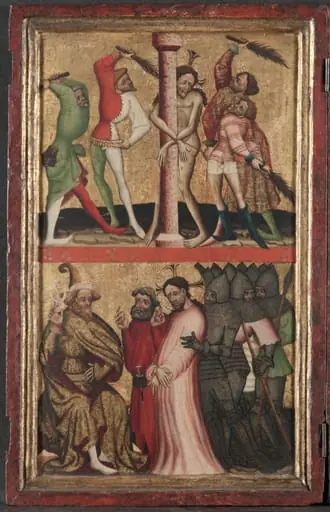 Diptych with the Passion of Christ (left wing):Flagellation and Christ Before Pilate
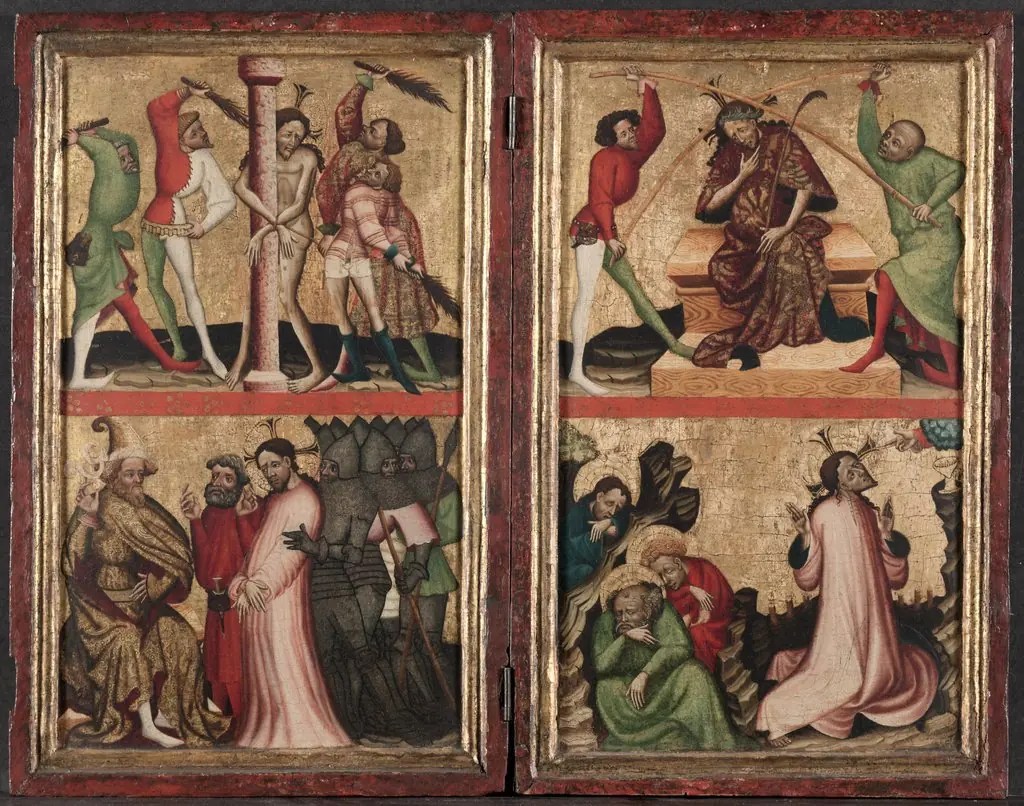 Diptych with the Passion of Christ
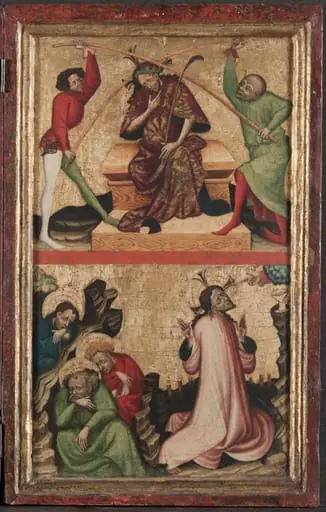 Diptych with the Passion of Christ (right wing): Crowning with Thorns and Agony on the Garden
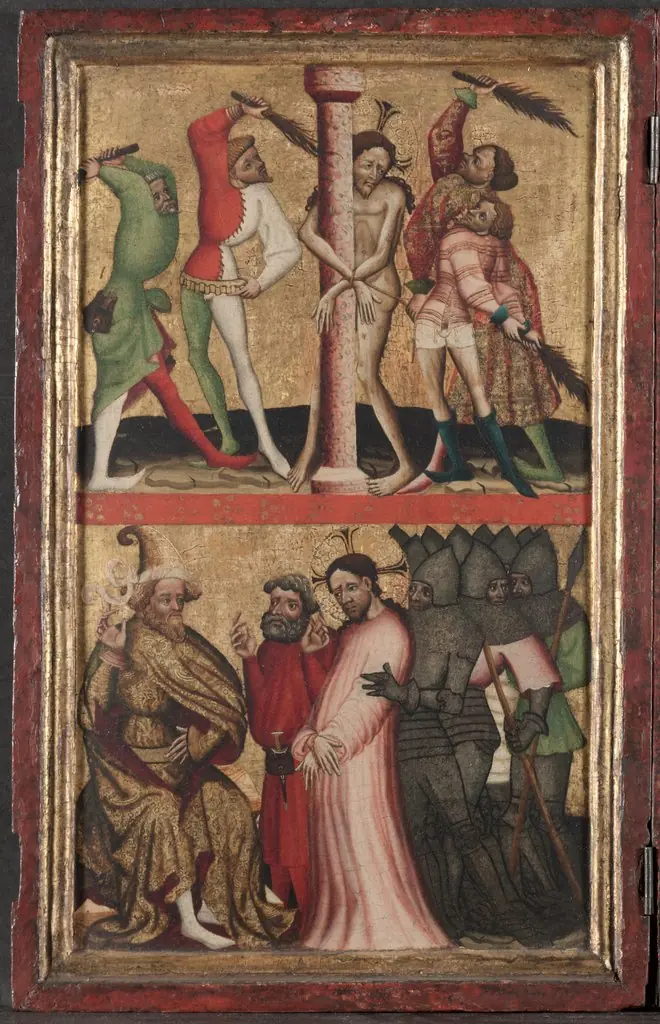 Diptych with the Passion of Christ (left wing):Flagellation and Christ Before Pilate
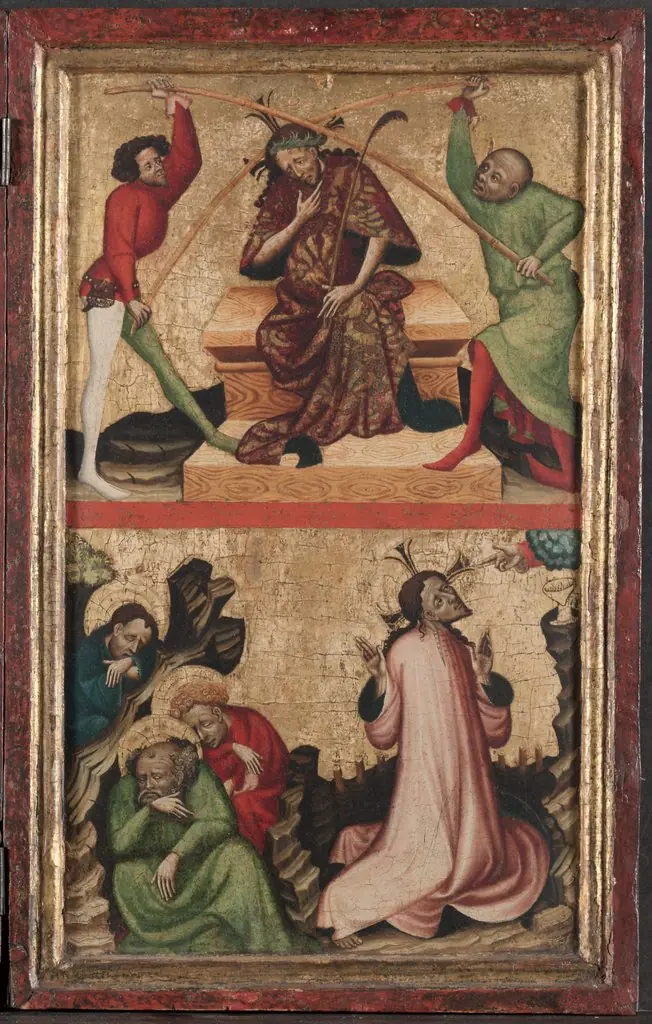 Diptych with the Passion of Christ (right wing): Crowning with Thorns and Agony on the Garden
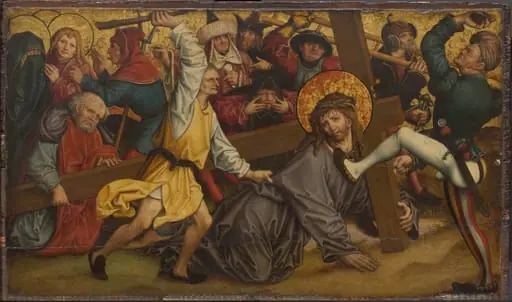 Christ Carrying the Cross
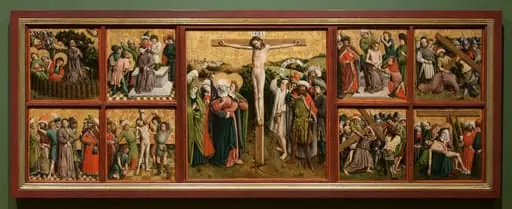 Altarpiece with The Passion of Christ