Artwork
Double Portrait of a Young Man and Young Woman
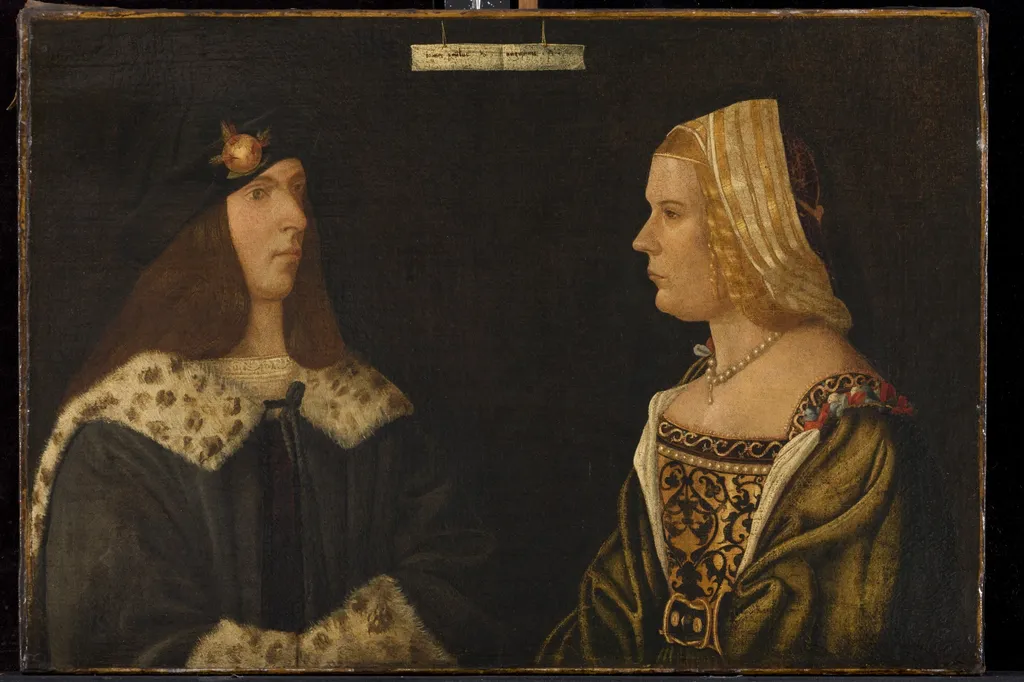
Double Portrait of a Young Man and Young Woman is an oil painting by the Northern Renaissance artist Unknown. It dates from 1520 and is held in the collection of the Detroit Institute of Arts. This oil painting presents a paired portrait of a young man and woman, rendered with quiet formality.
About this work
Overview
This oil painting presents a paired portrait of a young man and woman, rendered with quiet formality.
This oil painting presents a paired portrait of a young man and woman, rendered with quiet formality. Both figures stand against an empty black background, isolating them from any contextual setting. Their postures are still, their expressions reserved, emphasizing presence over narrative. The composition focuses attention on their attire and facial modeling, suggesting a deliberate emphasis on status and individuality rather than environment or action.
Subject & Meaning
The subjects appear to be members of a prosperous urban class, distinguished by their elaborate clothing and accessories. The man’s fur-lined cloak and jeweled hat, along with the woman’s gold-embroidered dress and pearl necklace, signal wealth and social standing. Their solemn gazes convey dignity and restraint, typical of portraiture intended to project composure and moral seriousness rather than personal emotion or intimacy.
Technique & Style
The artist employs chiaroscuro to model the faces and garments with subtle gradations of light and shadow, lending a sculptural depth to the figures. The dark background enhances the three-dimensionality of their forms, while fine brushwork renders intricate textile details—particularly the gold embroidery and fur textures—with precision. The absence of landscape or props directs focus entirely to the subjects’ material presence and facial expression.
History & Provenance
The painting’s origin remains undocumented in public records, though its style aligns with Northern European portraiture of the late 15th or early 16th century. The attention to fabric detail and the use of black grounds are characteristic of regional practices during this period. Its survival in relatively intact condition suggests it was carefully preserved, possibly within a family collection or ecclesiastical context.
Context
During the late medieval and early Renaissance periods, paired portraits of couples were uncommon outside of aristocratic or noble circles. This work reflects a growing trend among the urban elite to commission individualized likenesses as symbols of marital alliance and social identity. The stark background and formal pose echo devotional panel painting conventions, blending sacred aesthetics with secular self-representation.
Legacy
Though not widely known, the painting exemplifies the quiet sophistication of Northern European portraiture before the full emergence of Renaissance naturalism. Its restrained composition and technical precision influenced later artists who sought to convey psychological presence through controlled lighting and detailed textile rendering. It remains a quiet testament to the visual language of status in pre-modern society.
Artist & collection

 Domestic Scene
 Giacomo and Cardinal Marco, investing Andrea, Abbot of San Zeno, with his Benefice
 The Nymph of Fontainebleau
 Portrait of a Woman
 Madonna and Child with Saints in the Enclosed Garden
 Venus and Minerva
 Family Group of Four on Sofa
 Wall painting from Room H of the Villa of P. Fannius Synistor at Boscoreale
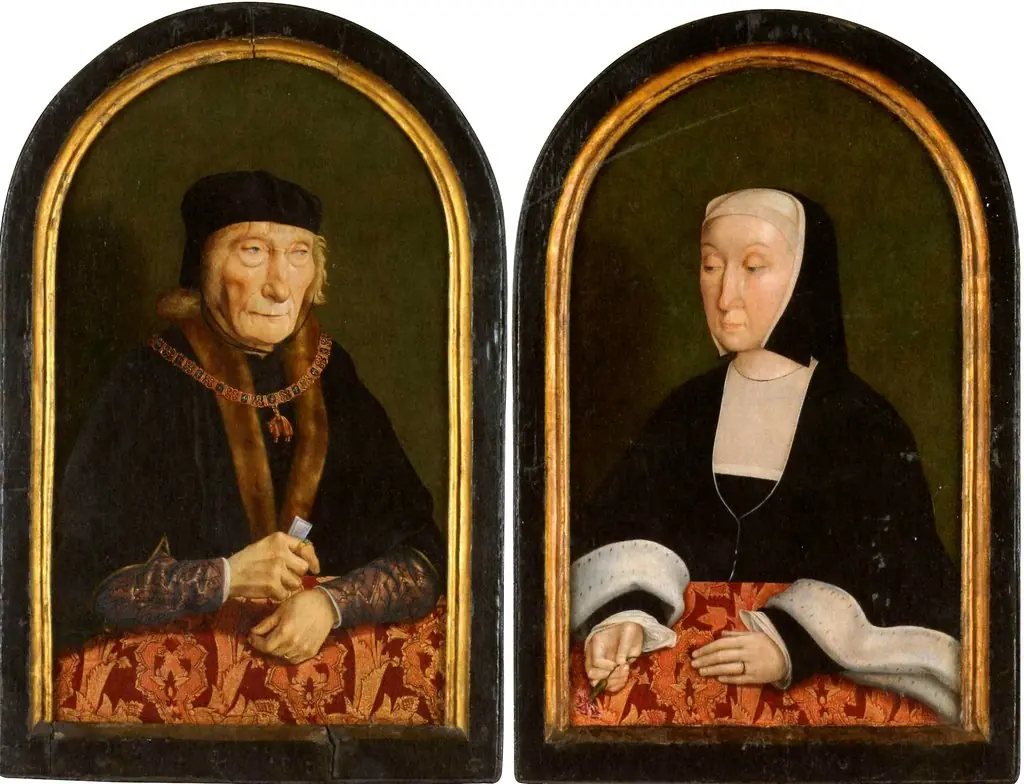 Portrait of Jan III, First Count of Egmond (1438–1516) and his wife Magdalena van Werdenburg, Countess of Egmond (1464–1538)
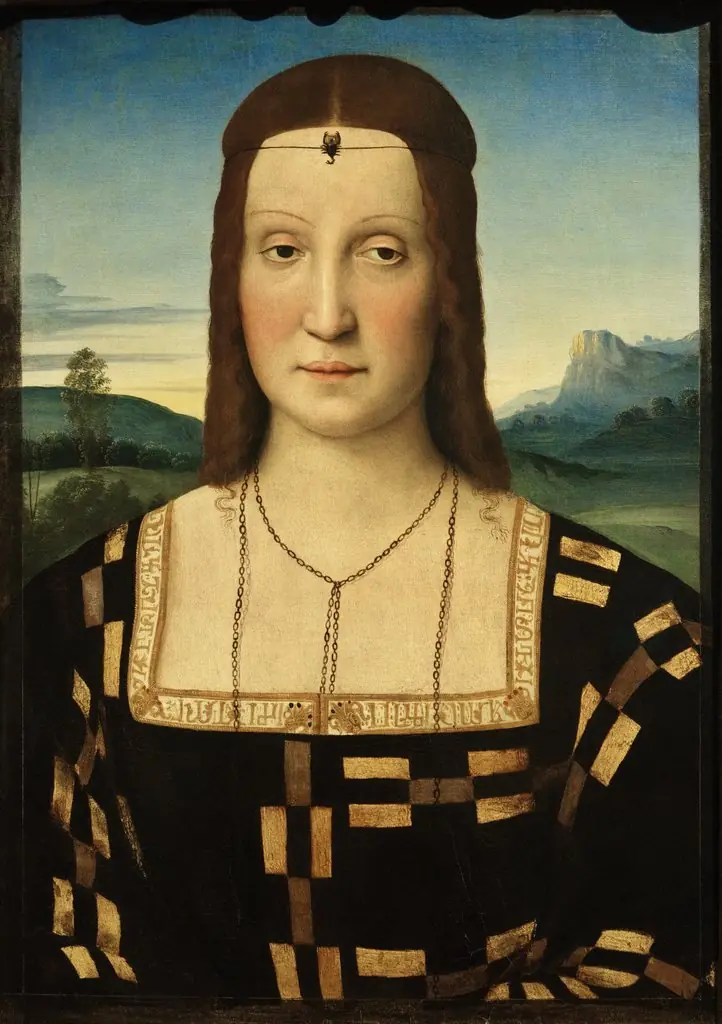 Portrait of Elisabetta Gonzaga
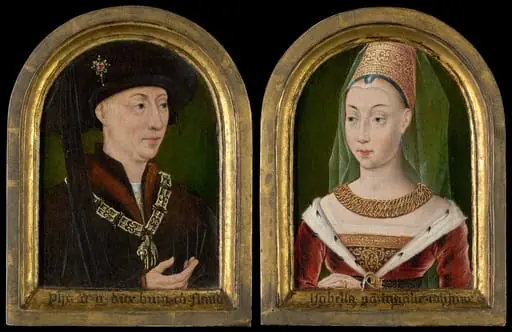 Philip the Good, Duke of Burgundy; Isabelle of Bourbon (?)
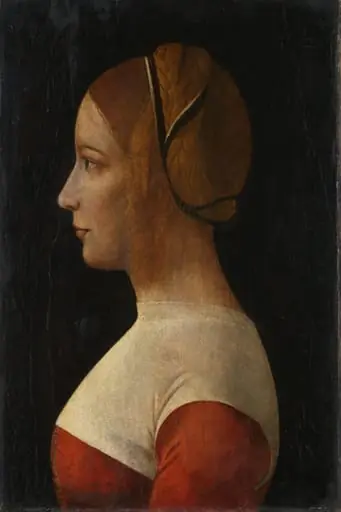 Portrait of a young Woman
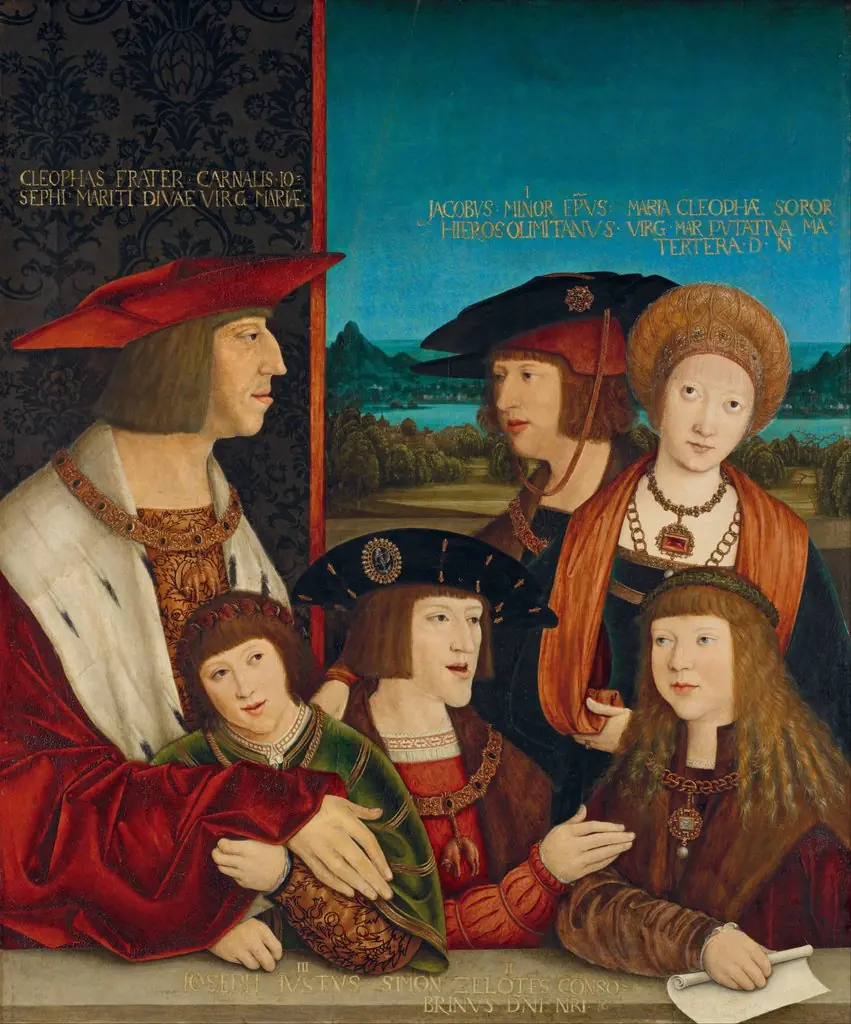 Portrait of Emperor Maximilian and his family
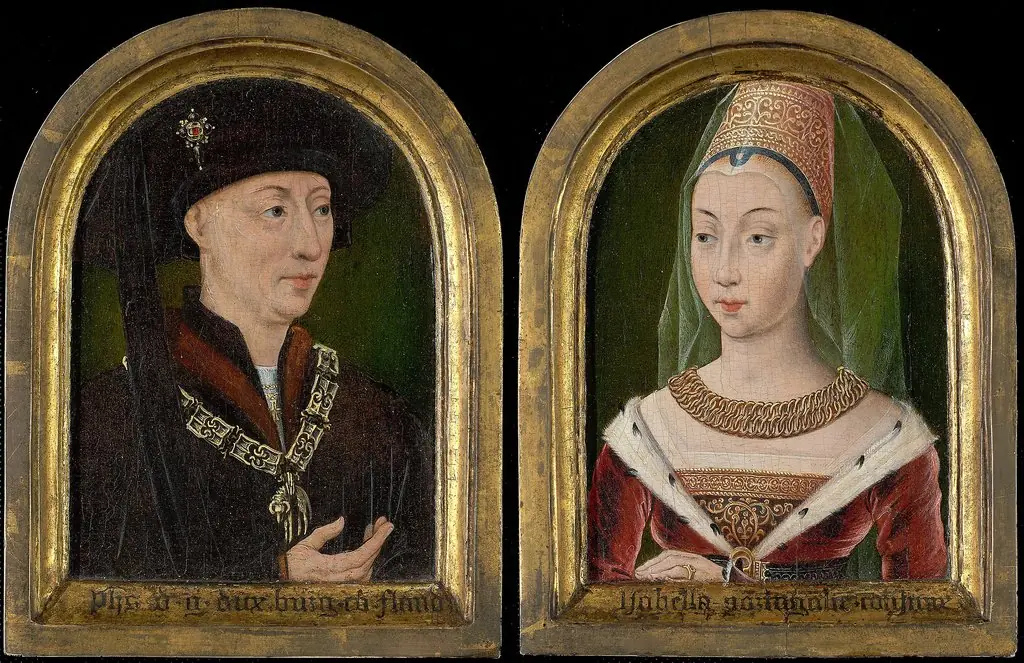 Philip the Good, Duke of Burgundy; Isabelle of Bourbon (?)
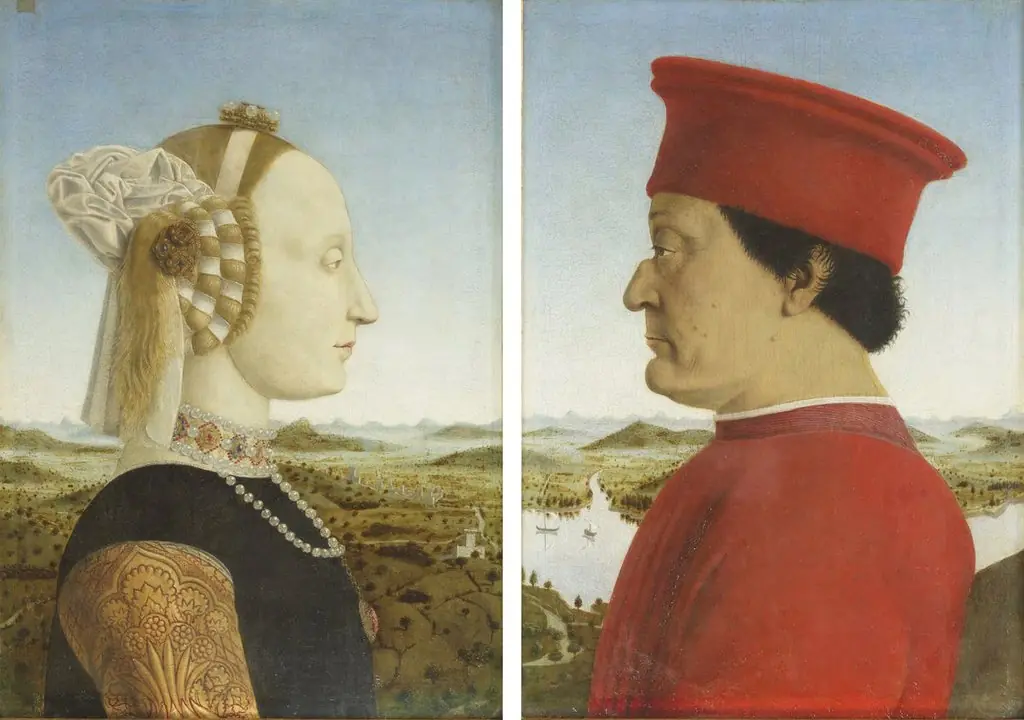 Diptych of Federico da Montefeltro and Battista Sforza
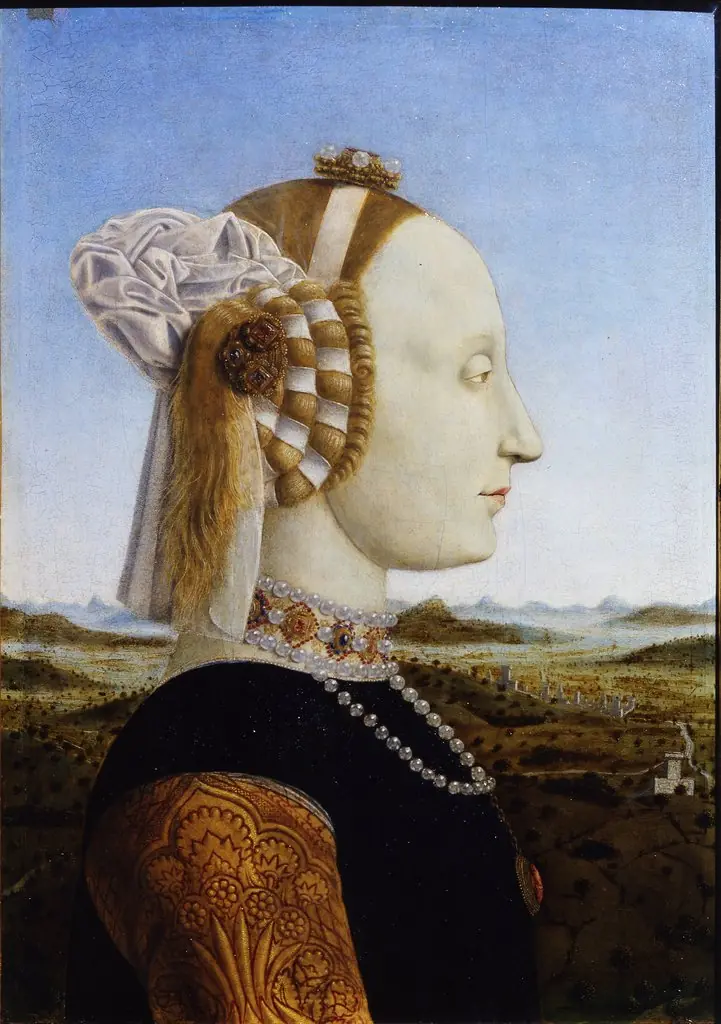 Portrait of Battista Sforza
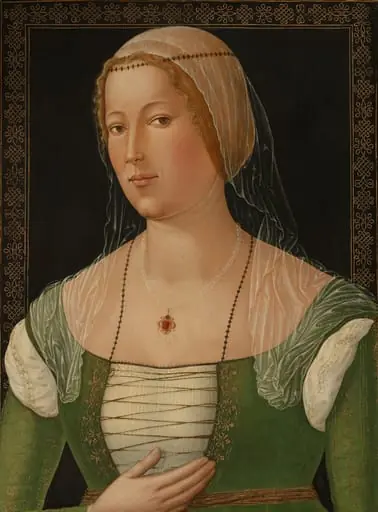 Portrait of a Young Woman
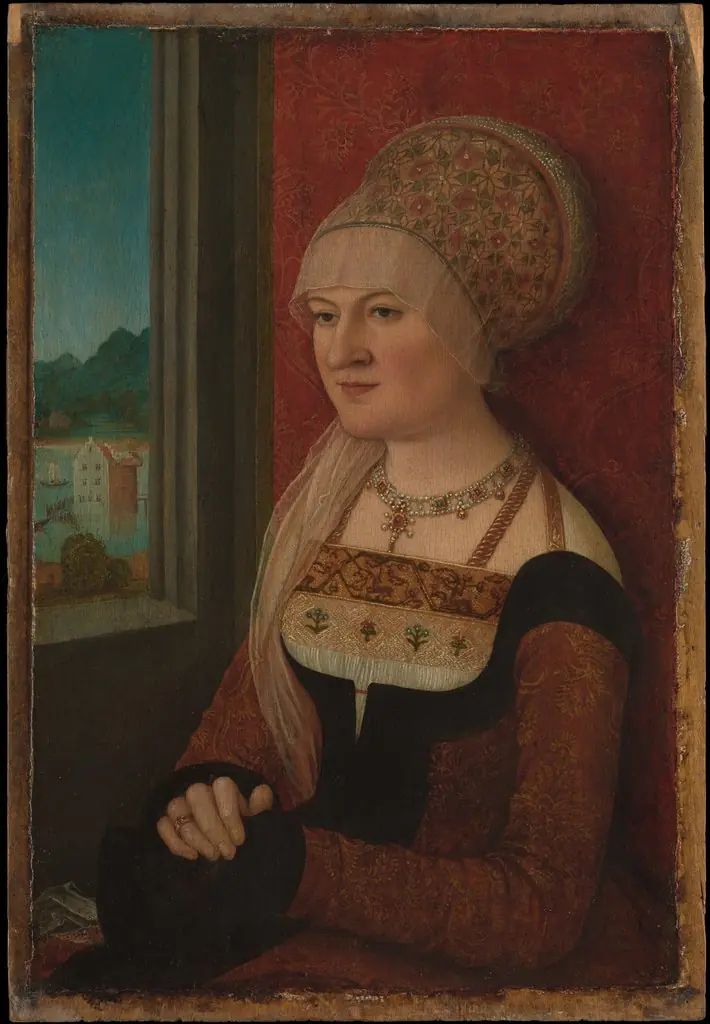 Portrait of a Woman