Artwork
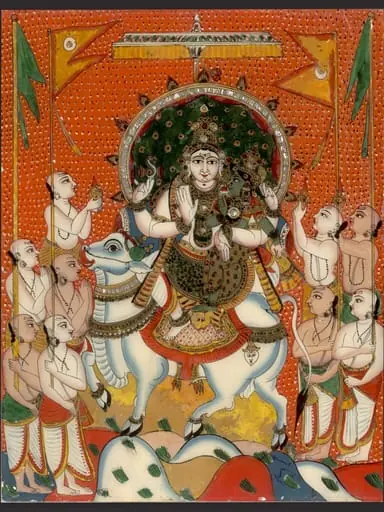
Double-Sided Painted Banner (Paubha) with God Shiva
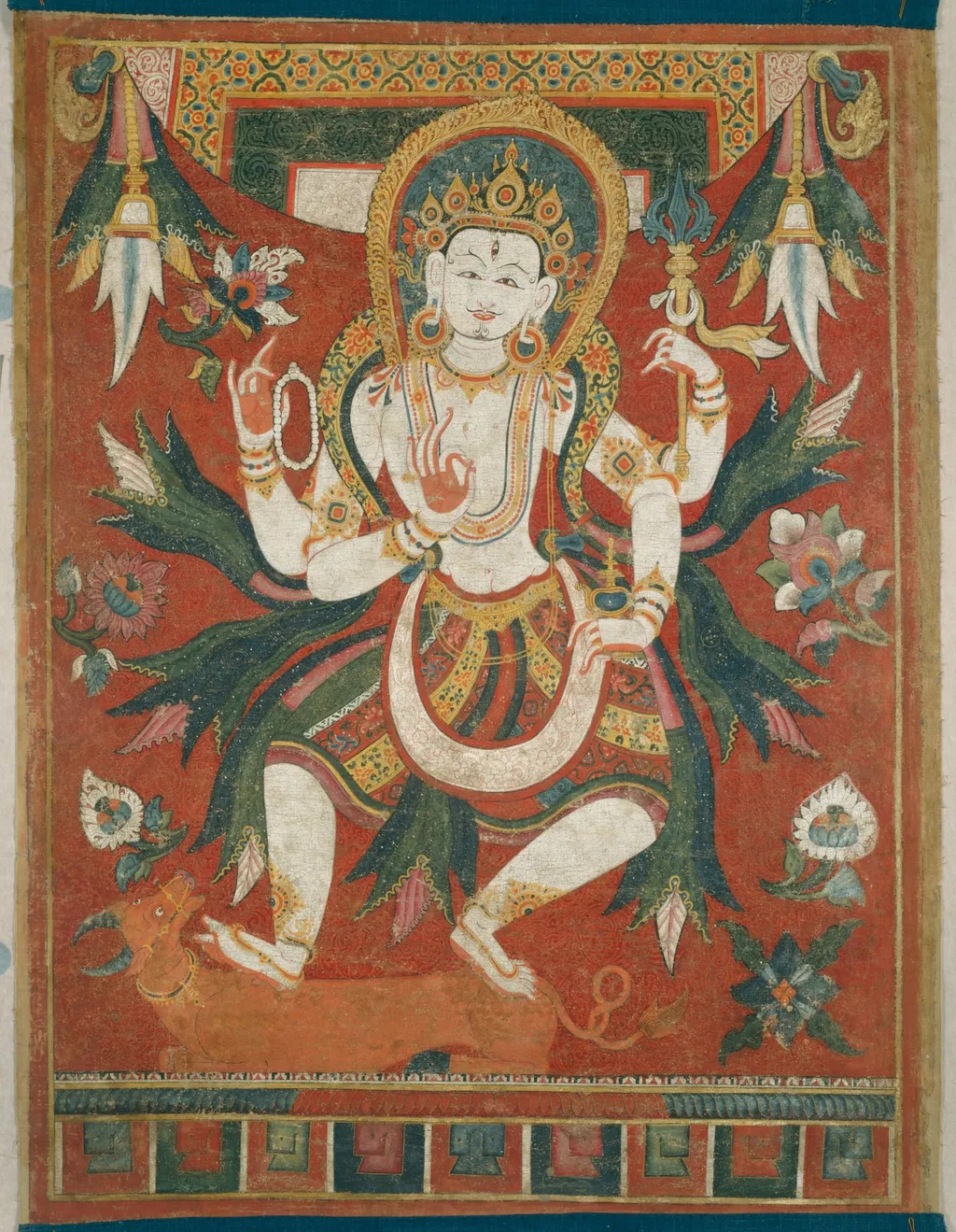
Double-Sided Painted Banner (Paubha) with God Shiva is a gold painting by the Renaissance artist Unknown. It dates from 1600 and is held in the collection of the Art Institute of Chicago.
About this work
Overview
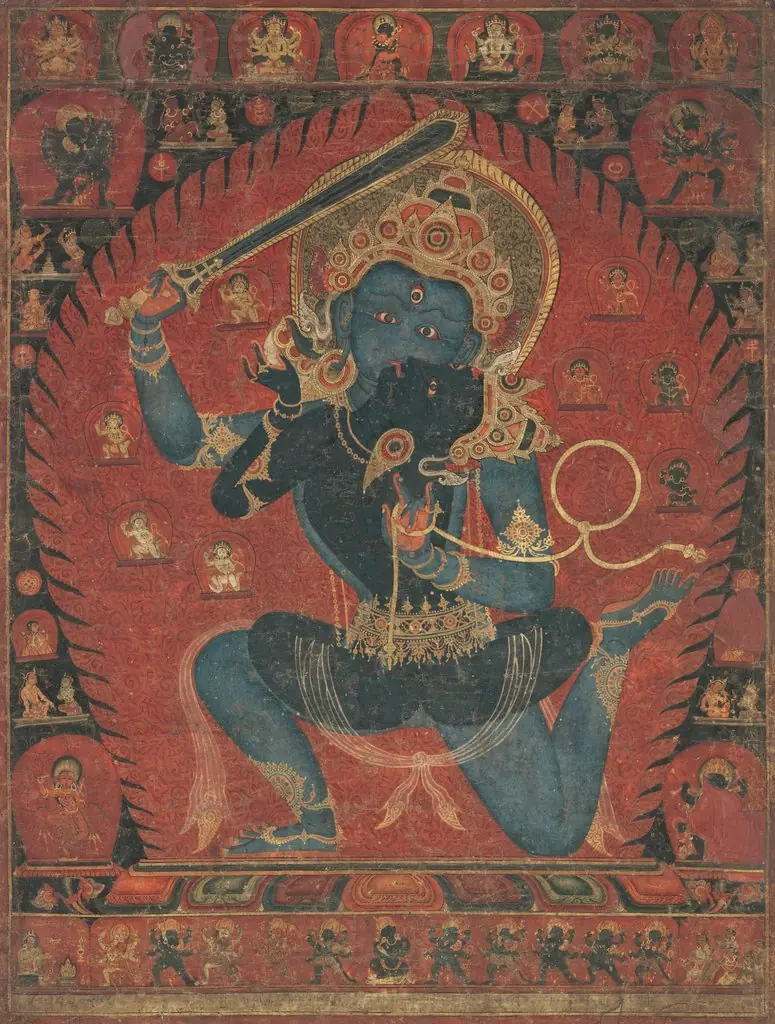
This double-sided Nepalese banner, known as a Paubha, is a rare, exceptionally well-preserved example of religious art, painted on both sides with vibrant colors and gold accents on cotton. Designed for procession, it measures tall enough to be carried above crowds during festivals.
Subject & Meaning
One side depicts Shiva, the Hindu god, dancing on his bull Nandi, possibly as Nataraja (Lord of Dance), holding a trident, rosary, a Buddhist stupa, and forming the vitarka mudra. The other side shows Durga, Shiva’s shakti, dancing on a white snow lion. The stupa in Shiva’s hand symbolizes Nepal’s non-sectarian religious devotion.
Technique & Style
The banner showcases bold, vibrant colors and intricate textile patterns, with dynamic sashes and a tassel-framed swag at the top. Large, striking flowers adorn the backgrounds of both sides, enhancing the visual energy.
History & Provenance
While specific origins and age are not detailed, the banner’s excellent preservation and unique double-sided painting highlight its rarity among surviving examples of Nepalese religious banners.
Context
Created for religious festivals, this Paubha would have been carried in processions, serving as a mobile, visible embodiment of divine presence amidst the crowd, reflecting the communal and ceremonial nature of Nepalese religious practice.
Legacy
Now part of a museum collection (as suggested by the reference to the Art Institute of Chicago), it provides a valuable insight into Nepal’s religious art and syncretic traditions, offering a teaching tool for understanding the country’s eclectic religious heritage.
Artist & collection

 Domestic Scene
 Giacomo and Cardinal Marco, investing Andrea, Abbot of San Zeno, with his Benefice
 The Nymph of Fontainebleau
 Portrait of a Woman
 Madonna and Child with Saints in the Enclosed Garden
 Venus and Minerva
 Family Group of Four on Sofa
 Wall painting from Room H of the Villa of P. Fannius Synistor at Boscoreale