Artwork
Dragon Boat Festival
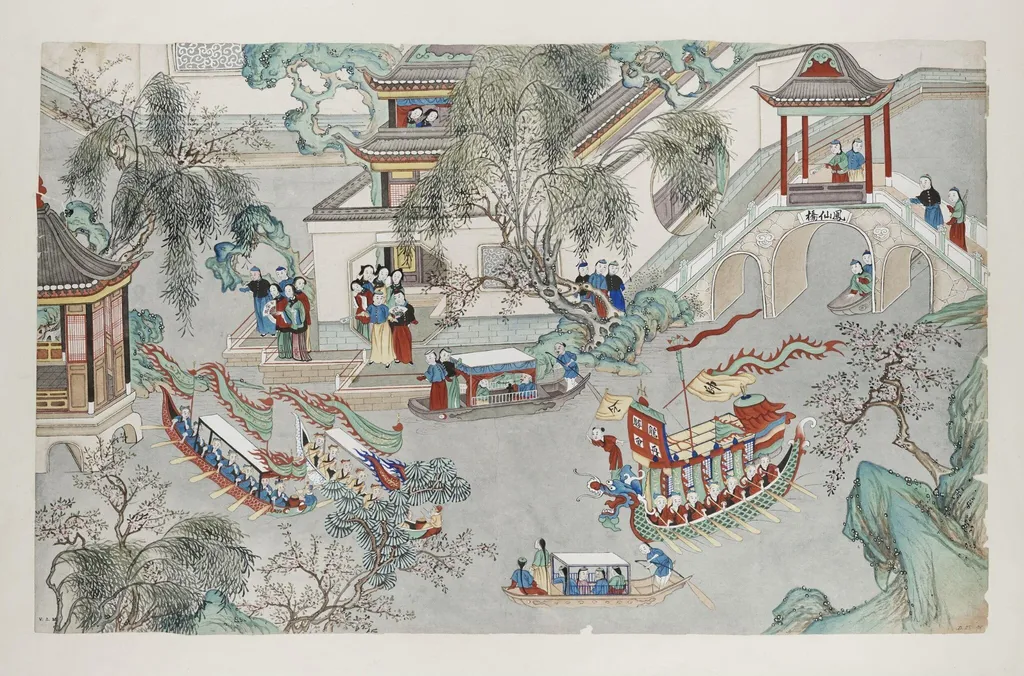
Dragon Boat Festival is a paint painting by the Impressionist artist Unknown. It dates from 1880 and is held in the collection of the Victoria and Albert Museum. This painting is one of thirty-five works in a series documenting ceremonial processions.
About this work
Overview
Its original function was as a page in a bound album, likely intended for private contemplation rather than public display.
This painting is one of thirty-five works in a series documenting ceremonial processions. Executed in ink and color on paper, it captures a river scene during the Dragon Boat Festival. The composition is horizontally oriented, emphasizing the movement of boats and the density of spectators along the bank. Its original function was as a page in a bound album, likely intended for private contemplation rather than public display.
Subject & Meaning
The scene illustrates the annual Dragon Boat Festival, commemorating the poet Qu Yuan. The dragon-headed vessel leads a fleet of racing boats, while crowds gather on the shore, some exiting a pavilion, others standing beneath trees. The event blends ritual, competition, and communal memory. The presence of flags and ornate boats signals both celebration and cultural continuity, reflecting traditions tied to water, remembrance, and seasonal renewal.
Technique & Style
The artist employs fluid brushwork to convey motion—ripples in the water, fluttering flags, and flowing robes are rendered with loose, energetic strokes. Colors are applied boldly: vermilion, cobalt, and emerald contrast against a pale, unmodulated background. Figures are simplified yet distinct, suggesting movement rather than detailed individuality. The lack of perspective depth enhances the rhythmic, decorative quality of the scene.
History & Provenance
Acquired by the Victoria and Albert Museum in 1898 from Parsons & Sons, the painting was part of a larger album of processional scenes. Its catalog number, D.2-1898, reflects its inclusion in the museum’s early East Asian collection. Little is known of its creation or earlier owners, but its format and style suggest it was produced in southern China during the late Qing dynasty, possibly for a collector interested in folk customs.
Context
The painting belongs to a tradition of album leaves that recorded seasonal festivals and public rituals in late imperial China. Such works were often commissioned by urban elites to document local customs, blending documentary observation with aesthetic refinement. Similar albums circulated among scholars and officials, serving as visual records of cultural life beyond courtly themes.
Legacy
As part of a rare surviving set of festival-themed album paintings, this work contributes to the understanding of how everyday rituals were visually preserved in Chinese art. It offers insight into regional practices and the role of visual culture in sustaining collective memory. Today, it remains a key reference for studies of Qing-era popular imagery and the intersection of art and tradition.
Artist & collection

 Domestic Scene
 Giacomo and Cardinal Marco, investing Andrea, Abbot of San Zeno, with his Benefice
 The Nymph of Fontainebleau
 Portrait of a Woman
 Madonna and Child with Saints in the Enclosed Garden
 Venus and Minerva
 Family Group of Four on Sofa
 Wall painting from Room H of the Villa of P. Fannius Synistor at Boscoreale
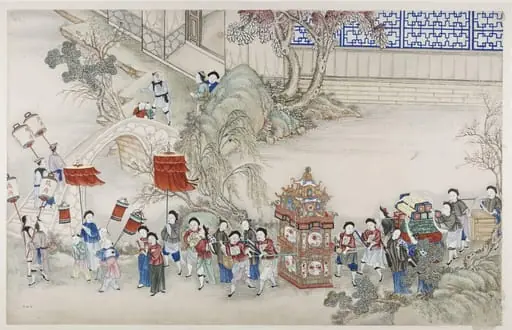 One scene of a wedding: the bride and her dowry on her way to her new home
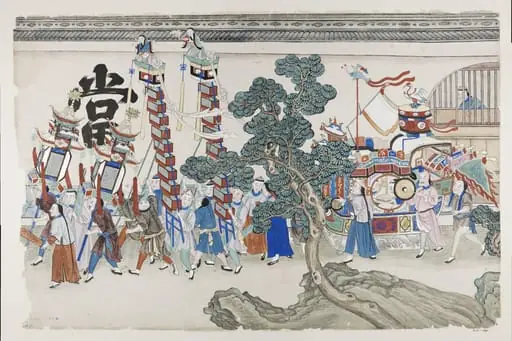 A procession
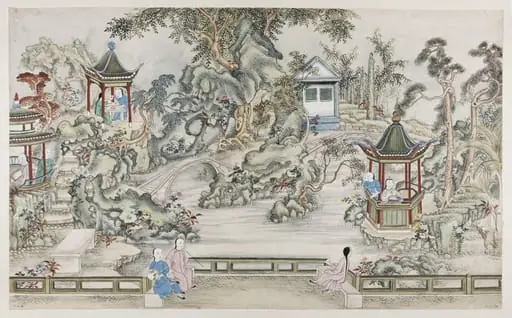 Pavilions in lake area
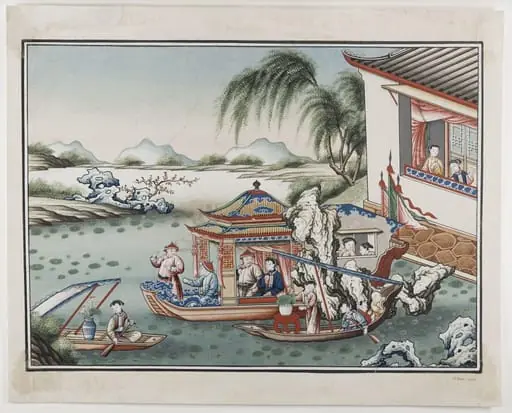 Outing on a Lake
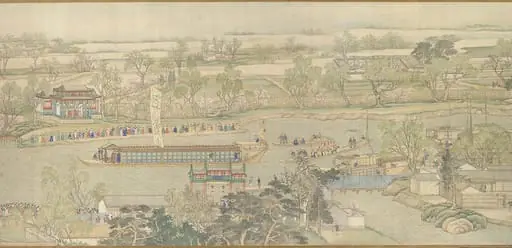 清 徐揚 等 乾隆南巡圖 (第六卷﹕大運河至蘇州) 卷|The Qianlong Emperor's Southern Inspection Tour, Scroll Six: Entering Suzhou along the Grand Canal
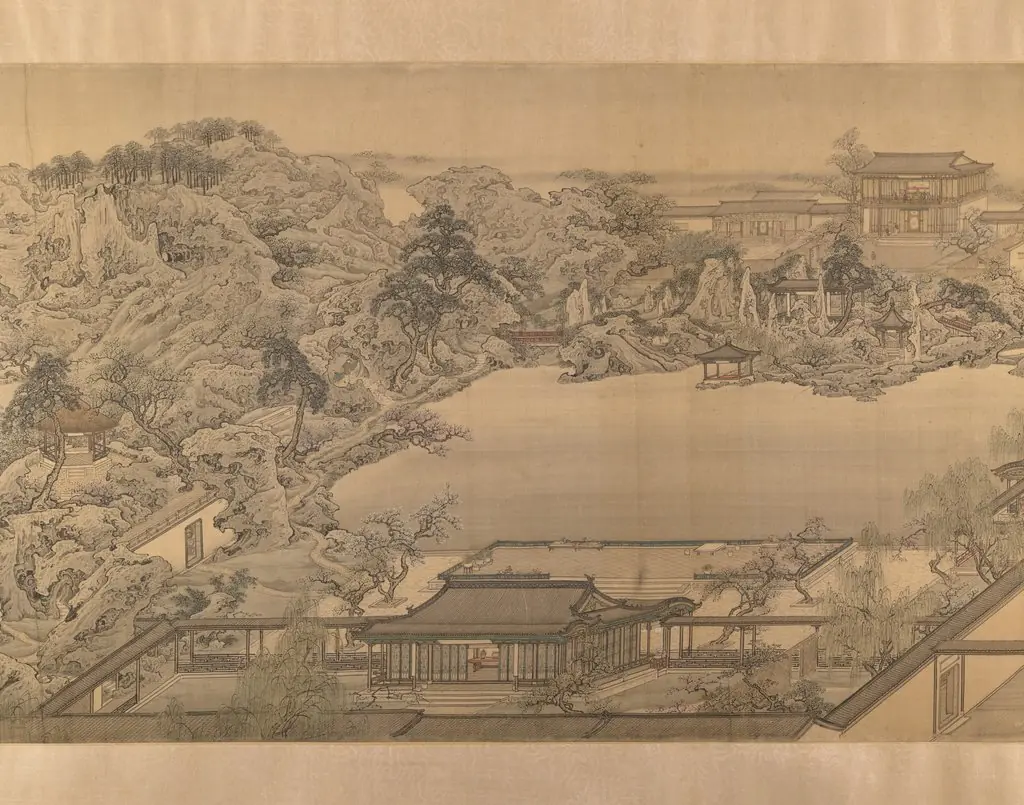 清 佚名 臨袁江瞻園圖 卷|View of a Garden Villa
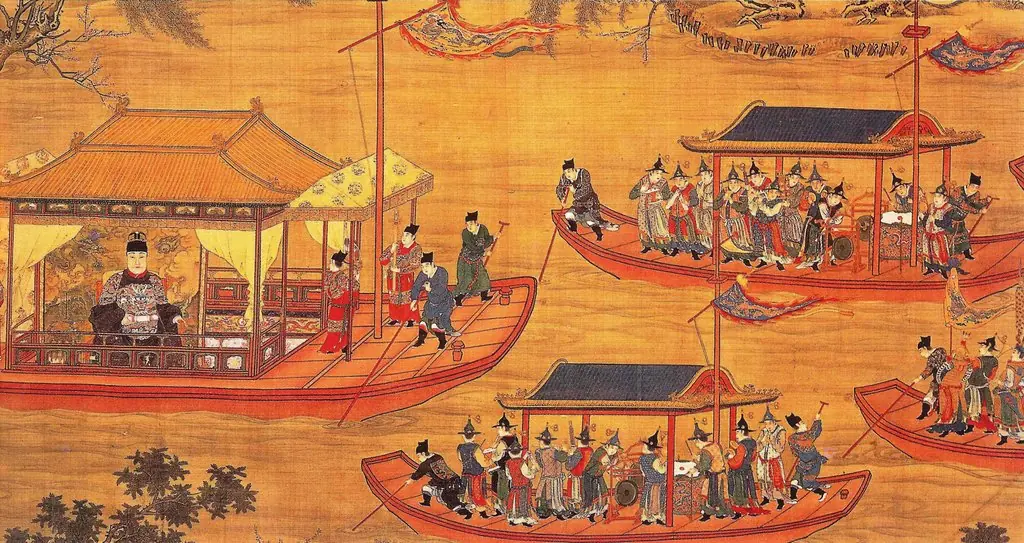 Imperial Procession Returning to the Palace
 清董邦達九陽消寒 軸