Artwork
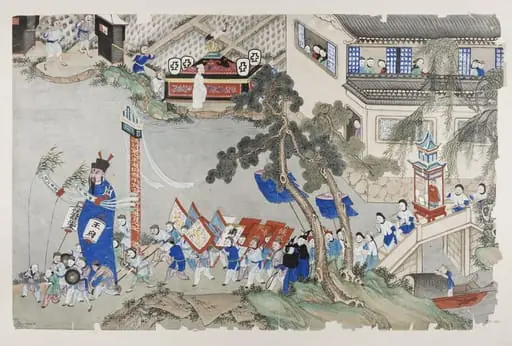
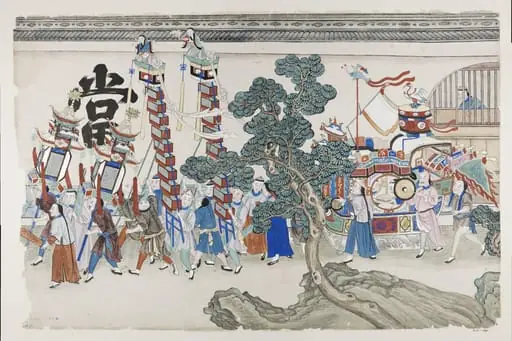
One scene of a wedding: the bride and her dowry on her way to her new home
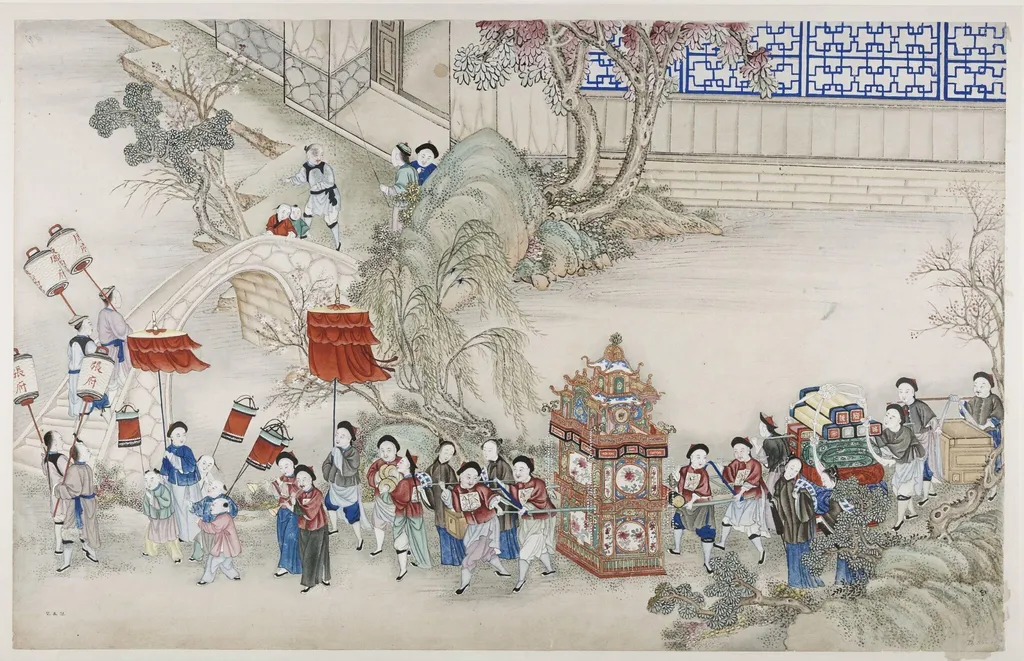
One scene of a wedding: the bride and her dowry on her way to her new home is a paint painting by the Patna School of Painting artist Unknown. It dates from 1880 and is held in the collection of the Victoria and Albert Museum.
About this work
Overview
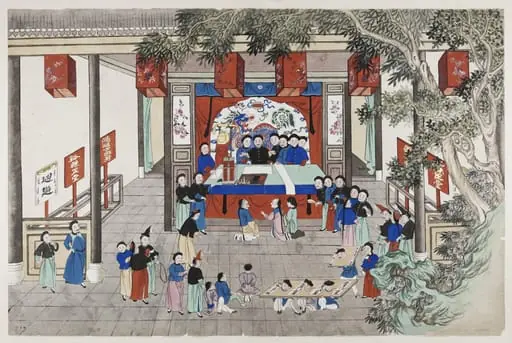
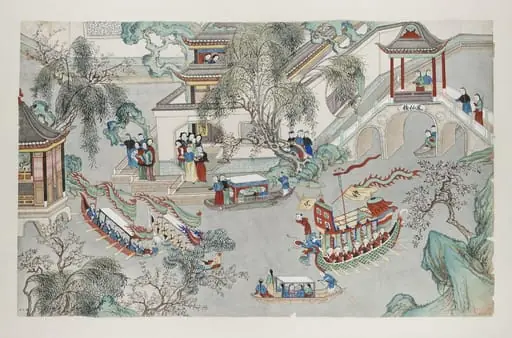
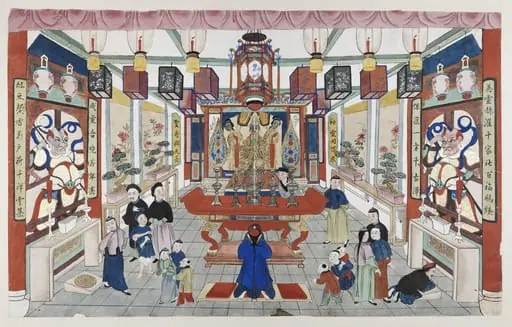
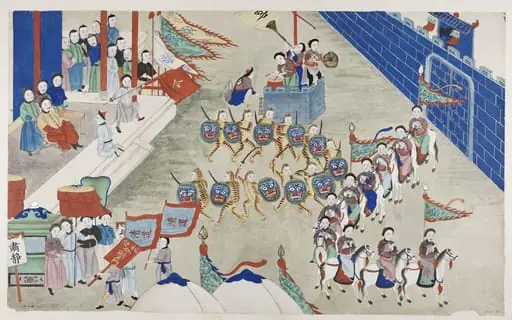
This painting captures a single moment from a wedding procession, one of thirty-five scenes originally compiled in an album depicting ceremonial events.
This painting captures a single moment from a wedding procession, one of thirty-five scenes originally compiled in an album depicting ceremonial events. The composition follows a winding path lined with trees and a stone wall, guiding the viewer’s eye toward a bridge and a distant structure. Figures move in orderly yet dynamic formation, carrying symbolic items associated with marriage and transition.
Subject & Meaning
The bride, dressed in red, is central to the scene, accompanied by family and attendants transporting her dowry in ornate chests and containers. The presence of lanterns, flags, and a decorated palanquin signals the ceremonial importance of the event. These elements reflect social customs where marriage entailed the transfer of property and status, emphasizing the bride’s transition into a new household and lineage.
Technique & Style
The artist employs vivid pigments and fluid brushwork to convey motion and texture. Robes, banners, and lanterns are rendered with energetic strokes, suggesting the rhythm of the procession. Spatial depth is implied through overlapping figures and a receding path, while architectural details like the bridge and wall are simplified yet distinct, grounding the scene in a tangible environment.
History & Provenance
The painting was part of a numbered series commissioned for an album of ceremonial processions, likely created in the late 18th or early 19th century. It entered the institution’s collection in 1898 through acquisition from Parsons & Sons, a known dealer of Asian artworks. Its original context as a page in a bound album suggests it was intended for private contemplation rather than public display.
Context
Such albums were produced in regions where courtly and civic rituals were meticulously documented. Similar scenes of funerals, official parades, and legal proceedings indicate a cultural interest in recording social order and ritual. The emphasis on dowry and procession reflects broader societal norms around marriage, gender roles, and familial obligation in the period.
Legacy
Though once part of a private collection, the painting now contributes to scholarly understanding of ceremonial life in its cultural context. Its preservation allows comparison with other regional traditions and offers insight into how visual narratives were used to reinforce social structures. It remains a quiet but significant record of everyday ritual in historical society.
Artist & collection

 Domestic Scene
 Giacomo and Cardinal Marco, investing Andrea, Abbot of San Zeno, with his Benefice
 The Nymph of Fontainebleau
 Portrait of a Woman
 Madonna and Child with Saints in the Enclosed Garden
 Venus and Minerva
 Family Group of Four on Sofa
 Wall painting from Room H of the Villa of P. Fannius Synistor at Boscoreale