Artwork
Drawing of a fountain
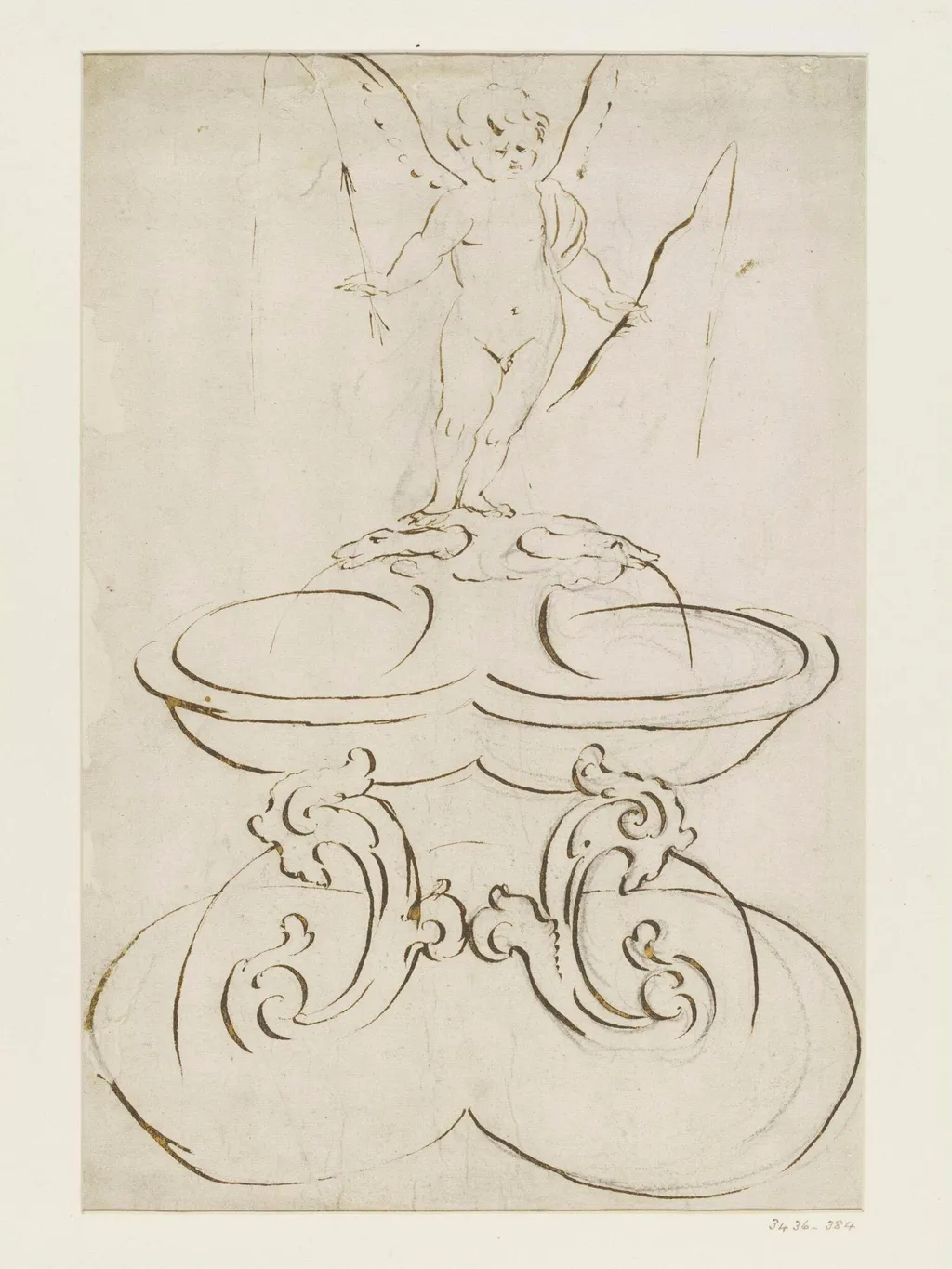
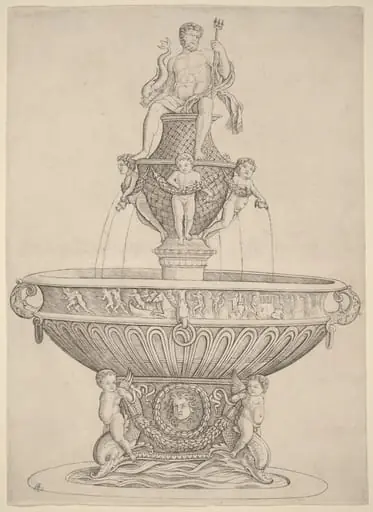
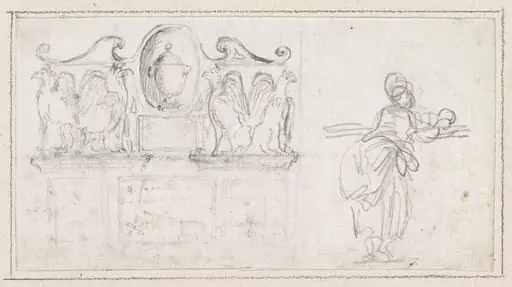
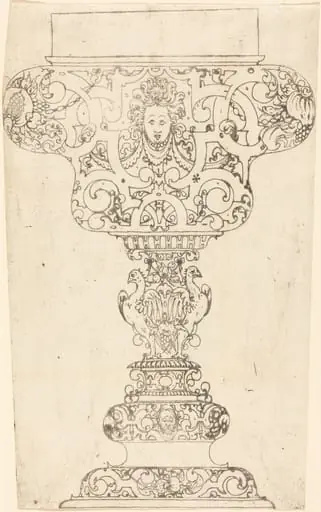
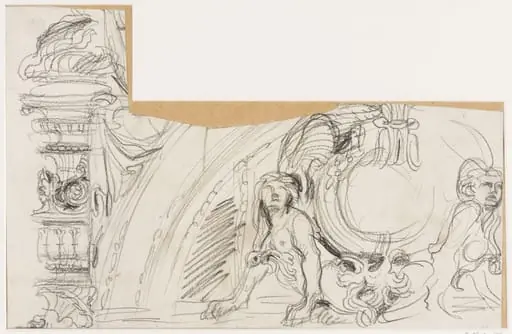
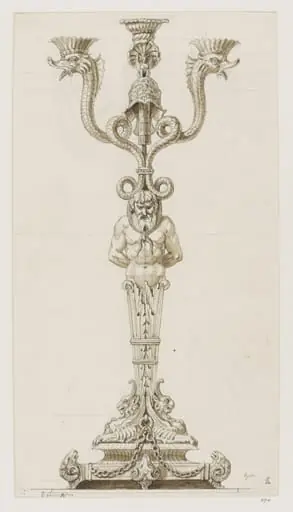
Drawing of a fountain is a drawing by Unknown. It dates from 1750 and is held in the collection of the Victoria and Albert Museum. A pen-and-pencil drawing from 1750 presents a detailed architectural fantasy of a fountain, rendered in fine linear precision.
About this work
Overview
A pen-and-pencil drawing from 1750 presents a detailed architectural fantasy of a fountain, rendered in fine linear precision.
A pen-and-pencil drawing from 1750 presents a detailed architectural fantasy of a fountain, rendered in fine linear precision. The composition centers on a winged figure atop a tiered basin, surrounded by ornamental stonework. The work was once bound within a collector’s album of design studies, later acquired by the museum in 1863. Its modest scale and technical clarity suggest it served as a preparatory study rather than a finished presentation piece.
Subject & Meaning
The central figure is a putto, traditionally associated with love or divine playfulness, depicted here as Eros holding a bow and arrow. Water emerges from both weapons, symbolizing the flow of desire or life. The figure’s serene posture and the layered basins evoke a quiet, idealized harmony between nature and artifice. The imagery aligns with 18th-century garden design, where mythological figures often anchored decorative water features.
Technique & Style
The artist employed delicate ink lines and subtle pencil shading to define form and texture. Curving contours outline the fountain’s ornate base, while the figure’s drapery and wings are rendered with controlled, rhythmic strokes. The absence of color emphasizes structure and proportion, reflecting a designer’s focus on spatial relationships. The precision suggests familiarity with classical sculpture and architectural drafting conventions of the period.
History & Provenance
The drawing belonged to Charles James Richardson, an architect and collector of design sketches, whose album preserved works by various hands. It entered the museum’s collection in 1863, likely as part of a larger donation or purchase of architectural materials. Its survival within a bound volume indicates it was valued as a reference, not merely a decorative item.
Context
In mid-18th-century Britain, architectural drawings of garden features were common among designers seeking to blend classical motifs with landscape planning. This piece reflects a trend where mythological subjects like Eros were adapted for private estates and public promenades. Similar designs appear in contemporary treatises on garden ornamentation, linking this sketch to broader aesthetic practices of the era.
Legacy
Though unsigned and unattributed to a major name, the drawing survives as a representative example of professional design practice in Georgian England. It contributes to understanding how architects translated classical ideals into functional ornament. Its preservation in a public collection ensures continued study of how decorative arts were conceived and documented before construction.
Artist & collection

 Domestic Scene
 Giacomo and Cardinal Marco, investing Andrea, Abbot of San Zeno, with his Benefice
 The Nymph of Fontainebleau
 Portrait of a Woman
 Madonna and Child with Saints in the Enclosed Garden
 Venus and Minerva
 Family Group of Four on Sofa
 Wall painting from Room H of the Villa of P. Fannius Synistor at Boscoreale