Artwork
Duminica Samaritencei
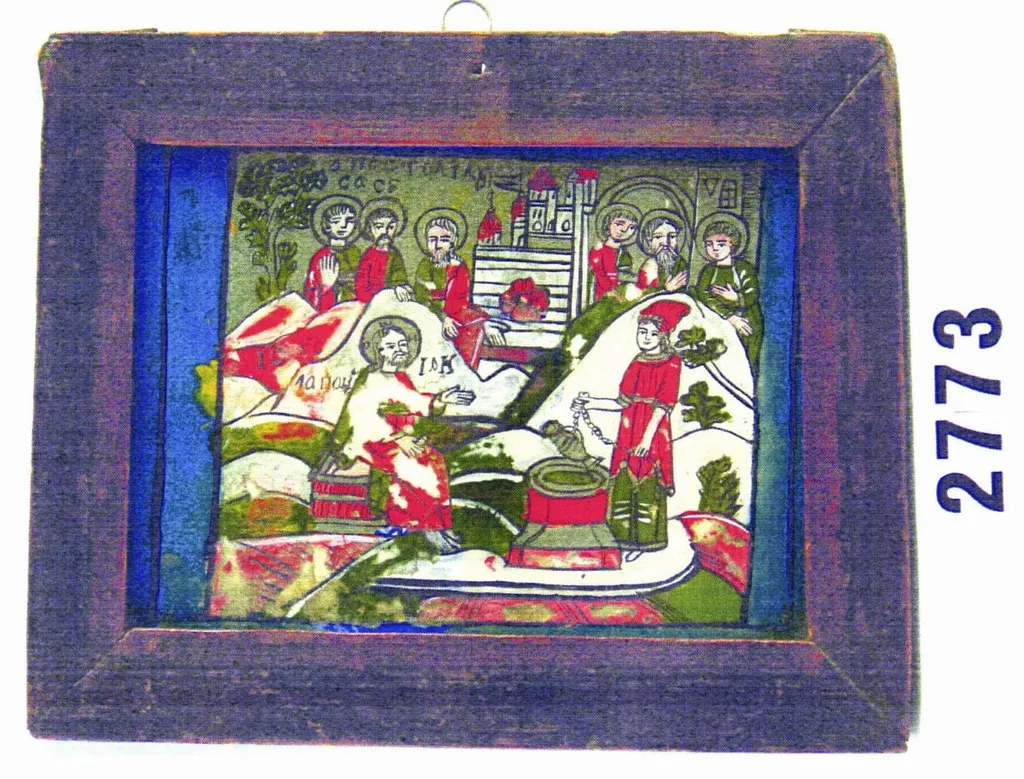
Duminica Samaritencei is a drawing by the Impressionist artist Unknown. It dates from 1899 and is held in the collection of the ASTRA National Museum Complex.
About this work
Overview
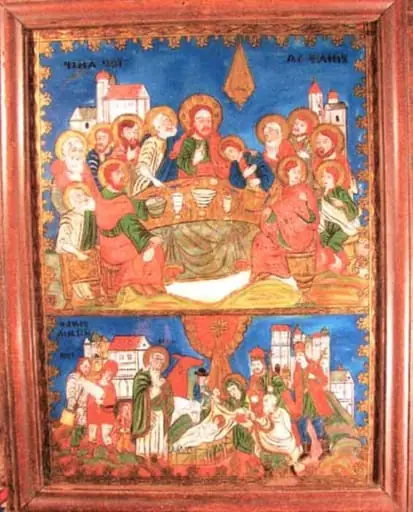
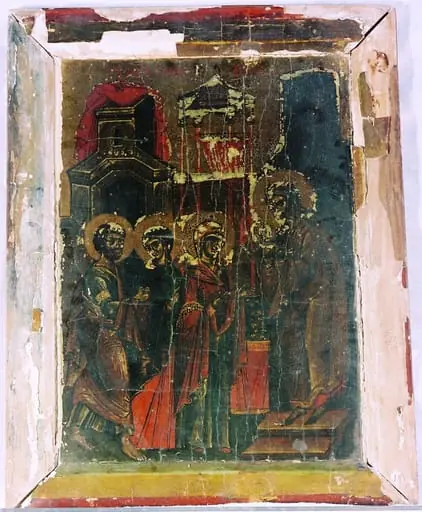
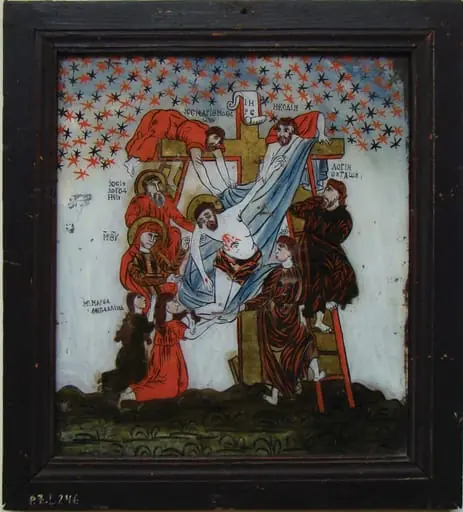
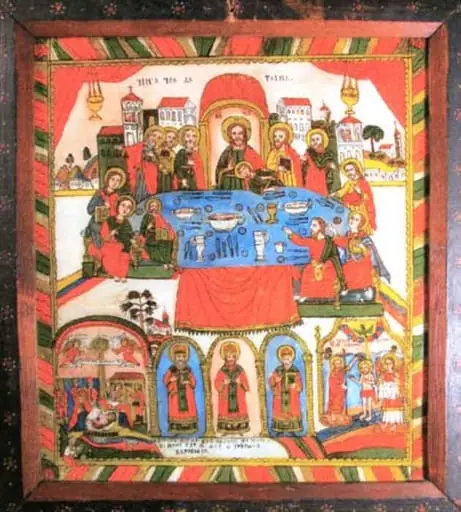
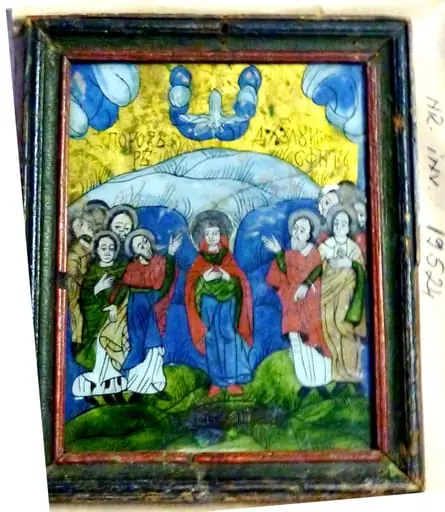
The work titled “Duminica Samaritencei” is an image depicting a group of figures arranged both standing and seated. The participants wear vivid red and green garments and are marked by halos above their heads. A distant architectural backdrop in muted greens and whites frames the scene, while a foreground figure holds a chain and another carries a bowl with a spoon.
Subject & Meaning
The composition suggests a religious or ritual gathering, indicated by the halos and the presence of ceremonial objects such as the chain and the bowl. The use of bright, contrasting colors and the inclusion of everyday items point to a narrative rooted in folk tradition, possibly illustrating a communal celebration or a liturgical moment.
Technique & Style
Rendered in a folk‑art idiom, the image employs bold outlines and saturated hues that emphasize form over naturalistic detail. The flat application of color and simplified perspective create a decorative effect, while the clear delineation of figures and objects reflects a stylized visual language common in ethnographic visual records.
History & Provenance
The piece is part of the collection of the Museum of Ethnography, where it is displayed as an example of regional visual culture. Its acquisition details are not specified, but its presence in the museum underscores its relevance to the study of local artistic practices and communal rites.
Context
The painting’s visual vocabulary aligns with traditional Eastern European folk motifs, where red and green attire often symbolize vitality and fertility. The halos and ritual objects echo Christian iconography, suggesting a syncretic blend of religious symbolism and popular customs typical of community celebrations in the area.
Artist & collection

 Domestic Scene
 Giacomo and Cardinal Marco, investing Andrea, Abbot of San Zeno, with his Benefice
 The Nymph of Fontainebleau
 Portrait of a Woman
 Madonna and Child with Saints in the Enclosed Garden
 Venus and Minerva
 Family Group of Four on Sofa
 Wall painting from Room H of the Villa of P. Fannius Synistor at Boscoreale