Artwork
Cina cea de Taină și Nașterea lui Iisus
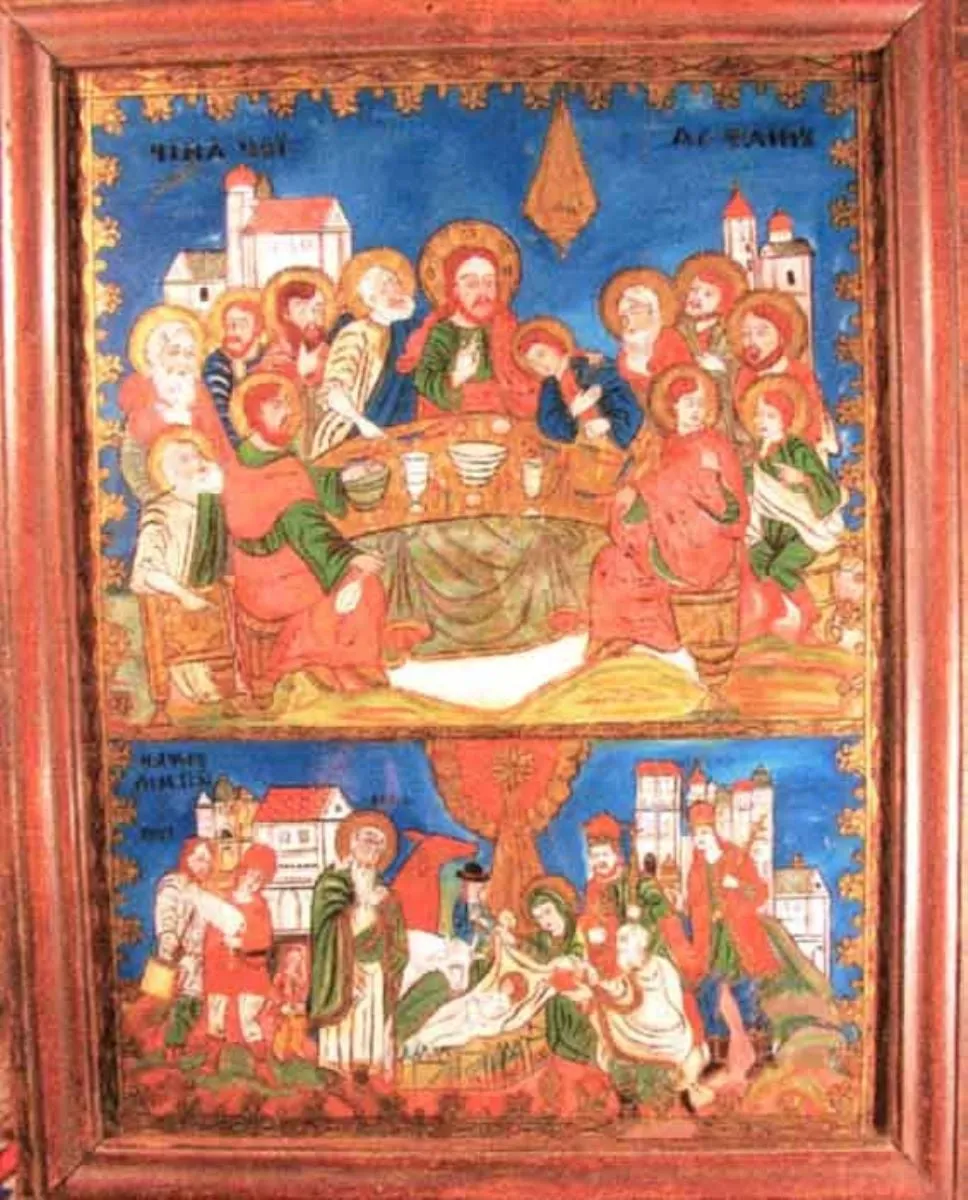
Cina cea de Taină și Nașterea lui Iisus is a drawing by the Impressionist artist Unknown. It dates from 1857 and is held in the collection of the Romanian Peasant Museum. This artwork presents two biblical narratives in a single vertical composition.
About this work
Overview
The two scenes are separated but unified by a shared visual language: flat forms, vivid colors, and minimal depth.
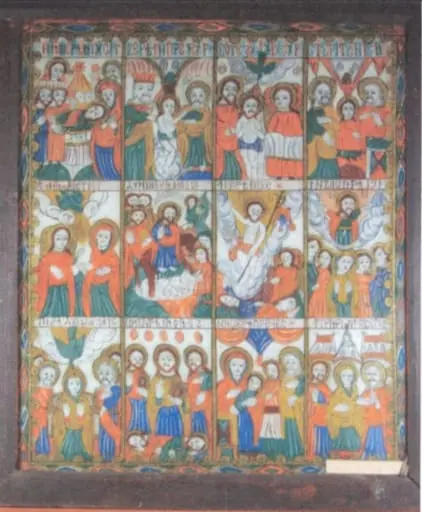
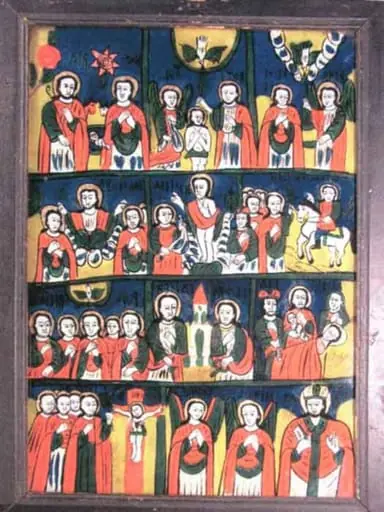
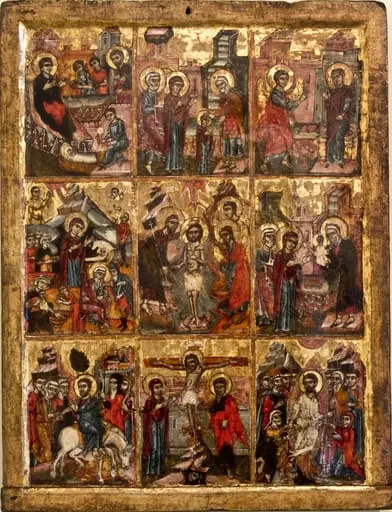
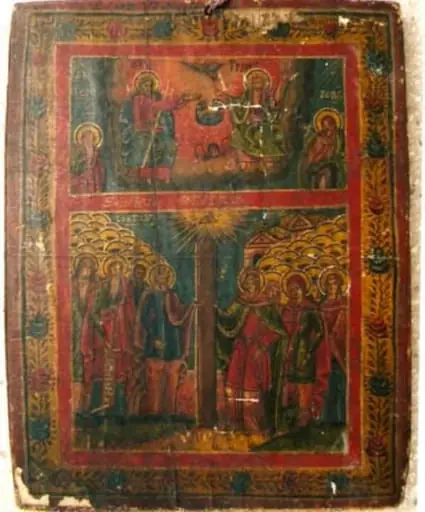
This artwork presents two biblical narratives in a single vertical composition. The upper register depicts a gathering around a table, commonly interpreted as the Last Supper, while the lower register shows the Nativity, with a mother cradling a newborn amid attentive figures. The two scenes are separated but unified by a shared visual language: flat forms, vivid colors, and minimal depth. Gold stars and a blue background suggest a celestial setting, reinforcing the sacred nature of both moments.
Subject & Meaning
The painting links the institution of the Eucharist with the birth of Christ, framing Jesus’ life as a continuous divine act. The Last Supper, with its central figure holding a round object, symbolizes sacrifice, while the Nativity scene emphasizes humility and new life. Together, they suggest a theological arc from origin to purpose. The inclusion of witnesses in both scenes underscores communal witness to sacred events, a common devotional strategy in religious art of the period.
Technique & Style
Figures are rendered with bold, flat outlines and unmodulated colors, avoiding realistic shading or perspective. Clothing appears as solid patches of hue, with no modeling or cross-hatching to suggest volume. The background uses a uniform blue field dotted with gold stars, creating a non-earthly space. This stylized approach prioritizes symbolic clarity over naturalism, aligning with devotional traditions that favored legibility and spiritual resonance over illusionistic detail.
History & Provenance
The work originates from a region where Byzantine and local iconographic traditions merged, likely produced in a monastic or workshop setting during the late medieval or early Renaissance period. Its vertical format suggests it was intended for private devotion or liturgical use, possibly as part of a larger altarpiece or panel series. No documented ownership history survives, but its style and materials point to a regional Orthodox or Eastern Catholic context.
Context
This image reflects a broader trend in Eastern Christian art of combining multiple sacred events into one composition to convey theological unity. Unlike Western Renaissance works that emphasized spatial depth and individual expression, this style prioritized symbolic coherence and liturgical function. The use of gold and blue, materials associated with divinity, aligns with devotional practices that sought to elevate the viewer’s gaze beyond the material world.
Legacy
The painting exemplifies a persistent regional tradition that resisted the shift toward naturalism seen in Western Europe. Its enduring form influenced later local religious art, preserving a visual language rooted in spiritual symbolism rather than empirical observation. Though not widely known outside its cultural sphere, it remains a testament to the diversity of Christian artistic expression during a period of profound theological and aesthetic change.
Artist & collection

 Domestic Scene
 Giacomo and Cardinal Marco, investing Andrea, Abbot of San Zeno, with his Benefice
 The Nymph of Fontainebleau
 Portrait of a Woman
 Madonna and Child with Saints in the Enclosed Garden
 Venus and Minerva
 Family Group of Four on Sofa
 Wall painting from Room H of the Villa of P. Fannius Synistor at Boscoreale