Artwork
Duminica Tuturor Sfinților
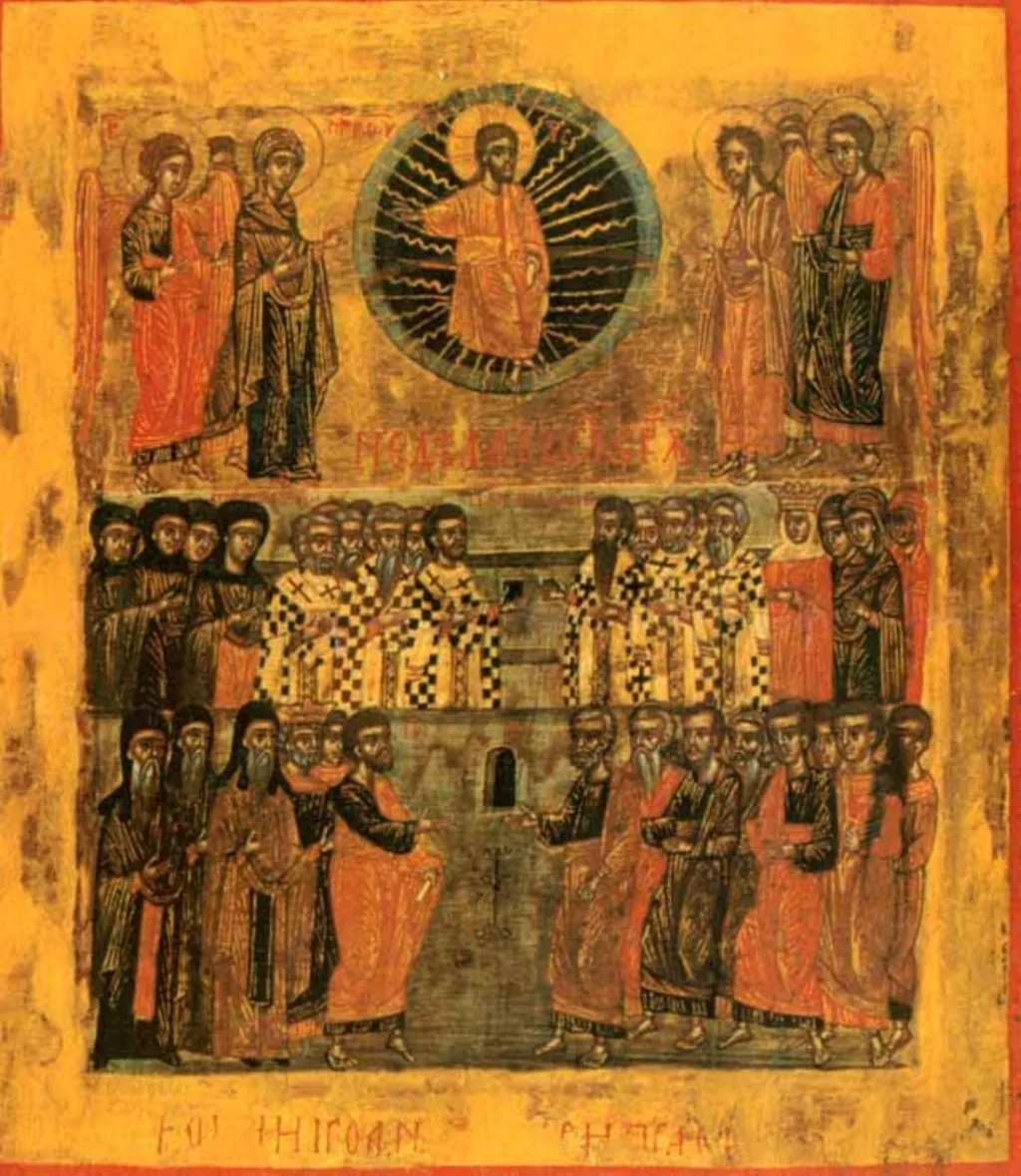
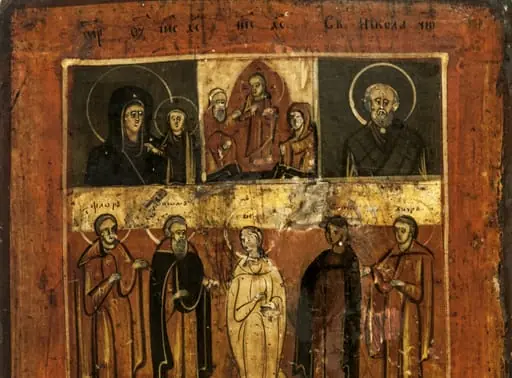
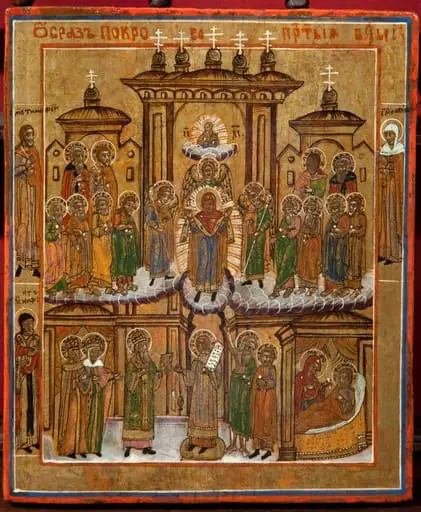
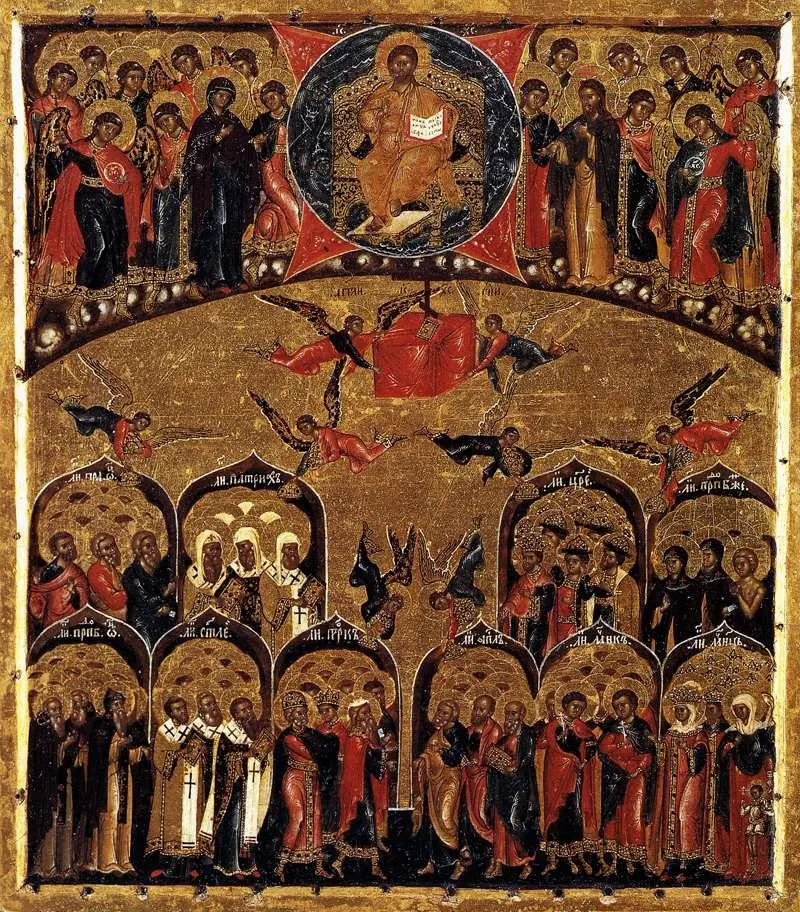
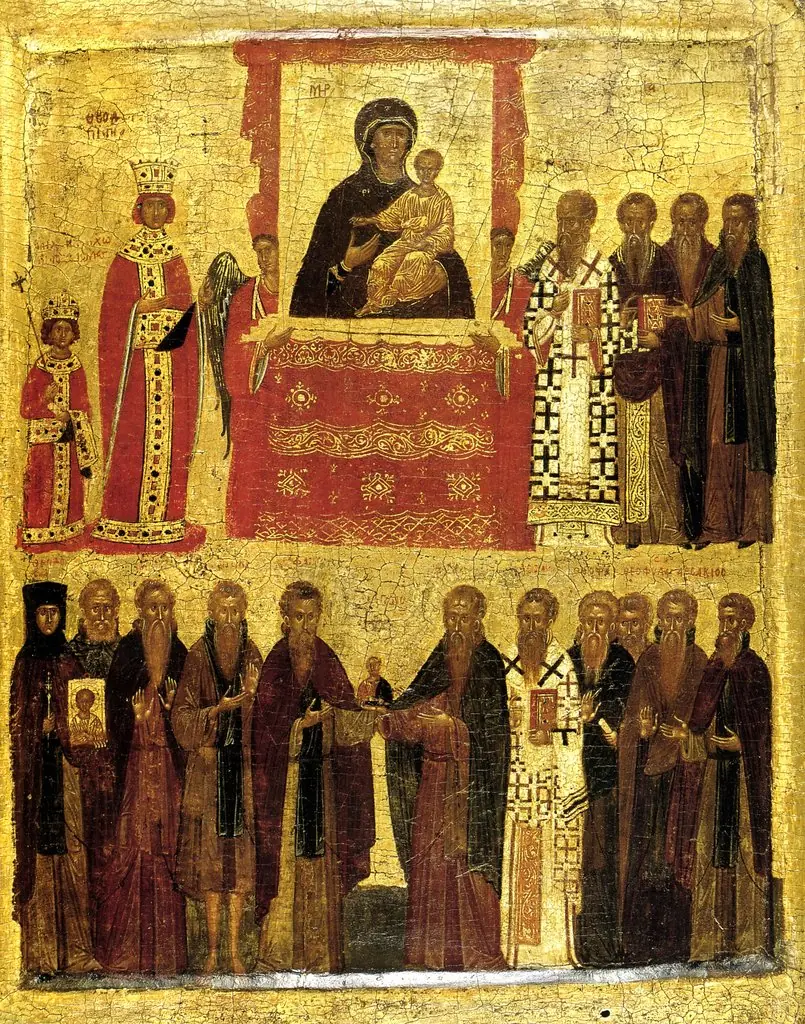
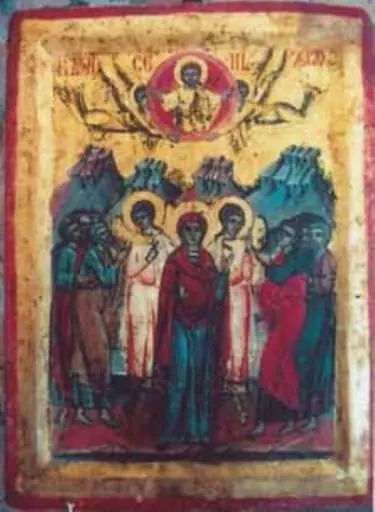
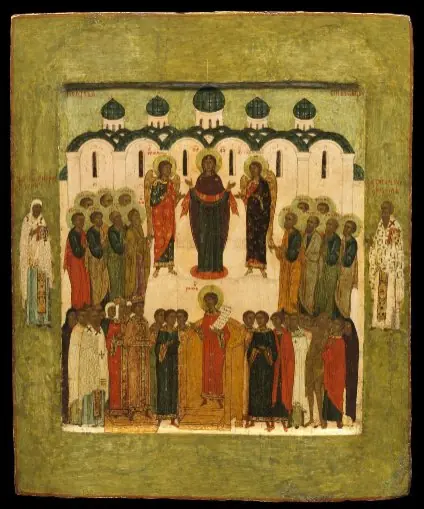
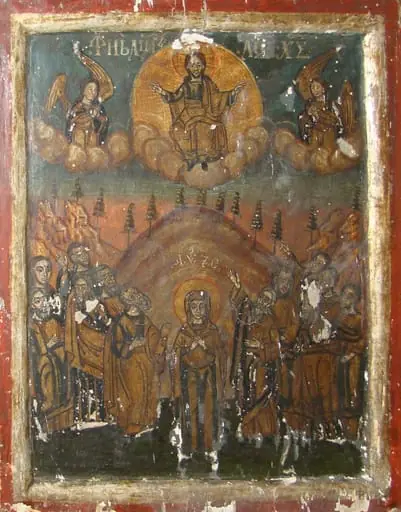
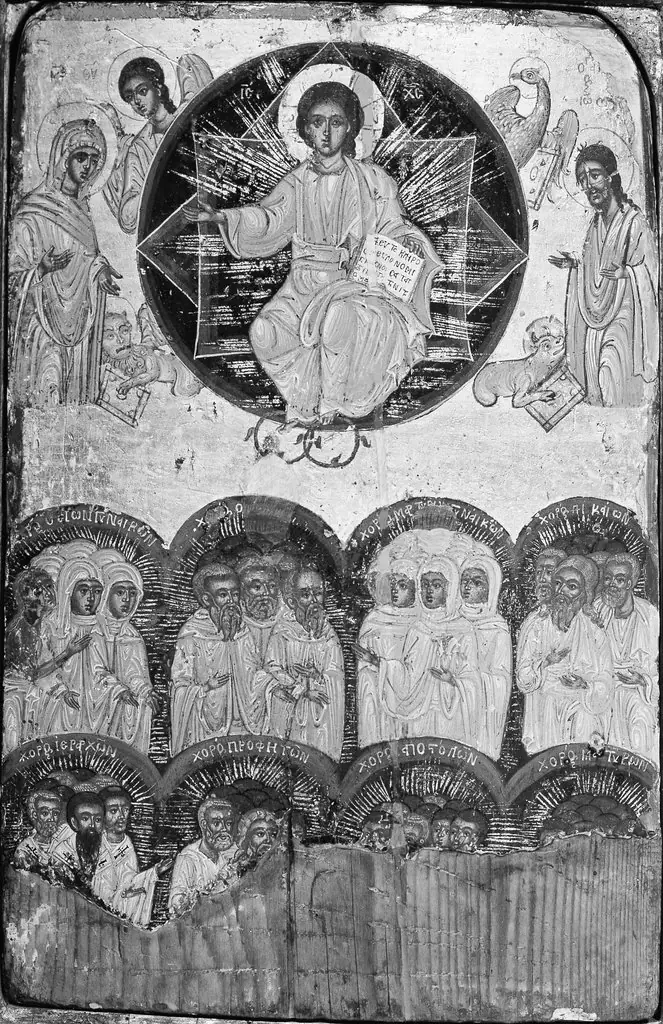
Duminica Tuturor Sfinților is a drawing by Unknown. It dates from 1850 and is held in the collection of the National Museum of Art of Romania. This vertical composition depicts two distinct religious scenes, one above the other.
About this work
Overview
The style reflects traditional iconographic conventions of Eastern Christian art, emphasizing spiritual hierarchy through spatial arrangement.
This vertical composition depicts two distinct religious scenes, one above the other. The upper register features a central radiant figure with a halo, flanked by four robed individuals, while the lower scene shows a group gathered before a structure crowned with a cross. The palette is dominated by earth tones—browns, reds, and golds—with luminous blues and greens framing the central figure. The style reflects traditional iconographic conventions of Eastern Christian art, emphasizing spiritual hierarchy through spatial arrangement.
Subject & Meaning
The upper scene likely represents Christ or a saint in glory, surrounded by witnesses, possibly apostles or martyrs, a common motif in feast-day iconography. The lower scene may illustrate a gathering of church leaders, scholars, or the faithful in worship before a sacred building. Together, the two panels suggest a connection between divine presence and earthly devotion, reinforcing the continuity between heavenly realms and the community of believers.
Technique & Style
The painting employs flat, stylized forms typical of medieval iconography, with minimal perspective and symbolic rather than naturalistic space. Gold and radiant hues highlight the divine figure, while the surrounding figures are rendered with restrained modeling. The use of fine lines and layered pigments creates subtle texture, especially in robes and halos. Rays emanating from the central head signify sanctity, a conventional device in Byzantine and post-Byzantine religious imagery.
History & Provenance
The work originates from a region with strong Eastern Orthodox traditions, likely produced in the 17th or 18th century. Its format suggests it was part of a devotional panel or iconostasis screen in a church or private chapel. The materials and technique align with local workshops that preserved Byzantine methods long after the fall of Constantinople, indicating a continuity of artistic practice in rural or monastic settings.
Context
Created during a period when Orthodox communities maintained religious identity under foreign rule, such images served both liturgical and educational roles. They visually reinforced doctrine for congregations with limited literacy. The pairing of heavenly glory with earthly assembly mirrored theological teachings on the communion of saints, uniting the faithful across time and space in a single devotional frame.
Legacy
This work exemplifies the enduring influence of Byzantine iconography in Eastern European religious art. Though stylistically conservative, it reflects regional adaptations in color and composition. Such panels were often replicated in homes and churches, preserving visual traditions through generations. Today, they remain important artifacts for understanding the spiritual and cultural life of Orthodox communities in the early modern era.
Artist & collection

 Domestic Scene
 Giacomo and Cardinal Marco, investing Andrea, Abbot of San Zeno, with his Benefice
 The Nymph of Fontainebleau
 Portrait of a Woman
 Madonna and Child with Saints in the Enclosed Garden
 Venus and Minerva
 Family Group of Four on Sofa
 Wall painting from Room H of the Villa of P. Fannius Synistor at Boscoreale