Artwork
Synaxis of All Saints
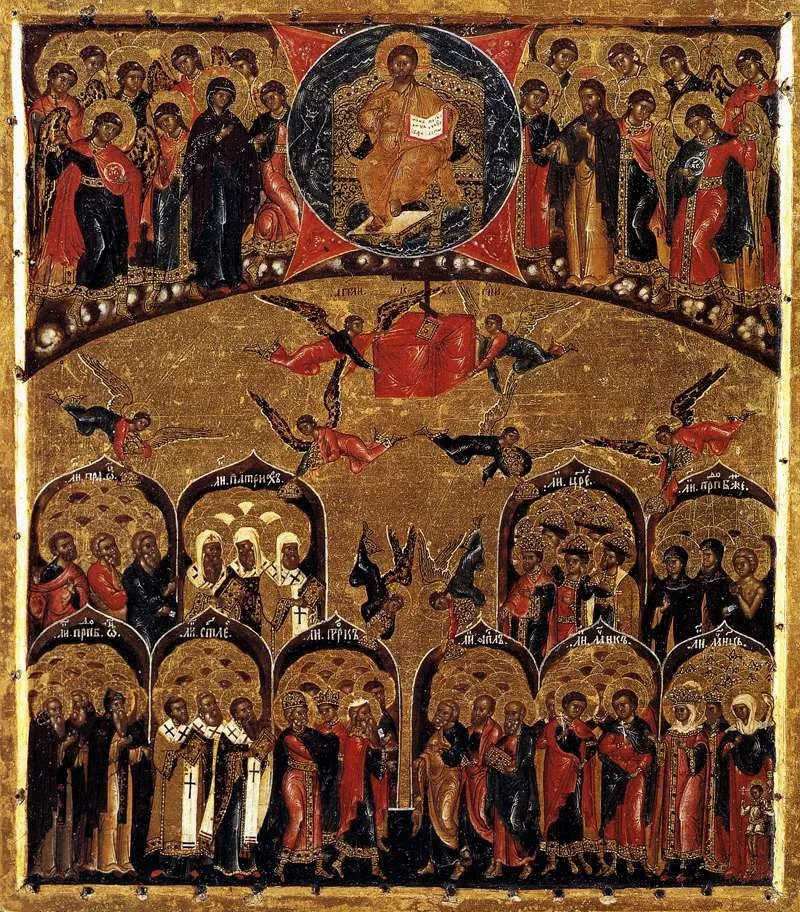
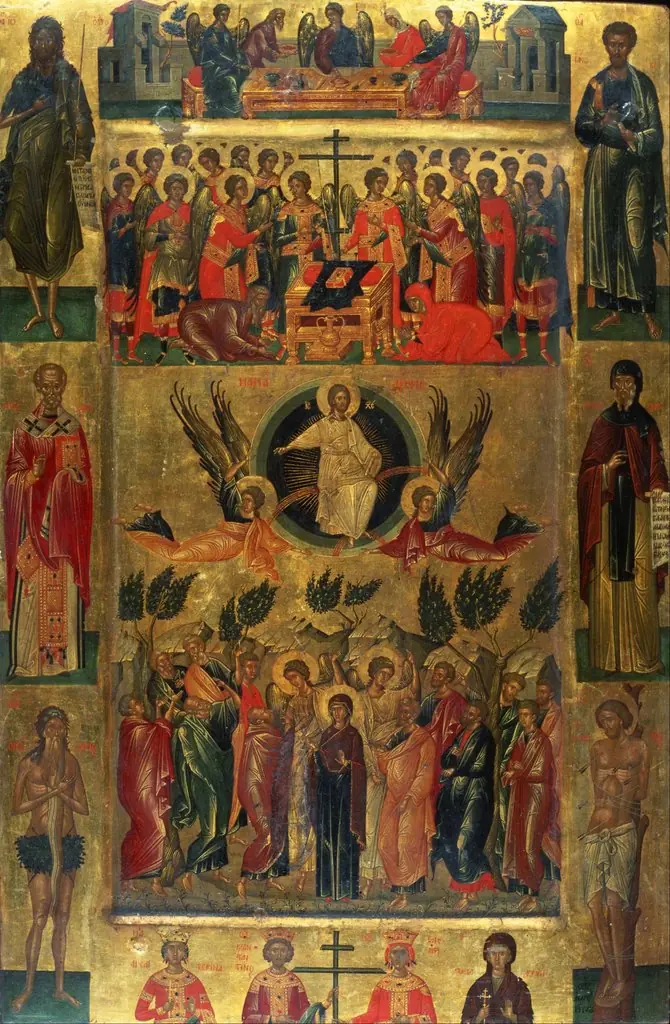
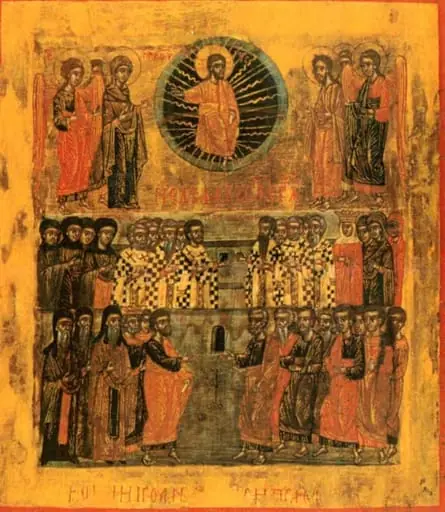
Synaxis of All Saints is a wood painting by the Byzantine icon painting artist Unknown. It dates from 1650 and is held in the collection of the Vatican Museums.
About this work
Overview
The gold background and richly detailed robes reflect traditional Byzantine iconographic conventions, emphasizing spiritual rather than earthly space.
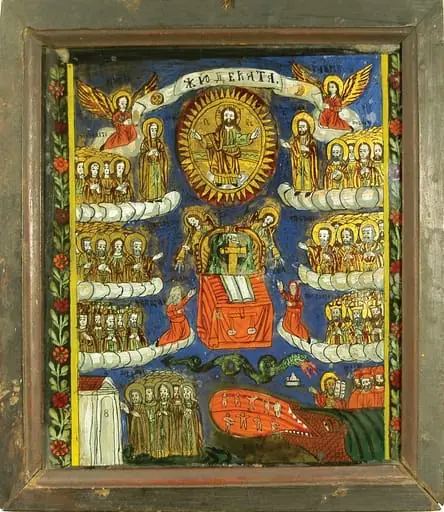
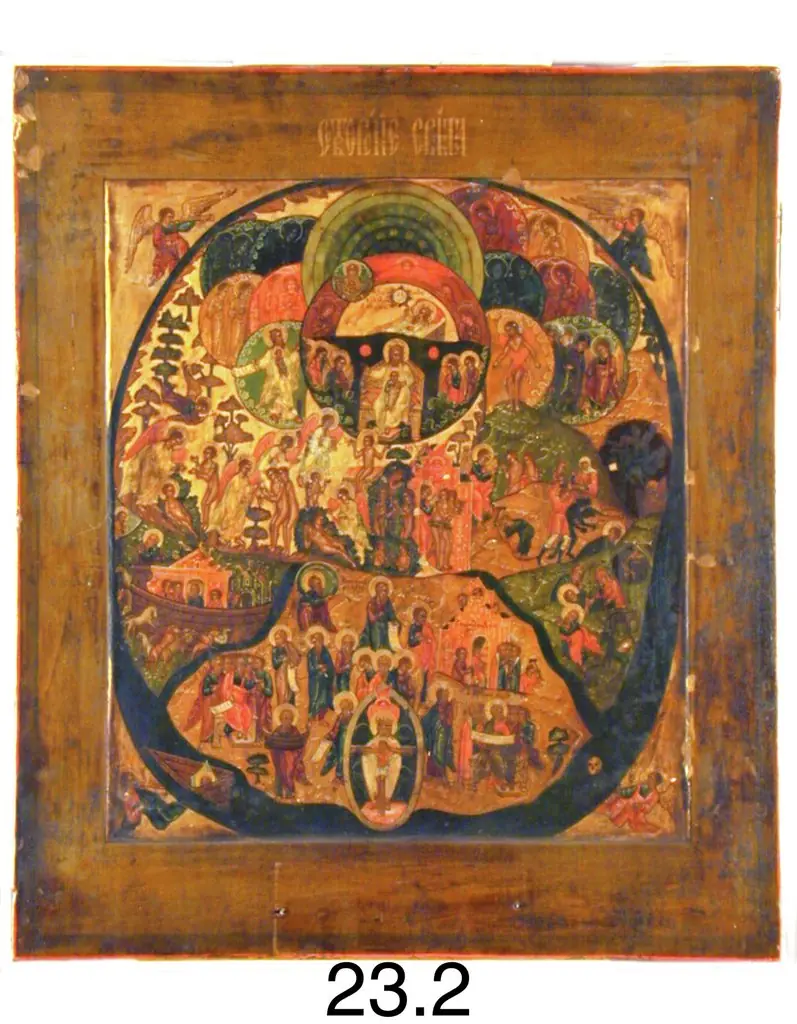
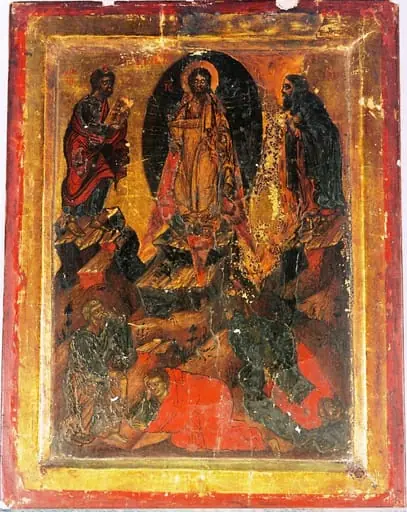
This wooden panel painting depicts a Synaxis of All Saints, a liturgical gathering honoring all Christian saints, known and unknown. The composition is formal and hierarchical, with figures arranged in orderly rows beneath a central symbolic element. The gold background and richly detailed robes reflect traditional Byzantine iconographic conventions, emphasizing spiritual rather than earthly space.
Subject & Meaning
The central red square, enclosed by a black circle with a gold border, likely represents the divine presence or the throne of Christ, a common symbol in Eastern Orthodox iconography. All figures, dressed in red and black vestments, gaze upward in reverence, signifying their collective veneration of the sacred. The hovering angels reinforce the heavenly context, suggesting a communion between earthly worshippers and the divine realm.
Technique & Style
The painting employs tempera on wood, a standard medium in medieval Orthodox iconography. Details in the robes and halos are rendered with fine brushwork and gold leaf, enhancing luminosity without naturalistic shading. Unlike chiaroscuro, which models form through light and shadow, this work relies on flat planes and symbolic color to convey spiritual hierarchy and otherworldly presence.
History & Provenance
The painting originates from a region within the Byzantine cultural sphere, likely produced in the late medieval period. Its preservation on wood suggests it was intended for devotional use in a church or private chapel. While its exact origin and early ownership are undocumented, its stylistic features align with Orthodox liturgical art from the 13th to 15th centuries.
Context
Created during a time when Orthodox Christianity emphasized communal worship and the veneration of saints, this image served as a visual liturgy. The Synaxis of All Saints was celebrated annually, reinforcing the belief in the unity of the faithful across time and space. Such icons were not merely decorative but integral to ritual practice and theological instruction.
Legacy
This work exemplifies the enduring tradition of Orthodox icon painting, where symbolic form supersedes naturalism to convey theological truths. Its preservation offers insight into medieval devotional practices and the continuity of visual language across centuries. Similar compositions remain in use today in Eastern Christian communities, maintaining their original spiritual function.
Artist & collection

 Domestic Scene
 Giacomo and Cardinal Marco, investing Andrea, Abbot of San Zeno, with his Benefice
 The Nymph of Fontainebleau
 Portrait of a Woman
 Madonna and Child with Saints in the Enclosed Garden
 Venus and Minerva
 Family Group of Four on Sofa
 Wall painting from Room H of the Villa of P. Fannius Synistor at Boscoreale