Artwork
Dumnezeu-Fiul ține Crucea pe umărul drept, Dumnezeu-Tatăl are globul pământesc pe genunchi. Veșmintele sunt în combinație de roșu vermillon și albastru bleu-ciel. În registrul îndepărtat superior este cerul albastru, cu ruje roșii, flori de trandafir, rodie și măceș, reprezentând toate Grădina Raiului. Florile sunt în număr de 9, al 9-lea Cer, supoziție. Dumnezeu-Fiul ține cu brațul drept Crucea. Tatăl și Fiul sunt foarte apropiați și Asemenea, formând ideatic întregul unei inimi mari. Deasupra este Sfântul Duh, sub forma porumbelului alb pogorât din Cerurile deschise, dintr-un mănunchi de raze luminoase. Fondul este Cerul senin de albastru bleu-ciel foarte deschis. Nuanța de albastru foarte senin este specifică centrului de pictură de icoane pe sticlă de la Gherla. Inscripția din româno-chirilică se traduce Tre Ime. Cromatica este armonioasă și vie, puternică: roșu vermillon, galben-ocru, albastru ceruleum, albastru bleu-ciel, alb, negru. Trăsăturile chipurilor sunt rafinat desenate. Este o icoană de Gherla, din Nordul Transilvaniei.
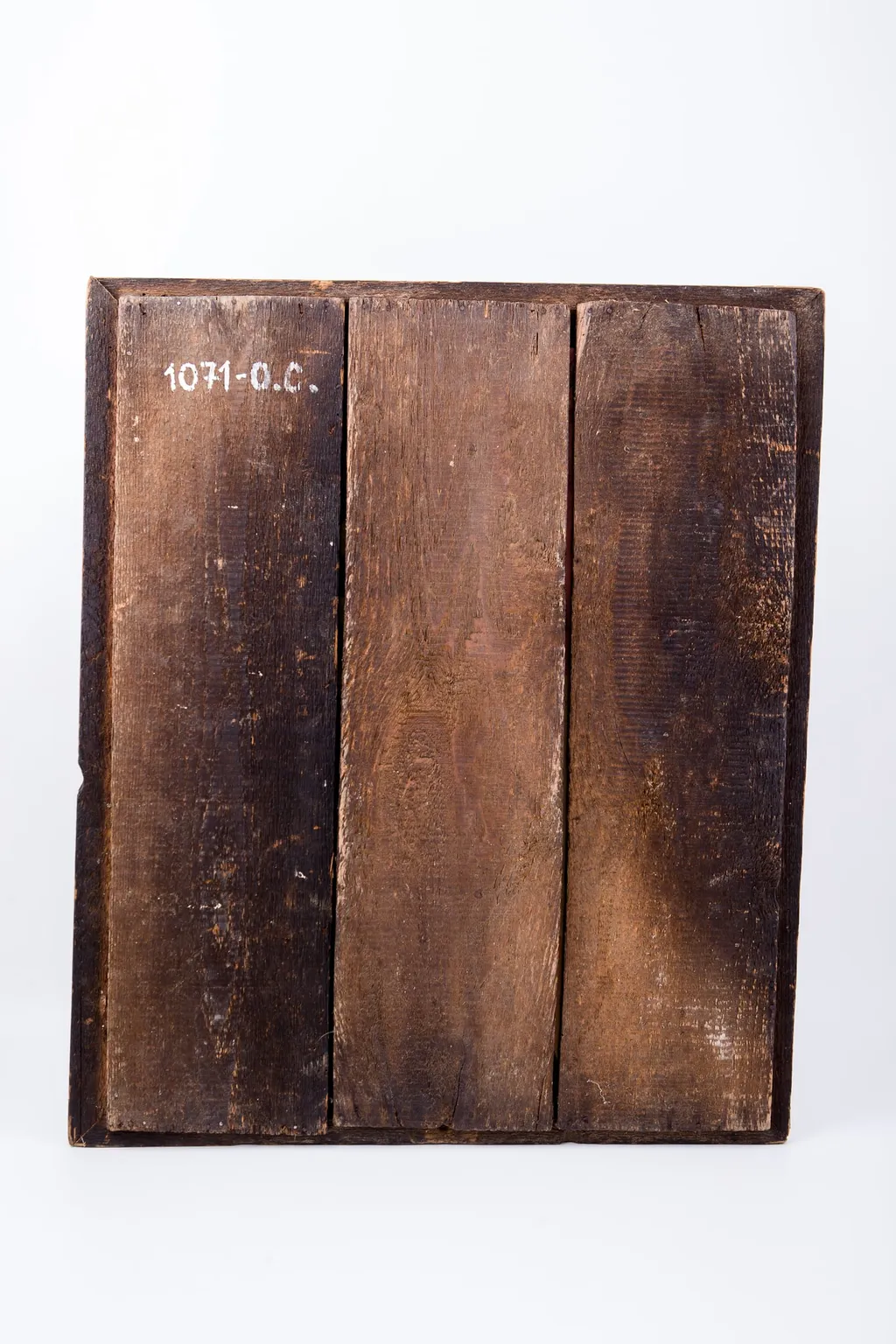
Dumnezeu-Fiul ține Crucea pe umărul drept, Dumnezeu-Tatăl are globul pământesc pe genunchi. Veșmintele sunt în combinație de roșu vermillon și albastru bleu-ciel. În registrul îndepărtat superior este cerul albastru, cu ruje roșii, flori de trandafir, rodie și măceș, reprezentând toate Grădina Raiului. Florile sunt în număr de 9, al 9-lea Cer, supoziție. Dumnezeu-Fiul ține cu brațul drept Crucea. Tatăl și Fiul sunt foarte apropiați și Asemenea, formând ideatic întregul unei inimi mari. Deasupra este Sfântul Duh, sub forma porumbelului alb pogorât din Cerurile deschise, dintr-un mănunchi de raze luminoase. Fondul este Cerul senin de albastru bleu-ciel foarte deschis. Nuanța de albastru foarte senin este specifică centrului de pictură de icoane pe sticlă de la Gherla. Inscripția din româno-chirilică se traduce Tre Ime. Cromatica este armonioasă și vie, puternică: roșu vermillon, galben-ocru, albastru ceruleum, albastru bleu-ciel, alb, negru. Trăsăturile chipurilor sunt rafinat desenate. Este o icoană de Gherla, din Nordul Transilvaniei. is a drawing by Unknown. It dates from 1850 and is held in the collection of the ASTRA National Museum Complex. The panel is a worn wooden icon from the Gherla tradition in northern Transylvania, divided into three vertical registers.
About this work
The description mentions an inscription in an old script, which translates to "Tre Ime" (Three Persons), hinting at a religious theme.
This is a worn wooden panel with three vertical sections. The wood looks old, with dark brown and gray tones, and a faded number "1071-0.C." stamped in the top left corner. The edges are slightly uneven, and the surface shows signs of age and handling.
The panel likely once held an icon, given its size and shape. The description mentions an inscription in an old script, which translates to "Tre Ime" (Three Persons), hinting at a religious theme.
Look up inscription to see how symbols and text were used in religious art.
Overview
The panel is a worn wooden icon from the Gherla tradition in northern Transylvania, divided into three vertical registers. Its surface shows age‑related dark brown and gray tones, with a faint stamped number in the upper left. The composition presents a Trinitarian scene, employing vivid vermilion, ochre, sky‑blue and white hues typical of the region’s glass‑icon painting.
Subject & Meaning
The central register depicts the Father and the Son in close proximity, forming a heart‑shaped outline. The Son holds the Cross on his right shoulder, while the Father rests a globe on his knee, symbolising divine authority over the world. Above them, the Holy Spirit appears as a white dove descending amid radiant beams, completing the representation of the Holy Trinity.
Technique & Style
Executed in the Gherla iconographic style, the work combines bright vermilion and sky‑blue pigments with ochre and black accents, creating a harmonious yet striking palette. The figures are rendered with refined facial lines, and the background features a clear blue sky populated by nine stylised flowers—rose, pomegranate, and rosehip—evoking the Garden of Eden.
Context
The icon belongs to the Gherla school of glass‑icon painting, a regional variant noted for its luminous blues and precise line work. Its dimensions and three‑panel format suggest it was intended for liturgical use, likely within a church or private chapel in the Transylvanian Orthodox tradition.
Artist & collection

 Domestic Scene
 Giacomo and Cardinal Marco, investing Andrea, Abbot of San Zeno, with his Benefice
 The Nymph of Fontainebleau
 Portrait of a Woman
 Madonna and Child with Saints in the Enclosed Garden
 Venus and Minerva
 Family Group of Four on Sofa
 Wall painting from Room H of the Villa of P. Fannius Synistor at Boscoreale
 Icoana este împărțită pe două tematici iconografice: Sfântul Mare Ierarh Vasile și Sfânta Treime. Sfântul Vasile cel Mare este îmbrăcat în veșminte arhierești în combinația de roșu-zmeuriu, albastru cobalt, verde și alb. Are barba și părul lungi. Poartă mitrhră arhierească și aureolă. Binecuvântează cu mâna dreaptă și ține în mâna stângă Sfânta Evanghelie închisă. Dumnezeu-Fiul ține Crucea pe umărul stâng, Dumnezeu-Tatăl are globul pământesc și dimpreună susțin coroana Împărăției Cerești. Dumnezeu-Tatăl și Dumnezeu-Fiul sunt înveșmântați în roșu vermillon-zmeuriu, albastru cobalt și verde, cu bogăție de detalii decorativ-ornamentale fine și minuscule pe veșmintele împărătești, dungi albe. În registrul îndepărtat superior este cerul auriu cu o mandorlă de nouri rotunzi albaștri.
 Icoana reprezintă Sfânta Treime - Sfânta Troiță. Dumnezeu-Tatăl, Dumnezeu-Fiul sunt înveșmântați în veșminte roșii vermillon și verzi închise. Dumnezeu-Tatăl și Dumnezeu-Fiul sunt dimpreună cu Sfântul Duh, reprezentat prin porumbelul pogorât prin mănunchiul de raze solare. În registrul îndepărtat superior este cerul albastru, Dumnezeu-Fiul ține pe brațul drept Crucea, iar Dumnezeu-Tatăl are globul pământesc pe genunchi. Fondul icoanei este cerul bleu-ciel în registrul superior. În registrul inferior sunt mandorle de nouri cenușii. Cromatica este armonioasă, vie și luminoasă: roșu vermillon, ocru, bej, albastru cobalt și bleu-ciel, gri, brun-maro, alb, negru. Icoana este de Gherla. Inscripția din româno-chirilică se traduce Treime.
 Icoana reprezintă Sfânta Treime. Dumnezeu-Tatăl și Fiul Iisus Hristos susțin globul pământesc dimpreună, Binecuvântând lumea, și având Crucea în spatele Pământului. Dumnezeu-Tatăl și Dumnezeu-Fiul sunt înveșmântați în roșu vermillon și verde-văratic-kaki, cu liniuțe fine albe. Deasupra, în registrul superior, dintr-un mănunchi de raze luminoase, printr-o mandorlă de nouri albi, rotunzi, se pogoară Sfântul Duh, sub forma porumbelului alb. Astfel este prezentă întreaga Sfântă Treime. Între Dumnezeu-Tatăl și Fiul este un spațiu luminos de galben, cu Crucea aurie. Fondul icoanei este cerul albastru ultramarin-indigo înconjurat de lumina galbenă de chihlimbar și lumina albă, ca de zăpadă. Întreaga tematică iconografică este încadrată de un chenar decorativ geometrizant brun-acajou, cu linia albă șerpuită, simbolul infinitului. Inscripția din româno-chirilică se traduce S Treime. Cromatica este luminoasă și armonioasă: roșu vermillon, albastru ultramarin-indigo, galben chihlimbar, verde văratic-kaki, brun, acajou, alb, negru. Icoana este din Nordul Transilvaniei, Nicula.
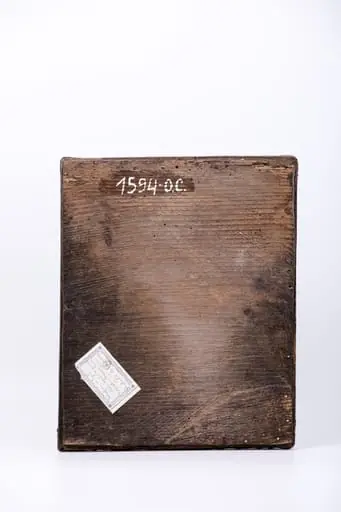 Maica Domnului ține în brațe Pruncul Iisus Hristos. Maica Domnului este înveșmântată în mantie cu maforion roșu vermillon și interiorul căputușit cu galben, bronz, și decorat cu multe striații albe. Mantia este foarte acoperitoare, mâinile Maicii Domnului fiind ascunse sub veșmânt. Pruncul Iisus Hristos este ținut în veșmântul maternității. Icoana este pictată după modelul Maicii Domnului Sporirea minții - icoană rusească, făcătoare de minuni. În locul îngerilor, lateral stânga-dreapta sunt flori, simetrice, pe câmpuri paralele, alternativ-cromatizate cu brun, gri și galben. Fondul icoanei este albastru ultramarin bleumarin întunecat, cu un chenar decorativ geometrizant, care conține și linia albă șerpuitoare. Cromatica este armonioasă și semnificativă: roșu vermillon, galben-chihlimbar, gri, ocru, brun, bej, abastru ultramarin bleumarin, alb, negru. Inscripția din româno-chirilică se traduce Sf Maică Maria. Icoana este de Nicula.
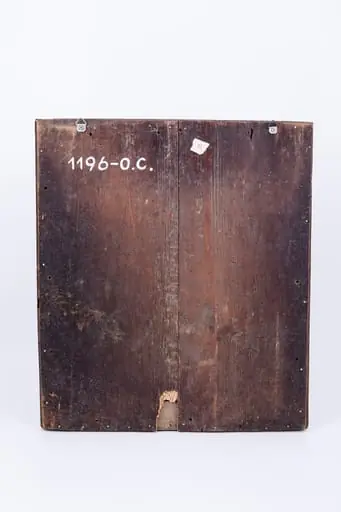 În centrul icoanei este Crucea, iar în dreapta crucii este Împăratul Constantin și în stânga este Împărăteasă Elena, mama sa. Veșmintele sfinților împărați sunt pictate cu roșu vermillon, roz, ocru, brun, alb și bronziu. Deasupra fiecăruia este inscripționat numele. Pe brațele Crucii sunt elemente forale și vegetale, realizate prin petale punctiforme roșii. Deasupra Sfinților Împărați sunt volutele și drapajele unor draperii roșii și galbene, care au menirea să încadreze în spațiu și timp tematica iconografică. Icoana este de Țara Oltului. Inscripția în româno-chirilică se traduce Sfântul Constantin Sfânta Elena. Fondul este albastru-violaceu, iar în registrul inferior există un caroiaj alb-gri-negru. Cromatica este armonioasă și bogată: roșu vermillon, roz, orange, galben-ocru, albastru violaceu, verde kaki, brun, alb, negru.
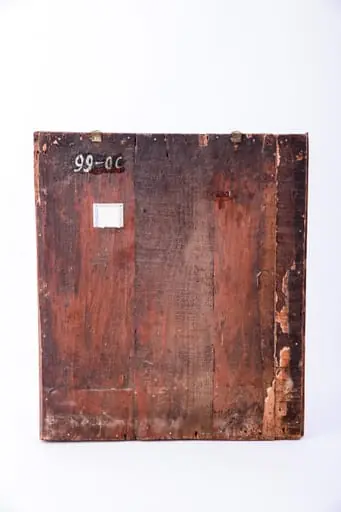 Trupul Mântuitorului Iisus Hristos este coborât de pe cruce de patru ucenici, învelit în giulgiul alb și primit de Maica Domnului și două femei mironosițe purtătoare mir. În partea dreaptă, alături de Maica Domnului este și ucenicul cei iubit, Ioan Teologul, care va fi Sfântul Apostol și Evanghelist Ioan, Teologul Iubirii. Compoziția este foarte simetrică, echilibrată. Petele de sânge de pe giulgiul alb, interiorul căptușit al maforiumului Maicii Domnului și scara, pe care se urcă ucenicii, sunt de culoare roșie. Veșmintele toate sunt verzi kaki, cu tonuri de bronz și olive-smarald. Cerul este albastru închis, ca de noapte de bleumarin. Inscripția în româno-chirilică este cu alb pe cerul ceruleum și se traduce Coborârea de pe cruce a Mântuitorului Iisus Hristos IC XC. Icoana este pictată la Lancrăm, Valea Sebeșului, având o cromatică fină, delicată, puternică, armonioasă: verde, kaki, olive, smarald, albastru ceruleum, gri, bronz, alb, negru, roșu.