Artwork
Durga
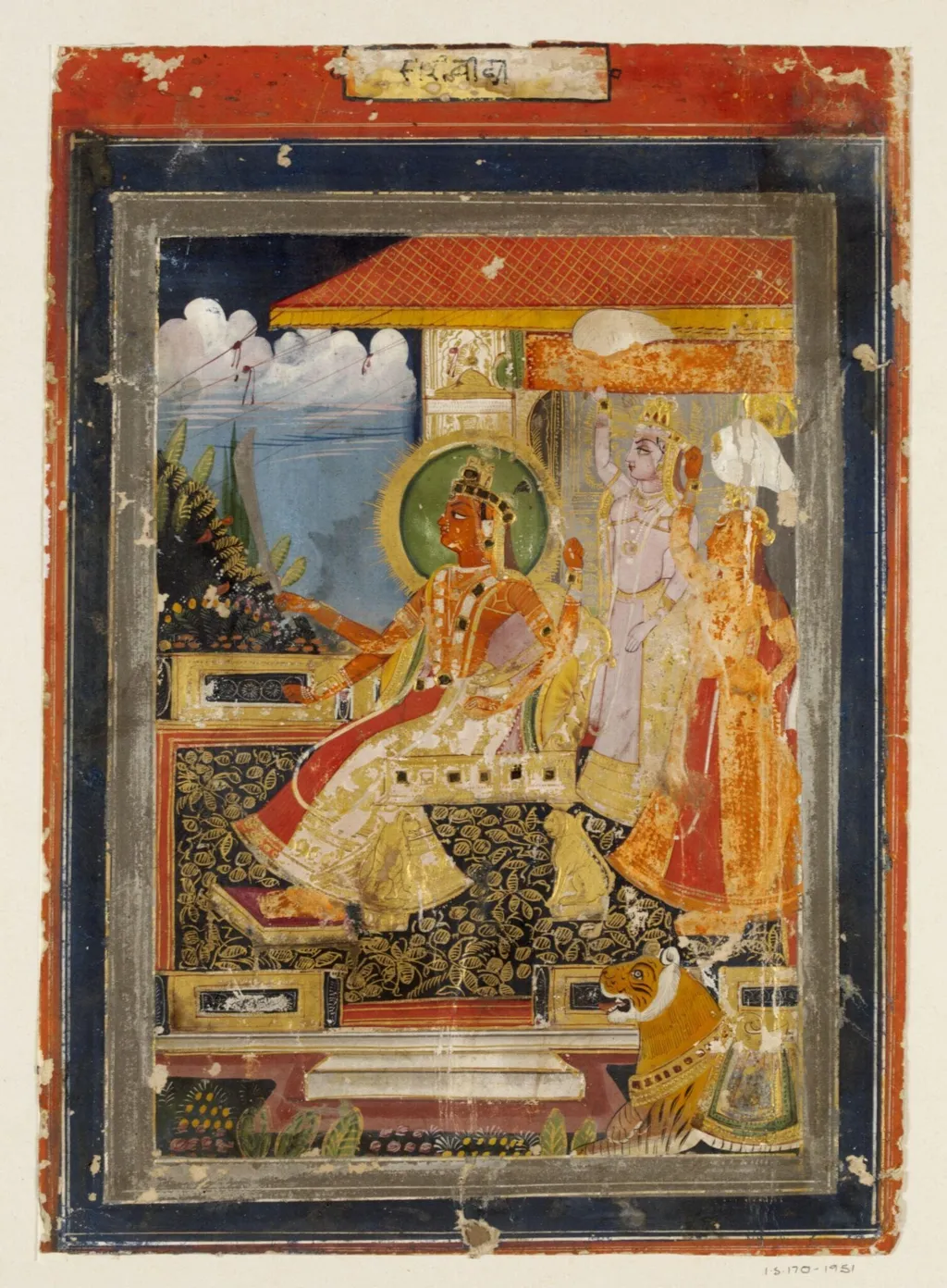
Durga is a paint painting by Unknown. It dates from 1850 and is held in the collection of the Victoria and Albert Museum.
About this work
Overview
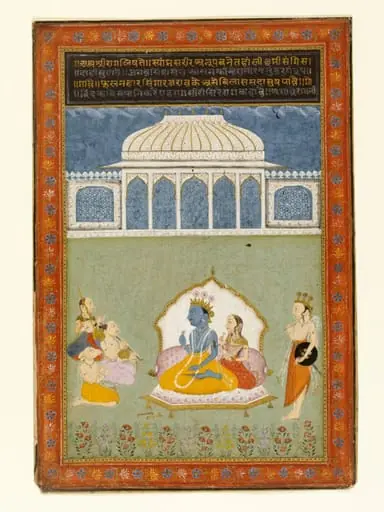
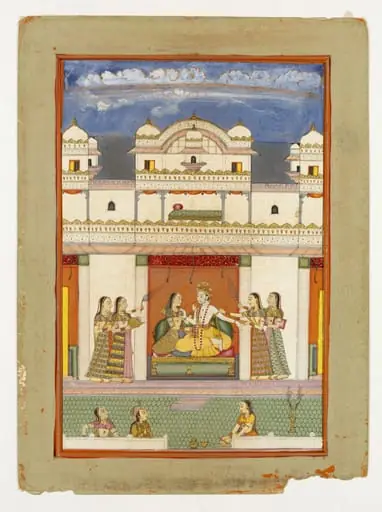
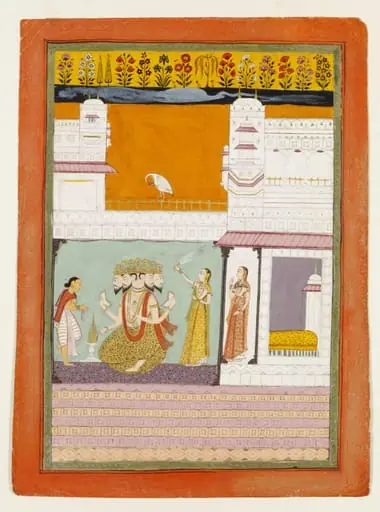
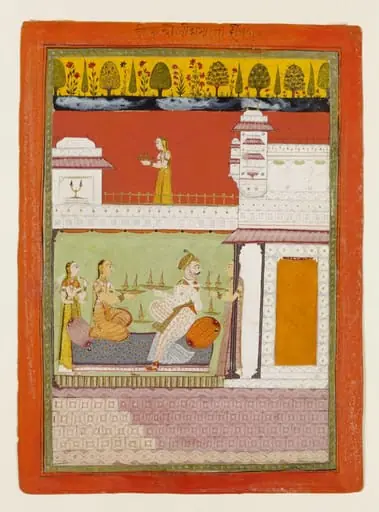
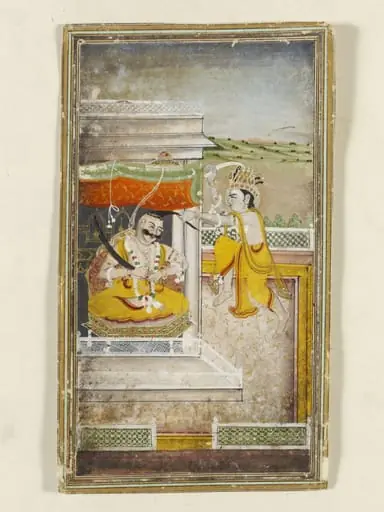
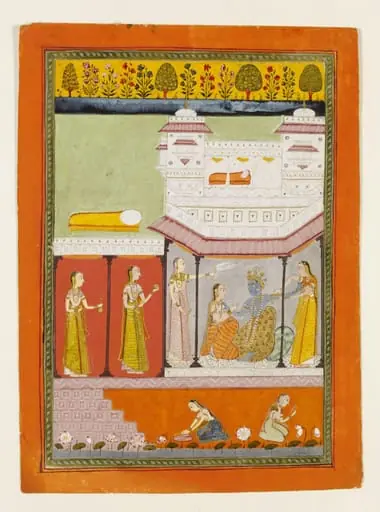
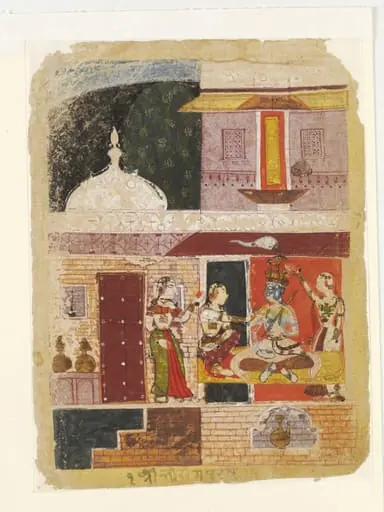
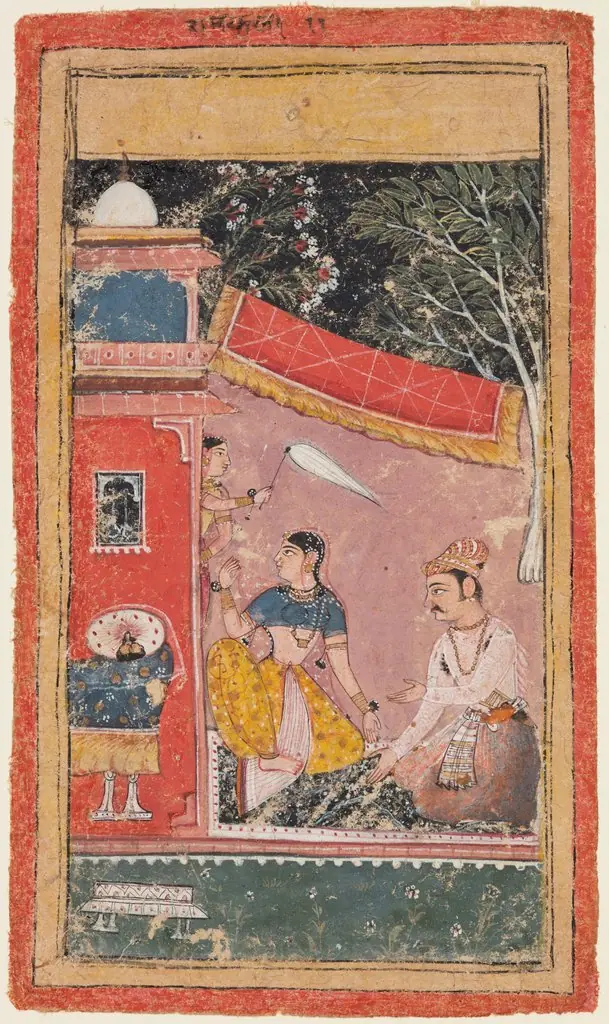
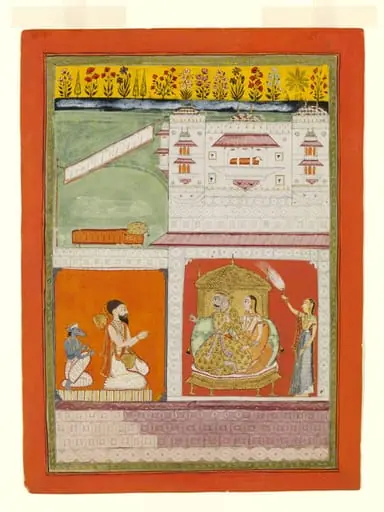
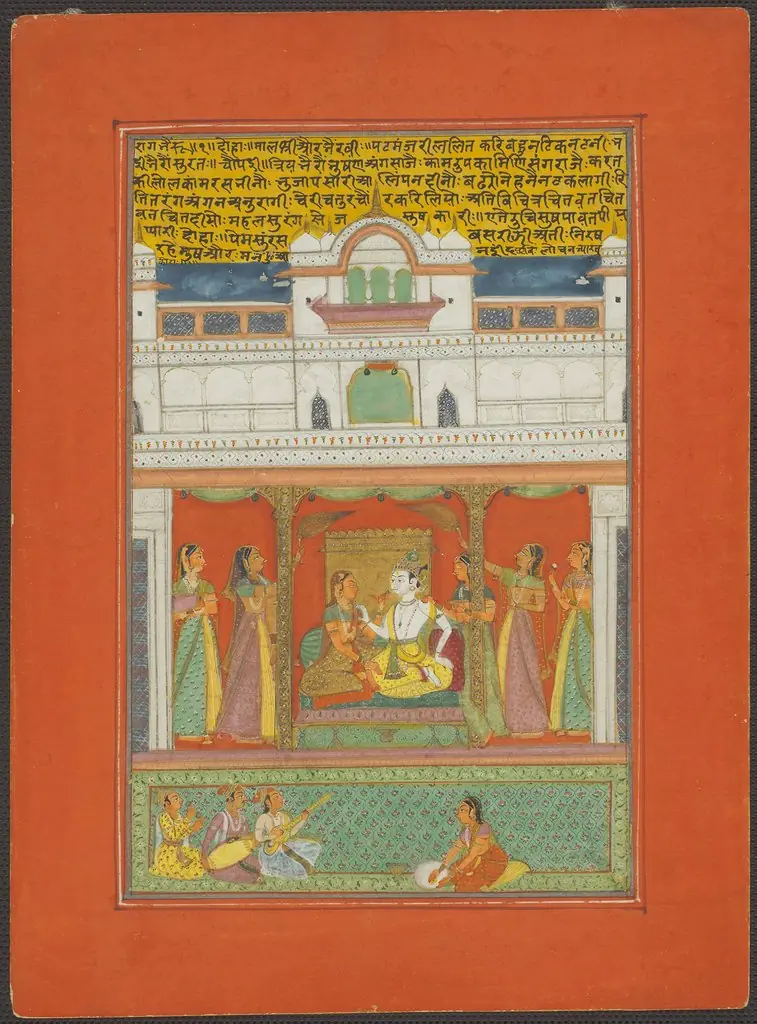
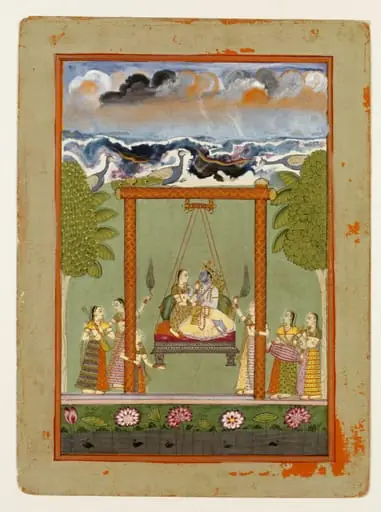
This 1850 opaque watercolor on paper portrays the Hindu goddess Durga in a formal seated pose. Executed with meticulous detail, the work combines rich pigments and gold leaf to convey divine presence. The composition centers on the goddess, framed by ornate architecture and natural elements, reflecting regional artistic conventions of mid-19th century North India.
Subject & Meaning
Durga is depicted as a serene yet authoritative figure, embodying protective power and cosmic balance. Her raised hand signifies blessing or reassurance, while her seated posture on a gilded throne reinforces her status as a sovereign deity. The tiger at her side, a traditional symbol of her dominion over brute force, underscores her role as a conqueror of chaos and evil.
Technique & Style
The painting employs opaque watercolor with gold leaf accents to achieve luminous texture and depth. Fine brushwork defines intricate patterns on the throne and jewelry, while the background uses layered washes to suggest distance through trees, clouds, and water. The palette—dominated by red, white, and gold—enhances the divine atmosphere without overt naturalism.
History & Provenance
Created around 1850, likely in a courtly or temple-associated atelier in North India, the work reflects devotional painting traditions of the period. Its preservation suggests it was valued within a religious or aristocratic context, possibly used in ritual observance or private worship. No documented ownership prior to modern collections is recorded.
Context
This image aligns with regional styles of Pahari or Rajasthani miniature painting, where deities were rendered with symbolic precision rather than realism. The inclusion of natural elements and ornate architecture reflects a broader trend in 19th-century Indian art that merged spiritual iconography with decorative elegance, even as colonial influences began to reshape artistic production.
Legacy
The painting contributes to a sustained visual tradition of Durga iconography that persisted through the colonial era. While later representations became more standardized, this work preserves the nuanced craftsmanship and symbolic language of pre-modern Indian devotional art, offering insight into how divine authority was visually constructed in its time.
Artist & collection

 Domestic Scene
 Giacomo and Cardinal Marco, investing Andrea, Abbot of San Zeno, with his Benefice
 The Nymph of Fontainebleau
 Portrait of a Woman
 Madonna and Child with Saints in the Enclosed Garden
 Venus and Minerva
 Family Group of Four on Sofa
 Wall painting from Room H of the Villa of P. Fannius Synistor at Boscoreale