Artwork
Sri Raga
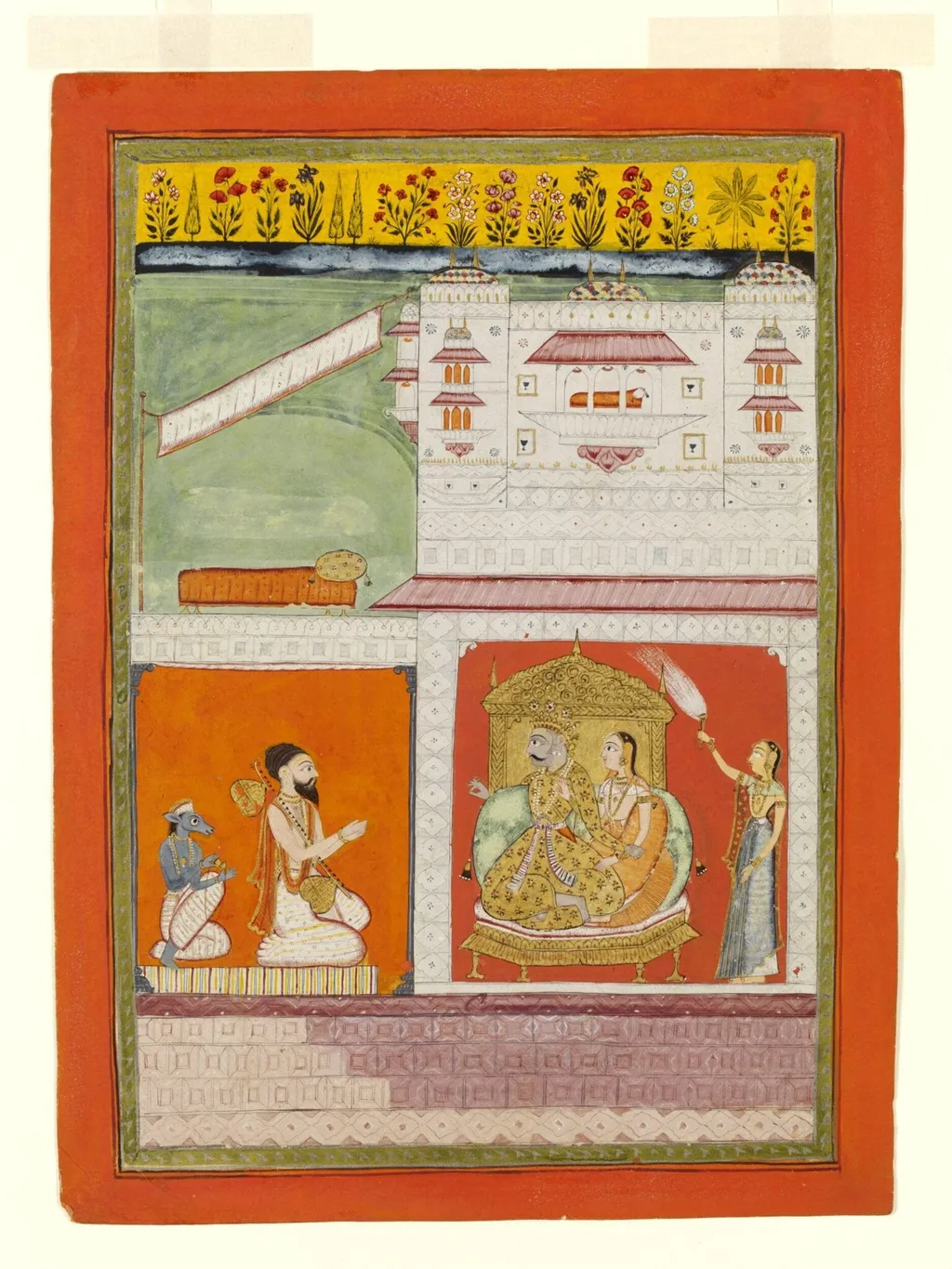
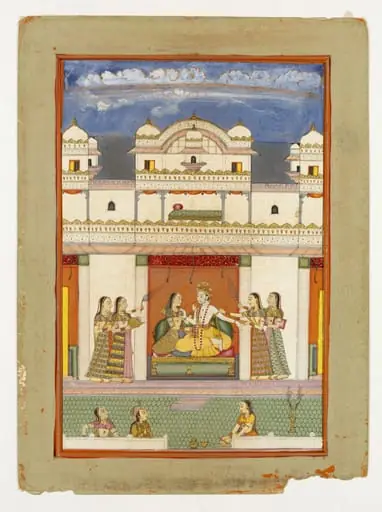
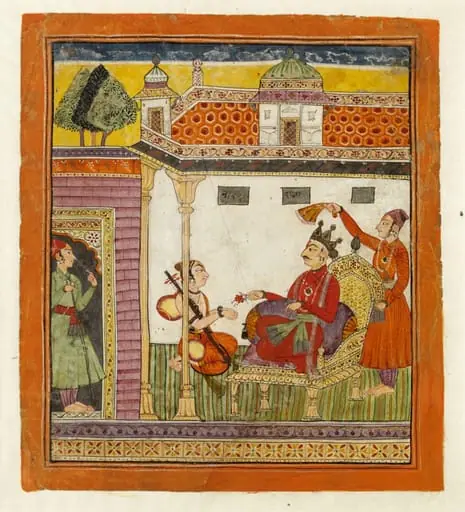
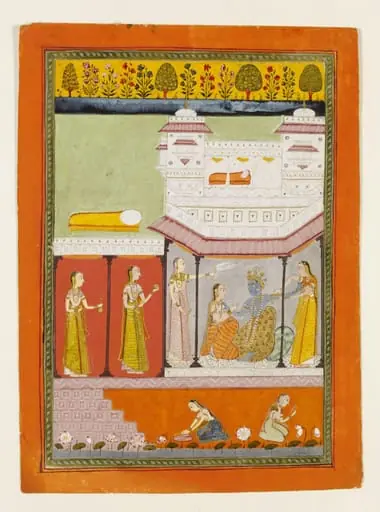
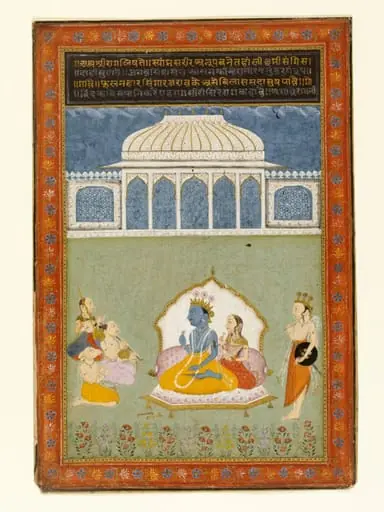
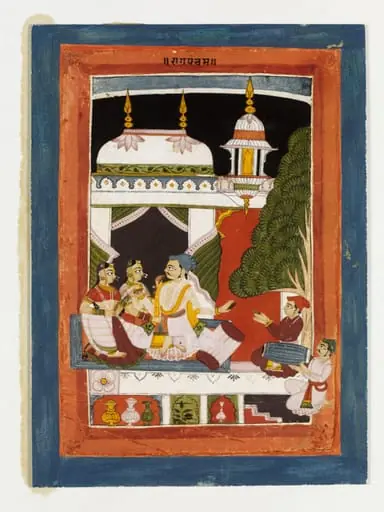
Sri Raga is a paint painting by the Baroque artist Unknown. It dates from 1680 and is held in the collection of the Victoria and Albert Museum. This 1680 Ragamala painting, executed in opaque watercolour on paper, illustrates a musical mode through a layered narrative scene.
About this work
Overview
This 1680 Ragamala painting, executed in opaque watercolour on paper, illustrates a musical mode through a layered narrative scene.
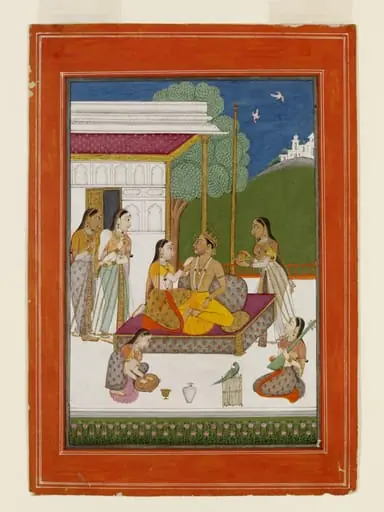
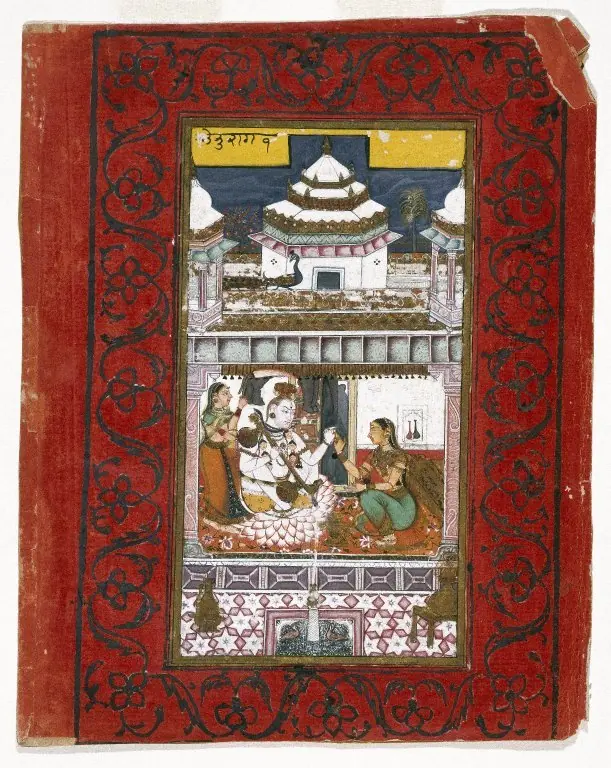
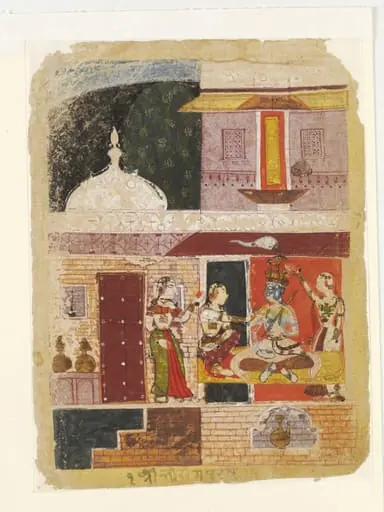
This 1680 Ragamala painting, executed in opaque watercolour on paper, illustrates a musical mode through a layered narrative scene. It combines two distinct moments within a single composition: one featuring a contemplative figure with a monkey, the other a royal pair under a canopied throne. The setting is an ornate architectural space with terraces and floral motifs, rendered in vivid reds, greens, and golds characteristic of late Mughal-era Rajput painting.
Subject & Meaning
The painting visually interprets the raga Sri Raga, associated with devotion and serenity. The seated figure with a book and monkey suggests ascetic reflection, while the royal pair on the throne embodies worldly grace. Their coexistence reflects the raga’s dual nature—spiritual and sensual. The kneeling yogi and kinnara, a celestial being, reinforce the sacred context, linking earthly beauty to divine order through symbolic presence.
Technique & Style
The work employs fine brushwork and layered opaque pigments to achieve rich, luminous surfaces. Details in textiles, jewelry, and architecture are meticulously rendered, emphasizing texture and pattern. The composition divides space horizontally, balancing intimate and ceremonial moments. Background elements like flowering trees and pavilions are stylized, not naturalistic, aligning with the decorative conventions of Rajput court painting rather than European realism.
History & Provenance
Created around 1680, likely in a Rajput atelier influenced by Mughal aesthetics, this painting belongs to a series illustrating musical modes. Such Ragamala albums were commissioned by noble patrons for private contemplation or courtly display. Its survival suggests it was carefully preserved, possibly within a royal collection, though its specific early ownership remains undocumented in public records.
Context
Ragamala paintings emerged in north India during the 16th–17th centuries as visual expressions of Hindustani classical music. Each raga was personified through mood, time of day, and associated figures. This work reflects the fusion of Hindu devotional traditions with Persianate courtly styles, where music, poetry, and painting converged as spiritual disciplines within elite cultural life.
Legacy
Though lesser known than Mughal miniatures, Ragamala paintings like this one influenced later Indian artistic traditions by embedding abstract concepts—music, emotion, divinity—into visual form. They remain important for understanding how non-Western cultures encoded philosophical ideas through imagery, offering a distinct alternative to European narrative painting conventions of the same period.
Artist & collection

 Domestic Scene
 Giacomo and Cardinal Marco, investing Andrea, Abbot of San Zeno, with his Benefice
 The Nymph of Fontainebleau
 Portrait of a Woman
 Madonna and Child with Saints in the Enclosed Garden
 Venus and Minerva
 Family Group of Four on Sofa
 Wall painting from Room H of the Villa of P. Fannius Synistor at Boscoreale