Artwork
Durga and Mahishasura
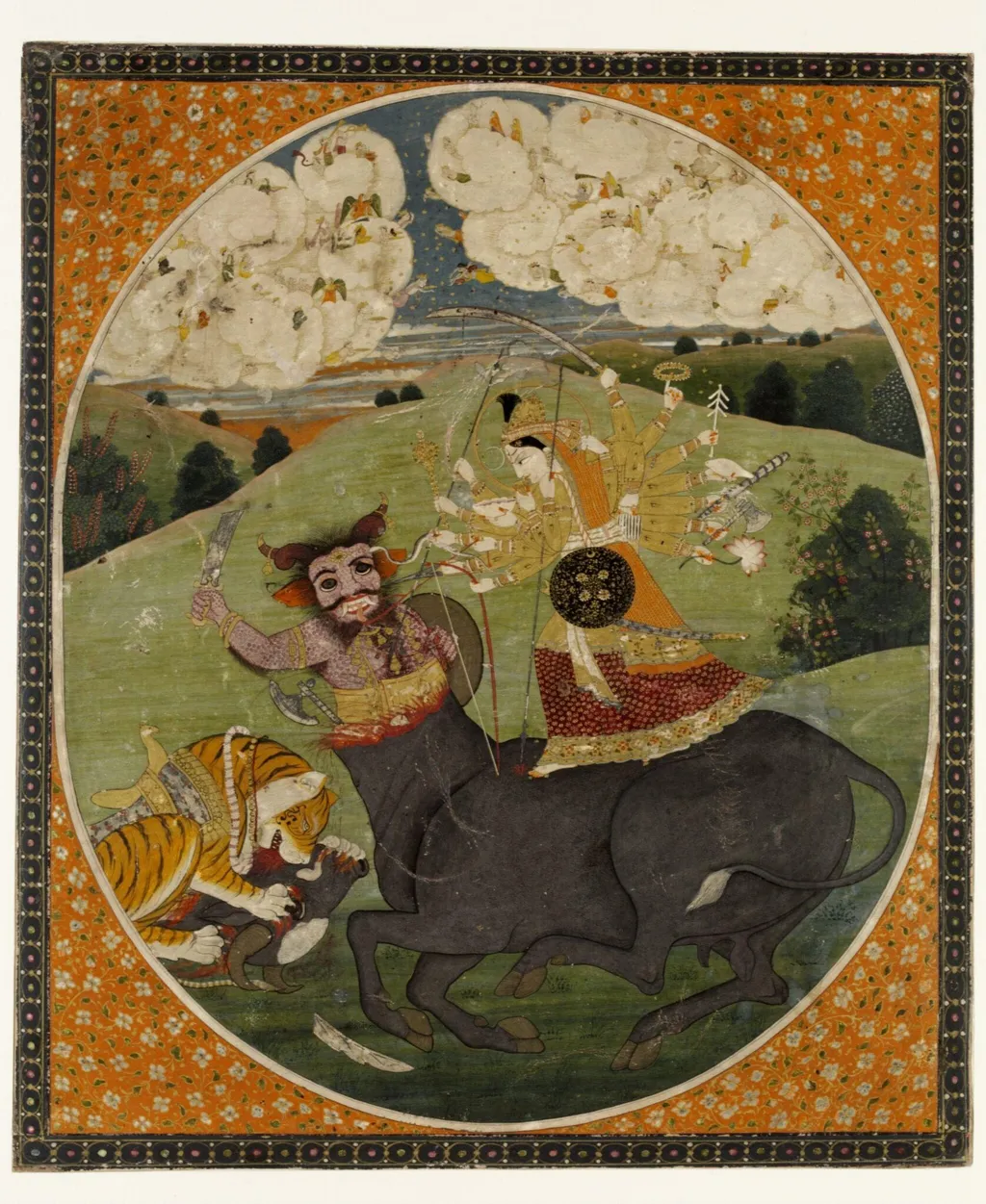
Durga and Mahishasura is a paint painting by the Romanticist artist Unknown. It dates from 1830 and is held in the collection of the Victoria and Albert Museum.
About this work
Overview
This opaque watercolor on paper, created around 1830 in the Harkhu style, portrays the Hindu goddess Durga in combat with the buffalo demon Mahishasura.
This opaque watercolor on paper, created around 1830 in the Harkhu style, portrays the Hindu goddess Durga in combat with the buffalo demon Mahishasura. The work is executed with rich pigments and intricate detailing, characteristic of regional Pahari painting traditions. It was once part of the Rothenstein Collection and is documented in the publication *Devi: The Great Goddess: Female Divinity in South Asian Art*, reflecting its significance in the study of South Asian devotional imagery.
Subject & Meaning
The scene illustrates the mythological moment when Durga, embodying divine feminine power, defeats Mahishasura, a demon who had gained invincibility through a boon. Her multiple arms, each holding a weapon, signify her cosmic authority, while the tiger beneath her represents controlled energy. The demon’s severed head and the buffalo’s defeat symbolize the triumph of order over chaos, a central theme in Hindu cosmology and devotional narratives.
Technique & Style
Rendered in opaque watercolor on paper, the painting employs bold, saturated hues—crimson, gold, and azure—against a luminous sky and verdant landscape. The Harkhu style is marked by fine linework, ornate textile patterns, and stylized natural elements. Figures are arranged dynamically, with exaggerated proportions and expressive gestures that heighten narrative tension, typical of North Indian courtly painting traditions of the early 19th century.
History & Provenance
The painting was previously owned by the Rothenstein Collection, a noted assemblage of South Asian art gathered by British collectors in the 19th and early 20th centuries. Its inclusion in the scholarly volume *Devi: The Great Goddess* confirms its recognition within academic circles. While its exact origin within the Harkhu region remains unspecified, its stylistic features align with workshops active in the Punjab Hills during the period of Sikh and Rajput patronage.
Context
Created during a time when regional courts in northern India continued to support devotional art despite political upheaval, this work reflects enduring Hindu iconographic traditions. It was likely produced for private worship or courtly display, not public ritual. Though contemporaneous with European Romanticism, its visual language derives from indigenous cosmology rather than Western artistic movements, emphasizing spiritual narrative over emotional individualism.
Legacy
The painting contributes to the broader documentation of Durga’s iconography in pre-colonial and colonial-era South Asia. Its preservation and scholarly cataloging have helped sustain interest in regional painting styles that might otherwise have been overshadowed by Mughal or colonial art histories. It remains a reference point for understanding how mythological themes were visually sustained across generations in Himalayan foothill communities.
Artist & collection

 Domestic Scene
 Giacomo and Cardinal Marco, investing Andrea, Abbot of San Zeno, with his Benefice
 The Nymph of Fontainebleau
 Portrait of a Woman
 Madonna and Child with Saints in the Enclosed Garden
 Venus and Minerva
 Family Group of Four on Sofa
 Wall painting from Room H of the Villa of P. Fannius Synistor at Boscoreale
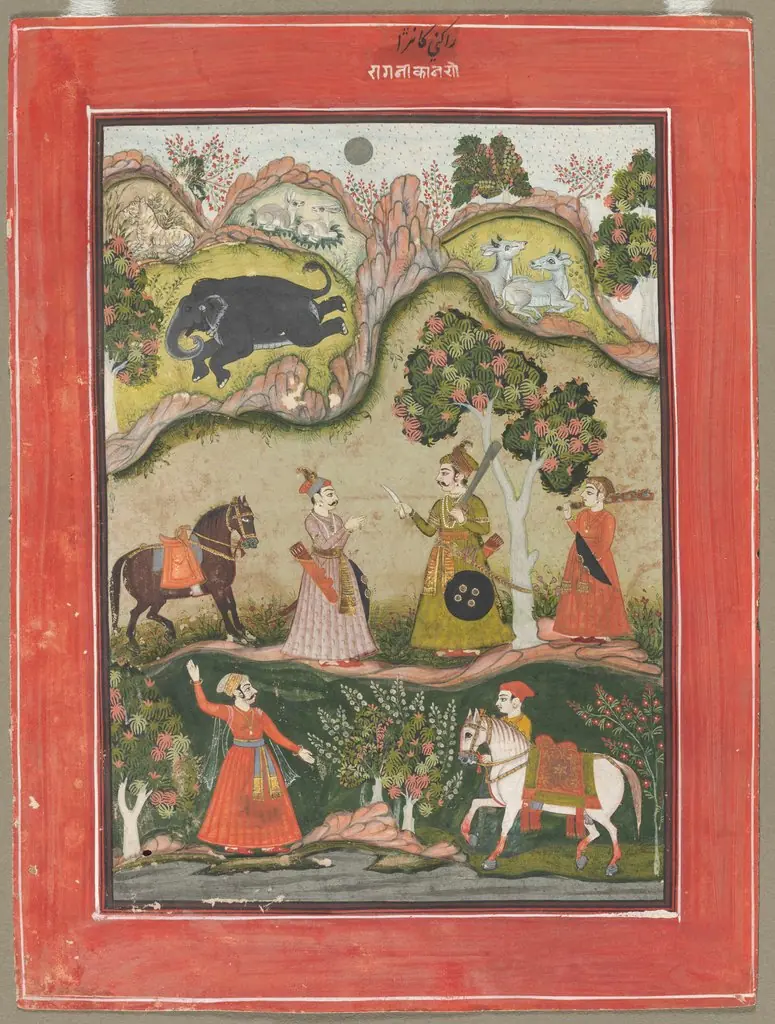 Kanhara Ragini: Song of Inspiration to Krishna for Killing the Elephant Demon, from the Ragamala Series
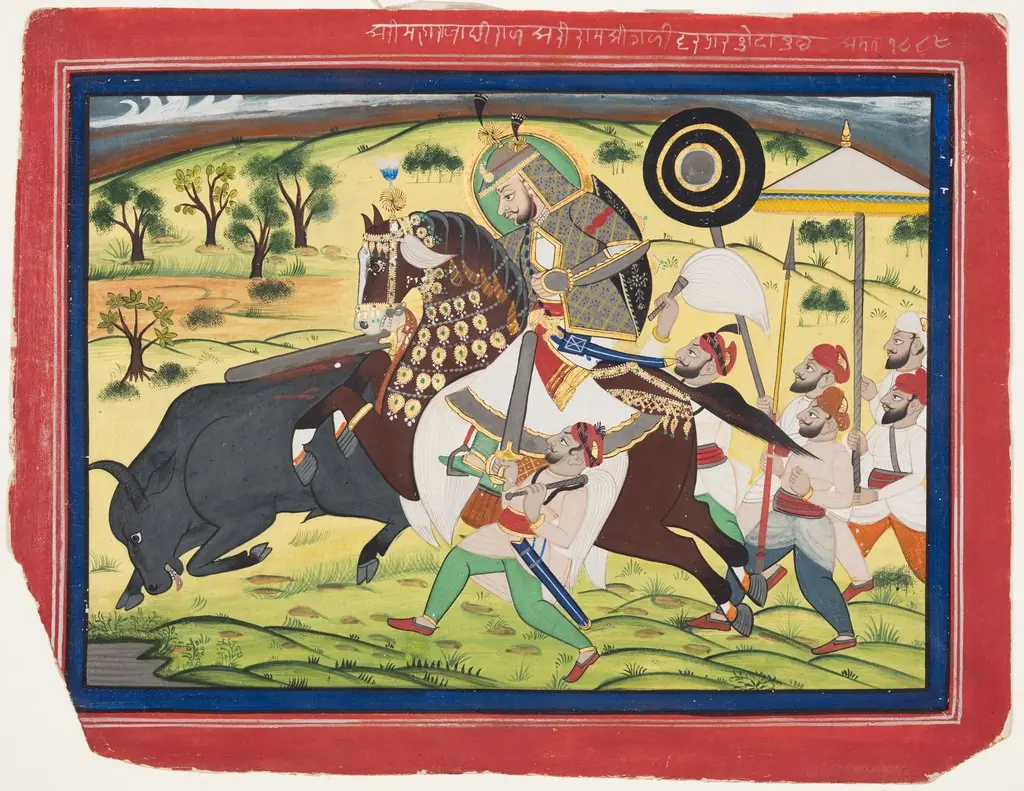 Maharao Ram Singh II of Kota (r. 1828–66) Hunting Buffalo
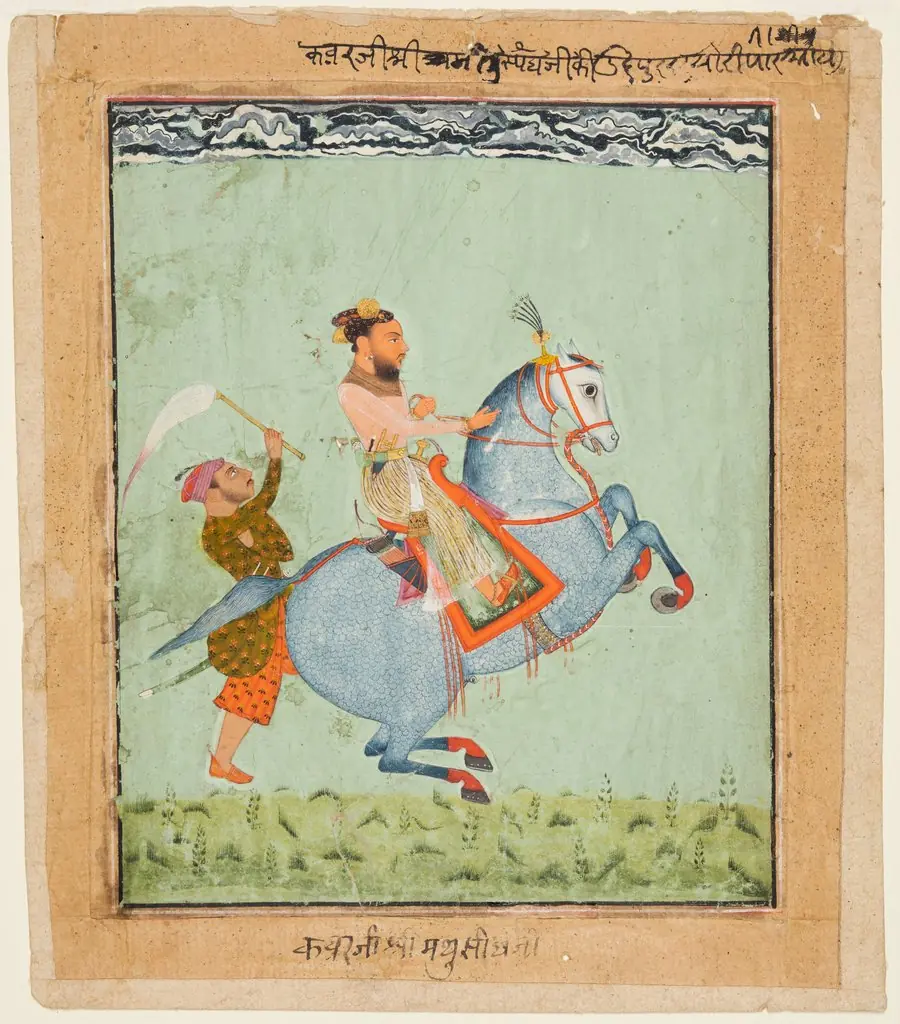 Prince Mathu Singh of Jatoli on a Blue Horse Riding to Udaipur
 Untitled
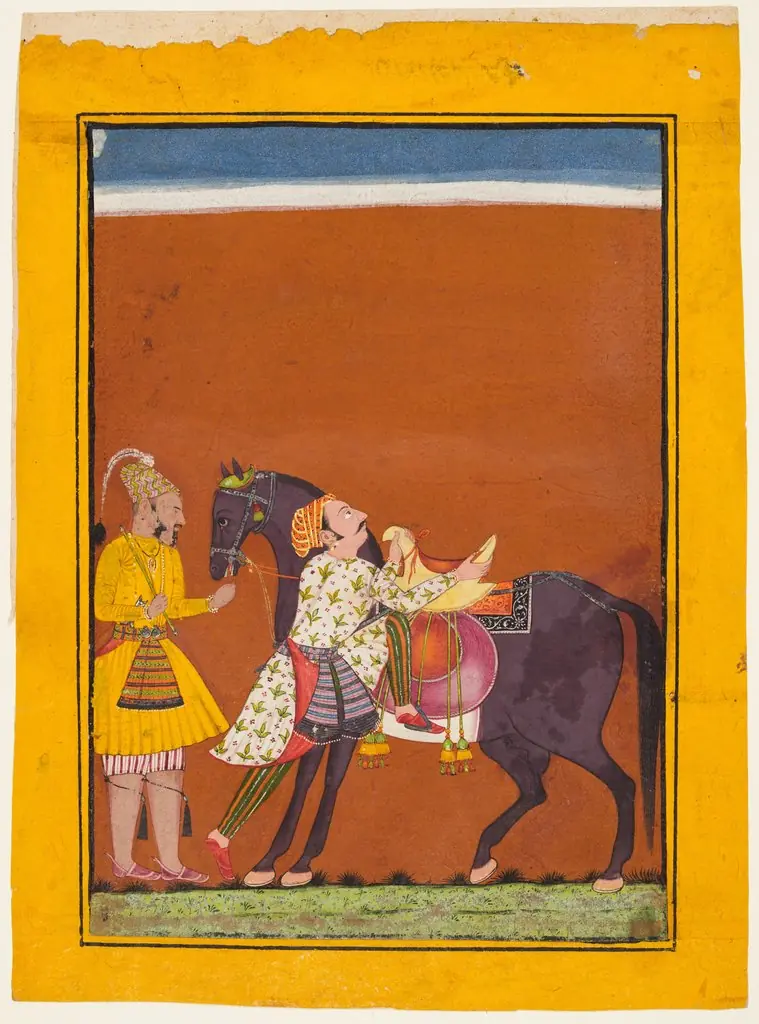 A Warrior Mounting a Held Horse: Saindhava Ragaputra of Shri, from a Chamba Ragamala
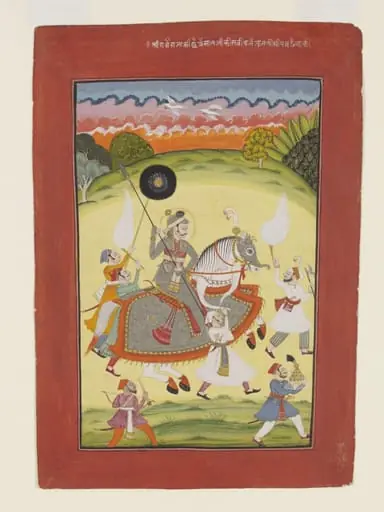 Rao Chhattar Sal
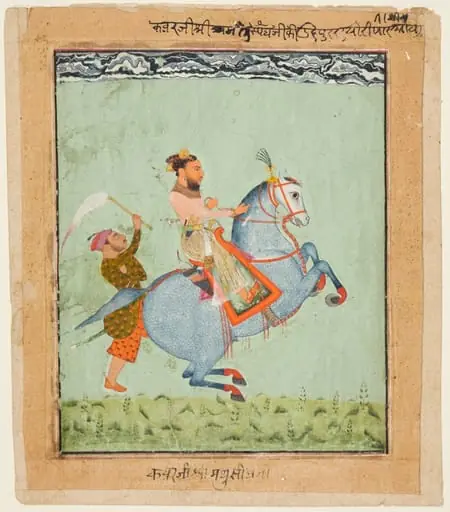 Prince Mathu Singh of Jatoli on a Blue Horse Riding to Udaipur
 Rama
Rama