Artwork
Rama
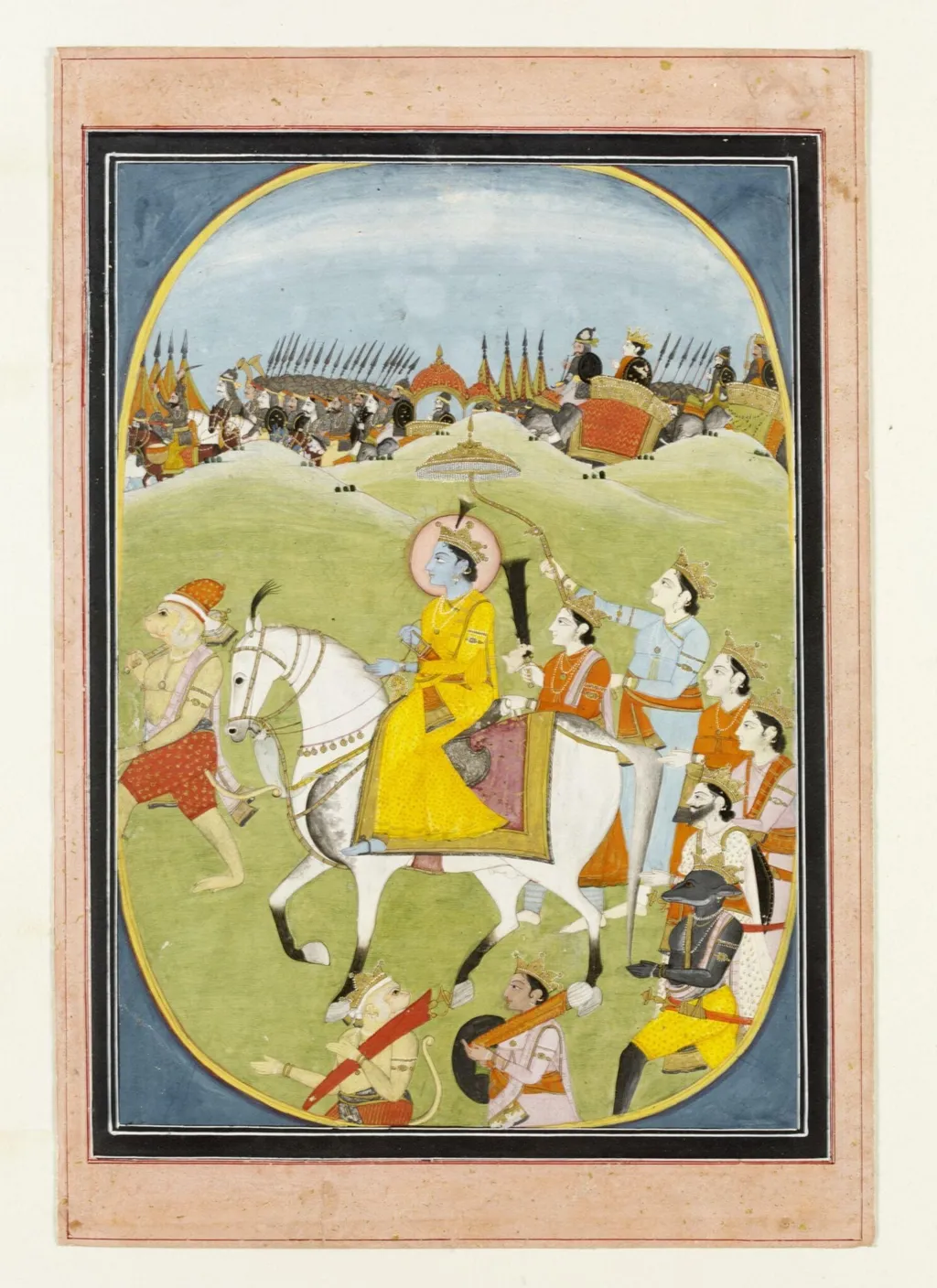
Rama is a paint painting by the Romanticist artist Unknown. It dates from 1830 and is held in the collection of the Victoria and Albert Museum.
About this work
Overview
Created around 1830 in opaque watercolour on paper, this work portrays the Hindu deity Rama returning to his capital, Ayodhya, after a victorious campaign. He rides a white horse at the centre, flanked by brothers, allies and a distant army, capturing a moment of triumphant homecoming drawn from the epic narrative.
Subject & Meaning
The central figure, Rama, is shown in regal yellow attire and a crown, symbolising his divine kingship. Accompanying riders and soldiers represent his loyal companions and the collective support of his realm, emphasizing themes of duty, victory and the restoration of order after exile.
Technique & Style
Executed in opaque watercolour, the artist builds colour in layers on paper, achieving a luminous surface. The palette blends blues, greens and yellows to suggest atmospheric depth, while the use of rich reds and gold on the horse’s tack adds focal contrast. The overall handling reflects Romantic sensibilities, favouring drama and emotional intensity.
Context
The painting originates in the early nineteenth‑century period when Indian subjects were increasingly rendered for both local and European audiences. Its romanticised treatment aligns with contemporary interest in exotic narratives and the broader diffusion of the Ramayana across artistic media.
Artist & collection

 Domestic Scene
 Giacomo and Cardinal Marco, investing Andrea, Abbot of San Zeno, with his Benefice
 The Nymph of Fontainebleau
 Portrait of a Woman
 Madonna and Child with Saints in the Enclosed Garden
 Venus and Minerva
 Family Group of Four on Sofa
 Wall painting from Room H of the Villa of P. Fannius Synistor at Boscoreale
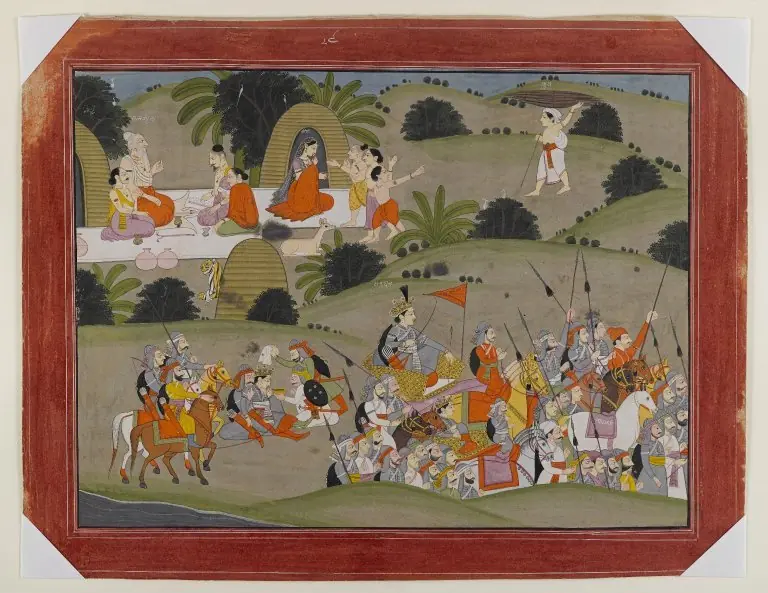 Battle between Lava and Rama's brother, Shatrughna, near the hermitage of Valmiki
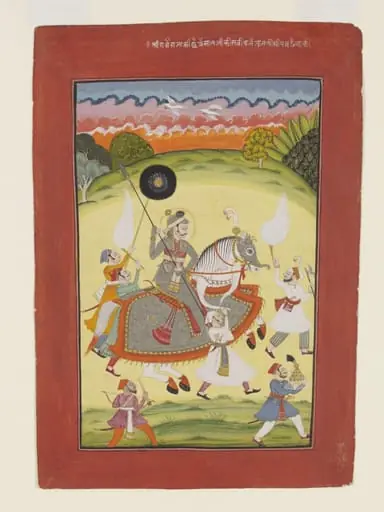 Rao Chhattar Sal
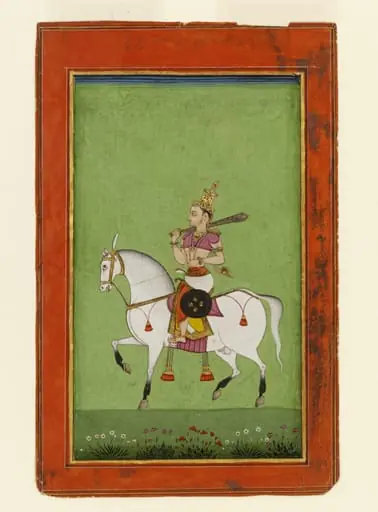 Kalki avatar
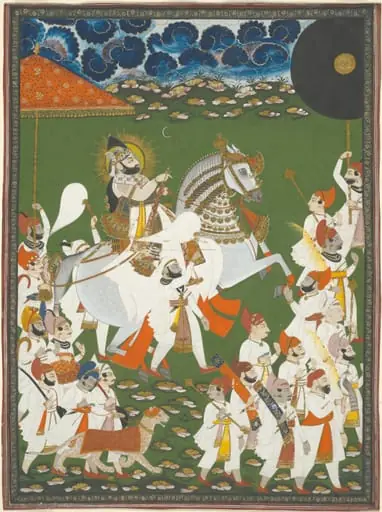 Maharana Bhim Singh in Procession
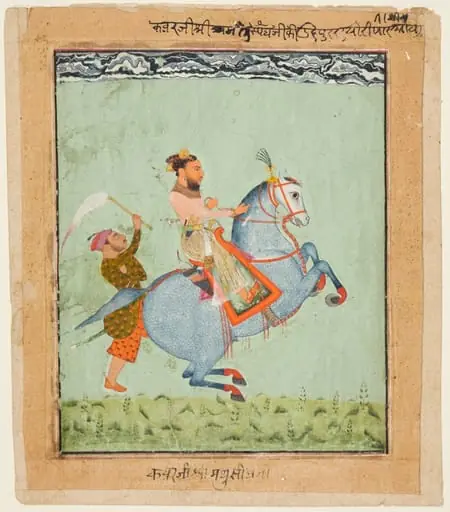 Prince Mathu Singh of Jatoli on a Blue Horse Riding to Udaipur
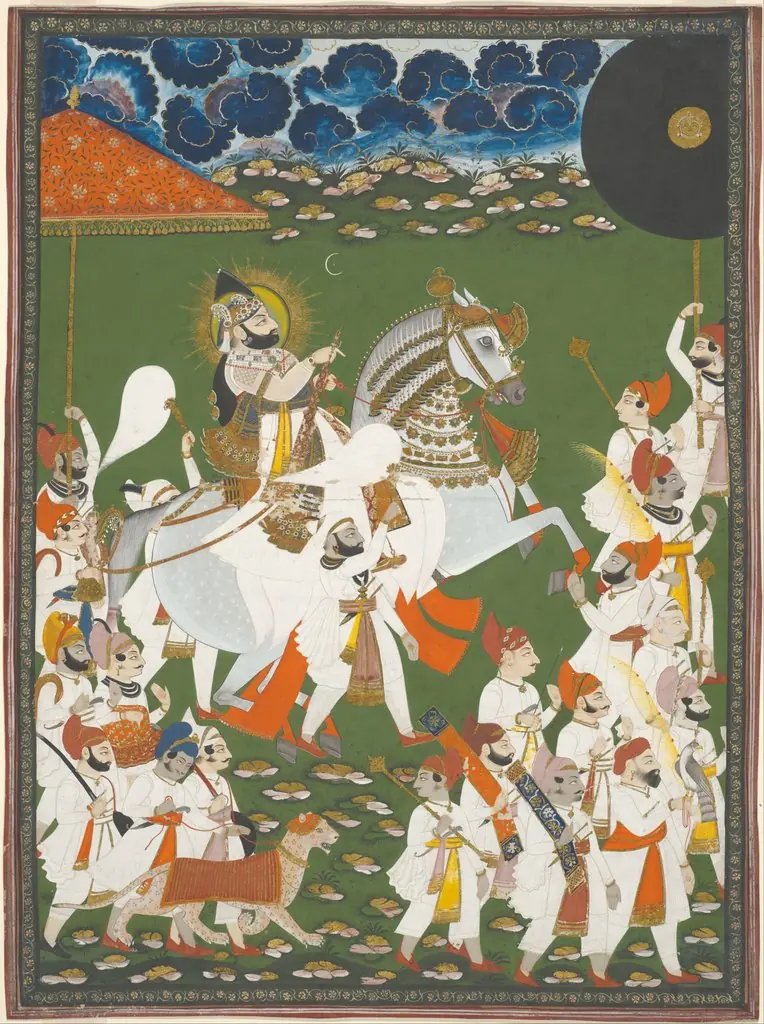 Maharana Bhim Singh in Procession
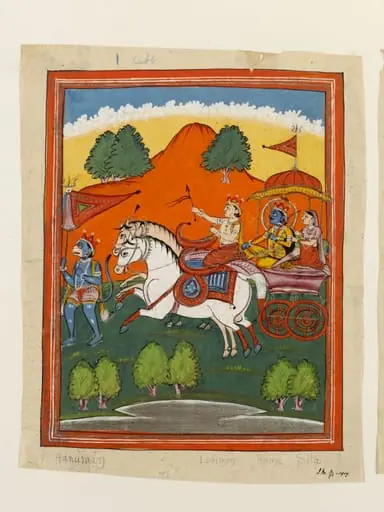 Rama, Sita, Hanuman and Lakshman
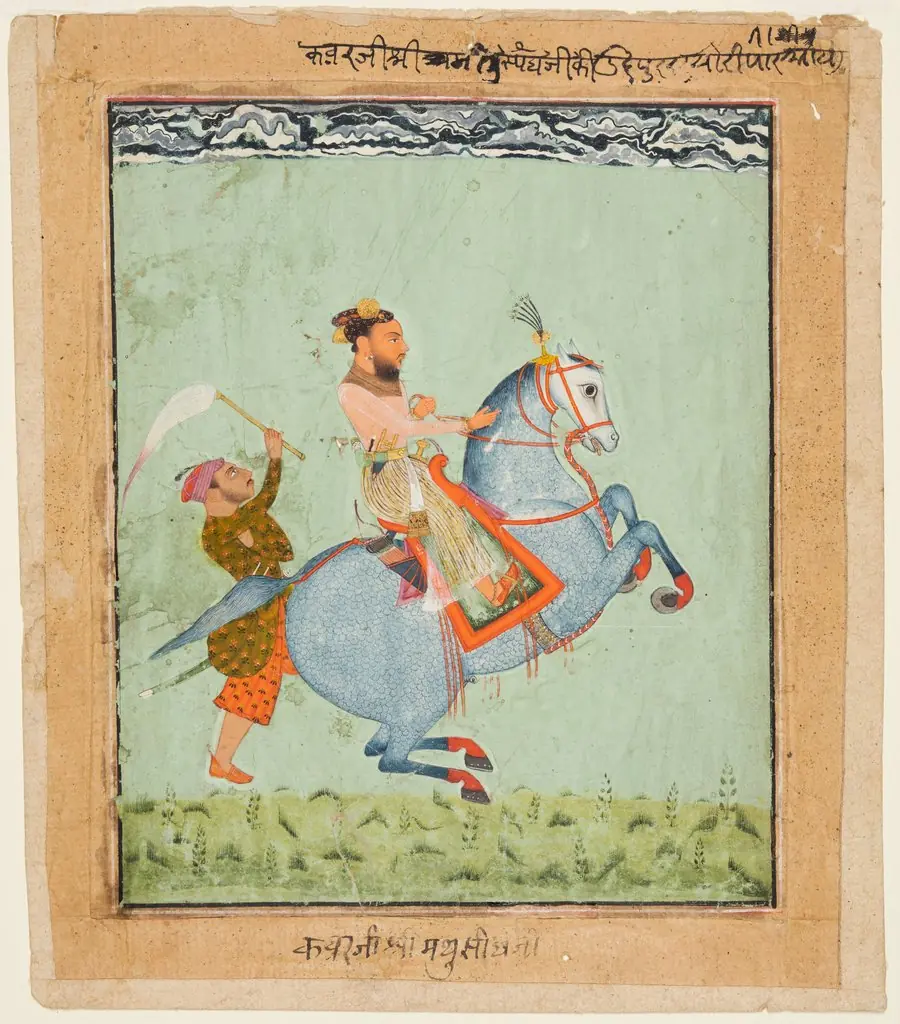 Prince Mathu Singh of Jatoli on a Blue Horse Riding to Udaipur
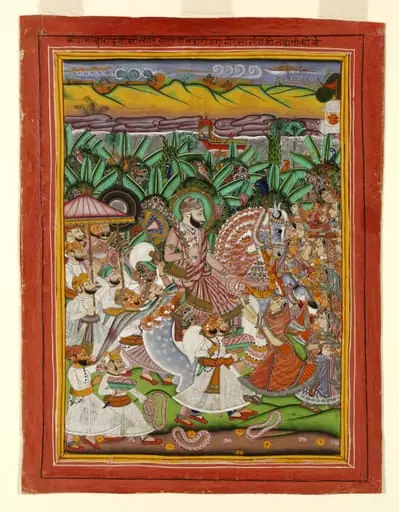 Maharao Chhatar Sal
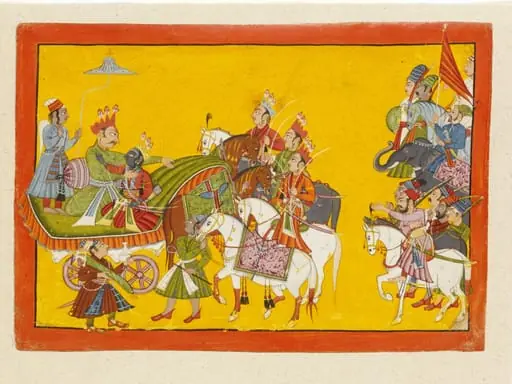 Dasaratha and Rama