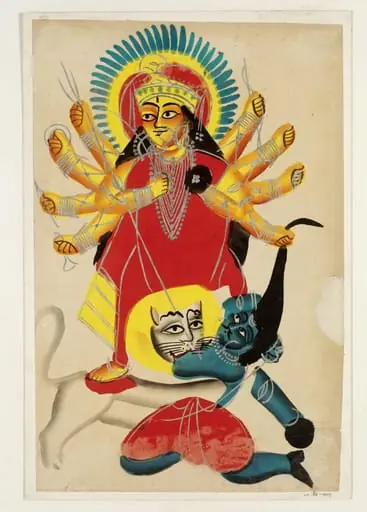
Artwork
Durga and Sambara
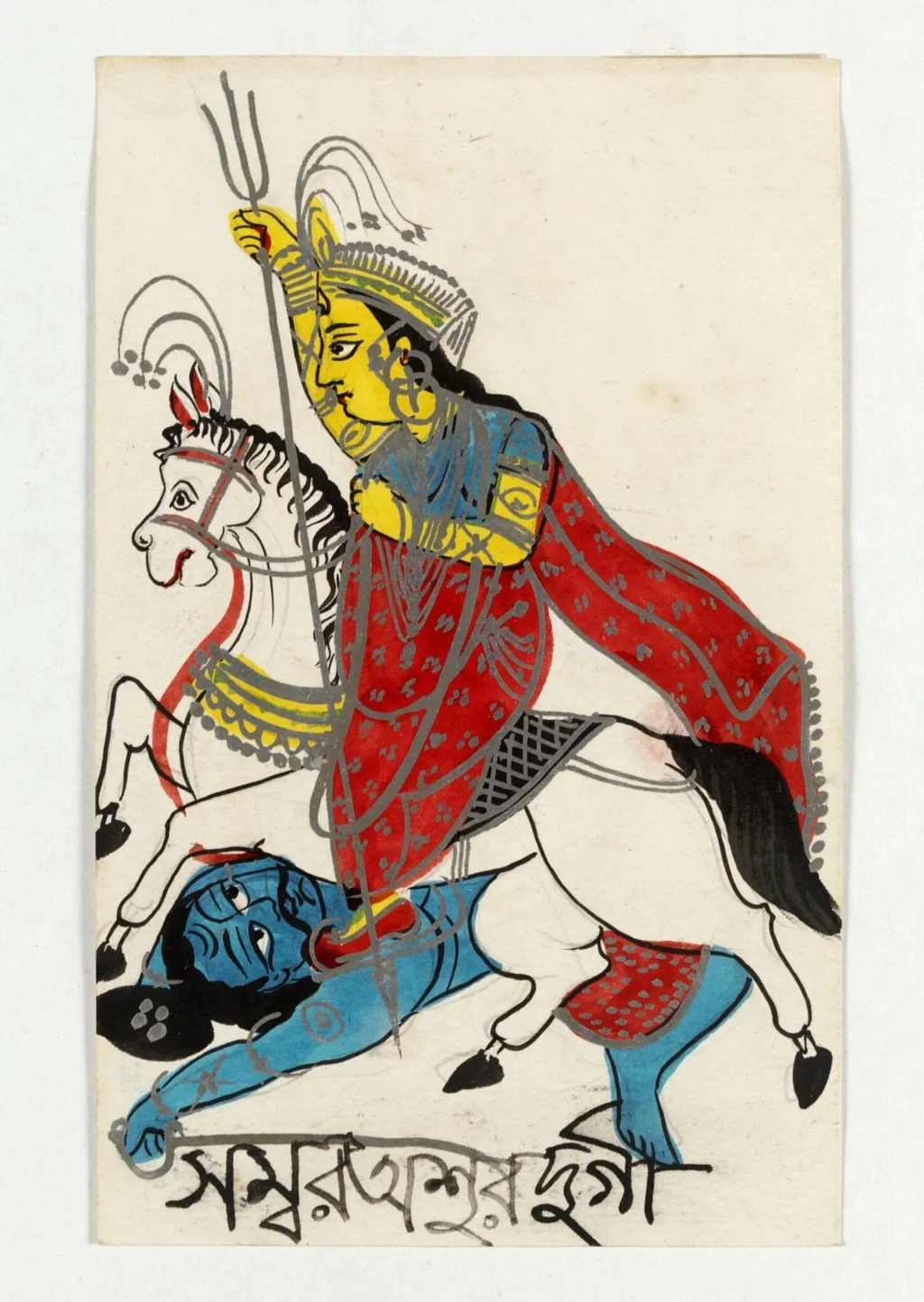
Durga and Sambara is a paint painting by the Impressionist artist Unknown. It dates from 1890 and is held in the collection of the Victoria and Albert Museum.
About this work
Overview
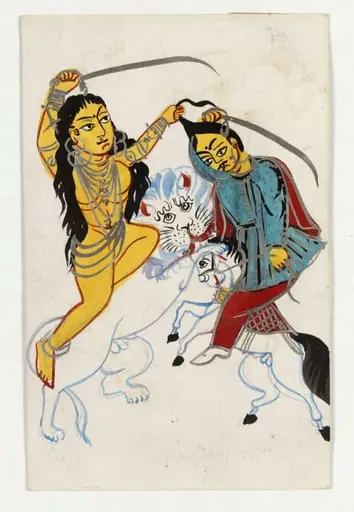
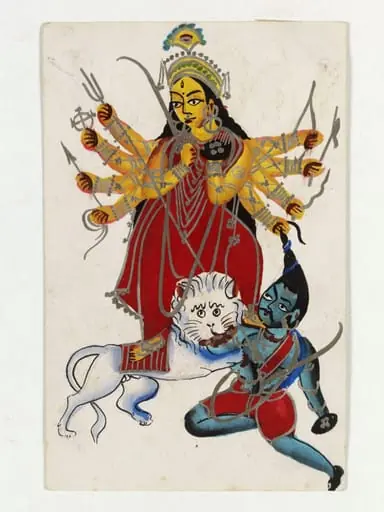
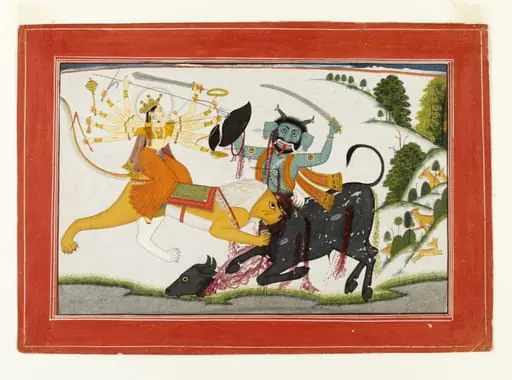
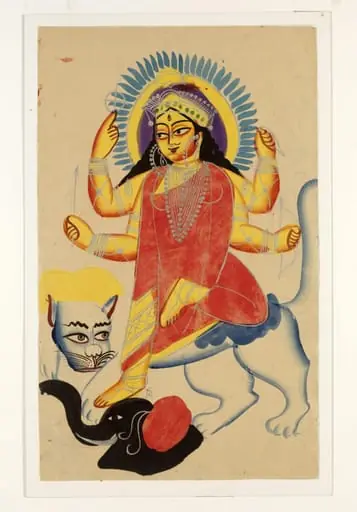
Durga and Sambara is a watercolour and tin alloy on cardboard painting from 1890, depicting a dynamic scene of the goddess Durga defeating the demon Sambara.
Subject & Meaning
The painting illustrates a pivotal moment from Hindu mythology: Durga, astride a white horse, spears the blue-skinned demon Sambara, who lies helpless on the ground, grasping upwards. This scene symbolizes the triumph of good over evil.
Technique & Style
Characterized by bold, stylized facial features, strong outlines, and predominantly flat colors, the work showcases a distinctive visual language. Notable contrasts include the simplicity of the horse's mane and tail against the intricately patterned red armor worn by Durga.
History & Provenance
Created in 1890, the painting's materials (watercolour, tin alloy on cardboard) reflect common practices of the time. However, specific details regarding its creation, artist, or ownership history before its current location are not provided.
Context
This work can be contextualized within late 19th-century Indian artistic productions, possibly influenced by traditional folk or religious art forms. Its style, however, bears some resemblance to works found in Western museums, suggesting a broad aesthetic appeal.
Legacy
While the painting's direct influence or fame is not highlighted, its preservation and display contribute to the visibility of Hindu mythological themes in art historical collections, offering insights into religious and cultural narratives of the period.
Artist & collection

 Domestic Scene
 Giacomo and Cardinal Marco, investing Andrea, Abbot of San Zeno, with his Benefice
 The Nymph of Fontainebleau
 Portrait of a Woman
 Madonna and Child with Saints in the Enclosed Garden
 Venus and Minerva
 Family Group of Four on Sofa
 Wall painting from Room H of the Villa of P. Fannius Synistor at Boscoreale