Artwork
Durga, Hanuman and Shiva
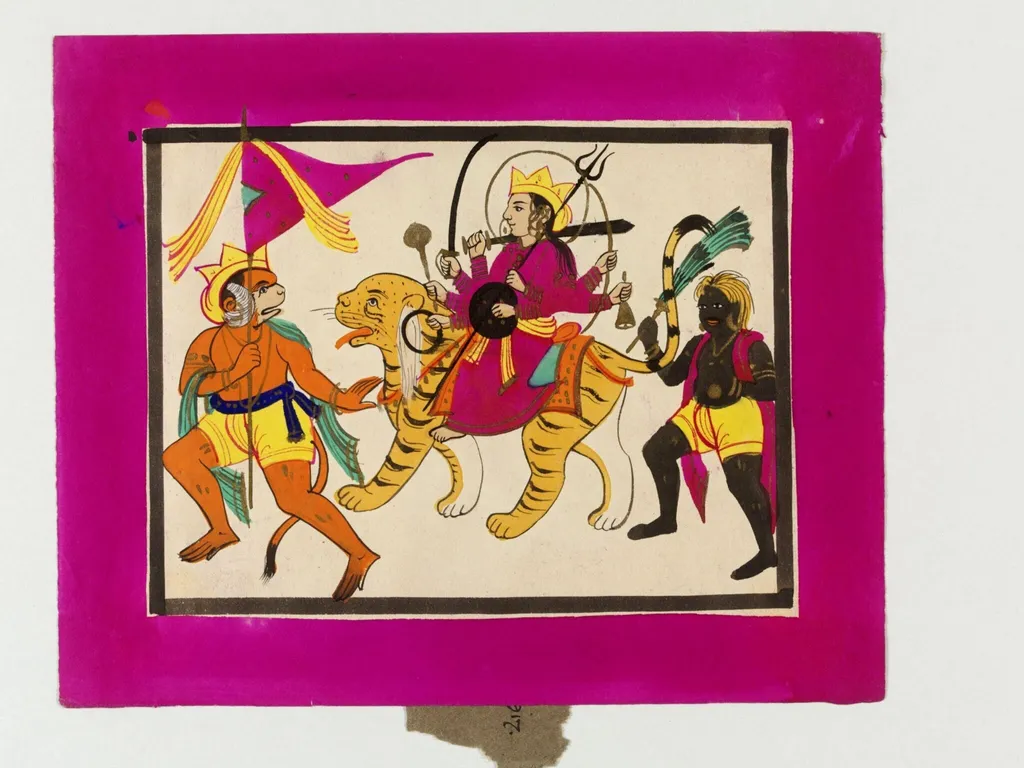
Durga, Hanuman and Shiva is a paint painting by Unknown. It dates from 1850 and is held in the collection of the Victoria and Albert Museum.
About this work
Overview
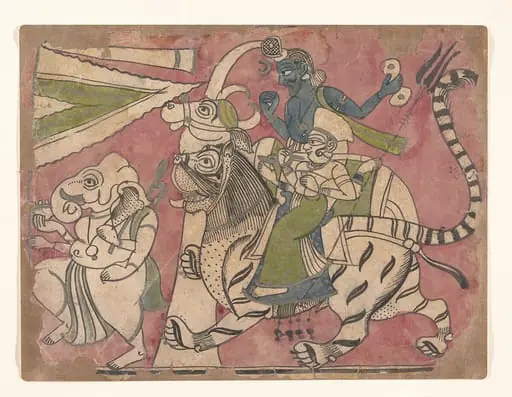
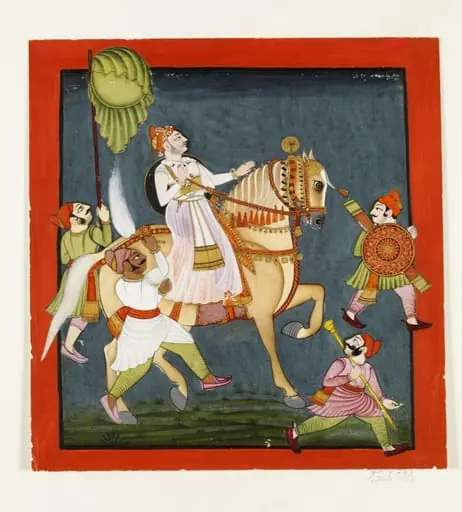
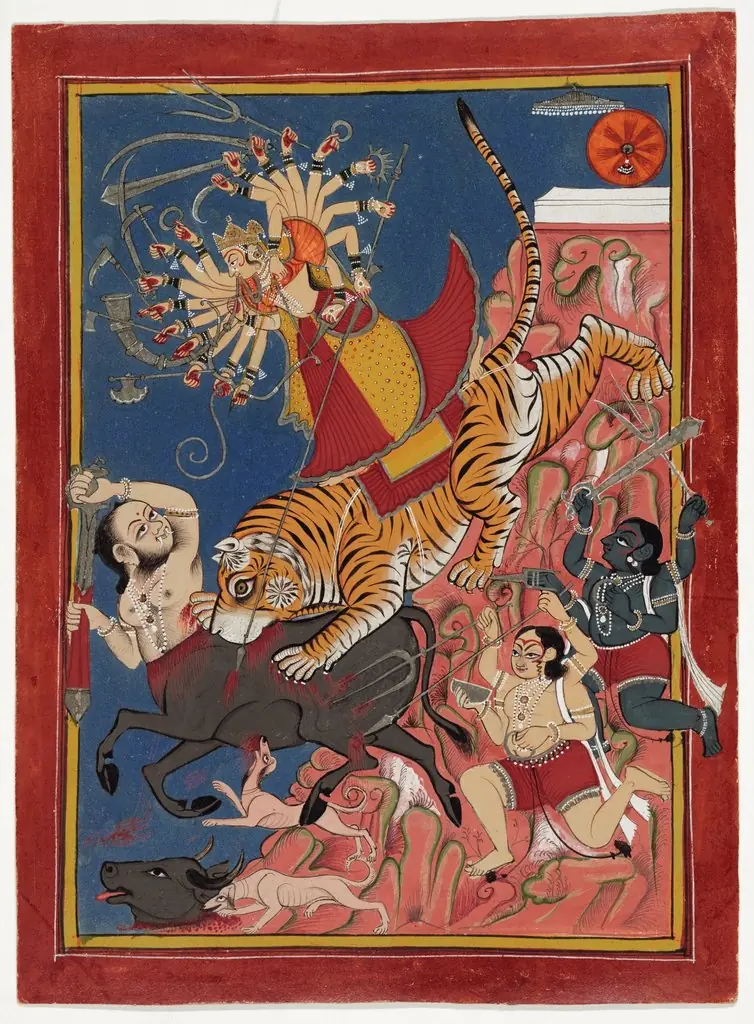
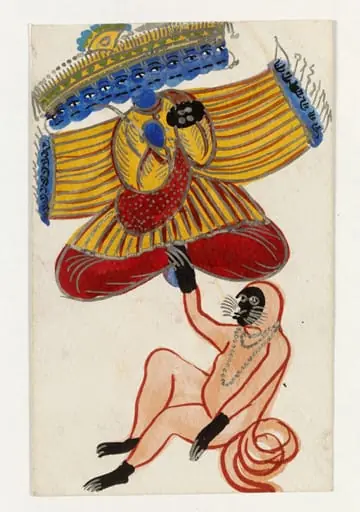
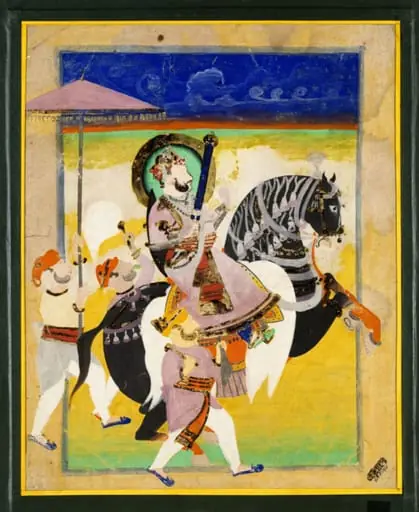
This 1850 watercolour brush drawing on paper depicts a procession of three key Hindu deities: Durga, Hanuman, and Shiva, accompanied by symbolic animals, set against a vibrant, energetic background.
Subject & Meaning
Shiva, the destroyer, follows, characterized by a raised hand and dark, contrasting attire, signifying his complex, multifaceted role in Hinduism.
The painting illustrates a scene of divine power and companionship. Durga, the goddess of strength, rides a lion (often symbolizing bravery) while wielding a sword and drum. Hanuman, the monkey god and devotee of Rama, precedes her with a flag, embodying loyalty. Shiva, the destroyer, follows, characterized by a raised hand and dark, contrasting attire, signifying his complex, multifaceted role in Hinduism.
Technique & Style
Executed in watercolour with bold brushwork, the piece features vibrant, expressive colors (notably pink, green, yellow, orange, and dark tones) that animate the composition. The stylized, flattened forms and the emphasis on symbolic attributes reflect the influence of traditional Indian folk or religious art practices prevalent in Upper India and Bengal during the 19th century.
History & Provenance
Created in 1850, this painting was later included in an extensive album of 196 Indian artworks (prints, paintings, drawings) compiled by J. Lockwood Kipling between 1865 and 1893. The album, largely comprising lithographs from Upper Indian and Bengali fairs and bazaars, was donated to the museum by Rudyard Kipling, J. Lockwood's son, in 1917.
Context
This work reflects the rich religious and artistic traditions of 19th-century India, where such depictions of deities would have been popular in religious and market contexts. Its inclusion in an album alongside other diverse artworks highlights the interest of British collectors like J. Lockwood Kipling in documenting Indian cultural practices during the colonial era.
Legacy
Now part of a museum collection (implicitly suggested to be similar to the Victoria and Albert Museum, given the reference), this painting contributes to the understanding and appreciation of Indian religious art and the historical exchange of cultural artifacts between India and Britain during the 19th century.
Artist & collection

 Domestic Scene
 Giacomo and Cardinal Marco, investing Andrea, Abbot of San Zeno, with his Benefice
 The Nymph of Fontainebleau
 Portrait of a Woman
 Madonna and Child with Saints in the Enclosed Garden
 Venus and Minerva
 Family Group of Four on Sofa
 Wall painting from Room H of the Villa of P. Fannius Synistor at Boscoreale