Artwork
八童子図|Eight Attendants of Fudō Myōō
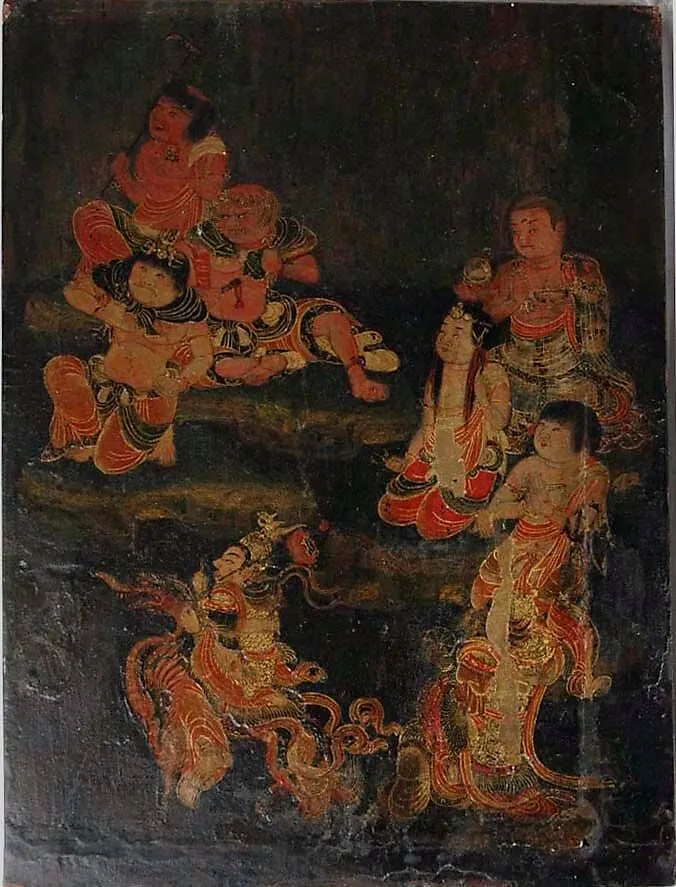
八童子図|Eight Attendants of Fudō Myōō is an ink painting. It dates from 1449 and is held in the collection of the Metropolitan Museum of Art.
About this work
Overview
Dated 1449, the work depicts eight small boys, or attendants, dressed in vibrant robes and arranged in a dense cluster around a central void.
Eight Attendants of Fudō Myōō is a mid-15th-century Japanese religious painting executed in ink, color, and gold on a lacquered wooden door from a portable shrine. Dated 1449, the work depicts eight small boys, or attendants, dressed in vibrant robes and arranged in a dense cluster around a central void. Each figure holds a distinct ritual implement, including a sword, a rope, and a scroll, symbolizing their specific roles as fierce protectors of the Buddhist deity Fudō Myōō. The composition utilizes the empty center to suggest the unseen presence of the main deity, focusing the viewer's attention on the dynamic activity of the guardians. Created during the Muromachi period, this piece exemplifies the integration of esoteric Buddhist iconography with decorative arts, serving a functional role in processional worship. The use of gold and bright pigments on the dark lacquer ground highlights the figures against the portable shrine's surface. Although the artist remains unknown, the work stands as a significant example of 15th-century Japanese religious art, illustrating the visual language used to convey the protective power of Fudō Myōō's retinue in a format designed for mobility and ritual use.
Subject & Meaning
The eight boys depicted are the dōji, or youthful attendants, of Fudō Myōō, a significant wrathful deity in Esoteric Buddhism. They are not merely helpers but fierce protectors, dedicated to battling evil and guiding devotees. Each attendant’s unique tool—such as a sword or rope—symbolizes an aspect of Fudō Myōō's power to subdue negative influences and overcome spiritual impediments.
Technique & Style
The artwork is executed on lacquered wood, utilizing ink, vibrant pigments, and gold. A distinctive element is the application of gold leaf in the background, which has developed a network of fine cracks. This aged texture, sometimes called hira-hakumei, allows glimpses of the underlying wood, contributing to the painting's material character and visual depth.
Context
This painting originally formed part of a portable shrine, a type of sacred vessel designed for mobility. Such shrines were essential to Buddhist rituals, enabling monks to transport sacred imagery and conduct ceremonies in diverse locations. This allowed the protective and purifying presence of deities like Fudō Myōō to be invoked wherever spiritual practice was required.
Artist & collection