Artwork
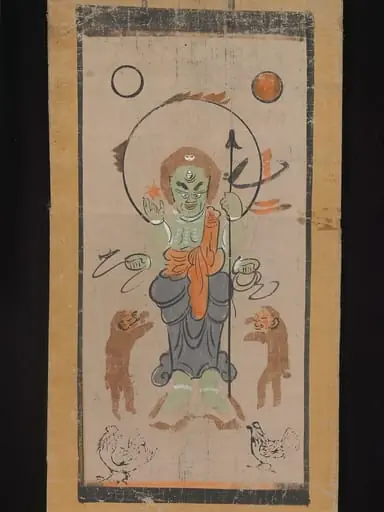
雨宝童子図大津絵|Ōtsu-e of Uhō Dōji
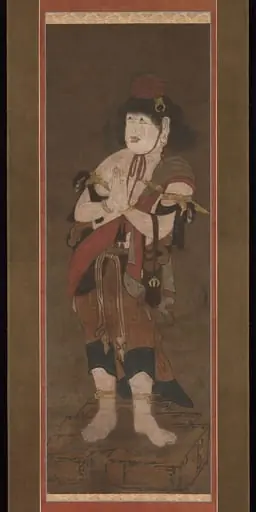
雨宝童子図大津絵|Ōtsu-e of Uhō Dōji is an ink painting. It dates from 1657 and is held in the collection of the Metropolitan Museum of Art.
About this work
Overview
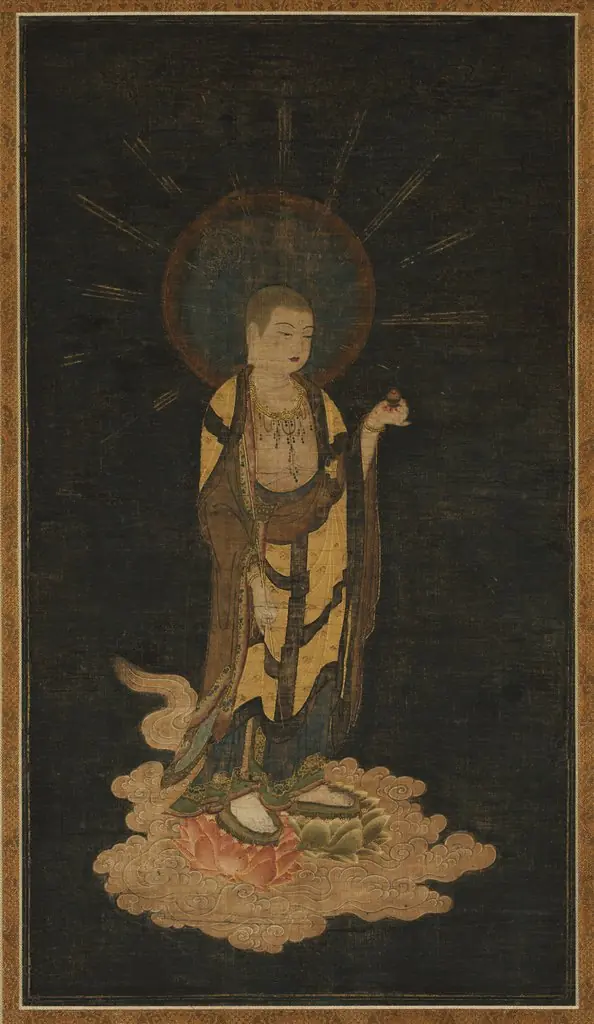
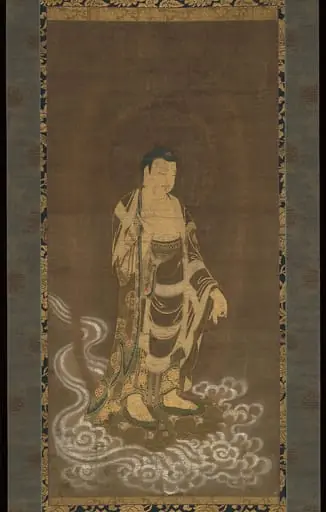
The work is a hanging scroll executed in ink, color and woodblock printing on paper, depicting a smiling, bald‑headed boy clutching a red umbrella and a scroll. He stands on a lotus blossom, his garment patterned with stylised clouds. The image functions as a portable charm, intended to be displayed or carried for its auspicious associations.
Subject & Meaning
The figure is identified as Uhō Dōji, a folk character whose name translates as “rain of treasure child.” In popular belief this child dispenses wealth and good fortune, especially protection against the hardships of travel. The umbrella and scroll reinforce his role as a bearer of blessings, while the lotus base alludes to purity and safe passage.
Technique & Style
The composition combines hand‑drawn ink outlines with color applied by woodblock printing, a hallmark of Ōtsu‑e popular prints. Bold, simplified forms and vivid reds dominate, while the swirling cloud motif on the robe reflects a decorative approach rather than realistic rendering. The technique allows rapid reproduction for sale to a broad audience.
History & Provenance
Produced in the Ōtsu region of Japan, the scroll was sold at roadside stalls frequented by travelers. Its function as a talisman made it a common purchase for those embarking on long journeys, where it was believed to ensure safe travel and bring material luck. No specific artist is recorded; the work belongs to the anonymous commercial print tradition.
Context
Ōtsu‑e emerged in the Edo period as a folk art catering to the needs of itinerant merchants and pilgrims. The genre favoured accessible subjects, bright colors, and portable formats. The depiction of Uhō Dōji aligns with a broader cultural practice of invoking protective deities and charms, reflecting everyday religious syncretism in pre‑modern Japan.
Artist & collection