Artwork
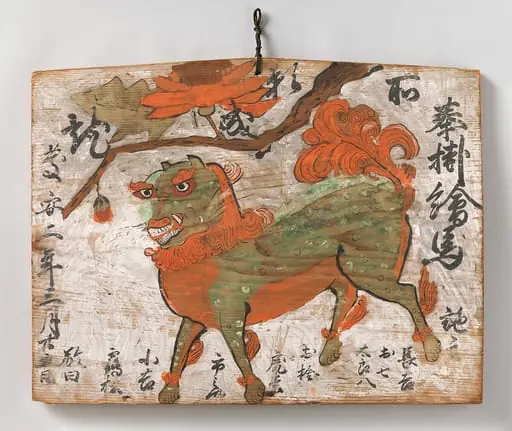
優闐王と唐獅子図絵馬「奉掛御宝前 絵馬 寛永丁卯年三月廿五日」|Ema (Votive Painting) of Chinese Lion Led by Utenō
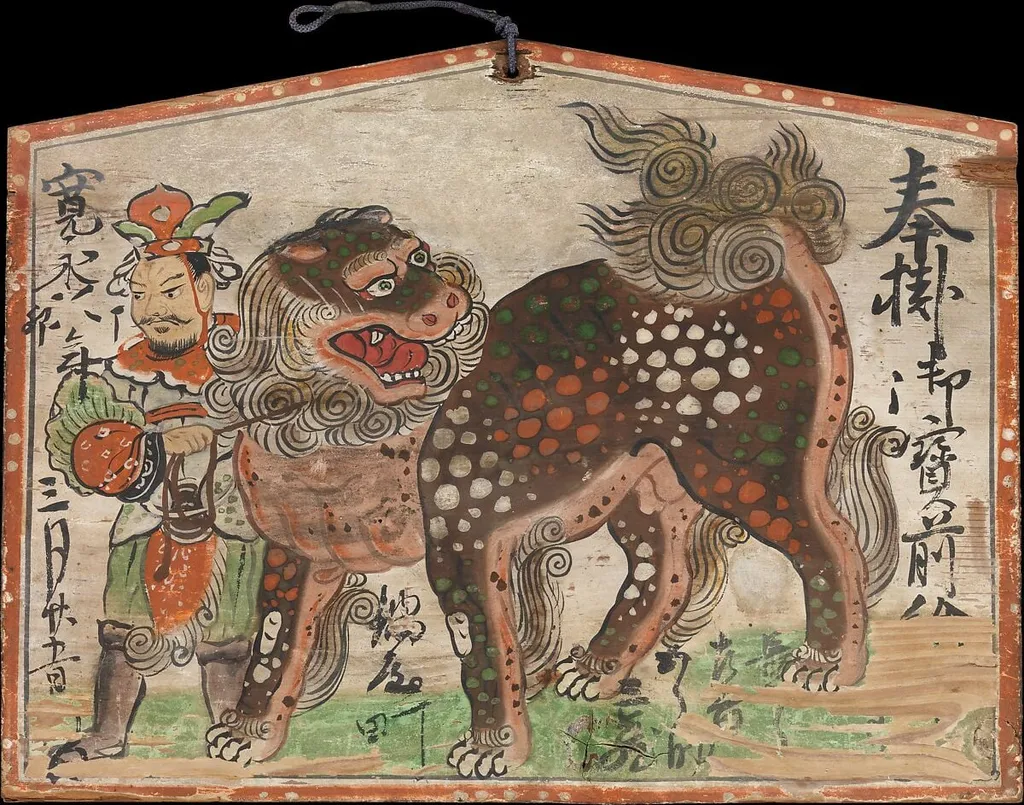
優闐王と唐獅子図絵馬「奉掛御宝前 絵馬 寛永丁卯年三月廿五日」|Ema (Votive Painting) of Chinese Lion Led by Utenō is an ink painting. It dates from 1627 and is held in the collection of the Metropolitan Museum of Art. This votive plaque, an ema, consists of a wooden board painted with ink and color.
About this work
The lion isn’t a real animal in Japan; it’s a Chinese symbol of power, brought over in stories and art.
You see a wooden board painted with a man leading a big, curly-maned lion on a red leash.
This is a *ema*—a Japanese prayer plaque. People hung these at shrines to ask for help or say thanks. The date carved on it, 1627, makes it one of the oldest surviving examples. The lion isn’t a real animal in Japan; it’s a Chinese symbol of power, brought over in stories and art.
Look up *ema* at The Metropolitan Museum of Art to see more of these painted wishes.
Overview
This votive plaque, an ema, consists of a wooden board painted with ink and color. The central image shows a figure—identified as the Chinese ruler Utenō—guiding a large, curly‑maned lion on a red leash. The plaque bears the date 1627 (Kan'ei 4, 3rd month, 25th day), placing it among the earliest surviving examples of painted ema.
Subject & Meaning
The composition merges Japanese devotional practice with Chinese iconography. The lion, a symbol of imperial power and protection in Chinese tradition, is presented under the control of the ruler, suggesting a wish for dominance over formidable forces or the safeguarding of the petitioner’s concerns.
Technique & Style
Executed with ink outlines and mineral pigments on a smooth wooden surface, the work displays a bold, linear style typical of early Edo‑period shrine art. The vivid red leash and the stylized, flowing mane of the lion reflect a synthesis of Chinese decorative motifs and Japanese folk painting techniques.
History & Provenance
Carved and painted in 1627, the ema was likely offered at a Shinto shrine as a prayer or gratitude token. Its survival indicates careful preservation, and it now resides in a museum collection, providing insight into early 17th‑century cross‑cultural religious artifacts.
Context
During the early Edo period, Japanese shrines began incorporating foreign symbols, especially Chinese lions, into votive objects. This reflects the broader flow of Chinese artistic and symbolic ideas into Japan, mediated through trade and Buddhist narratives.
Legacy
As one of the oldest dated painted ema, the plaque serves as a reference point for scholars studying the evolution of shrine votive art and the integration of Chinese motifs into Japanese religious expression.
Artist & collection