Artwork
Emperor Akbar
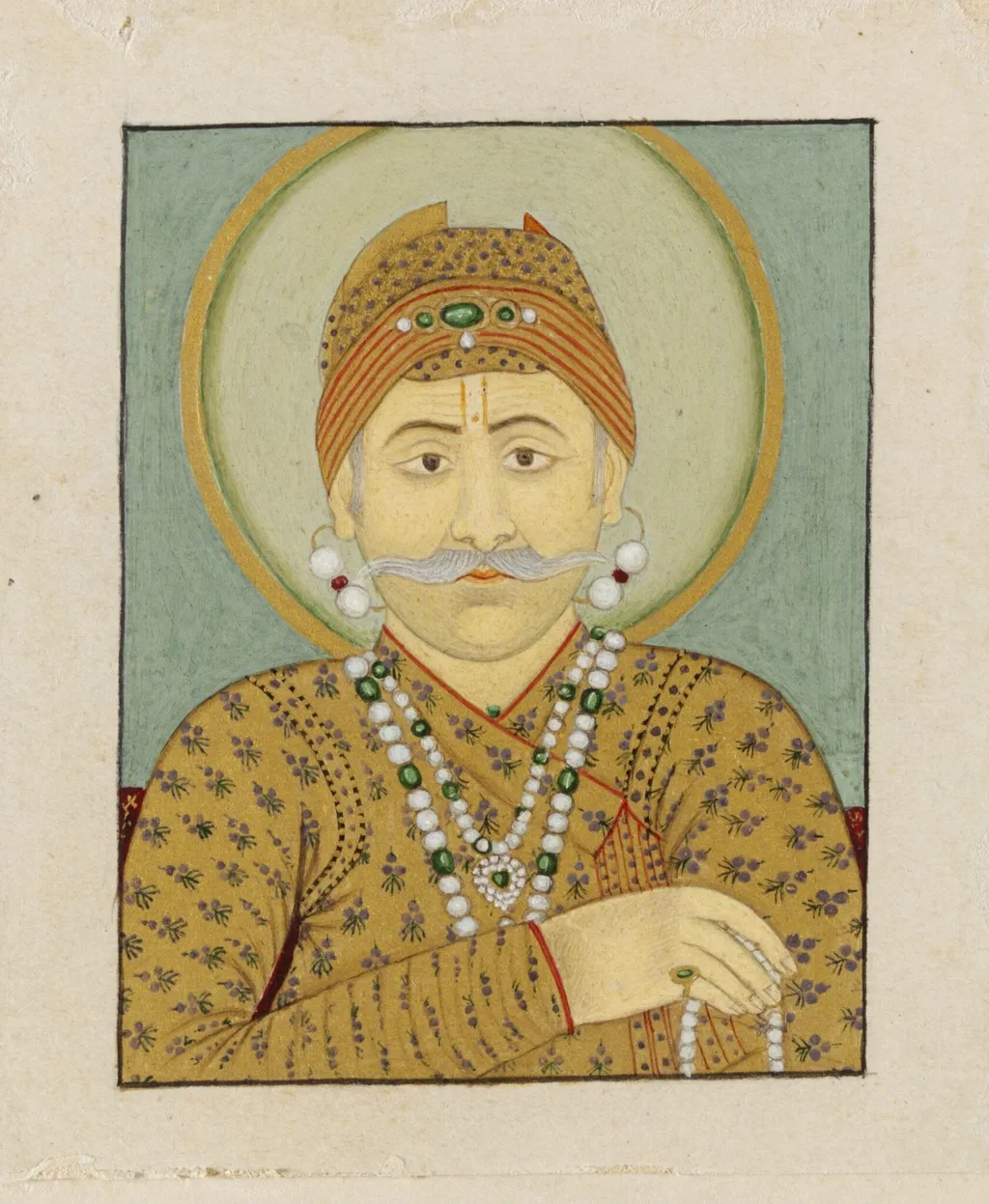
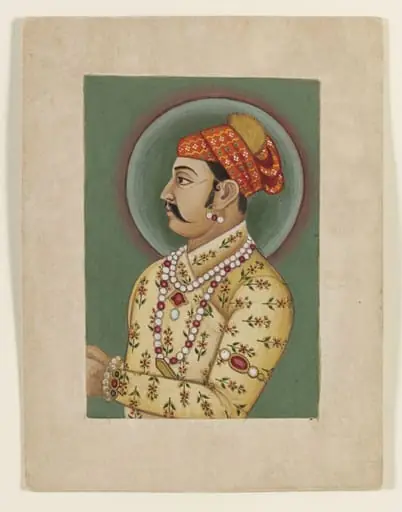
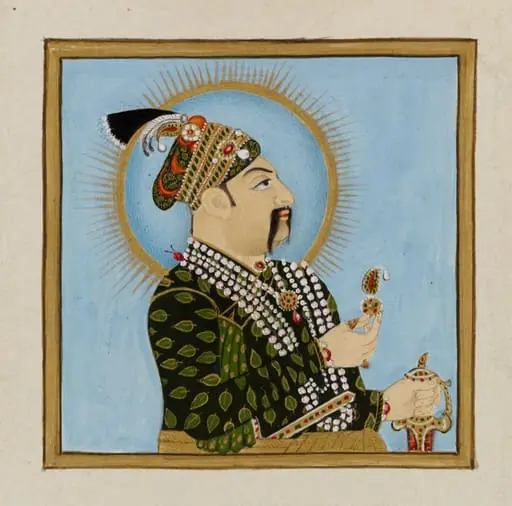
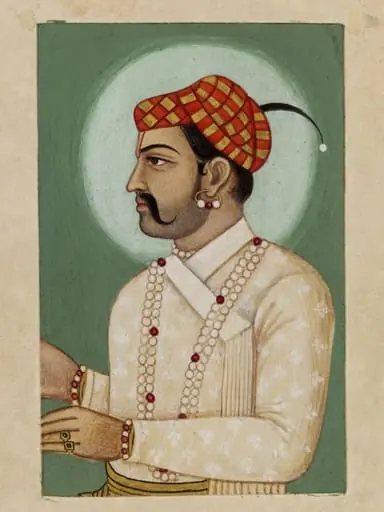
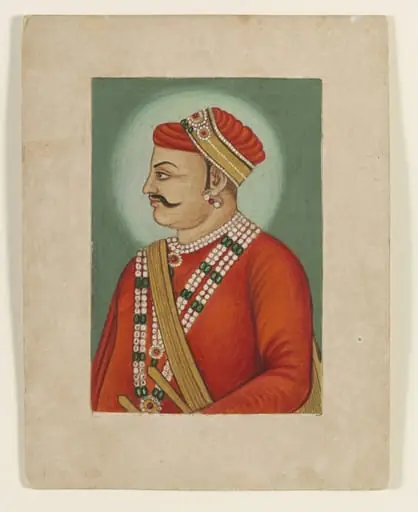
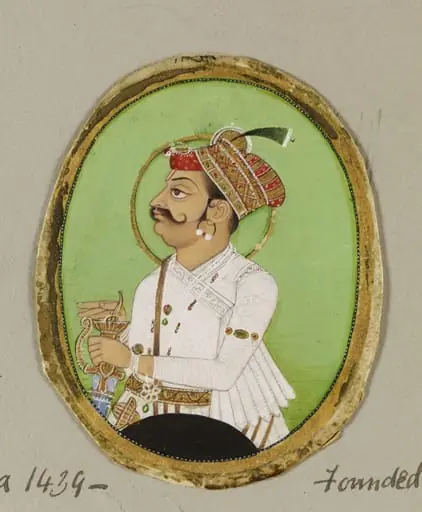
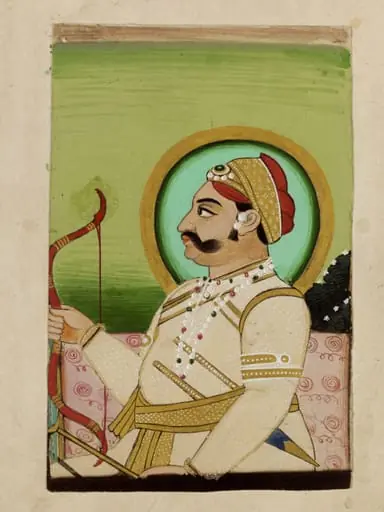
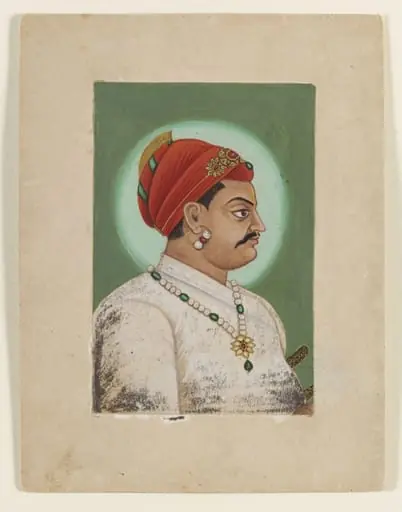
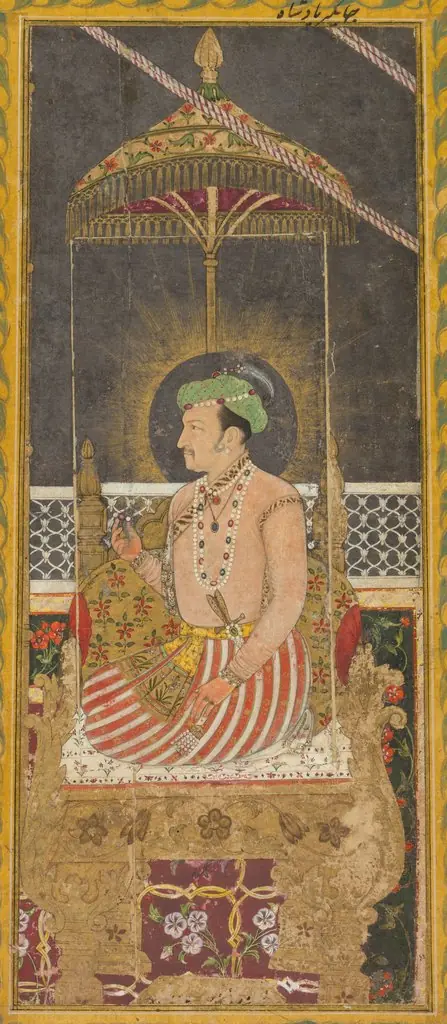
Emperor Akbar is a paint painting by the Impressionist artist Unknown. It dates from 1890 and is held in the collection of the Victoria and Albert Museum.
About this work
Overview
This late 19th-century portrait, created around 1890, depicts Emperor Akbar in a traditional South Asian style, utilizing opaque watercolour and gold on paper.
Subject & Meaning
The subject, Emperor Akbar, is portrayed with a serious expression and a distinctive white mustache, symbolizing dignity and authority. Adorned in intricately patterned yellow attire, abundant jewellery, and a beaded necklace, the depiction emphasizes his regal status.
Technique & Style
Characterized by simplicity and attention to detail, the painting focuses on the facial expression and ornamental elements. A green-and-gold halo frames the emperor’s head, set against a plain light green circular background. The overall style is indicative of South Asian artistic traditions, where rulers were often depicted in vibrant, jewel-encrusted attire.
History & Provenance
Created circa 1890, the painting’s specific origins and ownership history prior to its current location are not detailed in available information.
Context
This portrait reflects the artistic conventions of South Asia during the late 19th century, where such depictions of rulers in elaborate attire were common. Comparable works can be found in collections like the Victoria and Albert Museum.
Legacy
While not individually renowned, this portrait contributes to the broader understanding and appreciation of South Asian royal portraiture from the late 19th century.
Artist & collection

 Domestic Scene
 Giacomo and Cardinal Marco, investing Andrea, Abbot of San Zeno, with his Benefice
 The Nymph of Fontainebleau
 Portrait of a Woman
 Madonna and Child with Saints in the Enclosed Garden
 Venus and Minerva
 Family Group of Four on Sofa
 Wall painting from Room H of the Villa of P. Fannius Synistor at Boscoreale