Artwork
Untitled
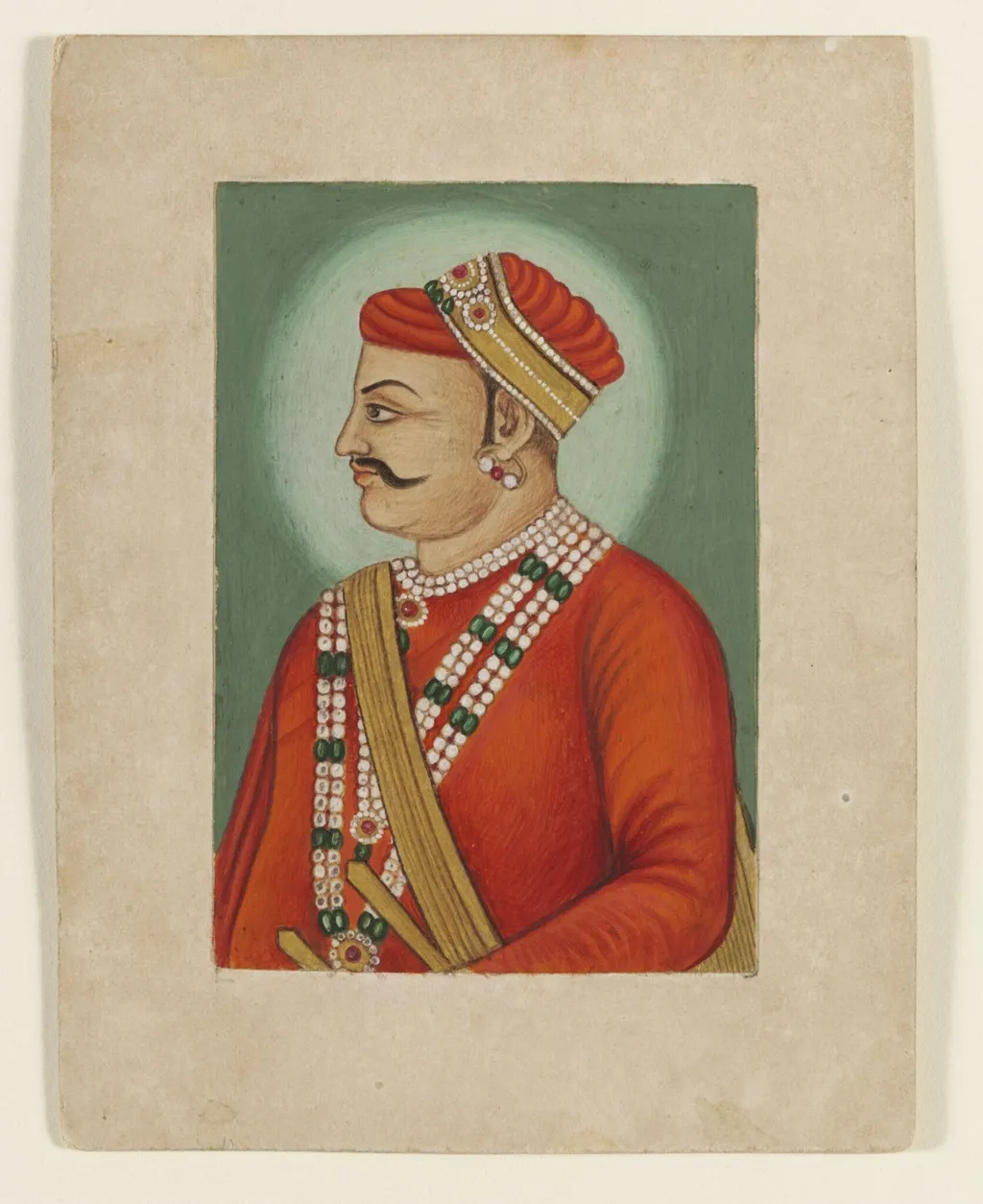
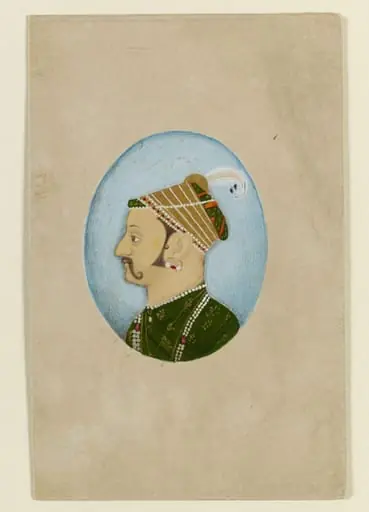
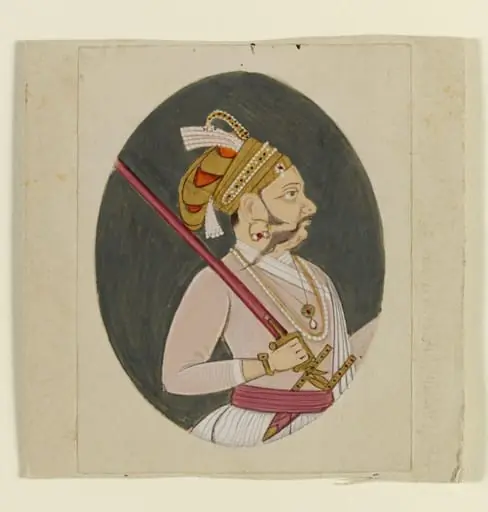
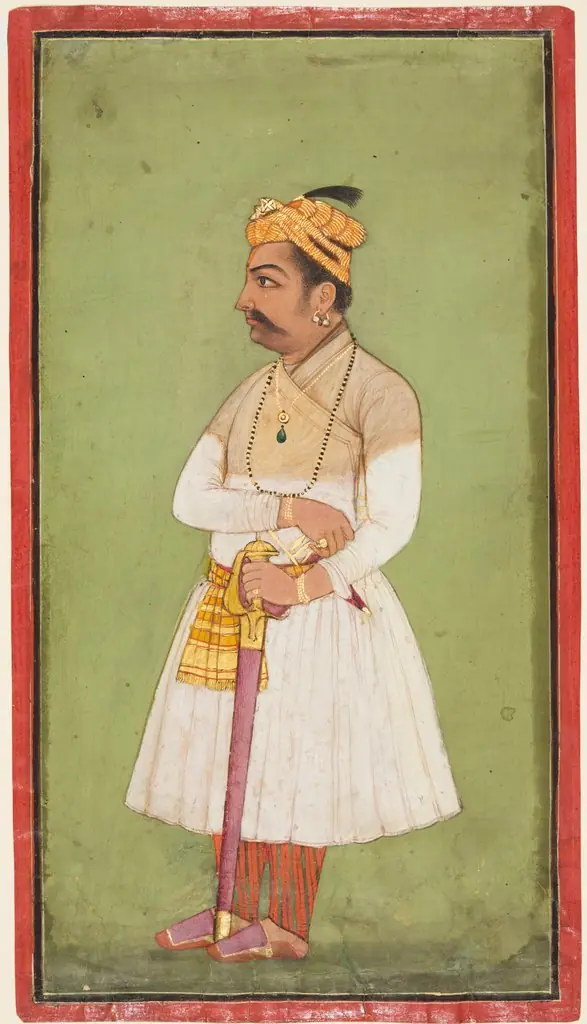
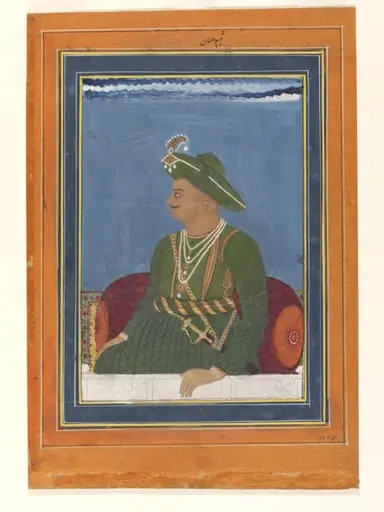
Untitled is a paint painting by Ram Gopal. It dates from 1850 and is held in the collection of the Victoria and Albert Museum.
About this work
Overview
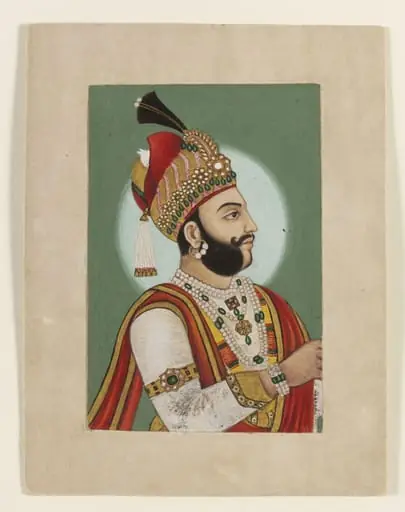
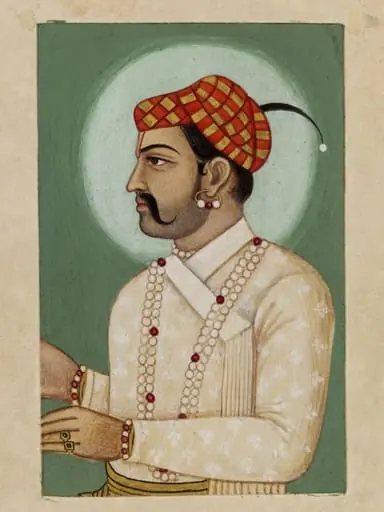
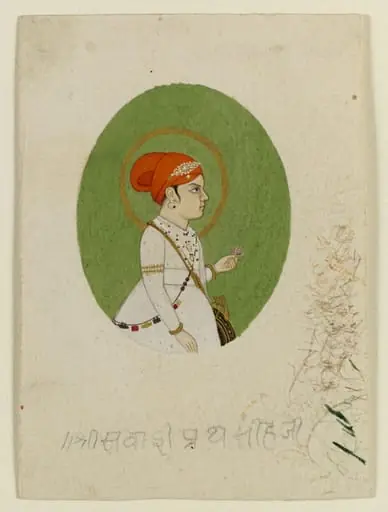
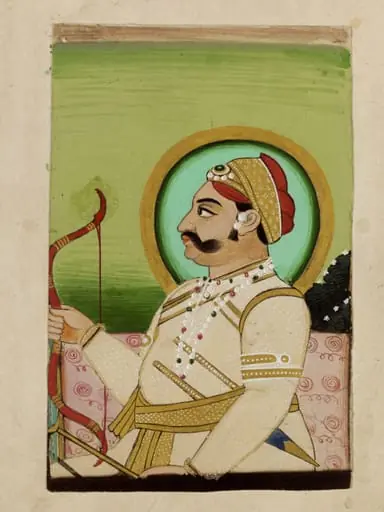
It presents a seated ruler in profile, rendered with refined detail and restrained composition.
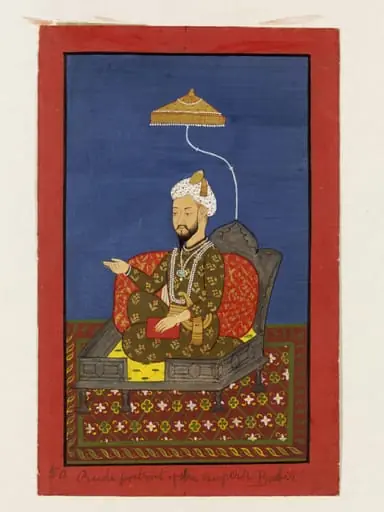
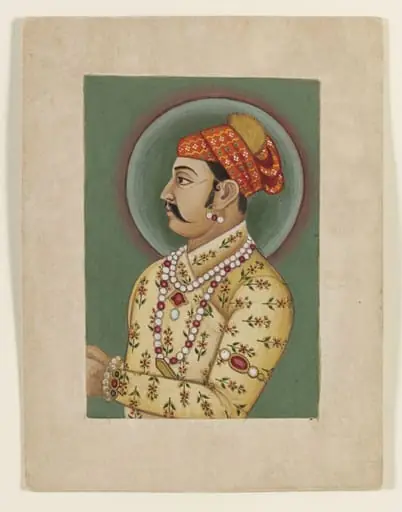
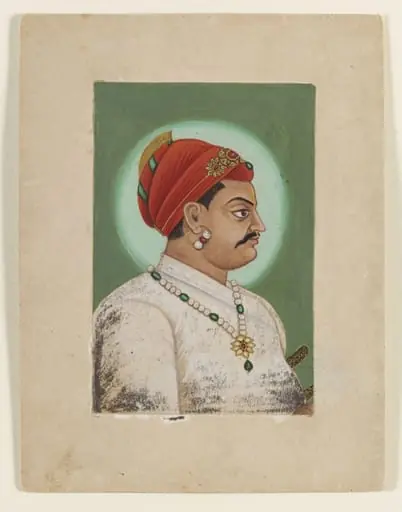
This untitled portrait, created around 1850 by the artist Ram Gopal, is a small-scale work executed in opaque watercolour and gold on paper, later mounted on cardboard. It presents a seated ruler in profile, rendered with refined detail and restrained composition. The use of luminous pigments and metallic accents reflects the conventions of late Mughal and regional court painting traditions in northern India during the mid-nineteenth century.
Subject & Meaning
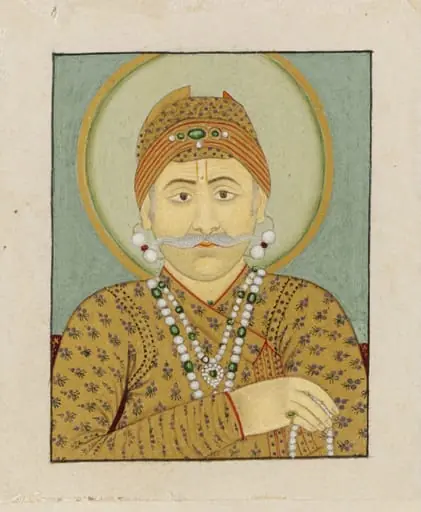
The figure is believed to be Maharaja Prithvi Raj, a ruler of a princely state in the region. His dignified posture, with one hand resting gently on his chest, conveys composure and authority. The elaborate attire and jewelled turban signify status, while the absence of symbolic objects or narrative context emphasizes personal presence over political allegory. The portrait functions as a visual assertion of identity and lineage within a shifting political landscape.
Technique & Style
The artist employed opaque watercolour with deliberate layering to achieve rich, saturated tones, particularly in the red garments and gold embellishments. Fine brushwork defines the texture of fabric and the sheen of jewels. The background is reduced to a flat green circle, eliminating spatial depth to concentrate attention on the figure. This stylistic choice aligns with regional portraiture that prioritized symbolic clarity over naturalistic environment.
History & Provenance
The painting originates from a courtly atelier in northern India during a period of transition as British influence expanded. Its survival suggests it was preserved within a royal collection or by a patron with ties to the ruling family. While its exact early ownership is undocumented, its material quality and execution indicate it was commissioned for private or ceremonial use rather than public display.
Context
Created during the twilight of independent princely rule, this portrait reflects the persistence of traditional courtly aesthetics despite increasing colonial presence. Artists like Ram Gopal continued to serve local rulers, adapting Mughal conventions to suit new political realities. The emphasis on personal regalia over imperial iconography signals a shift toward localized identity in visual culture.
Legacy
This work contributes to a broader corpus of 19th-century Indian portraiture that bridges Mughal refinement and emerging regional styles. Though not widely exhibited, it remains a significant example of how indigenous artists maintained technical sophistication and symbolic language under changing patronage. Its preservation in institutional collections underscores its value as a historical document of courtly life.
Artist & collection
Artist
Ram Gopal spent his life painting the rulers who ruled him, a quiet rebellion wrapped in regal colors and gold-leaf flourishes.