Artwork
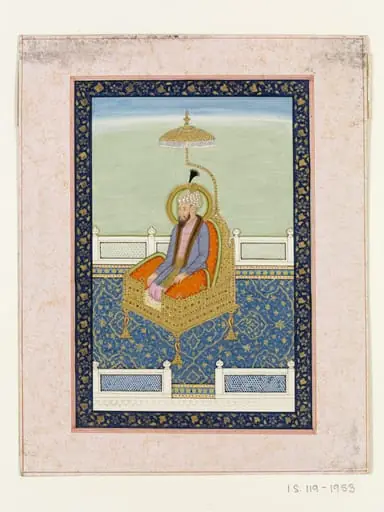
Emperor Akbar II
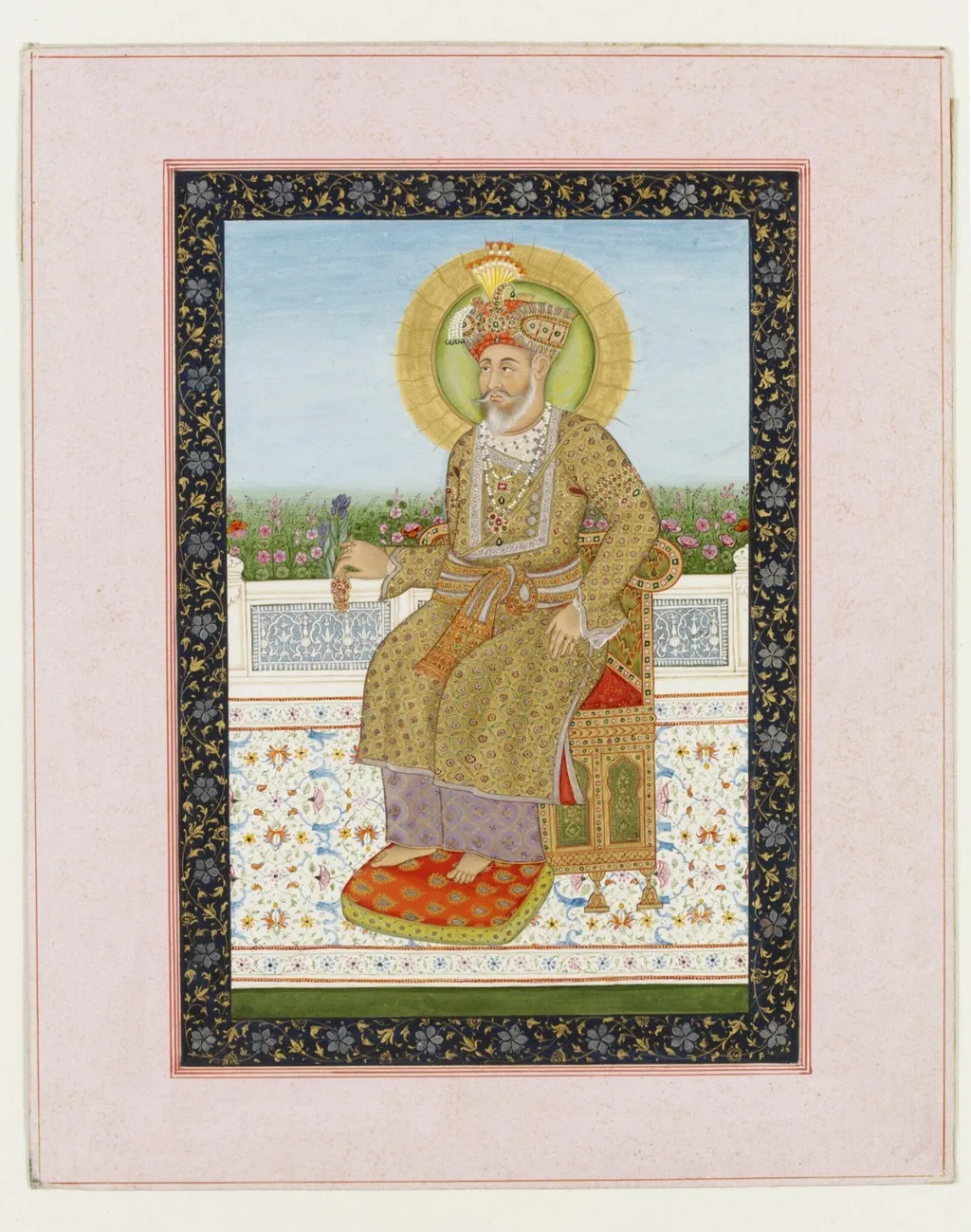
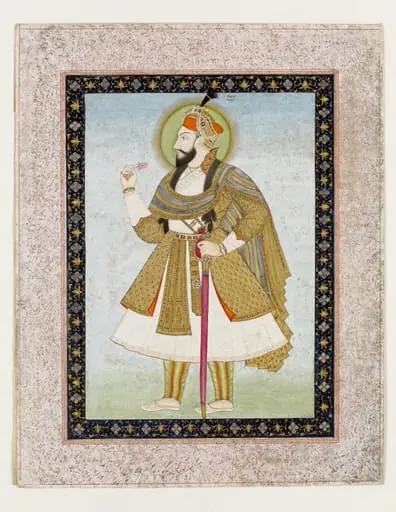
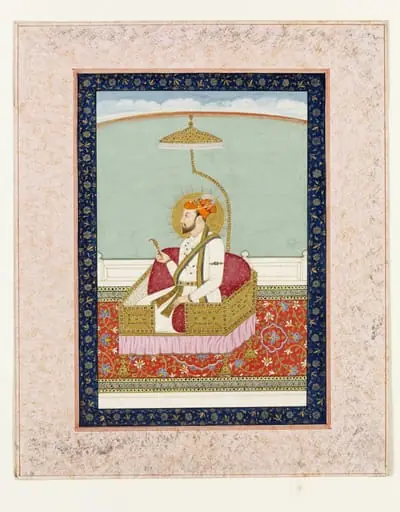
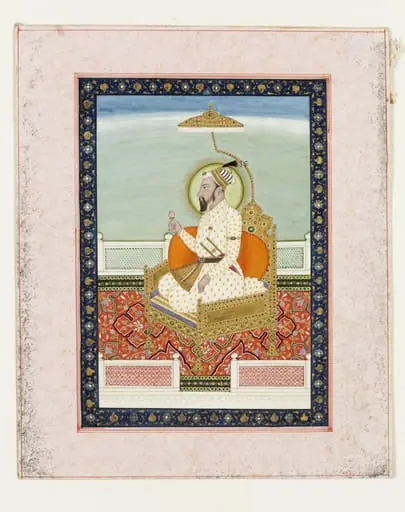
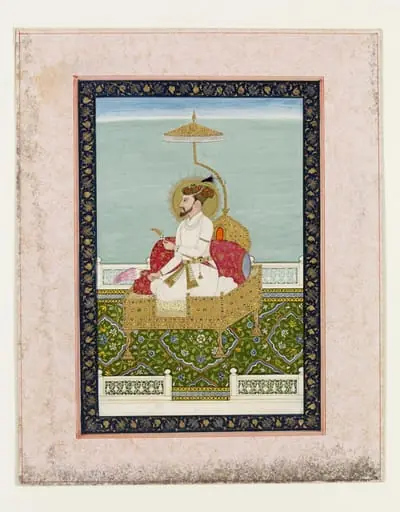
Emperor Akbar II is a paint painting by the Romanticist artist Unknown. It dates from 1840 and is held in the collection of the Victoria and Albert Museum.
About this work
Overview
The painting was once held by the Earl of Auckland, Governor-General of India, suggesting its acquisition during British colonial administration.
This opaque watercolour on paper portrays Emperor Akbar II, the Mughal ruler who reigned from 1806 to 1837. Created as part of a series depicting Muslim sovereigns, the work reflects the late Mughal court’s continued investment in portraiture despite declining political power. The painting was once held by the Earl of Auckland, Governor-General of India, suggesting its acquisition during British colonial administration.
Subject & Meaning
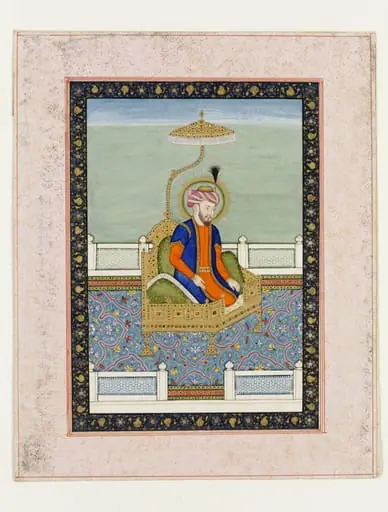
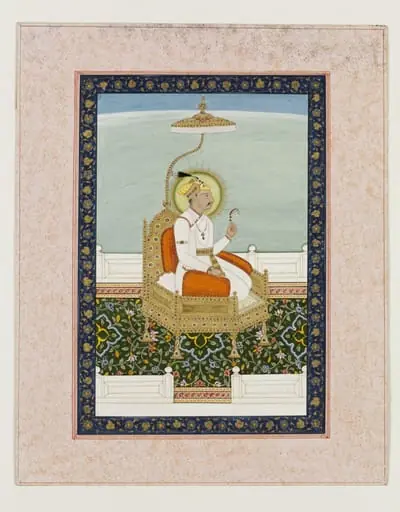
Akbar II is depicted seated on an ornate throne, holding a flower and crowned with a royal headpiece. A halo encircles his head, signaling spiritual or imperial authority rather than religious sanctity. The lush garden and floral border surrounding him evoke paradise, a traditional symbol of just rule in Islamic and Mughal iconography. His calm posture and regal attire convey dignity amid the empire’s diminishing sovereignty.
Technique & Style
Executed in fine opaque watercolour on paper, the painting features meticulous detailing in textiles, architecture, and flora. Delicate brushwork renders intricate patterns on the throne and robe, while the blue sky and floral border create a stylized, non-naturalistic backdrop. Though reminiscent of Romanticism in its idealized setting, the style remains rooted in Indo-Persian miniature traditions, emphasizing symbolism over realism.
History & Provenance
The painting entered the collection of the Earl of Auckland during his tenure as Governor-General of India (1836–1842), likely acquired as part of a broader effort to document or collect Mughal imagery. Its survival suggests it was valued as a cultural artifact rather than a political statement. The work’s journey from imperial court to British colonial hands reflects shifting power dynamics in early 19th-century India.
Context
Produced during the twilight of Mughal authority, the portrait asserts continuity with earlier imperial traditions despite British dominance. While the East India Company held real power, the Mughal court still commissioned art to preserve its ceremonial prestige. This image belongs to a genre where rulers were depicted in timeless, idealized forms—bridging the gap between fading sovereignty and enduring cultural identity.
Legacy
The painting stands as a quiet testament to the persistence of Mughal visual culture under colonial rule. It illustrates how artistic conventions endured even as political power waned. Today, it contributes to scholarly understanding of how indigenous elites adapted imagery to maintain symbolic authority, offering insight into the complex interplay of tradition and colonialism in early 19th-century India.
Artist & collection

 Domestic Scene
 Giacomo and Cardinal Marco, investing Andrea, Abbot of San Zeno, with his Benefice
 The Nymph of Fontainebleau
 Portrait of a Woman
 Madonna and Child with Saints in the Enclosed Garden
 Venus and Minerva
 Family Group of Four on Sofa
 Wall painting from Room H of the Villa of P. Fannius Synistor at Boscoreale